
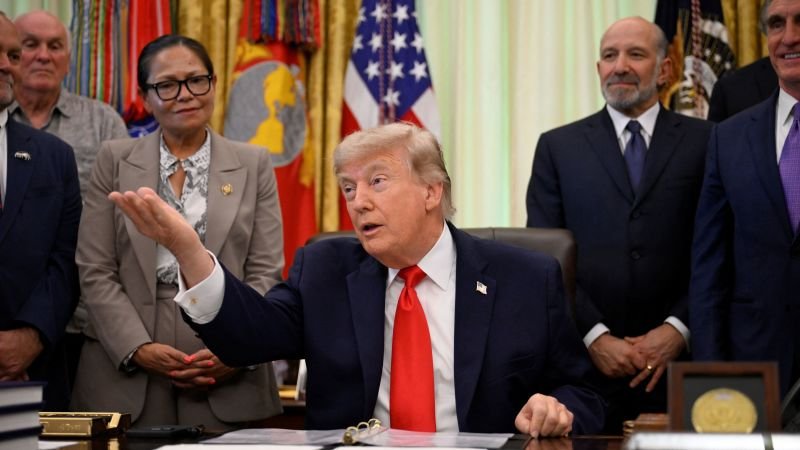
• Trump touts progress: US President Donald Trump trumpeted a “great settlement” that could resolve the war and open the Strait of Hormuz, suggesting Iran’s supreme leader is on board and an agreement would be finalized in the coming days. Speaking in the Oval Office, Trump said Vice President JD Vance could soon attend a signing ceremony in Europe.
• Skepticism from Tehran: However, Iran’s foreign ministry spokesperson said the country has not reached a final decision on any agreement, according to state media. The spokesperson said “a large portion of the text had already been finalized,” but the US has taken shifting positions since negotiations began.
• Recent escalations: Trump vowed earlier Thursday to take Kharg Island, which handles roughly 90% of Iran’s crude exports. Tehran said it targeted US bases in the region overnight for a second consecutive day, following US strikes across Iran.
50 Posts
While the Iranians acknowledge President Donald Trump saying he has canceled military action against the country, there still is a good deal of distrust and skepticism.
CNN operates in Iran only with the permission of the government but maintains full editorial control of its reports.
Prime Minister Benjamin Netanyahu spoke with President Donald Trump Thursday evening after the US president’s post on social media claiming that Israel supported a potential impending agreement with Iran.
But Trump has focused his public comments on dealing with Iran’s enriched uranium; he hasn’t mentioned ballistic missiles or proxies in weeks.
Trump has also declined to put a timeline on negotiations for a final agreement, which first requires a memorandum of understanding to enable subsequent talks.
Trump’s announcement of an imminent agreement on Truth Social caught Netanyahu by surprise as he was meeting with his top security official to discuss Iran.
Iran’s Foreign Ministry spokesperson Esmail Baghaei told Iran’s state-run news agency IRNA that reports of a finalized agreement with the United States were “merely speculation” and said Tehran had not yet made a final decision on any deal.
Baghaei said Qatar and Pakistan were “active as mediators,” but added that “U.S. actions are affecting the diplomatic process.”
“From the beginning, the status of the negotiations was clear to us, and a large portion of the text had already been finalized. However, the Americans kept changing their positions,” Baghaei said, according to IRNA.
He added that Iran had “proven that it does not compromise on what it has defined as its red lines.”
“So far, Iran has not reached a final decision regarding any agreement,” he said.
He also said the situation in the Strait of Hormuz had become “less secure because of U.S. actions.”
Earlier on Thursday, President Donald Trump said he was canceling the strikes against Iran that he had previewed hours earlier because “final points” of a deal with the country had been approved.
“Based on the fact that discussions with the Islamic Republic of Iran have been brought to the highest level of Iranian leadership and approved, I have, as President of the United States of America, cancelled the scheduled strikes and bombings against Iran this evening,” Trump wrote on Truth Social.
President Donald Trump suggested Thursday that Iran’s new supreme leader supports the agreement, in which he said Tehran has agreed “conceptually” to allow the US to secure nuclear materials and to stop pursuing a nuclear weapon.
“I understand the answer is yes,” Trump told reporters in the Oval Office when pressed on whether the supreme leader has approved of the agreement, adding that the US will end its blockade immediately once it’s signed.
Trump heralded “a very strong memorandum of understanding,” calling it “a little conceptual,” but insisting Iran had committed to forego pursuing nuclear capabilities.
“They will not have a nuclear weapon, they’ve agreed to that — there will be no, which is the whole reason, which is a big part of the reason,” Trump said. “They will not only not have, they will not purchase, develop in any way, any shape, in any way, shape or form a nuclear weapon.”
And he said he believes negotiators in Iran want a deal “as much as I do, or more.”
President Donald Trump said Thursday he was canceling the strikes against Iran and that the two countries were very close to a peace agreement — one that could be signed as soon as this weekend.
But, Iran’s Foreign Ministry spokesperson Esmail Baghaei told Iran’s state-run news agency IRNA that reports of a finalized agreement with the US were “merely speculation” and said Tehran had not yet made a final decision on any deal.
Here’s what Trump said today:
From the Oval Office, Trump trumpeted a “great settlement” that could resolve the war, suggesting it would be finalized in the coming days. He said he anticipated a signing ceremony soon, potentially in Europe, to be attended by Vice President JD Vance.
The latest military action pushed Tehran to actually agree to a deal this time, Trump said, and that Iran has “taken a pounding like very few people could take, and they want to make a deal a lot more than I do.”
Trump said it is a “very strong memorandum of understanding,” and called the deal a “little conceptual.” Iran had committed to forego pursing nuclear capabilities, he said, and the US will end its blockade immediately once it’s signed.
What Iran said: Baghaei said “Iran has not reached a final decision regarding any agreement” and that “U.S. actions are affecting the diplomatic process.” Trump, however, suggested Iran’s supreme leader supports the settlement and has agree “conceptually” to allow the US to secure nuclear materials and to top pursing a nuclear weapon.
Who is involved: The United States, Israel, Saudi Arabia, UAE, Qatar, Turkey, Pakistan, Bahrain, Kuwait, Jordan and Egypt as nations involved in the approvals, according to Trump.
What we know about the meetings in Iran: A Qatari delegation had been in Tehran this week for discussions. US officials believe meetings between Iranian and Qatari officials helped resolve some of the remaining sticking points, a person familiar said. Those mediators “hit some breakthroughs,” a source said.
What has the recent timeline looked like: Iran passed along its latest draft of the proposed agreement through Qatari mediators earlier this week, according to a person familiar with the matter. Trump returned a proposed deal with changes nearly two weeks ago, looking to harden some of the language around the nuclear issue.
What the reaction has been: Trump’s post on social media suggesting an imminent agreement surprised Israeli Prime Minister Benjamin Netanyahu — who was in the midst of a security discussion about Iran, according to an Israeli source. Trump later said he spoke to Netanyahu and other Gulf leaders. Meantime, oil prices fell and US stocks moved sharply higher.
CNN’s Kevin Liptak, John Towfighi, Tal Shalev, Mohammed Tawfeeq, Aida Karimi, Kit Maher, Donald Judd and Jeremy Diamond contributed reporting to this report, which has been updated with the latest statement from Iran.
President Donald Trump said the United States’ latest military action against Iran has pushed Tehran to actually agree to a peace deal this time, after he’s said repeatedly over the past couple months that an agreement is close.
“They’ve taken a pounding, they’ve taken a pounding like very few people could take, and they want to make the deal a lot more than I do,” Trump told reporters in the Oval Office Thursday. “They got hit very hard recently, as you know, and I don’t like to have to do things that way, but I felt it was necessary.”
Trump has repeatedly suggested before that Iran wants a deal more than the United States, though other times he’s claimed an agreement was close it didn’t come to fruition.
The president said he canceled attacks on Iran tonight because the two sides were close to an agreement. He said that the US explained to Iran exactly what the attacks would look like tonight, before ultimately not going through with them.
“We were hitting them very hard for the last three days, we had them even harder tonight,” Trump said. “There wasn’t a thing they could have done about it, and we won this war militarily very early on.”
President Donald Trump trumpeted a “great settlement” that could resolve the war with Iran, suggesting it would be finalized in the coming days.
He said he anticipated a signing ceremony for the document soon, potentially in Europe, to be attended by Vice President JD Vance.
“The documents are pretty final shape, so we’ll see,” he said during an event in the Oval Office on Thursday. “We’ll see.”
“That should be done pretty quickly,” he continued.
He said he’d just spoken to a number of leaders, including Israeli Prime Minister Benjamin Netanyahu and Gulf nation heads.
Iran is considering adding business interests linked to Elon Musk across the Middle East to its military target list, after accusing the billionaire’s companies of supporting US and Israeli military operations attacking Iran, according to Iran’s semi-official Fars News Agency.
The move comes after “the US and Israeli militaries have used infrastructure managed by Elon Musk, including Starlink,” during the conflict with Iran, according to Fars.
Fars, which is affiliated with the Islamic Revolutionary Guard Corps (IRGC), also claimed that “Musk’s military assistance to the US military” had previously been disclosed through “projects such as Starshield” and through “the launch of military satellites for activities including Earth observation, encrypted communications, and secure data transfer.”
The Fars report said that “Starlink ground stations located in Israel, Qatar, Jordan, the UAE, and Oman, along with SpaceX shareholders — including infrastructure linked to the two companies Alpha Dhabi and Mubadala — are among the entities reportedly included in Iran’s new target bank.”
Fars also claimed, citing an informed source, that the US military, with support from companies linked to Musk, “had attacked water infrastructure in southern Iran,” and that “Iran reserves the right to strike all facilities associated with holding companies managed by Musk in the region and in Israel.”
Starlink is a satellite internet subsidiary owned entirely by SpaceX. CNN has reached out to the SpaceX media office for comment.
The Iranian threat comes as investors await a highly anticipated SpaceX initial public offering of its stock that would value the company at roughly $1.77 trillion.
A source with knowledge of the situation has acknowledged real “breakthroughs” in US-Iran peace negotiations amid a post on social media from US President Donald Trump that an agreement with Tehran is imminent.
The source told CNN that mediators are “cautiously optimistic” about the parties getting a deal over the finish line.
They cited the latest series of discussions held by Qatari negotiators in Tehran on Wednesday and Thursday.
Mediators involved in US-Iran negotiations are signaling that Qatari negotiators’ visit to Tehran yesterday and talks until early morning today helped push it forward despite the tit-for-tat situation, the source said, referring to the latest volleys of strikes.
“Mediators have hit some breakthroughs,” they said.
Iran’s Islamic Revolutionary Guard Corps (IRGC) have cast doubt on US President Donald Trump’s latest remarks that “final points” of an agreement with Tehran had been approved, saying Iranian officials had not confirmed any such deal.
In a statement, the IRGC said that “While Iranian officials have not yet responded to Trump’s claims, the report notes that since the start of the war, Trump has repeatedly made contradictory and inaccurate statements.”
Iran’s semi-official Tasnim news agency, which is closely linked to the IRGC, also reacted to Trump’s latest remarks, saying his statements about progress in negotiations with Tehran should not be taken at face value unless Iran officially announces an agreement.
“Until any potential understanding or agreement is officially announced by Iran, any statements from Trump on this matter should be viewed in the same light as his previous claims and messages,” Tasnim said.
Earlier on Thursday, Trump said he was canceling the strikes against Iran that he had previewed hours earlier because “final points” of a deal had been approved.
“Based on the fact that discussions with the Islamic Republic of Iran have been brought to the highest level of Iranian leadership and approved, I have, as President of the United States of America, cancelled the scheduled strikes and bombings against Iran this evening,” Trump wrote on Truth Social.
President Donald Trump’s post on social media suggesting an imminent agreement with Tehran surprised Israeli Prime Minister Benjamin Netanyahu — who was in the midst of a security discussion about Iran, according to an Israeli source.
Israel was not aware of any impending agreement with Iran, the source told CNN, or of any approval to an agreement, appearing to contradict Trump’s claim on Truth Social.
After two consecutive nights of US strikes on Iran and the threat of more ahead by Trump, Netanyahu had convened a limited security discussion on Thursday night with top security officials and some of his ministers. Trump posted about the potential agreement while he was participating in that discussion.
US officials believe meetings between Iranian and Qatari officials in Tehran this week helped resolve some of the remaining sticking points in an agreement with the US, according to a person familiar with the matter.
The sticking points included details of how the future negotiations over Iran’s nuclear program will unfold and the sequencing of financial relief for Iran.
Iran passed along its latest draft of the proposed agreement with the United States through Qatari mediators earlier this week, according to a person familiar with the matter.
Trump had returned a proposed deal with changes nearly two weeks ago, looking to harden some of the language around the nuclear issue. He had been growing frustrated that Iran was taking too long to respond.
But the discussions through Qatar this week helped narrow some of the gaps. US officials had been in frequent contact with the mediators, even as the US and Iran were trading strikes on consecutive days this week.
Still, Trump has voiced optimism about a deal frequently over the last month with nothing materializing.
Oil prices fell and US stocks moved sharply higher Thursday after US President Donald Trump said he was calling off planned strikes on Iran.
The Dow surged 810 points, or 1.62%. The jump comes one day after the Dow had its worst day of the year.
The S&P 500 gained 1.3%, and the tech-heavy Nasdaq Composite soared 1.8%.
Brent crude fell 3.7% to just below $90 per barrel. US crude oil fell 3.6% to just below $87 per barrel.
Traders have been conditioned to “buy the dip” on Trump’s announcements, whether or not meaningful de-escalation is expected.
Traders have been on edge in recent days as tensions between Washington and Tehran flared. The drop in oil prices eased traders’ nerves about inflation, bring US Treasury yields lower.
President Donald Trump said he was canceling the strikes against Iran Thursday night that he’d previewed hours earlier because “final points” of an agreement between the two sides had been approved.
“Based on the fact that discussions with the Islamic Republic of Iran have been brought to the highest level of Iranian leadership and approved, I have, as President of the United States of America, cancelled the scheduled strikes and bombings against Iran this evening,” Trump wrote on Truth Social.
He said “discussions and final points have been, in both concept and great detail, approved by all parties involved.”
He listed the United States, Israel, Saudi Arabia, UAE, Qatar, Turkey, Pakistan, Bahrain, Kuwait, Jordan and Egypt as nations involved in the approvals.
“The Naval Blockade will remain in full force and effect until this Transaction is finalized,” he said.
“Time and place of the signing to be announced shortly,” he said.
It’s not the first time Trump has suggested a deal with Iran is close, and the assertion has fallen apart previously. But Iran did pass along its latest draft of the proposed agreement with the United States through Qatari mediators earlier this week, according to a person familiar with the matter.
US officials had been in frequent contact with the mediators, even as the US and Iran were trading strikes on consecutive days this week.
A Qatari delegation had been in Tehran this week for discussions about the deal.
Iran’s top joint military command, Khatam al-Anbiya Central Headquarters has warned that any future US attack on Iran would trigger “a response even more severe than before,” in a statement published by Iran’s state-run news agency IRNA.
The statement, that was issued before US President Donald Trump said he was canceling tonight’s scheduled strikes against Iran, accused Washington of duplicity, saying, “On the one hand, the United States speaks of agreements and negotiations, while on the other it engages in hostile actions.”
It added that this “clear contradiction in America’s words and deeds is the main source of instability in the region,” and has “endangered international trade and economic security, particularly in the Strait of Hormuz.”
The command warned that if the United States “launch[es] another attack against Iran,” the conflict “would not only deepen regional instability but could also expand far beyond its current scope.”
The statement also threaten global energy flows, saying: “In light of recent US threats against Iran’s oil infrastructure, we declare that either oil and gas exports will remain available to all, or they will not be available to anyone.”
Earlier on Thursday, Trump warned that the US would hit Iran “VERY HARD TONIGHT” and vowed to take Kharg Island, which handles roughly 90% of Iran’s crude exports. Plans to capture the island have been drawn up for months but were repeatedly shelved because it was considered too risky, sources say.
Energy executives have warned the White House that key oil reserves being used to limit the Iran war’s impact on prices are running dangerously low, adding further urgency to President Donald Trump’s search for a way out of the conflict.
The concerns conveyed to Cabinet officials and White House aides have centered on industry stockpiles that are projected to reach critical lows perhaps in a matter of weeks, three sources familiar with the private discussions told CNN.
The government’s own emergency oil stockpile is also being rapidly depleted and will likely force the administration to slow its pace of withdrawals as soon as next month.
“The [Strategic Petroleum Reserve] is going to be precariously low,” one of the sources said of the government’s emergency supply. “What comes next is higher prices.”
“We are getting closer to the bottom,” another industry source said.
The private alarm that industry officials have regularly communicated to Trump aides has been reflected in recent public statements made by major companies like Exxon, which said last month that it was approaching “unheard of inventory levels.”
The industry has relied on those stockpiles to mitigate fallout from the closure of the Strait of Hormuz, which has effectively choked off a key source of the global oil supply.
US gas prices have still risen sharply throughout the war. But should the conflict drag into another month, executives have cautioned the White House, those price increases will likely become even more volatile.
“July is likely the pain point when the market turns,” said another one of the sources.
In response to questions about the industry’s warnings, White House spokeswoman Taylor Rogers reiterated Trump’s assurances that oil prices will drop once the war is over.
“President Trump and his energy team anticipated short-term market disruptions, communicated them openly to the American people, and implemented an aggressive plan to mitigate any impacts,” she said in a statement. “When the President forces this conflict to a successful end, gas prices will drop back to multi-year lows and global energy markets will be much more stable in the long term.”
Tensions between the US and Iran remain high after President Donald Trump threatened to take Iran’s key oil export hub of Kharg Island.
Trump also said the US will strike Iran “VERY HARD TONIGHT.” The latest threats are putting pressure on already fragile negotiations to end the war.
A top Iranian official has warned that Iran will deliver a “firm, crushing, painful, and regret-inducing response” if the US attacks Kharg Island.
If you’re just joining us, here’s the latest on the war:
Iran says it’s ready for escalations: Iran and all its territory, including Kharg Island, are “fully prepared,” Ebrahim Azizi, head of the Iranian parliament’s National Security and Foreign Policy Commission, said in comments to Iranian newspaper Hamshahri. An adviser to Iran’s supreme leader told CNN in Tehran that Iran would “respond more severely and more heavily” to any future US attacks, adding that the fate of the war depends on Washington’s actions.
On Kharg Island threats: Plans for the US military to try to capture the island have been drawn up for months but continuously shelved because the operation was considered too risky, sources said. Earlier this year, CNN reported that Iran has laid traps and moved additional military personnel and air defenses to Kharg.
US war fatigue: Trump conceded that he was not sure Americans had “the appetite” for a major military operation that would be required to take Kharg Island, as he’s mused about escalating military operations in Iran.
Strait of Hormuz tensions: The oil trade chokepoint, which has been almost entirely shut since the war began, will be “closed to all vessels,” Iran’s Islamic Revolutionary Guard Corps said. US Central Command pushed back on the Iranian claim, saying that commercial ships continue to transit in and out of the strait — which the IRGC denied.
Inside the White House: Trump grew furious this week after ordering new strikes on Iran, believing that US military action was not being viewed as powerful enough, according to sources. After gauging the response, Trump ordered a second round on Wednesday, the sources said, hoping to jolt Iranian leaders into accepting a deal to end hostilities.
CNN’s Deva Lee, Kaanita Iyer, Alayna Treene, Natasha Bertrand, Alejandra Jaramillo, Aileen Graef, Aida Karimi, Dugald McConnell, Manu Raju, Casey Riddle and Sophie Tanno contributed to this report.
Iran has responded sharply to US threats against a critical oil hub and its energy exports, warning that further escalation could have lasting repercussions.
“Wrong strategies and impulsive decisions will reset the entire board for the worse,” Iran’s Parliament Speaker Mohammad Bagher Ghalibaf wrote in a post on X on Thursday.
“Explode energy infrastructure and markets and create an endless quagmire that you will be stuck in for years. You will see a different Iran,” Ghalibaf, Iran’s chief negotiator in the talks, added.
Earlier on Thursday, US President Donald Trump warned that the US would hit Iran “VERY HARD TONIGHT” and threatened to take Kharg Island, which handles roughly 90% of Iran’s crude exports.
Iran will deliver a “firm, crushing, painful, and regret-inducing response” if the US attacks Kharg Island, a top Iranian official has warned, amid a threat from US President Donald Trump that the US will seize the key Iranian oil export hub.
Describing Trump as “confused and erratic,” Ebrahim Azizi, who is the head of the Iranian parliament’s National Security and Foreign Policy Commission, said there was no doubt Iran would deliver a severe response to any such attempt to seize the island.
Iran and all its territory, including Kharg Island, are “fully prepared,” Azizi said in comments to Iranian newspaper Hamshahri on Thursday.
Trump said Thursday morning the US will take Kharg Island and other oil infrastructure in Iran.
The tiny island in the Persian Gulf is an economic lifeline for Iran and handles roughly 90% of the country’s crude exports.
For at least the sixth time since a ceasefire began in April, the US military launched “self-defense” airstrikes on targets throughout Iran overnight.
The attacks, which included both air-dropped bombs and Tomahawk cruise missile strikes, targeted “military surveillance capabilities, communication systems, and air defense sites across Iran,” according to US Central Command.
But unlike previous instances of US “self-defense” airstrikes, explosions were heard last night in cities near the capital Tehran, which is hundreds of miles inland from the contested Strait of Hormuz along the country’s coast. Previous rounds, including those launched Tuesday after an Iranian drone took down a US helicopter in the Strait of Hormuz, focused exclusively on targets near the coast.
A US official speaking on condition of anonymity told CNN that “self-defense” strikes are distinguished from offensive strikes largely by the nature of their targets.
“Self-defense” attacks prioritize facilities or military positions that pose a current threat to US forces, such as drone launch facilities or radar installations that enable Iranian forces to target US aircraft or ships transiting the strait. Many such targets are located along the coast or otherwise near the strait, the official added.
Offensive strikes, by contrast, aim to reduce Iran’s ability to impact the rest of the Middle East, both now and into the future. The US official highlighted Iran’s ballistic missile capabilities as a prime target for offensive strikes such as launch equipment, support facilities, and even the factories that make the missiles, their fuel, and other required components.
Regardless of US intentions for Wednesday night’s strikes, Iranian officials are signaling that they may have crossed the line compared to previous “self-defense” efforts.
Last night’s attacks made the ceasefire between the two countries “meaningless,” top Iranian officials said earlier today.
Davis Winkie’s work at CNN is supported by a partnership between Outrider Foundation and Journalism Funding Partners (JFP). CNN retains full editorial control of the reporting.
• Trump touts progress: US President Donald Trump trumpeted a “great settlement” that could resolve the war and open the Strait of Hormuz, suggesting Iran’s supreme leader is on board and an agreement would be finalized in the coming days. Speaking in the Oval Office, Trump said Vice President JD Vance could soon attend a signing ceremony in Europe.
• Skepticism from Tehran: However, Iran’s foreign ministry spokesperson said the country has not reached a final decision on any agreement, according to state media. The spokesperson said “a large portion of the text had already been finalized,” but the US has taken shifting positions since negotiations began.
• Recent escalations: Trump vowed earlier Thursday to take Kharg Island, which handles roughly 90% of Iran’s crude exports. Tehran said it targeted US bases in the region overnight for a second consecutive day, following US strikes across Iran.
While the Iranians acknowledge President Donald Trump saying he has canceled military action against the country, there still is a good deal of distrust and skepticism.
CNN operates in Iran only with the permission of the government but maintains full editorial control of its reports.
Prime Minister Benjamin Netanyahu spoke with President Donald Trump Thursday evening after the US president’s post on social media claiming that Israel supported a potential impending agreement with Iran.
But Trump has focused his public comments on dealing with Iran’s enriched uranium; he hasn’t mentioned ballistic missiles or proxies in weeks.
Trump has also declined to put a timeline on negotiations for a final agreement, which first requires a memorandum of understanding to enable subsequent talks.
Trump’s announcement of an imminent agreement on Truth Social caught Netanyahu by surprise as he was meeting with his top security official to discuss Iran.
Iran’s Foreign Ministry spokesperson Esmail Baghaei told Iran’s state-run news agency IRNA that reports of a finalized agreement with the United States were “merely speculation” and said Tehran had not yet made a final decision on any deal.
Baghaei said Qatar and Pakistan were “active as mediators,” but added that “U.S. actions are affecting the diplomatic process.”
“From the beginning, the status of the negotiations was clear to us, and a large portion of the text had already been finalized. However, the Americans kept changing their positions,” Baghaei said, according to IRNA.
He added that Iran had “proven that it does not compromise on what it has defined as its red lines.”
“So far, Iran has not reached a final decision regarding any agreement,” he said.
He also said the situation in the Strait of Hormuz had become “less secure because of U.S. actions.”
Earlier on Thursday, President Donald Trump said he was canceling the strikes against Iran that he had previewed hours earlier because “final points” of a deal with the country had been approved.
“Based on the fact that discussions with the Islamic Republic of Iran have been brought to the highest level of Iranian leadership and approved, I have, as President of the United States of America, cancelled the scheduled strikes and bombings against Iran this evening,” Trump wrote on Truth Social.
President Donald Trump suggested Thursday that Iran’s new supreme leader supports the agreement, in which he said Tehran has agreed “conceptually” to allow the US to secure nuclear materials and to stop pursuing a nuclear weapon.
“I understand the answer is yes,” Trump told reporters in the Oval Office when pressed on whether the supreme leader has approved of the agreement, adding that the US will end its blockade immediately once it’s signed.
Trump heralded “a very strong memorandum of understanding,” calling it “a little conceptual,” but insisting Iran had committed to forego pursuing nuclear capabilities.
“They will not have a nuclear weapon, they’ve agreed to that — there will be no, which is the whole reason, which is a big part of the reason,” Trump said. “They will not only not have, they will not purchase, develop in any way, any shape, in any way, shape or form a nuclear weapon.”
And he said he believes negotiators in Iran want a deal “as much as I do, or more.”
President Donald Trump said Thursday he was canceling the strikes against Iran and that the two countries were very close to a peace agreement — one that could be signed as soon as this weekend.
But, Iran’s Foreign Ministry spokesperson Esmail Baghaei told Iran’s state-run news agency IRNA that reports of a finalized agreement with the US were “merely speculation” and said Tehran had not yet made a final decision on any deal.
Here’s what Trump said today:
From the Oval Office, Trump trumpeted a “great settlement” that could resolve the war, suggesting it would be finalized in the coming days. He said he anticipated a signing ceremony soon, potentially in Europe, to be attended by Vice President JD Vance.
The latest military action pushed Tehran to actually agree to a deal this time, Trump said, and that Iran has “taken a pounding like very few people could take, and they want to make a deal a lot more than I do.”
Trump said it is a “very strong memorandum of understanding,” and called the deal a “little conceptual.” Iran had committed to forego pursing nuclear capabilities, he said, and the US will end its blockade immediately once it’s signed.
What Iran said: Baghaei said “Iran has not reached a final decision regarding any agreement” and that “U.S. actions are affecting the diplomatic process.” Trump, however, suggested Iran’s supreme leader supports the settlement and has agree “conceptually” to allow the US to secure nuclear materials and to top pursing a nuclear weapon.
Who is involved: The United States, Israel, Saudi Arabia, UAE, Qatar, Turkey, Pakistan, Bahrain, Kuwait, Jordan and Egypt as nations involved in the approvals, according to Trump.
What we know about the meetings in Iran: A Qatari delegation had been in Tehran this week for discussions. US officials believe meetings between Iranian and Qatari officials helped resolve some of the remaining sticking points, a person familiar said. Those mediators “hit some breakthroughs,” a source said.
What has the recent timeline looked like: Iran passed along its latest draft of the proposed agreement through Qatari mediators earlier this week, according to a person familiar with the matter. Trump returned a proposed deal with changes nearly two weeks ago, looking to harden some of the language around the nuclear issue.
What the reaction has been: Trump’s post on social media suggesting an imminent agreement surprised Israeli Prime Minister Benjamin Netanyahu — who was in the midst of a security discussion about Iran, according to an Israeli source. Trump later said he spoke to Netanyahu and other Gulf leaders. Meantime, oil prices fell and US stocks moved sharply higher.
CNN’s Kevin Liptak, John Towfighi, Tal Shalev, Mohammed Tawfeeq, Aida Karimi, Kit Maher, Donald Judd and Jeremy Diamond contributed reporting to this report, which has been updated with the latest statement from Iran.
President Donald Trump said the United States’ latest military action against Iran has pushed Tehran to actually agree to a peace deal this time, after he’s said repeatedly over the past couple months that an agreement is close.
“They’ve taken a pounding, they’ve taken a pounding like very few people could take, and they want to make the deal a lot more than I do,” Trump told reporters in the Oval Office Thursday. “They got hit very hard recently, as you know, and I don’t like to have to do things that way, but I felt it was necessary.”
Trump has repeatedly suggested before that Iran wants a deal more than the United States, though other times he’s claimed an agreement was close it didn’t come to fruition.
The president said he canceled attacks on Iran tonight because the two sides were close to an agreement. He said that the US explained to Iran exactly what the attacks would look like tonight, before ultimately not going through with them.
“We were hitting them very hard for the last three days, we had them even harder tonight,” Trump said. “There wasn’t a thing they could have done about it, and we won this war militarily very early on.”
President Donald Trump trumpeted a “great settlement” that could resolve the war with Iran, suggesting it would be finalized in the coming days.
He said he anticipated a signing ceremony for the document soon, potentially in Europe, to be attended by Vice President JD Vance.
“The documents are pretty final shape, so we’ll see,” he said during an event in the Oval Office on Thursday. “We’ll see.”
“That should be done pretty quickly,” he continued.
He said he’d just spoken to a number of leaders, including Israeli Prime Minister Benjamin Netanyahu and Gulf nation heads.
Iran is considering adding business interests linked to Elon Musk across the Middle East to its military target list, after accusing the billionaire’s companies of supporting US and Israeli military operations attacking Iran, according to Iran’s semi-official Fars News Agency.
The move comes after “the US and Israeli militaries have used infrastructure managed by Elon Musk, including Starlink,” during the conflict with Iran, according to Fars.
Fars, which is affiliated with the Islamic Revolutionary Guard Corps (IRGC), also claimed that “Musk’s military assistance to the US military” had previously been disclosed through “projects such as Starshield” and through “the launch of military satellites for activities including Earth observation, encrypted communications, and secure data transfer.”
The Fars report said that “Starlink ground stations located in Israel, Qatar, Jordan, the UAE, and Oman, along with SpaceX shareholders — including infrastructure linked to the two companies Alpha Dhabi and Mubadala — are among the entities reportedly included in Iran’s new target bank.”
Fars also claimed, citing an informed source, that the US military, with support from companies linked to Musk, “had attacked water infrastructure in southern Iran,” and that “Iran reserves the right to strike all facilities associated with holding companies managed by Musk in the region and in Israel.”
Starlink is a satellite internet subsidiary owned entirely by SpaceX. CNN has reached out to the SpaceX media office for comment.
The Iranian threat comes as investors await a highly anticipated SpaceX initial public offering of its stock that would value the company at roughly $1.77 trillion.
A source with knowledge of the situation has acknowledged real “breakthroughs” in US-Iran peace negotiations amid a post on social media from US President Donald Trump that an agreement with Tehran is imminent.
The source told CNN that mediators are “cautiously optimistic” about the parties getting a deal over the finish line.
They cited the latest series of discussions held by Qatari negotiators in Tehran on Wednesday and Thursday.
Mediators involved in US-Iran negotiations are signaling that Qatari negotiators’ visit to Tehran yesterday and talks until early morning today helped push it forward despite the tit-for-tat situation, the source said, referring to the latest volleys of strikes.
“Mediators have hit some breakthroughs,” they said.
Iran’s Islamic Revolutionary Guard Corps (IRGC) have cast doubt on US President Donald Trump’s latest remarks that “final points” of an agreement with Tehran had been approved, saying Iranian officials had not confirmed any such deal.
In a statement, the IRGC said that “While Iranian officials have not yet responded to Trump’s claims, the report notes that since the start of the war, Trump has repeatedly made contradictory and inaccurate statements.”
Iran’s semi-official Tasnim news agency, which is closely linked to the IRGC, also reacted to Trump’s latest remarks, saying his statements about progress in negotiations with Tehran should not be taken at face value unless Iran officially announces an agreement.
“Until any potential understanding or agreement is officially announced by Iran, any statements from Trump on this matter should be viewed in the same light as his previous claims and messages,” Tasnim said.
Earlier on Thursday, Trump said he was canceling the strikes against Iran that he had previewed hours earlier because “final points” of a deal had been approved.
“Based on the fact that discussions with the Islamic Republic of Iran have been brought to the highest level of Iranian leadership and approved, I have, as President of the United States of America, cancelled the scheduled strikes and bombings against Iran this evening,” Trump wrote on Truth Social.
President Donald Trump’s post on social media suggesting an imminent agreement with Tehran surprised Israeli Prime Minister Benjamin Netanyahu — who was in the midst of a security discussion about Iran, according to an Israeli source.
Israel was not aware of any impending agreement with Iran, the source told CNN, or of any approval to an agreement, appearing to contradict Trump’s claim on Truth Social.
After two consecutive nights of US strikes on Iran and the threat of more ahead by Trump, Netanyahu had convened a limited security discussion on Thursday night with top security officials and some of his ministers. Trump posted about the potential agreement while he was participating in that discussion.
US officials believe meetings between Iranian and Qatari officials in Tehran this week helped resolve some of the remaining sticking points in an agreement with the US, according to a person familiar with the matter.
The sticking points included details of how the future negotiations over Iran’s nuclear program will unfold and the sequencing of financial relief for Iran.
Iran passed along its latest draft of the proposed agreement with the United States through Qatari mediators earlier this week, according to a person familiar with the matter.
Trump had returned a proposed deal with changes nearly two weeks ago, looking to harden some of the language around the nuclear issue. He had been growing frustrated that Iran was taking too long to respond.
But the discussions through Qatar this week helped narrow some of the gaps. US officials had been in frequent contact with the mediators, even as the US and Iran were trading strikes on consecutive days this week.
Still, Trump has voiced optimism about a deal frequently over the last month with nothing materializing.
Oil prices fell and US stocks moved sharply higher Thursday after US President Donald Trump said he was calling off planned strikes on Iran.
The Dow surged 810 points, or 1.62%. The jump comes one day after the Dow had its worst day of the year.
The S&P 500 gained 1.3%, and the tech-heavy Nasdaq Composite soared 1.8%.
Brent crude fell 3.7% to just below $90 per barrel. US crude oil fell 3.6% to just below $87 per barrel.
Traders have been conditioned to “buy the dip” on Trump’s announcements, whether or not meaningful de-escalation is expected.
Traders have been on edge in recent days as tensions between Washington and Tehran flared. The drop in oil prices eased traders’ nerves about inflation, bring US Treasury yields lower.
President Donald Trump said he was canceling the strikes against Iran Thursday night that he’d previewed hours earlier because “final points” of an agreement between the two sides had been approved.
“Based on the fact that discussions with the Islamic Republic of Iran have been brought to the highest level of Iranian leadership and approved, I have, as President of the United States of America, cancelled the scheduled strikes and bombings against Iran this evening,” Trump wrote on Truth Social.
He said “discussions and final points have been, in both concept and great detail, approved by all parties involved.”
He listed the United States, Israel, Saudi Arabia, UAE, Qatar, Turkey, Pakistan, Bahrain, Kuwait, Jordan and Egypt as nations involved in the approvals.
“The Naval Blockade will remain in full force and effect until this Transaction is finalized,” he said.
“Time and place of the signing to be announced shortly,” he said.
It’s not the first time Trump has suggested a deal with Iran is close, and the assertion has fallen apart previously. But Iran did pass along its latest draft of the proposed agreement with the United States through Qatari mediators earlier this week, according to a person familiar with the matter.
US officials had been in frequent contact with the mediators, even as the US and Iran were trading strikes on consecutive days this week.
A Qatari delegation had been in Tehran this week for discussions about the deal.
Iran’s top joint military command, Khatam al-Anbiya Central Headquarters has warned that any future US attack on Iran would trigger “a response even more severe than before,” in a statement published by Iran’s state-run news agency IRNA.
The statement, that was issued before US President Donald Trump said he was canceling tonight’s scheduled strikes against Iran, accused Washington of duplicity, saying, “On the one hand, the United States speaks of agreements and negotiations, while on the other it engages in hostile actions.”
It added that this “clear contradiction in America’s words and deeds is the main source of instability in the region,” and has “endangered international trade and economic security, particularly in the Strait of Hormuz.”
The command warned that if the United States “launch[es] another attack against Iran,” the conflict “would not only deepen regional instability but could also expand far beyond its current scope.”
The statement also threaten global energy flows, saying: “In light of recent US threats against Iran’s oil infrastructure, we declare that either oil and gas exports will remain available to all, or they will not be available to anyone.”
Earlier on Thursday, Trump warned that the US would hit Iran “VERY HARD TONIGHT” and vowed to take Kharg Island, which handles roughly 90% of Iran’s crude exports. Plans to capture the island have been drawn up for months but were repeatedly shelved because it was considered too risky, sources say.
Energy executives have warned the White House that key oil reserves being used to limit the Iran war’s impact on prices are running dangerously low, adding further urgency to President Donald Trump’s search for a way out of the conflict.
The concerns conveyed to Cabinet officials and White House aides have centered on industry stockpiles that are projected to reach critical lows perhaps in a matter of weeks, three sources familiar with the private discussions told CNN.
The government’s own emergency oil stockpile is also being rapidly depleted and will likely force the administration to slow its pace of withdrawals as soon as next month.
“The [Strategic Petroleum Reserve] is going to be precariously low,” one of the sources said of the government’s emergency supply. “What comes next is higher prices.”
“We are getting closer to the bottom,” another industry source said.
The private alarm that industry officials have regularly communicated to Trump aides has been reflected in recent public statements made by major companies like Exxon, which said last month that it was approaching “unheard of inventory levels.”
The industry has relied on those stockpiles to mitigate fallout from the closure of the Strait of Hormuz, which has effectively choked off a key source of the global oil supply.
US gas prices have still risen sharply throughout the war. But should the conflict drag into another month, executives have cautioned the White House, those price increases will likely become even more volatile.
“July is likely the pain point when the market turns,” said another one of the sources.
In response to questions about the industry’s warnings, White House spokeswoman Taylor Rogers reiterated Trump’s assurances that oil prices will drop once the war is over.
“President Trump and his energy team anticipated short-term market disruptions, communicated them openly to the American people, and implemented an aggressive plan to mitigate any impacts,” she said in a statement. “When the President forces this conflict to a successful end, gas prices will drop back to multi-year lows and global energy markets will be much more stable in the long term.”
Tensions between the US and Iran remain high after President Donald Trump threatened to take Iran’s key oil export hub of Kharg Island.
Trump also said the US will strike Iran “VERY HARD TONIGHT.” The latest threats are putting pressure on already fragile negotiations to end the war.
A top Iranian official has warned that Iran will deliver a “firm, crushing, painful, and regret-inducing response” if the US attacks Kharg Island.
If you’re just joining us, here’s the latest on the war:
Iran says it’s ready for escalations: Iran and all its territory, including Kharg Island, are “fully prepared,” Ebrahim Azizi, head of the Iranian parliament’s National Security and Foreign Policy Commission, said in comments to Iranian newspaper Hamshahri. An adviser to Iran’s supreme leader told CNN in Tehran that Iran would “respond more severely and more heavily” to any future US attacks, adding that the fate of the war depends on Washington’s actions.
On Kharg Island threats: Plans for the US military to try to capture the island have been drawn up for months but continuously shelved because the operation was considered too risky, sources said. Earlier this year, CNN reported that Iran has laid traps and moved additional military personnel and air defenses to Kharg.
US war fatigue: Trump conceded that he was not sure Americans had “the appetite” for a major military operation that would be required to take Kharg Island, as he’s mused about escalating military operations in Iran.
Strait of Hormuz tensions: The oil trade chokepoint, which has been almost entirely shut since the war began, will be “closed to all vessels,” Iran’s Islamic Revolutionary Guard Corps said. US Central Command pushed back on the Iranian claim, saying that commercial ships continue to transit in and out of the strait — which the IRGC denied.
Inside the White House: Trump grew furious this week after ordering new strikes on Iran, believing that US military action was not being viewed as powerful enough, according to sources. After gauging the response, Trump ordered a second round on Wednesday, the sources said, hoping to jolt Iranian leaders into accepting a deal to end hostilities.
CNN’s Deva Lee, Kaanita Iyer, Alayna Treene, Natasha Bertrand, Alejandra Jaramillo, Aileen Graef, Aida Karimi, Dugald McConnell, Manu Raju, Casey Riddle and Sophie Tanno contributed to this report.
Iran has responded sharply to US threats against a critical oil hub and its energy exports, warning that further escalation could have lasting repercussions.
“Wrong strategies and impulsive decisions will reset the entire board for the worse,” Iran’s Parliament Speaker Mohammad Bagher Ghalibaf wrote in a post on X on Thursday.
“Explode energy infrastructure and markets and create an endless quagmire that you will be stuck in for years. You will see a different Iran,” Ghalibaf, Iran’s chief negotiator in the talks, added.
Earlier on Thursday, US President Donald Trump warned that the US would hit Iran “VERY HARD TONIGHT” and threatened to take Kharg Island, which handles roughly 90% of Iran’s crude exports.
Iran will deliver a “firm, crushing, painful, and regret-inducing response” if the US attacks Kharg Island, a top Iranian official has warned, amid a threat from US President Donald Trump that the US will seize the key Iranian oil export hub.
Describing Trump as “confused and erratic,” Ebrahim Azizi, who is the head of the Iranian parliament’s National Security and Foreign Policy Commission, said there was no doubt Iran would deliver a severe response to any such attempt to seize the island.
Iran and all its territory, including Kharg Island, are “fully prepared,” Azizi said in comments to Iranian newspaper Hamshahri on Thursday.
Trump said Thursday morning the US will take Kharg Island and other oil infrastructure in Iran.
The tiny island in the Persian Gulf is an economic lifeline for Iran and handles roughly 90% of the country’s crude exports.
For at least the sixth time since a ceasefire began in April, the US military launched “self-defense” airstrikes on targets throughout Iran overnight.
The attacks, which included both air-dropped bombs and Tomahawk cruise missile strikes, targeted “military surveillance capabilities, communication systems, and air defense sites across Iran,” according to US Central Command.
But unlike previous instances of US “self-defense” airstrikes, explosions were heard last night in cities near the capital Tehran, which is hundreds of miles inland from the contested Strait of Hormuz along the country’s coast. Previous rounds, including those launched Tuesday after an Iranian drone took down a US helicopter in the Strait of Hormuz, focused exclusively on targets near the coast.
A US official speaking on condition of anonymity told CNN that “self-defense” strikes are distinguished from offensive strikes largely by the nature of their targets.
“Self-defense” attacks prioritize facilities or military positions that pose a current threat to US forces, such as drone launch facilities or radar installations that enable Iranian forces to target US aircraft or ships transiting the strait. Many such targets are located along the coast or otherwise near the strait, the official added.
Offensive strikes, by contrast, aim to reduce Iran’s ability to impact the rest of the Middle East, both now and into the future. The US official highlighted Iran’s ballistic missile capabilities as a prime target for offensive strikes such as launch equipment, support facilities, and even the factories that make the missiles, their fuel, and other required components.
Regardless of US intentions for Wednesday night’s strikes, Iranian officials are signaling that they may have crossed the line compared to previous “self-defense” efforts.
Last night’s attacks made the ceasefire between the two countries “meaningless,” top Iranian officials said earlier today.
Davis Winkie’s work at CNN is supported by a partnership between Outrider Foundation and Journalism Funding Partners (JFP). CNN retains full editorial control of the reporting.



Responses