
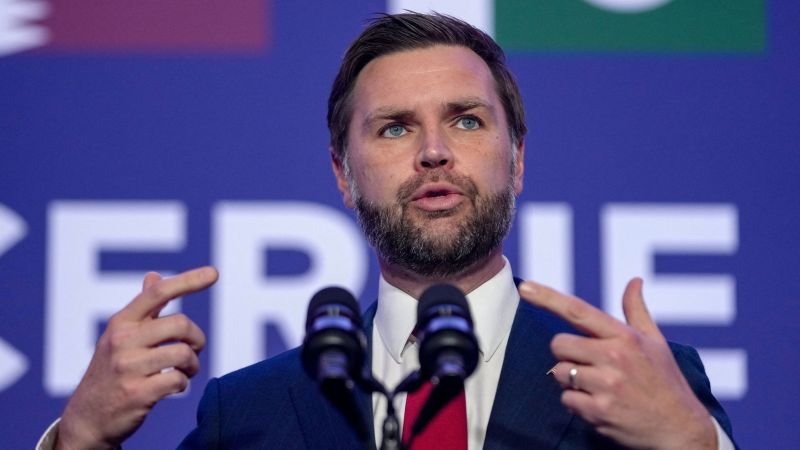
• Nuclear monitoring: US Vice President JD Vance said Tehran agreed to admit nuclear monitors into the country after negotiations in Switzerland. Iran denied making any new commitments. Meanwhile, President Donald Trump said preventing Iran from obtaining a nuclear weapon outweighs the potential economic consequences of prolonged military action.
• Strait of Hormuz: Iran agreed to set up a telephone hotline to “prevent and resolve any misunderstandings” with the US or other countries as ships cross the waterway. Traffic through the strait is steadily increasing, with at least two dozen commercial ships having transited in the past 24 hours, according to MarineTraffic data.
• Israel-Lebanon talks: The US will mediate another round of talks beginning Tuesday to end clashes in southern Lebanon between Iran-backed Hezbollah and Israel, according to a US State Department official.
38 Posts
The next round of US-mediated talks between Israel and Lebanon, which are expected to begin Tuesday, will include sessions on both the political and military tracks, as the US seeks to move forward on a “comprehensive peace and security agreement,” a State Department official said.
The latest round of talks come amid a fragile ceasefire in Lebanon, where continued violations by Hezbollah and Israel have threatened to derail the US-Iran negotiations.
The talks will begin with a joint military and political session, then a military session, followed by a political closing round, a State Department official said Monday.
The US side is being led by State Department counselor Dan Holler and Assistant Secretary of Defense for International Security Affairs Daniel Zimmerman, the official said.
“Our shared goal is to end the cycle of violence for good,” the official said. “We are enabling Israel and Lebanon to negotiate as two sovereign states and to find a way to have peace and security.”
“The talks will continue to advance a comprehensive peace and security agreement between the two countries,” the official said.
At least two dozen commercial vessels transited the Strait of Hormuz in the past 24 hours, according to MarineTraffic data, as US-Iran negotiations continue.
The ships included eight tankers and two cargo ships exiting the Persian Gulf and eight tankers and six cargo ships entering it. These figures mark a clear increase from depressed crossing rates seen during much of the Iran war from its start in late February.
In the months since, the strait has seen intense GPS spoofing — a form of navigation systems interference that causes vessels’ broadcast positions to appear in the wrong locations. Spoofing has subsided noticeably in recent days.
Iran has agreed to set up a Strait of Hormuz “telephone hotline” to “prevent and resolve any misunderstandings” with the US or other countries when ships are passing through the vital waterway.
Iran’s chief negotiator, Mohammad Bagher Ghalibaf, said Monday that Iran and the US had “reached an agreement to establish coordination mechanisms — a telephone hotline and a center so that if any ambiguity or issue arises, ships can contact that center.”
In an interview with Iranian state media on the flight back from negotiations in Switzerland, Ghalibaf said that from now on, the strait will be “managed under Iranian arrangements” and “never return to what it was before the war.”
He promised that Iran “will implement international laws precisely” and act quickly to resolve any problems or misunderstandings. “Naturally, just as problems may arise in Lebanon or elsewhere, problems can also arise in the Strait of Hormuz,” he said. “As you’ve seen, on some nights there have even been clashes.”
Ghalibaf said the hotline would help to ensure “the highest level of safety and traffic flow.”
When asked by a reporter about the purpose of the hotline, he said: “If Americans have any objection to anything, or if any vessels or ships need clarity on any route or anything … they [can] call.”
Ghalibaf also claimed that Iran’s access to $12 billion of its frozen funds and details surrounding the lifting of oil sanctions were finalized during the negotiations in Switzerland.
US Vice President JD Vance left Switzerland on Monday following a day of negotiations focused on finding a permanent end to the war with Iran. Vance departed after what he described as a “very, very good day” of negotiations between the US and Iran on Sunday.
Earlier Monday, Vance said Tehran had agreed to admit nuclear monitors into the country, describing this as “the first step in permanently denuclearizing” Iran. For its part, Iran denied making any new commitments on monitoring, with the Islamic Republic News Agency reporting that Tehran did not negotiate the nuclear issue during 18 hours of discussions.
Meanwhile, the US Treasury Department today issued a 60-day waiver on the sale of Iranian oil, following through on one of the key commitments.
This comes after Vance outlined an initiative for unfreezing Iranian assets that would grant the US approval over what Tehran can purchase using the money.
Here’s what else we’ve been covering:
Temporary lifted sanctions: The US Treasury’s 60-day waiver allows Iran to sell and deliver oil sanction-free until 12:01 a.m. on August 21 to nearly every country around the world, including the US.
Work to be done in Lebanon: Regarding the attacks between Iran-backed Hezbollah and Israel in southern Lebanon, Vance described the talks as a “work in progress.” An Israeli source said Israel is considering announcing “symbolic” withdrawals from minor areas in southern Lebanon.
US monitoring Lebanon ceasefire: The United States has set up a “monitoring mechanism” via US Central Command for the tenuous ceasefire in Lebanon, as repeated violations by Israel and Hezbollah have threatened to derail US-Iran negotiations, a US official said Monday.
Talks in the Middle East: US Secretary of State Marco Rubio will travel to the United Arab Emirates, Kuwait and Bahrain from Tuesday through Thursday to “discuss a range of regional priorities including the memorandum of understanding with Iran.” According to Qatari Prime Minister Mohammed bin Abdulrahman bin Jassim Al Thani, Iran is also set to hold talks with Persian Gulf states on regional security in the next stage of talks with the US.
CNN’s Adam Cancryn, Alejandra Jaramillo, Donald Judd, Haley Britzky, Jennifer Hansler, Kevin Liptak, Mohammed Tawfeeq, Sarah Tamimi and Tal Shalev contributed to this report.
President Donald Trump said Monday that preventing Iran from obtaining a nuclear weapon outweighs concerns about the potential economic consequences of prolonged military action, including the risk of a global depression.
He went on to argue that the threat posed by a nuclear weapon is a greater concern. “If they don’t abide by — well, nuclear weapon supersedes depression.”
Trump reiterated that military action remains on the table if Iran does not comply with the agreement.
“If Iran doesn’t live up to their agreement, or if they’re not behaving, I will do what I have to do,” he said.
Watch the moment:
Senate Majority Leader John Thune was not sold yet on the administration’s move to ease sanctions on Iran when he spoke with reporters on Monday afternoon.
“I’d like to see lifting of sanctions connected to steps taken by the Iranians to shut down their nuclear program,” he told CNN. When pressed if he’s seen Iran take those steps, Thune said, “I haven’t, but, then again, they’re still negotiating over there.”
Thune added, “I always want to tie lifting sanctions or financial incentives to conditions on our Iranian behavior, so right now part of it is getting the strait opened up, and I think that’s part of what this is, but in my view, at least the objective here has always got to be Iranian compliance with getting rid of their nuclear program in exchange for getting some of their financial incentives.”
Asked when the Senate will be briefed on the preliminary agreement with Iran and the state of negotiations, Thune replied, “hopefully sometime this week.”
The United States has set up a “monitoring mechanism” for the fragile ceasefire in Lebanon as repeated violations by Israel and Hezbollah have threatened to derail US-Iran negotiations, a US official said Monday.
The official said Secretary of State Marco Rubio spoke with both Israeli Prime Minister Benjamin Netanyahu and Lebanese President Joseph Aoun on Friday “about solidifying ceasefire and future talks.”
“As a result of those calls, the US started a monitoring mechanism via CENTCOM [US Central Command] so that our policymakers have real-time and accurate information about fighting in Lebanon,” the official said.
It is part of a “deconfliction mechanism” referenced by Vice President JD Vance earlier Monday, which Vance said was set up on Sunday afternoon Switzerland time.
“We’ve been, I think, very good at setting up what we’re calling a deconfliction mechanism,” Vance said. “What it really is is to say that when things happen, the sides are actually talking to one another.”
US-mediated negotiations between Israel and Lebanon are expected to start Tuesday morning.
CNN’s Haley Britzky contributed to this story.
President Donald Trump agreeing to offer Iran economic incentives is necessary and “what any negotiator would have to do,” Robert Malley, former US special envoy on Iran during the Biden administration, told CNN.
Malley said the Trump administration’s willingness to embrace sanctions relief is an “indictment of the policy that President Trump himself led.”
Remember: Trump, Secretary of State Marco Rubio and Vice President JD Vance for years have argued against deals that provided financial concessions to Iran, saying that giving the regime money fuels terror. But the agreement they’ve reached to end the war with Tehran is poised to hand the regime billions.
Trump tried to “deny that reality in his first term. He tried to deny it for the last year and a half. He’s now surrendered to that reality,” Malley added.
Malley said he believes “it is a good thing that we now are back to a situation where we’re going to trade economic relief for steps that Iran is going to take, which is the only way forward.”
CNN’s Jennifer Hansler and Andrew Kaczynski contributed to this report.
Vice President JD Vance on Monday brushed aside suggestions that Iranian Foreign Minister Abbas Araghchi intentionally snubbed him during weekend talks in Switzerland, saying social media speculation did not reflect the reality of the negotiations.
“No,” Vance said when asked if he felt snubbed by the diplomat and leading negotiator after a video circulated in which an Iranian official entered and exited a meeting room without greeting him. Iranian media had suggested that Araghchi purposely rejected the handshake.
“I mean, trust me, I’ve spent a lot of time dealing with the Iranians over the last few months,” Vance added, speaking to reporters before he boarded Air Force Two to head back to the US. “Sometimes I find them extremely confusing as negotiators.”
The vice president continued that despite a “social media firestorm” suggesting the talks were breaking down, “we proceeded to talk to them for like the next nine hours.”
Vance, who described Sunday as a “very, very good day” of negotiations, said the US and Iran made “a lot of good progress” during the talks, which he has characterized as a major step toward ending the war with Iran.
Before departing Switzerland, Vance urged reporters to “mistrust a little bit what you see coming out of Iranian social media.”
Vice President JD Vance departed Switzerland on Monday after a day of high-level negotiations aimed at ending the war with Iran.
“As much as this place is very beautiful, I can’t stay here for the next 60 days,” Vance said during a brief news conference before departing. He added that negotiators made “a lot of good progress” during the talks.
Vance arrived in Switzerland on Saturday after discussions, initially scheduled for Friday, were delayed by an escalation in fighting between Israel and Hezbollah in Lebanon.
Iran said Monday that its cooperation with the UN nuclear watchdog would continue “under the current procedures,” pushing back after senior US officials said Tehran had agreed to let International Atomic Energy Agency (IAEA) inspectors back into the country.
In comments carried by the official Islamic Republic News Agency (IRNA), Iranian Foreign Ministry spokesperson Esmaeil Baghaei said Iran’s interaction with the IAEA would proceed “in accordance with Iran’s obligations under safeguard agreements” and “in line with resolutions passed by Parliament and decisions of the Supreme National Security Council.”
A law passed by Iran’s parliament last summer restricted cooperation with the IAEA and suspended inspections. However, IRNA reported, cooperation with the IAEA has never been completely cut off and the new law allows IAEA inspectors to visit “active nuclear sites,” such as the Bushehr nuclear power plant, on a “case-by-case basis.”
Baghaei’s remarks came after US Vice President JD Vance said at a news conference in Switzerland, the site of US-Iran talks Sunday, that Iran had agreed to admit IAEA inspectors, a development he said “is probably what we’re most excited about as Americans.”
According to IRNA, Baghaei was responding to those US statements and said Iran has not taken on any new commitments. IRNA also reported, citing officials familiar with talks in Switzerland, that Tehran did not negotiate the nuclear issue during 18 hours of discussions and did not accept any new obligations.
It added that any visits to damaged nuclear sites and any arrangements involving Iran’s enriched uranium stockpile would depend on a specific mechanism to be agreed in a final deal after the 60-day negotiations set out in a memorandum of understanding between the US and Iran.
Syria will intervene in Lebanon only if requested by the Lebanese government, Syrian President Ahmad al-Sharaa reiterated in a televised interview on Sunday, dismissing any immediate intervention in his neighbor’s affairs after comments from US President Donald Trump.
Al-Sharaa told Al Mashhad news channel that if it serves the interests of both Lebanon and Syria, he is open to sitting down with Hezbollah, the Iran-backed Lebanese armed group he spent years fighting as a militant during the Syrian civil war.
Last week, Trump told reporters he had suggested to Israel that Syria should keep Hezbollah in check, because “they would do a better job.”
“(Trump’s) statements were interpreted as if Syrian forces would enter Lebanon tomorrow morning,” al-Sharaa said. He rejected any immediate intervention and instead suggested there could be “a positive role for Syria through Lebanon’s state institutions.”
Under former leader Hafez al-Assad, Syria dominated Lebanon’s political scene for nearly three decades until 2005. Syrian forces first deployed into the neighboring country during its civil war in 1976 — ostensibly as peacekeepers — but remained long after the fighting stopped and maintained a military presence that is seen by many as an occupation.
Al-Sharaa ousted Bashar al-Assad’s regime in Syria in late 2024 and has pursued policies markedly different from those of his predecessors, favoring nonintervention, opposing Iran — which backed Assad — and seeking dialogue with former adversaries such as Israel.
“Lebanon needs creative solutions. We cannot keep going around in circles and choosing the same old traditional solutions,” he said in an apparent reference to Syria’s past military intervention in Lebanon under the al-Assad regime.
Still, al-Sharaa said Syria possesses many tools to “positively influence” Lebanon.
“Why is Lebanon always given a choice between a civil war and an Israeli war? Why isn’t there a third option?” he said.
US Secretary of State Marco Rubio will travel to the Middle East this week — the first Cabinet official to visit the region following the signing of the US-Iran memorandum of understanding and amid fragile peace talks.
Rubio will travel to the United Arab Emirates, Kuwait and Bahrain from Tuesday through Thursday, State Department spokesperson Tommy Pigott announced Monday. Iran repeatedly attacked those countries during the course of the war, and even during the nominal ceasefire. Those attacks, which damaged both civilian infrastructure and US assets, also caused casualties, including the deaths of six US service members.
During his trip, Rubio “will discuss a range of regional priorities including the memorandum of understanding with Iran, efforts to secure full and free safe transit through the Strait of Hormuz, and the importance of peace and stability in the region,” Pigott said in a statement.
While in Bahrain, Rubio will meet with the Gulf Cooperation Council (GCC) “to discuss shared priorities across the region,” Pigott said.
The GCC is expected to play a key role in implementing elements of the MOU, especially around the Strait of Hormuz, and a regional source told CNN that the administration is looking to the multilateral body to lead efforts to address Iran’s ballistic missiles and support for proxies.
After the first full day of talks between the US and Iran, negotiators agreed to create a “deconfliction cell” for Lebanon to ensure a ceasefire there, facilitated by Qatar and Pakistan.
Iranian Foreign Minister Abbas Aragchi said it would be the “first real test” of the effort. Notably, Israel was not mentioned in the joint statement about the mechanism, and it’s not clear that Prime Minister Benjamin Netanyahu has signed off on the idea.
In a press briefing on Monday, a spokesperson for Netanyahu’s office didn’t acknowledge the mechanism. “Israel is not a party to of this (memorandum of understanding) or of the negotiations with Iran,” said David Mencer.
There are few details about the “deconfliction cell,” but the effort would apparently aim to prevent the Israeli military from inadvertently clashing with the Lebanese military. After a general and several other Lebanese officers were killed in an Israeli strike earlier this month, the Israel Defense Forces (IDF) said movement in the area “requires coordination.”
We have seen such mechanisms in Syria in the past. In 2015, the US and Russia established a deconfliction line to keep their military forces apart. Israel set up a similar line with Russia at around the same time. But those were between militaries that were trying to avoid unintentional run-ins.
Israel and Hezbollah, on the other hand, are actively targeting each other. That doesn’t require a deconfliction mechanism; it requires mutually agreed-upon terms to end the conflict. And that agreement doesn’t exist between Israel and Hezbollah.
After the November 2024 ceasefire in Lebanon, the US and France created a monitoring mechanism led by an American general that was supposed to open lines of communication between the militaries of Israel and Lebanon. The mechanism paved the way for discussions at the civilian level, but it ultimately proved ineffective at decisively ending the conflict.
Meetings with Persian Gulf countries are expected in the next stage of US-Iranian talks, according to Qatari Prime Minister Mohammed bin Abdulrahman bin Jassim Al Thani.
“There are preparations for Gulf meetings in the next stage to discuss regional security,” he said in an interview with Al Jazeera, adding that Qatar wants to see Iranian cooperation with Persian Gulf countries and a “high level of trust.”
“What Iran did toward us and toward our brothers during the war is unacceptable,” he said, referencing Iranian strikes in the region, including on Qatar’s Ras Laffan liquefied natural gas hub in March.
On Lebanon: Al Thani — who also serves as foreign minister — commended the US response to Israeli actions in Lebanon, telling Al Jazeera that it is “the right role.”
Remember: Mediators Pakistan and Qatar said the US and Iran agreed to establish a High-Level Committee to provide “political oversight on the mediation.” Negotiators reporting to the committee will lead groups focused on nuclear issues, sanctions and other means to implement the US-Iran agreement, the mediators said in a joint statement.
The Trump administration is temporarily lifting sanctions on the sale of Iranian oil, following through on one of the key commitments made in its extended ceasefire agreement.
The 60-day waiver issued Monday came on the heels of negotiations in Switzerland over the weekend between the US and Iran, which US Treasury Secretary Scott Bessent characterized as “productive talks.”
The waiver allows Iran to sell and deliver oil sanction-free until 12:01 a.m. on August 21 to nearly every country around the world, including the US.
That could represent a major boon to Iran’s economy following years of harsh restrictions on its ability to export its oil — a change that Trump administration negotiators agreed in an effort to convince Iran to fully reopen the Strait of Hormuz and alleviate a global energy supply crunch.
Sunday was a “very, very good” day of negotiations between the US and Iran in Switzerland, Vice President JD Vance said.
The vice president outlined a set of four major priorities as technical talks are expected to continue in the coming days. He said Iran has agreed to admit monitors from the International Atomic Energy Agency into the country, and said some progress has been made in negotiations to end the fighting between Israel and Hezbollah in southern Lebanon.
“We set the foundation — we haven’t built the house — but we’ve laid a successful foundation to get to a good place for the American people,” the vice president said, as he readies to depart Switzerland.
Here’s what else he just said:
Denies that Trump’s reproach to Iran’s president upended negotiations: “What we told the Iranians yesterday is when you guys engage in what us Millennials might call trash talk, you can’t expect the president of the United States not to respond and not to correct the record.”
On Iran agreeing to allow in nuclear inspectors: “That is a major milestone for the American people, and the first step in permanently denuclearizing or permanently ending a nuclear weapons program in Iran, and that’s exactly what we wanted to do.”
Status of negotiations between Israel and Hezbollah: “This is a work in progress, but what we’ve done is actually set up the operation so that we can ensure it doesn’t spiral out of control in the future.”
An initiative for unfreezing Iranian assets: “We wanted to make sure that we set up a process where if we ever unfreeze Iranian assets, we can ensure that money, that Iranian money, goes to help the people of Iran and not to fund terrorism,” Vance said, adding that the US and Qatar would have approval over the process. “The money would actually go to buy American soy, American corn and American wheat for the benefit of the Iranian people,” he added, calling it a “classic Trump deal.”
Iranian President Masoud Pezeshkian will visit Pakistan on Tuesday, according to the state-affiliated Tasim news agency, in his first trip abroad since 2025.
The visit will likely be a one-day trip, Habib Abbasi, Director General of Public Relations of the Presidential Office, was cited as saying by Tasnim.
Pezeshkian last visited Pakistan in August 2025.
Vice President JD Vance described an initiative for unfreezing Iranian assets that would grant the US approval over what Tehran can purchase using the money.
He said the plan, conceived by President Donald Trump’s son-in-law Jared Kushner, would require the money be spent on American agricultural products.
“We wanted to make sure that we set up a process where if we ever unfreeze Iranian assets, we can ensure that money, that Iranian money, goes to help the people of Iran and not to fund terrorism,” he said.
The plan, devised in coordination with Qatar, would direct the funds toward “American soy, American corn and American wheat for the benefit of the Iranian people,” he said.
Many Iran hawks have criticized Trump’s agreement with Iran for allowing financial relief to flow into the country. While the US says unfrozen Iranian assets won’t be put toward funding terrorist groups, some have suggested the humanitarian assistance would free up other money for malign purposes.
The set-up Vance described bears some resemblance to a mechanism included in an agreement under President Joe Biden, when Iranian funds were moved from restricted accounts in South Korea as part of a September 2023 deal to release five Americans who had been detained in Iran.
Iran was only going to be permitted to use the money for specific humanitarian purchases like food, agricultural products and medicine, and Biden administration officials stressed each transaction using the funds would be monitored by the US Treasury Department.
Vance described the arrangement as “a classic Trump deal, where if Iranian assets are ever unfrozen, they’re going to go to make American farmers richer and to feed the Iranian people.”
Vice President JD Vance denied that bombastic statements from President Donald Trump upended weekend negotiations with Iran.
“No, they didn’t throw a wrench in the system,” Vance said from Obbürgen, Switzerland, after he concluded hours of discussions over a final deal.
Trump, who spent the weekend at Camp David, had threatened renewed attacks on Iran in a phone call with Fox News and told Iran’s president to “watch his mouth” as the talks were unfolding. Vance acknowledged it caused brief interruption in the talks.
“There was a little bit of threatening, there was a little bit of whining, but at the end of the day, the talks continued, and we made great progress,” he said.
Vance said the US told the Iranians that Trump would respond to their statements to correct the record.
“What we told the Iranians yesterday is when you guys engage in what us millennials might call trash talk, you can’t expect the president of the United States not to respond and not to correct the record,” he said.
• Nuclear monitoring: US Vice President JD Vance said Tehran agreed to admit nuclear monitors into the country after negotiations in Switzerland. Iran denied making any new commitments. Meanwhile, President Donald Trump said preventing Iran from obtaining a nuclear weapon outweighs the potential economic consequences of prolonged military action.
• Strait of Hormuz: Iran agreed to set up a telephone hotline to “prevent and resolve any misunderstandings” with the US or other countries as ships cross the waterway. Traffic through the strait is steadily increasing, with at least two dozen commercial ships having transited in the past 24 hours, according to MarineTraffic data.
• Israel-Lebanon talks: The US will mediate another round of talks beginning Tuesday to end clashes in southern Lebanon between Iran-backed Hezbollah and Israel, according to a US State Department official.
The next round of US-mediated talks between Israel and Lebanon, which are expected to begin Tuesday, will include sessions on both the political and military tracks, as the US seeks to move forward on a “comprehensive peace and security agreement,” a State Department official said.
The latest round of talks come amid a fragile ceasefire in Lebanon, where continued violations by Hezbollah and Israel have threatened to derail the US-Iran negotiations.
The talks will begin with a joint military and political session, then a military session, followed by a political closing round, a State Department official said Monday.
The US side is being led by State Department counselor Dan Holler and Assistant Secretary of Defense for International Security Affairs Daniel Zimmerman, the official said.
“Our shared goal is to end the cycle of violence for good,” the official said. “We are enabling Israel and Lebanon to negotiate as two sovereign states and to find a way to have peace and security.”
“The talks will continue to advance a comprehensive peace and security agreement between the two countries,” the official said.
At least two dozen commercial vessels transited the Strait of Hormuz in the past 24 hours, according to MarineTraffic data, as US-Iran negotiations continue.
The ships included eight tankers and two cargo ships exiting the Persian Gulf and eight tankers and six cargo ships entering it. These figures mark a clear increase from depressed crossing rates seen during much of the Iran war from its start in late February.
In the months since, the strait has seen intense GPS spoofing — a form of navigation systems interference that causes vessels’ broadcast positions to appear in the wrong locations. Spoofing has subsided noticeably in recent days.
Iran has agreed to set up a Strait of Hormuz “telephone hotline” to “prevent and resolve any misunderstandings” with the US or other countries when ships are passing through the vital waterway.
Iran’s chief negotiator, Mohammad Bagher Ghalibaf, said Monday that Iran and the US had “reached an agreement to establish coordination mechanisms — a telephone hotline and a center so that if any ambiguity or issue arises, ships can contact that center.”
In an interview with Iranian state media on the flight back from negotiations in Switzerland, Ghalibaf said that from now on, the strait will be “managed under Iranian arrangements” and “never return to what it was before the war.”
He promised that Iran “will implement international laws precisely” and act quickly to resolve any problems or misunderstandings. “Naturally, just as problems may arise in Lebanon or elsewhere, problems can also arise in the Strait of Hormuz,” he said. “As you’ve seen, on some nights there have even been clashes.”
Ghalibaf said the hotline would help to ensure “the highest level of safety and traffic flow.”
When asked by a reporter about the purpose of the hotline, he said: “If Americans have any objection to anything, or if any vessels or ships need clarity on any route or anything … they [can] call.”
Ghalibaf also claimed that Iran’s access to $12 billion of its frozen funds and details surrounding the lifting of oil sanctions were finalized during the negotiations in Switzerland.
US Vice President JD Vance left Switzerland on Monday following a day of negotiations focused on finding a permanent end to the war with Iran. Vance departed after what he described as a “very, very good day” of negotiations between the US and Iran on Sunday.
Earlier Monday, Vance said Tehran had agreed to admit nuclear monitors into the country, describing this as “the first step in permanently denuclearizing” Iran. For its part, Iran denied making any new commitments on monitoring, with the Islamic Republic News Agency reporting that Tehran did not negotiate the nuclear issue during 18 hours of discussions.
Meanwhile, the US Treasury Department today issued a 60-day waiver on the sale of Iranian oil, following through on one of the key commitments.
This comes after Vance outlined an initiative for unfreezing Iranian assets that would grant the US approval over what Tehran can purchase using the money.
Here’s what else we’ve been covering:
Temporary lifted sanctions: The US Treasury’s 60-day waiver allows Iran to sell and deliver oil sanction-free until 12:01 a.m. on August 21 to nearly every country around the world, including the US.
Work to be done in Lebanon: Regarding the attacks between Iran-backed Hezbollah and Israel in southern Lebanon, Vance described the talks as a “work in progress.” An Israeli source said Israel is considering announcing “symbolic” withdrawals from minor areas in southern Lebanon.
US monitoring Lebanon ceasefire: The United States has set up a “monitoring mechanism” via US Central Command for the tenuous ceasefire in Lebanon, as repeated violations by Israel and Hezbollah have threatened to derail US-Iran negotiations, a US official said Monday.
Talks in the Middle East: US Secretary of State Marco Rubio will travel to the United Arab Emirates, Kuwait and Bahrain from Tuesday through Thursday to “discuss a range of regional priorities including the memorandum of understanding with Iran.” According to Qatari Prime Minister Mohammed bin Abdulrahman bin Jassim Al Thani, Iran is also set to hold talks with Persian Gulf states on regional security in the next stage of talks with the US.
CNN’s Adam Cancryn, Alejandra Jaramillo, Donald Judd, Haley Britzky, Jennifer Hansler, Kevin Liptak, Mohammed Tawfeeq, Sarah Tamimi and Tal Shalev contributed to this report.
President Donald Trump said Monday that preventing Iran from obtaining a nuclear weapon outweighs concerns about the potential economic consequences of prolonged military action, including the risk of a global depression.
He went on to argue that the threat posed by a nuclear weapon is a greater concern. “If they don’t abide by — well, nuclear weapon supersedes depression.”
Trump reiterated that military action remains on the table if Iran does not comply with the agreement.
“If Iran doesn’t live up to their agreement, or if they’re not behaving, I will do what I have to do,” he said.
Watch the moment:
Senate Majority Leader John Thune was not sold yet on the administration’s move to ease sanctions on Iran when he spoke with reporters on Monday afternoon.
“I’d like to see lifting of sanctions connected to steps taken by the Iranians to shut down their nuclear program,” he told CNN. When pressed if he’s seen Iran take those steps, Thune said, “I haven’t, but, then again, they’re still negotiating over there.”
Thune added, “I always want to tie lifting sanctions or financial incentives to conditions on our Iranian behavior, so right now part of it is getting the strait opened up, and I think that’s part of what this is, but in my view, at least the objective here has always got to be Iranian compliance with getting rid of their nuclear program in exchange for getting some of their financial incentives.”
Asked when the Senate will be briefed on the preliminary agreement with Iran and the state of negotiations, Thune replied, “hopefully sometime this week.”
The United States has set up a “monitoring mechanism” for the fragile ceasefire in Lebanon as repeated violations by Israel and Hezbollah have threatened to derail US-Iran negotiations, a US official said Monday.
The official said Secretary of State Marco Rubio spoke with both Israeli Prime Minister Benjamin Netanyahu and Lebanese President Joseph Aoun on Friday “about solidifying ceasefire and future talks.”
“As a result of those calls, the US started a monitoring mechanism via CENTCOM [US Central Command] so that our policymakers have real-time and accurate information about fighting in Lebanon,” the official said.
It is part of a “deconfliction mechanism” referenced by Vice President JD Vance earlier Monday, which Vance said was set up on Sunday afternoon Switzerland time.
“We’ve been, I think, very good at setting up what we’re calling a deconfliction mechanism,” Vance said. “What it really is is to say that when things happen, the sides are actually talking to one another.”
US-mediated negotiations between Israel and Lebanon are expected to start Tuesday morning.
CNN’s Haley Britzky contributed to this story.
President Donald Trump agreeing to offer Iran economic incentives is necessary and “what any negotiator would have to do,” Robert Malley, former US special envoy on Iran during the Biden administration, told CNN.
Malley said the Trump administration’s willingness to embrace sanctions relief is an “indictment of the policy that President Trump himself led.”
Remember: Trump, Secretary of State Marco Rubio and Vice President JD Vance for years have argued against deals that provided financial concessions to Iran, saying that giving the regime money fuels terror. But the agreement they’ve reached to end the war with Tehran is poised to hand the regime billions.
Trump tried to “deny that reality in his first term. He tried to deny it for the last year and a half. He’s now surrendered to that reality,” Malley added.
Malley said he believes “it is a good thing that we now are back to a situation where we’re going to trade economic relief for steps that Iran is going to take, which is the only way forward.”
CNN’s Jennifer Hansler and Andrew Kaczynski contributed to this report.
Vice President JD Vance on Monday brushed aside suggestions that Iranian Foreign Minister Abbas Araghchi intentionally snubbed him during weekend talks in Switzerland, saying social media speculation did not reflect the reality of the negotiations.
“No,” Vance said when asked if he felt snubbed by the diplomat and leading negotiator after a video circulated in which an Iranian official entered and exited a meeting room without greeting him. Iranian media had suggested that Araghchi purposely rejected the handshake.
“I mean, trust me, I’ve spent a lot of time dealing with the Iranians over the last few months,” Vance added, speaking to reporters before he boarded Air Force Two to head back to the US. “Sometimes I find them extremely confusing as negotiators.”
The vice president continued that despite a “social media firestorm” suggesting the talks were breaking down, “we proceeded to talk to them for like the next nine hours.”
Vance, who described Sunday as a “very, very good day” of negotiations, said the US and Iran made “a lot of good progress” during the talks, which he has characterized as a major step toward ending the war with Iran.
Before departing Switzerland, Vance urged reporters to “mistrust a little bit what you see coming out of Iranian social media.”
Vice President JD Vance departed Switzerland on Monday after a day of high-level negotiations aimed at ending the war with Iran.
“As much as this place is very beautiful, I can’t stay here for the next 60 days,” Vance said during a brief news conference before departing. He added that negotiators made “a lot of good progress” during the talks.
Vance arrived in Switzerland on Saturday after discussions, initially scheduled for Friday, were delayed by an escalation in fighting between Israel and Hezbollah in Lebanon.
Iran said Monday that its cooperation with the UN nuclear watchdog would continue “under the current procedures,” pushing back after senior US officials said Tehran had agreed to let International Atomic Energy Agency (IAEA) inspectors back into the country.
In comments carried by the official Islamic Republic News Agency (IRNA), Iranian Foreign Ministry spokesperson Esmaeil Baghaei said Iran’s interaction with the IAEA would proceed “in accordance with Iran’s obligations under safeguard agreements” and “in line with resolutions passed by Parliament and decisions of the Supreme National Security Council.”
A law passed by Iran’s parliament last summer restricted cooperation with the IAEA and suspended inspections. However, IRNA reported, cooperation with the IAEA has never been completely cut off and the new law allows IAEA inspectors to visit “active nuclear sites,” such as the Bushehr nuclear power plant, on a “case-by-case basis.”
Baghaei’s remarks came after US Vice President JD Vance said at a news conference in Switzerland, the site of US-Iran talks Sunday, that Iran had agreed to admit IAEA inspectors, a development he said “is probably what we’re most excited about as Americans.”
According to IRNA, Baghaei was responding to those US statements and said Iran has not taken on any new commitments. IRNA also reported, citing officials familiar with talks in Switzerland, that Tehran did not negotiate the nuclear issue during 18 hours of discussions and did not accept any new obligations.
It added that any visits to damaged nuclear sites and any arrangements involving Iran’s enriched uranium stockpile would depend on a specific mechanism to be agreed in a final deal after the 60-day negotiations set out in a memorandum of understanding between the US and Iran.
Syria will intervene in Lebanon only if requested by the Lebanese government, Syrian President Ahmad al-Sharaa reiterated in a televised interview on Sunday, dismissing any immediate intervention in his neighbor’s affairs after comments from US President Donald Trump.
Al-Sharaa told Al Mashhad news channel that if it serves the interests of both Lebanon and Syria, he is open to sitting down with Hezbollah, the Iran-backed Lebanese armed group he spent years fighting as a militant during the Syrian civil war.
Last week, Trump told reporters he had suggested to Israel that Syria should keep Hezbollah in check, because “they would do a better job.”
“(Trump’s) statements were interpreted as if Syrian forces would enter Lebanon tomorrow morning,” al-Sharaa said. He rejected any immediate intervention and instead suggested there could be “a positive role for Syria through Lebanon’s state institutions.”
Under former leader Hafez al-Assad, Syria dominated Lebanon’s political scene for nearly three decades until 2005. Syrian forces first deployed into the neighboring country during its civil war in 1976 — ostensibly as peacekeepers — but remained long after the fighting stopped and maintained a military presence that is seen by many as an occupation.
Al-Sharaa ousted Bashar al-Assad’s regime in Syria in late 2024 and has pursued policies markedly different from those of his predecessors, favoring nonintervention, opposing Iran — which backed Assad — and seeking dialogue with former adversaries such as Israel.
“Lebanon needs creative solutions. We cannot keep going around in circles and choosing the same old traditional solutions,” he said in an apparent reference to Syria’s past military intervention in Lebanon under the al-Assad regime.
Still, al-Sharaa said Syria possesses many tools to “positively influence” Lebanon.
“Why is Lebanon always given a choice between a civil war and an Israeli war? Why isn’t there a third option?” he said.
US Secretary of State Marco Rubio will travel to the Middle East this week — the first Cabinet official to visit the region following the signing of the US-Iran memorandum of understanding and amid fragile peace talks.
Rubio will travel to the United Arab Emirates, Kuwait and Bahrain from Tuesday through Thursday, State Department spokesperson Tommy Pigott announced Monday. Iran repeatedly attacked those countries during the course of the war, and even during the nominal ceasefire. Those attacks, which damaged both civilian infrastructure and US assets, also caused casualties, including the deaths of six US service members.
During his trip, Rubio “will discuss a range of regional priorities including the memorandum of understanding with Iran, efforts to secure full and free safe transit through the Strait of Hormuz, and the importance of peace and stability in the region,” Pigott said in a statement.
While in Bahrain, Rubio will meet with the Gulf Cooperation Council (GCC) “to discuss shared priorities across the region,” Pigott said.
The GCC is expected to play a key role in implementing elements of the MOU, especially around the Strait of Hormuz, and a regional source told CNN that the administration is looking to the multilateral body to lead efforts to address Iran’s ballistic missiles and support for proxies.
After the first full day of talks between the US and Iran, negotiators agreed to create a “deconfliction cell” for Lebanon to ensure a ceasefire there, facilitated by Qatar and Pakistan.
Iranian Foreign Minister Abbas Aragchi said it would be the “first real test” of the effort. Notably, Israel was not mentioned in the joint statement about the mechanism, and it’s not clear that Prime Minister Benjamin Netanyahu has signed off on the idea.
In a press briefing on Monday, a spokesperson for Netanyahu’s office didn’t acknowledge the mechanism. “Israel is not a party to of this (memorandum of understanding) or of the negotiations with Iran,” said David Mencer.
There are few details about the “deconfliction cell,” but the effort would apparently aim to prevent the Israeli military from inadvertently clashing with the Lebanese military. After a general and several other Lebanese officers were killed in an Israeli strike earlier this month, the Israel Defense Forces (IDF) said movement in the area “requires coordination.”
We have seen such mechanisms in Syria in the past. In 2015, the US and Russia established a deconfliction line to keep their military forces apart. Israel set up a similar line with Russia at around the same time. But those were between militaries that were trying to avoid unintentional run-ins.
Israel and Hezbollah, on the other hand, are actively targeting each other. That doesn’t require a deconfliction mechanism; it requires mutually agreed-upon terms to end the conflict. And that agreement doesn’t exist between Israel and Hezbollah.
After the November 2024 ceasefire in Lebanon, the US and France created a monitoring mechanism led by an American general that was supposed to open lines of communication between the militaries of Israel and Lebanon. The mechanism paved the way for discussions at the civilian level, but it ultimately proved ineffective at decisively ending the conflict.
Meetings with Persian Gulf countries are expected in the next stage of US-Iranian talks, according to Qatari Prime Minister Mohammed bin Abdulrahman bin Jassim Al Thani.
“There are preparations for Gulf meetings in the next stage to discuss regional security,” he said in an interview with Al Jazeera, adding that Qatar wants to see Iranian cooperation with Persian Gulf countries and a “high level of trust.”
“What Iran did toward us and toward our brothers during the war is unacceptable,” he said, referencing Iranian strikes in the region, including on Qatar’s Ras Laffan liquefied natural gas hub in March.
On Lebanon: Al Thani — who also serves as foreign minister — commended the US response to Israeli actions in Lebanon, telling Al Jazeera that it is “the right role.”
Remember: Mediators Pakistan and Qatar said the US and Iran agreed to establish a High-Level Committee to provide “political oversight on the mediation.” Negotiators reporting to the committee will lead groups focused on nuclear issues, sanctions and other means to implement the US-Iran agreement, the mediators said in a joint statement.
The Trump administration is temporarily lifting sanctions on the sale of Iranian oil, following through on one of the key commitments made in its extended ceasefire agreement.
The 60-day waiver issued Monday came on the heels of negotiations in Switzerland over the weekend between the US and Iran, which US Treasury Secretary Scott Bessent characterized as “productive talks.”
The waiver allows Iran to sell and deliver oil sanction-free until 12:01 a.m. on August 21 to nearly every country around the world, including the US.
That could represent a major boon to Iran’s economy following years of harsh restrictions on its ability to export its oil — a change that Trump administration negotiators agreed in an effort to convince Iran to fully reopen the Strait of Hormuz and alleviate a global energy supply crunch.
Sunday was a “very, very good” day of negotiations between the US and Iran in Switzerland, Vice President JD Vance said.
The vice president outlined a set of four major priorities as technical talks are expected to continue in the coming days. He said Iran has agreed to admit monitors from the International Atomic Energy Agency into the country, and said some progress has been made in negotiations to end the fighting between Israel and Hezbollah in southern Lebanon.
“We set the foundation — we haven’t built the house — but we’ve laid a successful foundation to get to a good place for the American people,” the vice president said, as he readies to depart Switzerland.
Here’s what else he just said:
Denies that Trump’s reproach to Iran’s president upended negotiations: “What we told the Iranians yesterday is when you guys engage in what us Millennials might call trash talk, you can’t expect the president of the United States not to respond and not to correct the record.”
On Iran agreeing to allow in nuclear inspectors: “That is a major milestone for the American people, and the first step in permanently denuclearizing or permanently ending a nuclear weapons program in Iran, and that’s exactly what we wanted to do.”
Status of negotiations between Israel and Hezbollah: “This is a work in progress, but what we’ve done is actually set up the operation so that we can ensure it doesn’t spiral out of control in the future.”
An initiative for unfreezing Iranian assets: “We wanted to make sure that we set up a process where if we ever unfreeze Iranian assets, we can ensure that money, that Iranian money, goes to help the people of Iran and not to fund terrorism,” Vance said, adding that the US and Qatar would have approval over the process. “The money would actually go to buy American soy, American corn and American wheat for the benefit of the Iranian people,” he added, calling it a “classic Trump deal.”
Iranian President Masoud Pezeshkian will visit Pakistan on Tuesday, according to the state-affiliated Tasim news agency, in his first trip abroad since 2025.
The visit will likely be a one-day trip, Habib Abbasi, Director General of Public Relations of the Presidential Office, was cited as saying by Tasnim.
Pezeshkian last visited Pakistan in August 2025.
Vice President JD Vance described an initiative for unfreezing Iranian assets that would grant the US approval over what Tehran can purchase using the money.
He said the plan, conceived by President Donald Trump’s son-in-law Jared Kushner, would require the money be spent on American agricultural products.
“We wanted to make sure that we set up a process where if we ever unfreeze Iranian assets, we can ensure that money, that Iranian money, goes to help the people of Iran and not to fund terrorism,” he said.
The plan, devised in coordination with Qatar, would direct the funds toward “American soy, American corn and American wheat for the benefit of the Iranian people,” he said.
Many Iran hawks have criticized Trump’s agreement with Iran for allowing financial relief to flow into the country. While the US says unfrozen Iranian assets won’t be put toward funding terrorist groups, some have suggested the humanitarian assistance would free up other money for malign purposes.
The set-up Vance described bears some resemblance to a mechanism included in an agreement under President Joe Biden, when Iranian funds were moved from restricted accounts in South Korea as part of a September 2023 deal to release five Americans who had been detained in Iran.
Iran was only going to be permitted to use the money for specific humanitarian purchases like food, agricultural products and medicine, and Biden administration officials stressed each transaction using the funds would be monitored by the US Treasury Department.
Vance described the arrangement as “a classic Trump deal, where if Iranian assets are ever unfrozen, they’re going to go to make American farmers richer and to feed the Iranian people.”
Vice President JD Vance denied that bombastic statements from President Donald Trump upended weekend negotiations with Iran.
“No, they didn’t throw a wrench in the system,” Vance said from Obbürgen, Switzerland, after he concluded hours of discussions over a final deal.
Trump, who spent the weekend at Camp David, had threatened renewed attacks on Iran in a phone call with Fox News and told Iran’s president to “watch his mouth” as the talks were unfolding. Vance acknowledged it caused brief interruption in the talks.
“There was a little bit of threatening, there was a little bit of whining, but at the end of the day, the talks continued, and we made great progress,” he said.
Vance said the US told the Iranians that Trump would respond to their statements to correct the record.
“What we told the Iranians yesterday is when you guys engage in what us millennials might call trash talk, you can’t expect the president of the United States not to respond and not to correct the record,” he said.





Responses