
Isaias, an artist and designer living in Atlanta, had a few things in mind for his first trip to China. He knew he wanted to see the urban metropolis of Shanghai, as well as Chongqing, an instagrammable megacity with a cyberpunk aesthetic in China’s mountainous southwest.
But his main motivation for flying across the world wasn’t wanderlust. It was an effort to save thousands of dollars on a medical procedure not covered by his insurance at home.
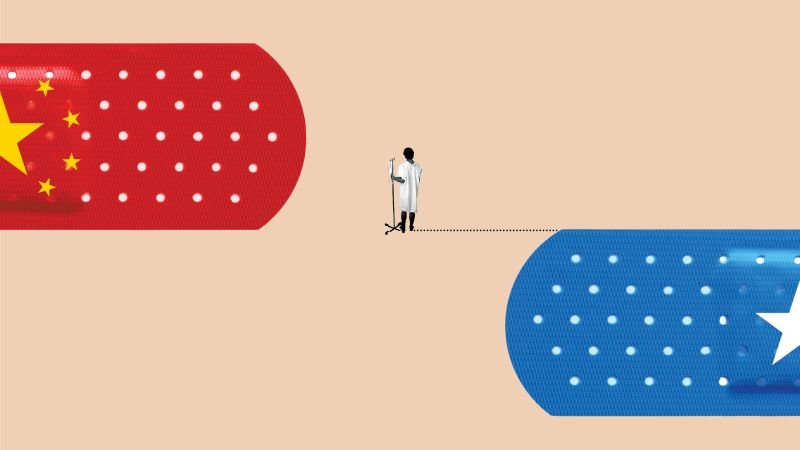
He’s one of a growing number of Americans seeking cheaper medical treatment abroad, for everything from cancer to dental care, as healthcare costs at home hit record levels.
During a December checkup, a doctor told Isaias, 26, that he had an abnormal growth on his gallbladder. Though it was non-cancerous, he would need to have it surgically removed within a year, the doctor said.
In Atlanta, the out-of-pocket cost was close to $10,000, said Isaias, who requested that only his first name be used to discuss his personal medical history.
His father started looking for alternative options overseas, including in the UK and in China. While UK costs were comparable, a medical tourism agency connected them with a facility in Shenzhen, which quoted them less than $2,000 for the same procedure.
“We were trying to stay local, just to avoid delays or anything. But [the cost] was just incredible,” Isaias said. “So we were just trying to find the best way.”
The agency helped him apply for a 90-day tourist visa and book a one-way flight in March. Once there, someone from the agency helped him set up the Chinese phone apps he would need to navigate daily life. The surgery and recovery took about 48 hours, he said. After a few days exploring Shenzhen, he went to Chongqing, and left the rest of his trip open-ended with vague plans to visit Shanghai and Hong Kong next.
“I just came to Chongqing because I see it all over Instagram,” he said. “I figured since I’m already here in China, I’d just see a few cities.”
Asian nations are increasingly eager to court visitors like Isaias, who want more than a holiday, as they try to boost their local economies.
The Medical Tourism Association, a non-profit that helps promote and facilitate medical tourism, estimated the global industry to be worth more than $100 billion as of 2024 and growing at an annual rate of 15 to 25%.
The financial incentive in becoming a medical tourism destination is evident in South Korea, which welcomed more than 2 million foreign patients last year, its third consecutive record-breaking year. Those tourists and their companions spent more than $8 billion and generated more than $15 billion in domestic production, according to the Korea Institute for Industrial Economics and Trade.
Visitors from the United States, the largest cohort after those from China, Japan and Taiwan, increased by 70.4% to 173,363 patients year on year, the nation’s Ministry of Health and Welfare said.
As medical technology in the region improves, and western healthcare costs climb, other nations including China, Vietnam and the Philippines are competing to rebrand themselves as medical tourism hubs too. Executives at medical facilities in Asia said their success will likely hinge on marketing and government efforts to appeal to patients overseas.
“Redefining the image of the country as a safe destination, as a modern, progressive country, as an accessible country, is something that needs to be done,” said Dennis Serrano, president of St. Luke’s Medical Center in the Philippines’ Quezon City. The health facility began partnering with the county’s tourism department last year.
The biggest risk travelers face is medical complications from their procedures without recourse after returning home, said Renée-Marie Stephano, chief executive of Global Healthcare Accreditation, which offers certification to hospitals that meet international safety standards.
Other potential pitfalls include varying quality of medical care, language barriers and unfamiliarity with drug or device standards, she said.
Of about 5% of hospitals globally that have international patient departments, Stephano estimated less than 1% are internationally accredited.
“It can be very challenging if patients are going to facilities that don’t have a dedicated person to help them with their experience. There’s a lot of trust that needs to be established,” she said.
Zeeshan Zaman, who founded the medical tourism platform Clinics on Call in 2014, said up until 18 months ago, less than 10% of his clientele was interested in medical services in Asia. Now, he estimates that about one in every four inquiries is about China.
Previously, medical tourists from North America largely preferred countries in the same hemisphere, such as Mexico, Brazil and Colombia, Zaman said. Price-sensitive patients from Eastern Europe and the Middle East often went to Turkey or India. But wait times and medical costs in the traditional go-to destinations are rising, he said.
“First of all, there are long queues. Secondly, the prices are quite high,” he said. “People are looking for alternatives, and some of these Asian countries are providing that.”
For example, he said one treatment that’s been in high demand –– CAR-T cell therapy, a form of immunotherapy that combats blood cancers –– can cost more than $500,000 in Europe, compared with about $60,000 in China.
The growth in the number of people seeking treatment abroad comes as healthcare costs in the US have climbed to record levels. Data from the Centers for Medicare and Medicaid Services showed US national health expenditure reached nearly $5.3 trillion dollars in 2024, more than double what it was in 2010.
The cost advantage, loosening visa restrictions and a burgeoning reputation for reliable medical care has given China a leg up against other aspiring healthcare hotspots. Last year, Chinese hospitals received 1.28 million foreigners, a 73% increase from 2022, state media reported.
“I was a little bit anxious about it all,” said Caroline Stockler, 61, who had toyed with the idea of getting liposuction for over a year before she flew to Shenzhen in May. She said having the procedure in New Zealand would have cost about three times the entire trip to China.
A medical tourism agency helped arrange local transportation, translation and payments, and she purchased travel insurance and asked her local doctor to oversee her recovery once she returned home.
“I’ve been so fortunate, I’ve had no complications, nothing. I think the hygiene was extremely high. Never have I stood naked and just been doused in iodine three times.”
In November, a British woman with the social media username AmieinChina posted on TikTok about her decision to travel to Beijing for diagnostics tests. Free treatment in the UK came with long waits, she said. In China, the cost of flights, lodging, food and a full checkup, which she estimated to total about $1,500, was still cheaper than private healthcare at home.
“I realized that it would take at least two weeks to even get an appointment,” she said in the first of an eight-part video series that garnered more than 1.8 million views. “I could have spoken to a specialist, had loads of tests, including the camera down the throat, everything, got all my results, and been put on a treatment plan in that time in China.”
After her TikTok went viral, Amie Brillu-Ogden said she received hundreds of comments and private messages asking her how to seek medical treatment in China. That gave her the idea to start her own consultancy.
“I was shocked at how many people resonated with exactly what I was saying,” said Brillu-Ogden, 32. “At first, obviously, you’re like, ‘Yay, my video is popular.’ But on the other hand, when you read the comments and you’re reading about people that have lost family members to cancer because the treatment wasn’t put in place early enough, or this thing wasn’t found, or this test wasn’t given, or they’re on a waiting list for nine months, it was like heartbreaking.”
While there are growing opportunities for such intermediaries, which advertise their services on Google and Chinese social media, turning a profit can be difficult, said Shijie Yu, chief marketing officer of Medora Health, which helped Isaias arrange his surgery in Shenzhen.
“Most people, they enter this field and think, ‘Oh, this is a great one, I can make a lot of profit, from there I can build an empire,’” she said. “But they end up failing to do it, because they didn’t realize how complex the entire thing could be.”
Part of the problem is that each new customer requires about 20 hours of communication with no guarantee of a sale, said Yu. Other Chinese medical tourism agents that she’s spoken to consider the work a side hustle rather than a full-time business.
Yu, who used to work at Amazon, launched the Medora Health website last year with two other founders, a Chinese surgeon and a former software engineer at Google. The company’s initial and largest client base is Bangladesh, but Yu said they also have worked with patients from Vietnam, the Middle East and the US.
Yu said it’s easier to make money facilitating cosmetic procedures, and she has seen a lot of US interest in rhinoplasty, breast augmentation and face lifts. To target this demographic, the company recently launched a sister website, called Medora Beauty.
“Everyone is trying so hard to get US patients,” she said. “The US is like the golden market.”





Responses