
• New wave of attacks: US Central Command says it carried out strikes on Iran for 90 minutes this morning, as tensions flare over the critical Strait of Hormuz. The strikes followed attacks overnight, which Tehran said killed at least seven military personnel in the southeast of Iran.
• Blockade underway: The US military says it has “redirected” two commercial vessels since reimposing its naval blockade of ships going to and from Iranian ports. It earlier said Iran has struck seven commercial ships in the last week, leaving nearly a dozen crew members killed, missing or injured.
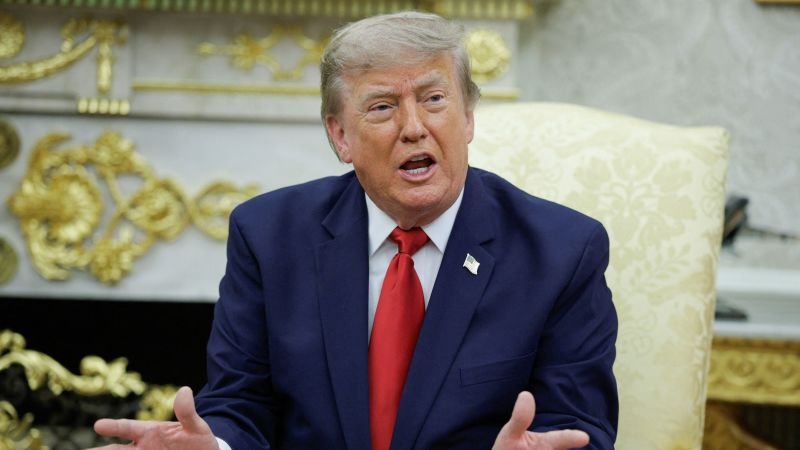
• Threat to infrastructure: US President Donald Trump renewed his threat to bomb Iranian civilian infrastructure unless Tehran returns to the negotiating table. Global oil prices and US gas prices rose again this morning.
29 Posts
The US military says it has redirected two commercial vessels since reinstating a naval blockade against Iranian ports.
“Since restarting the naval blockade against Iranian ports 17 hours ago, U.S. forces have redirected 2 commercial vessels attempting to run the blockade. The U.S. military remains vigilant and prepared to ensure full compliance,” US Central Command said in a social media post on Wednesday.
The blockade of ships heading to and from Iranian ports began around 4 p.m. ET on Tuesday. The US had previously enforced a blockade on Iranian ports for roughly two months between April and June.
CNN’s Haley Britzky contributed to this report.
More than 260 people have been injured in recent US strikes against Iran, the country’s Health Ministry said today.
This includes at least three women and six children, according to Hossein Kermanpour, the Health Ministry’s spokesperson. “So far, 222 of the injured have been treated and discharged,” he added.
Kermanpour said the injuries were sustained during the “latest wave of attacks against Iran,” but did not specify an exact timeframe.
CNN cannot independently verify the figure.
Earlier today, Iranian government spokesperson Fatemeh Mohajerani said more than 30 civilians had been killed in US strikes on the southern regions of Iran in recent days.
Meanwhile, at least seven Iranian military personnel were killed in overnight US strikes targeting a military base in the country’s southeast, Iran’s army said.
The Greater Tunb, a small island in the Persian Gulf close to the Strait of Hormuz, has was targeted in the latest wave of US strikes on Iran this morning.
It is one of several islands in the region that experts say are important to securing the safe passage of ships – and naval vessels – through the Strait of Hormuz. The island is administered by Iran but claimed by the United Arab Emirates (UAE).
Researchers at Sun Yat-sen University in Zhuhai, China, call Greater Tunb as well as six other islands, Abu Musa, Lesser Tunb, Hengam, Qeshm, Larak and Hormuz, Iran’s “arch defense” regarding the strait.
Iranian officials have referred to them and other gulf islands as Tehran’s “stationary and unsinkable aircraft carriers,” according to the researchers.
Last year, the IRGC said it was reinforcing its presence on Abu Musa, Greater Tunb and Lesser Tunb, Iranian state media reported.
Iran’s Foreign Minister Abbas Araghchi has traveled to Doha to attend a ceremony in honor of Qatar’s former Emir Hamad bin Khalifa Al Thani, according to the semi-official Mehr News Agency.
Al Thani died on Sunday aged 74, the nation’s Amiri Diwan, its top government body, said.
Iran has repeatedly targeted Qatar in recent weeks, using missiles and drones to strike Al Udeid Air Base in retaliation for US strikes, including on the day the former emir died.
Qatar had been a key mediator in US-Iran talks that produced the Memorandum of Understanding in June, which is now unraveling. It’s unclear if Araghchi’s trip to Doha will include discussions on restoring the ceasefire.
Before fighting between the US and Iran picked back up again recently, delegations from both countries had traveled to Doha for indirect negotiations.
The US military said that it completed a 90-minute wave of strikes on Iran this morning, marking another round of attacks after multiple consecutive nights.
Greater Tunb Island is one of the small islands located near the western entrance of the Strait of Hormuz. CNN reported on the significance of several islands in March, including Great Tunb, which is among what one researcher called Iran’s “arch defense.”
The strikes began at 6:00 a.m. ET and were completed by 7:30 a.m. ET, the military said. Central Command also posted a video of what appeared to show thermal imaging of the attack.
US President Donald Trump once again threatened to strike Iran’s power plants, saying that, if Iran does not return to the negotiating table, “next week it gets really bad for them, because next week comes the power plants.”
Iran has about 110 gas plants, a small number of which are hybrid, according to data from OpenInfraMap, an open-source intelligence tool for researching energy infrastructure, compiled by volunteers.
The country also operates solar, hydro, wind, oil, diesel, coal, geothermal and nuclear plants, according to the site.
The three biggest plants by output run on gas:
Damavand Combined Cycle Power Plant: located around 70 km southeast from downtown Tehran. Output: 2,868MW.
Shahid Salimi: located in Mazandaran province, near the Caspian Sea. Output: 2,215 MW.
Shahid Rajai: located some 110 km northeast of downtown Tehran. Output: 2,043 MW.
For context: Florida’s West County Energy Center is the largest operating natural gas power plant in the US, with an output of 3,750 MW, according to OpenInfraMap.
Iran produces most of its electricity via fossil fuels. Over 340,000 GWh came from such fuels, while almost 28,000 GWh was from renewable energy in 2023, according to data from the International Atomic Energy Agency (IAEA) website.
Iran says it only has one nuclear power reactor in operation — the Bushehr Nuclear Power Plant in the west — and another under construction, according to the IAEA. In 2023, Iran produced 5,740 GWh of electricity by nuclear energy.
Gas prices rose another 3 cents to $3.89 for a gallon of regular in the latest daily reading from AAA Wednesday. Prices are now 10 cents higher over the past week after fighting in the Middle East resumed.
Prices had been falling steadily for nearly two months on hopes that the the war had ended and the Strait of Hormuz would be reopened.
After the United States and Iran signed of a memorandum of understanding on June 18, the strait reopened and tankers that had been trapped in the Persian Gulf started to exit. But Iran continued firing on vessels, and last week President Donald Trump declared the ceasefire was over.
Oil and gas prices have been steadily climbing since then.
The gain in gas prices in the last week is the largest weekly increase that American drivers have faced since early May. And the $3.89 average is the highest average price in nearly three weeks.
The ceasefire between the US and Iran appears to be in tatters, with the conflict between the two sides intensifying over recent days.
Tehran and Washington agreed to a memorandum of understanding (MoU) last month.
On June 25, Iran struck a commercial vessel in the Strait of Hormuz. The next day, in response, the US military hit Iranian military targets around the waterway, according to US Central Command. On June 27, Iran’s Islamic Revolutionary Guard Corps (IRGC) said it targeted US military positions, and the US military again launched strikes against Iran.
On June 28, a Trump administration official told CNN that both sides “will stand down for now.”
Here’s what has happened since the beginning of this month:
July 1: US and Iranian negotiators travel to Doha, Qatar, for indirect negotiations. The delegations make “positive progress,” Qatari Foreign Ministry spokesperson Majed al-Ansari says.
July 7: Iran fires on three commercial vessels in Oman’s territorial waters near the Strait of Hormuz, according to a US official. US Central Command says it launched strikes against Iran as “punishment.”
July 8: Iran warns it will deliver a “crushing response” to the US strikes, and the IRGC says it has launched attacks at 85 US military targets across Bahrain and Kuwait. Trump castigates Iran as “evil, sick people” at the NATO summit in Turkey, saying the memorandum of understanding “is over.” Hours later, the US launches more strikes against Iran.
July 9: Tehran says the US military has struck a railway bridge in northern Iran. CENTCOM says the US has hit around 90 military targets in another round of strikes. A US official tells CNN that both countries are continuing to engage in technical negotiations on nuclear issues.
July 10: Trump says the US has agreed to continue talks with Iran, but also that Washington has informed Tehran the ceasefire is no longer in effect. Iran’s chief negotiator Mohammad Bagher Ghalibaf says Tehran is prepared for “all-out defense” if the US breaks the agreement. The Trump administration imposes fresh sanctions on Tehran.
July 11: Iran’s foreign minister accuses the US of violating a clause on Tehran’s nuclear program in their MoU.
July 12: The IRGC announces it has closed the Strait of Hormuz after firing a warning shot at a vessel attempting to use an unauthorized route to cross the waterway. The US military launches more strikes on Iran, and insists that the strait is still open.
July 13: US attacks across Iran continue into the afternoon, killing at least two people, Iranian media reports. Trump says he will reinstate a blockade of Iranian ships in the Strait of Hormuz. The US carries out more strikes on Iran overnight.
July 14: The IRGC says it “struck and disabled” what it called two “rogue supertankers.” Two tankers report being hit by missiles while transiting the southern route of the Strait of Hormuz, the UK Maritime Trade Operations center says. The US conducts more strikes overnight.
July 15: Iran says that US strikes on the country have killed more than 30 civilians in recent days. In retaliation for the US strikes, Tehran says it has targeted US military infrastructure in Kuwait, Bahrain and Jordan.
CNN’s Mohammed Tawfeeq, Zachary Cohen, Jessie Yeung, Kevin Liptak, Sophie Tanno, Casey Gannon, Julia Benbrook, Hira Humayun, Pamela Brown, Lex Harvey, Davis Winkie, Isaac Yee, Clay Voytek, Betsy Klein, Alejandra Jaramillo, Aida Karimi, Lauren Kent, Jennifer Hansler, Rhea Mogul, Dalia Abdelwahab, Aleena Fayaz, Aileen Graef, Kathleen Magramo, Billy Stockwell and Helen Regan contributed to this reporting.
What started as a campaign to diminish Iran’s nuclear capabilities and weaken its global terror networks has morphed into a dispute over control of one of the world’s most important trade routes.
The Iran war has become a battle for the Strait of Hormuz, a global chokepoint for oil, natural gas, fertilizer and other commodities.
If the conflict leaves Hormuz under the permanent control of Iran – or the United States – it could spell the beginning of the end of free passage on the open seas, a concept that has underpinned global trade for centuries.
You can read more about Tehran’s new energy weapon, and what it means for global shipping, in our article here, available to subscribers.
The US this morning began launching another series of strikes against Iran, US Central Command said in a post on X.
“The strikes are designed to further degrade military capabilities Iranian forces have used to attack commercial shipping in the Strait of Hormuz.”
It comes as the US reimposed a naval blockade on Iranian ports and launched a fourth consecutive night of strikes on the country. Last night, the military said that it had completed its latest round of strikes against Iran at 10 p.m. ET, hitting dozens of military targets near the Strait of Hormuz and coastal areas.
US President Donald Trump also issued a renewed threat that the US would strike bridges and power plants in Iran “next week” unless Tehran returns to the negotiating table.
The American blockade of Iranian ports is now underway, having resumed at 4 p.m. ET yesterday (11:30 p.m. local time), US Central Command said on X.
The US previously enforced a blockade on Iranian ports earlier in the war for roughly two months, between April and June. The enforcement operations stretched from the Middle East to the Indian Ocean, thousands of miles away.
The current blockade order applies to all Iranian ports, both inside and outside the strait — but what does a blockade entail?
A blockade is a tool of economic warfare as much as it is kinetic warfare.
The Newport Manual on the Law of Naval Warfare defines a blockade as “the capture of contraband, and the capture or destruction of enemy property found at sea.”
“These methods deny an enemy the chance of economic revenue from its exports and the benefits of imports that support its war effort,” the manual says.
To be legal, the imposition of a blockade must follow certain rules, including:
It must be declared and notified, meaning warnings must go out to ships that it might affect.
It must be effective, meaning the US must have the ships and aircraft to enforce it.
It must be impartial, affecting the vessels of any nation.
It cannot be targeted solely at civilian populations, but harm to civilians is acceptable.
It must not block access to neutral ports and may not block a strait, like Hormuz, which Trump has said is open to international shipping unrelated to Iran.
The United States launched strikes on Iran for a fourth consecutive night on Tuesday, with much of the campaign targeting Sistan and Baluchestan, Iran’s southeastern province bordering Pakistan.
A maritime traffic control center in Chabahar in the province was hit by a US projectile and sustained damage, Iran’s state news agency IRNA reported, citing the Public Relations Department of the Sistan and Baluchestan Ports and Maritime Organisation. The control tower is primarily used for search-and-rescue operations involving fishermen at sea, as well as ensuring the security of maritime trade.
Chabahar – located on the northern shores of the Gulf of Oman – was struck earlier in the war, but it has become a more prominent target since the ceasefire unraveled. The port lies near the historic village of Tis, where archaeological remains date back to at least 2500 BCE. The surrounding province of Sistan and Baluchestan has also faced a yearslong insurgency by Sunni Baloch militant groups.
In the early hours of Wednesday morning, the US launched 13 missiles at an army base in Bampur, also in Sistan and Baluchestan province, IRNA reported. Seven members of Iran’s military personnel were killed during the attack, while a number of others were injured.
Explosions were also heard in the port city of Bandar Abbas, and on Hengam Island, both on the Persian Gulf, IRNA reported. Residents of Sirik, a city located at the entrance to the Strait of Hormuz, reported hearing several explosions from a distance, according to the semi-official Mehr News Agency.
Overall, the US military said it launched a “seven-hour wave” of strikes overnight, hitting dozens of military targets near the Strait of Hormuz and coastal areas.
More than 30 civilians have been killed in American strikes on Iran in recent days, Iranian government spokesperson Fatemeh Mohajerani said today, as the country reels from yet another night of bombardment.
This comes as President Donald Trump warned the US will strike bridges and power plants in Iran “next week” unless Iran returns to the negotiating table.
If you’re just joining us, here’s the latest:
The US has carried out its fourth consecutive night of strikes against Iran, hitting dozens of military targets near the Strait of Hormuz and coastal areas, according to US Central Command.
At least seven Iranian military personnel were killed in strikes that targeted a military base in Iran’s southeastern city of Bampur, Iran’s army said today, according to Iranian state media.
Tehran said it targeted US military infrastructure in the Gulf in retaliation. Video geolocated by CNN appears to show an Iranian drone striking a warehouse in Kuwait, while Iran’s army claims it struck US military assets in Jordan and Bahrain, according to the state news agency IRNA. The Bahrain Defense Force said it “confronted, intercepted and destroyed a number of treacherous Iranian aerial attacks this morning,”
Trump has upped his pressure on Iran to make a deal with the US, saying the country won’t “have anybody left” if it doesn’t.
A total of 17 commercial vessels transited the Strait of Hormuz yesterday, according to data from analytics firm Kpler, as traffic in the waterway has stalled since strikes resumed.
Iran’s Islamic Revolutionary Guard Corps (IRGC) has threatened to halt more energy export routes from the Middle East, after the US reimposed its blockade of Iranian ports yesterday.
Oil prices ticked up once again today after yet another night of strikes. Brent, the global oil benchmark, was up 0.3% to $85 a barrel by early morning ET, while West Texas Intermediate, the US benchmark, was up 0.5% to almost $80 a barrel.
CNN’s Lex Harvey, Aida Karimi, Kit Maher, Clay Voytek, Billy Stockwell, Isaac Yee, Hira Humayun, Yasha Saebi, Dalia Abdelwahab, Sophie Tanno and Anna Cooban contributed to this reporting.
At least seven Iranian military personnel were killed in overnight US strikes targeting a military base in the country’s southeastern city of Bampur, Iran’s army said today, according to Iranian state media.
The US strikes targeted the military base’s barracks, accommodation facilities, guard posts and a guesthouse, IRNA reported.
Several explosions were heard in Bampur last night around midnight local time, Iran’s semi-official Fars News Agency said. US Central Command said it hit “dozens of military targets” in a fresh round of strikes lasting seven hours.
Oil prices ticked up Wednesday after the US launched a fourth consecutive night of strikes on Iran and reimposed a blockade on ships going to and from Iranian ports.
Brent, the global oil benchmark, was up 0.3% to $85 a barrel by early morning ET, while West Texas Intermediate, the US benchmark, was up 0.5% to almost $80 a barrel.
The US military said Tuesday that it had reinstated a blockade that was initially in place for two months from mid-April, and which helped send oil prices skyward.
However, Trump offered some relief for oil traders when, on Tuesday, he abandoned plans to impose a 20% toll on all cargo transiting the Strait of Hormuz — a move that would have validated Iran’s own efforts to monetize passage through the waterway.
Investors are largely “looking through the latest oil price spike,” wrote Deutsche Bank analysts in note on Wednesday. “Brent is well below its peak from earlier in the year, having spent around two months above $100 (a barrel).”
Still, ship crossings have slowed in recent days since the fighting restarted. A total of 17 commercial vessels transited the strait on Tuesday, according to Kpler. Before the war, a typical day would see around 100 commercial vessels pass through.
Iran’s Islamic Revolutionary Guard Corps (IRGC) has threatened to halt more energy export routes from the Middle East in response to the US military reimposing a naval blockade of ships going to and from Iranian ports.
The US “should expect the closure of other oil and gas export routes that serve the interests of the United States and its allies,” the IRGC said Wednesday, a day after the blockade resumed.
Over the weekend, the IRGC declared the Strait of Hormuz shut, through which a fifth of the world’s oil and liquefied natural gas passed before the war. Saudi Arabia, the world’s biggest crude exporter, has redirected most of its exports to the Red Sea, but the presence of Iran-backed Houthi rebels near the Bab al-Mandab Strait at its southern entrance raises the risk of further disruptions to global energy supplies should the group attempt to target shipping there.
The US military’s naval blockade of ships going to and from Iranian ports resumed at 4 p.m. ET on Tuesday, US Central Command said in a post on X.
The US previously enforced a blockade on Iranian ports earlier in the war for roughly two months, between April and June. The enforcement operations stretched from the Middle East to the Indian Ocean, thousands of miles away.
There were reports of Iranian attacks against Washington’s Gulf allies overnight as Iran says it targeted US military infrastructure in the region.
It came after another night of US airstrikes and the reimposed blockade on Iranian ports.
Here’s what to know:
• Kuwait: Iran’s revolutionary guards claimed early Wednesday local time that they had struck a US Army logistics and support center located in Mina Abdullah, Iran’s semi-official Tasnim news reported. Video geolocated by CNN appears to show an Iranian drone striking an already-burning warehouse near Mina Abdullah. It’s not clear if there is any US link to the building seen on fire.
Late Tuesday local time, the Kuwait Fire Force said it had extinguished a blaze “caused by a hostile Iranian aerial aggression,” the official Kuwait News Agency reported, without listing a location for the fire.
• Jordan: Jordan’s military said its air defenses intercepted and shot down three missiles launched from Iran early Wednesday, as reported by state news agency Petra. Earlier, Iran’s revolutionary guards claimed it struck hangars housing US fighter jets and “destroyed” several US MQ-9 drones at Jordan’s Al-Azraq Air Base, Iran’s semi-official Fars News reported. CNN cannot independently verify the claim and has reached out to US Central Command (CENTCOM) for comment.
• Bahrain: Iran’s Islamic Revolutionary Guard Corps (IRGC) claimed to have targeted a command and control center, warehouses, and fuel storage facilities used by the US Fifth Fleet, state media IRNA reported. Earlier, the IRGC claimed to have “destroyed” the control center for US unmanned boats in an attack on Bahrain, the semi-official Fars News said. CNN cannot independently verify the claims.
CNN’s Hira Humayun, Kathleen Magramo, Eyad Kourdi, Isaac Yee and Yasha Saebi contributed reporting.
US President Donald Trump renewed his threat yesterday to strike bridges and power plants in Iran unless Tehran returns to the negotiating table.
“Next week it gets really bad for them, because next week comes the power plants. Next week comes the bridges,” Trump told Fox News. He also said Tehran should make a deal otherwise they’re “not going to have anybody left.”
The US president has made similar threats before, issuing in April a stark warning to Iran, saying “a whole civilization will die tonight” as a US-imposed deadline approached for Iran to open the Strait of Hormuz.
But what do experts say about the legality of hitting power sites and bridges?
Retired Brigadier Gen. Mark Kimmitt told CNN that “bridges and infrastructure that are primarily being used to support military forces are legitimate military targets,” adding that he “didn’t hear anything about civilian infrastructure” in Trump’s comments.
“Let’s hope we’re going to stay focused on the military targets,” Kimmit added.
Amid previous threats from Trump to hit Iranian power plants, legal expert Craig Jones, a senior lecturer at the UK’s Newcastle University, told CNN there are two key questions to consider: Does such action have a “concrete and direct” military advantage? And if so, is this advantage proportionate to the harm inflicted on civilians and the environment?
Even if there is a legitimate military advantage to be gained, Jones said that doesn’t mean the action necessarily meets the “threshold for proportionality,” which requires impact on civilians to be considered.
Other experts expressed similar concerns.
Heba Morayef, regional director for the Middle East and North Africa at Amnesty International, said earlier this year the potential for “devastating” civilian harm arising from strikes on energy infrastructure means there is a “substantial risk such attacks would violate international humanitarian law and in some cases could amount to war crimes.”
In March, Ben Saul, UN special rapporteur on counterterrorism and human rights, condemned both US and Iranian threats to target civilian energy infrastructure. He said such attacks, if carried out, would constitute “war crimes under international law.”
More than 30 civilians have been killed in US strikes on southern regions of Iran in recent days, Iranian government spokesperson Fatemeh Mohajerani said on X.
“We extend our deepest condolences and sympathies to the bereaved families and honor the memory of those who were killed. The government will stand with the people and provide its full support,” Mohajerani said in the post reported by multiple state-linked media.
US President Donald Trump’s threat to bomb bridges and power plants in Iran next week unless Tehran comes to the negotiating table will not help resolve the conflict, former Ambassador and Assistant Secretary of State Christopher Hill told CNN.
“That’s quite problematic,” Hill told CNN of Trump’s threat, which the president made in an interview with Fox News on Tuesday.
“And I’m not sure that’s going to get us to a solution,” said the former diplomat, adding that it was “not the way to go.”
Trump has previously threatened to target other Iranian infrastructure including oil wells and water desalination plants.
Objects indispensable to a population’s survival are prohibited as military targets under the Geneva Conventions.
• New wave of attacks: US Central Command says it carried out strikes on Iran for 90 minutes this morning, as tensions flare over the critical Strait of Hormuz. The strikes followed attacks overnight, which Tehran said killed at least seven military personnel in the southeast of Iran.
• Blockade underway: The US military says it has “redirected” two commercial vessels since reimposing its naval blockade of ships going to and from Iranian ports. It earlier said Iran has struck seven commercial ships in the last week, leaving nearly a dozen crew members killed, missing or injured.
• Threat to infrastructure: US President Donald Trump renewed his threat to bomb Iranian civilian infrastructure unless Tehran returns to the negotiating table. Global oil prices and US gas prices rose again this morning.
The US military says it has redirected two commercial vessels since reinstating a naval blockade against Iranian ports.
“Since restarting the naval blockade against Iranian ports 17 hours ago, U.S. forces have redirected 2 commercial vessels attempting to run the blockade. The U.S. military remains vigilant and prepared to ensure full compliance,” US Central Command said in a social media post on Wednesday.
The blockade of ships heading to and from Iranian ports began around 4 p.m. ET on Tuesday. The US had previously enforced a blockade on Iranian ports for roughly two months between April and June.
CNN’s Haley Britzky contributed to this report.
More than 260 people have been injured in recent US strikes against Iran, the country’s Health Ministry said today.
This includes at least three women and six children, according to Hossein Kermanpour, the Health Ministry’s spokesperson. “So far, 222 of the injured have been treated and discharged,” he added.
Kermanpour said the injuries were sustained during the “latest wave of attacks against Iran,” but did not specify an exact timeframe.
CNN cannot independently verify the figure.
Earlier today, Iranian government spokesperson Fatemeh Mohajerani said more than 30 civilians had been killed in US strikes on the southern regions of Iran in recent days.
Meanwhile, at least seven Iranian military personnel were killed in overnight US strikes targeting a military base in the country’s southeast, Iran’s army said.
The Greater Tunb, a small island in the Persian Gulf close to the Strait of Hormuz, has was targeted in the latest wave of US strikes on Iran this morning.
It is one of several islands in the region that experts say are important to securing the safe passage of ships – and naval vessels – through the Strait of Hormuz. The island is administered by Iran but claimed by the United Arab Emirates (UAE).
Researchers at Sun Yat-sen University in Zhuhai, China, call Greater Tunb as well as six other islands, Abu Musa, Lesser Tunb, Hengam, Qeshm, Larak and Hormuz, Iran’s “arch defense” regarding the strait.
Iranian officials have referred to them and other gulf islands as Tehran’s “stationary and unsinkable aircraft carriers,” according to the researchers.
Last year, the IRGC said it was reinforcing its presence on Abu Musa, Greater Tunb and Lesser Tunb, Iranian state media reported.
Iran’s Foreign Minister Abbas Araghchi has traveled to Doha to attend a ceremony in honor of Qatar’s former Emir Hamad bin Khalifa Al Thani, according to the semi-official Mehr News Agency.
Al Thani died on Sunday aged 74, the nation’s Amiri Diwan, its top government body, said.
Iran has repeatedly targeted Qatar in recent weeks, using missiles and drones to strike Al Udeid Air Base in retaliation for US strikes, including on the day the former emir died.
Qatar had been a key mediator in US-Iran talks that produced the Memorandum of Understanding in June, which is now unraveling. It’s unclear if Araghchi’s trip to Doha will include discussions on restoring the ceasefire.
Before fighting between the US and Iran picked back up again recently, delegations from both countries had traveled to Doha for indirect negotiations.
The US military said that it completed a 90-minute wave of strikes on Iran this morning, marking another round of attacks after multiple consecutive nights.
Greater Tunb Island is one of the small islands located near the western entrance of the Strait of Hormuz. CNN reported on the significance of several islands in March, including Great Tunb, which is among what one researcher called Iran’s “arch defense.”
The strikes began at 6:00 a.m. ET and were completed by 7:30 a.m. ET, the military said. Central Command also posted a video of what appeared to show thermal imaging of the attack.
US President Donald Trump once again threatened to strike Iran’s power plants, saying that, if Iran does not return to the negotiating table, “next week it gets really bad for them, because next week comes the power plants.”
Iran has about 110 gas plants, a small number of which are hybrid, according to data from OpenInfraMap, an open-source intelligence tool for researching energy infrastructure, compiled by volunteers.
The country also operates solar, hydro, wind, oil, diesel, coal, geothermal and nuclear plants, according to the site.
The three biggest plants by output run on gas:
Damavand Combined Cycle Power Plant: located around 70 km southeast from downtown Tehran. Output: 2,868MW.
Shahid Salimi: located in Mazandaran province, near the Caspian Sea. Output: 2,215 MW.
Shahid Rajai: located some 110 km northeast of downtown Tehran. Output: 2,043 MW.
For context: Florida’s West County Energy Center is the largest operating natural gas power plant in the US, with an output of 3,750 MW, according to OpenInfraMap.
Iran produces most of its electricity via fossil fuels. Over 340,000 GWh came from such fuels, while almost 28,000 GWh was from renewable energy in 2023, according to data from the International Atomic Energy Agency (IAEA) website.
Iran says it only has one nuclear power reactor in operation — the Bushehr Nuclear Power Plant in the west — and another under construction, according to the IAEA. In 2023, Iran produced 5,740 GWh of electricity by nuclear energy.
Gas prices rose another 3 cents to $3.89 for a gallon of regular in the latest daily reading from AAA Wednesday. Prices are now 10 cents higher over the past week after fighting in the Middle East resumed.
Prices had been falling steadily for nearly two months on hopes that the the war had ended and the Strait of Hormuz would be reopened.
After the United States and Iran signed of a memorandum of understanding on June 18, the strait reopened and tankers that had been trapped in the Persian Gulf started to exit. But Iran continued firing on vessels, and last week President Donald Trump declared the ceasefire was over.
Oil and gas prices have been steadily climbing since then.
The gain in gas prices in the last week is the largest weekly increase that American drivers have faced since early May. And the $3.89 average is the highest average price in nearly three weeks.
The ceasefire between the US and Iran appears to be in tatters, with the conflict between the two sides intensifying over recent days.
Tehran and Washington agreed to a memorandum of understanding (MoU) last month.
On June 25, Iran struck a commercial vessel in the Strait of Hormuz. The next day, in response, the US military hit Iranian military targets around the waterway, according to US Central Command. On June 27, Iran’s Islamic Revolutionary Guard Corps (IRGC) said it targeted US military positions, and the US military again launched strikes against Iran.
On June 28, a Trump administration official told CNN that both sides “will stand down for now.”
Here’s what has happened since the beginning of this month:
July 1: US and Iranian negotiators travel to Doha, Qatar, for indirect negotiations. The delegations make “positive progress,” Qatari Foreign Ministry spokesperson Majed al-Ansari says.
July 7: Iran fires on three commercial vessels in Oman’s territorial waters near the Strait of Hormuz, according to a US official. US Central Command says it launched strikes against Iran as “punishment.”
July 8: Iran warns it will deliver a “crushing response” to the US strikes, and the IRGC says it has launched attacks at 85 US military targets across Bahrain and Kuwait. Trump castigates Iran as “evil, sick people” at the NATO summit in Turkey, saying the memorandum of understanding “is over.” Hours later, the US launches more strikes against Iran.
July 9: Tehran says the US military has struck a railway bridge in northern Iran. CENTCOM says the US has hit around 90 military targets in another round of strikes. A US official tells CNN that both countries are continuing to engage in technical negotiations on nuclear issues.
July 10: Trump says the US has agreed to continue talks with Iran, but also that Washington has informed Tehran the ceasefire is no longer in effect. Iran’s chief negotiator Mohammad Bagher Ghalibaf says Tehran is prepared for “all-out defense” if the US breaks the agreement. The Trump administration imposes fresh sanctions on Tehran.
July 11: Iran’s foreign minister accuses the US of violating a clause on Tehran’s nuclear program in their MoU.
July 12: The IRGC announces it has closed the Strait of Hormuz after firing a warning shot at a vessel attempting to use an unauthorized route to cross the waterway. The US military launches more strikes on Iran, and insists that the strait is still open.
July 13: US attacks across Iran continue into the afternoon, killing at least two people, Iranian media reports. Trump says he will reinstate a blockade of Iranian ships in the Strait of Hormuz. The US carries out more strikes on Iran overnight.
July 14: The IRGC says it “struck and disabled” what it called two “rogue supertankers.” Two tankers report being hit by missiles while transiting the southern route of the Strait of Hormuz, the UK Maritime Trade Operations center says. The US conducts more strikes overnight.
July 15: Iran says that US strikes on the country have killed more than 30 civilians in recent days. In retaliation for the US strikes, Tehran says it has targeted US military infrastructure in Kuwait, Bahrain and Jordan.
CNN’s Mohammed Tawfeeq, Zachary Cohen, Jessie Yeung, Kevin Liptak, Sophie Tanno, Casey Gannon, Julia Benbrook, Hira Humayun, Pamela Brown, Lex Harvey, Davis Winkie, Isaac Yee, Clay Voytek, Betsy Klein, Alejandra Jaramillo, Aida Karimi, Lauren Kent, Jennifer Hansler, Rhea Mogul, Dalia Abdelwahab, Aleena Fayaz, Aileen Graef, Kathleen Magramo, Billy Stockwell and Helen Regan contributed to this reporting.
What started as a campaign to diminish Iran’s nuclear capabilities and weaken its global terror networks has morphed into a dispute over control of one of the world’s most important trade routes.
The Iran war has become a battle for the Strait of Hormuz, a global chokepoint for oil, natural gas, fertilizer and other commodities.
If the conflict leaves Hormuz under the permanent control of Iran – or the United States – it could spell the beginning of the end of free passage on the open seas, a concept that has underpinned global trade for centuries.
You can read more about Tehran’s new energy weapon, and what it means for global shipping, in our article here, available to subscribers.
The US this morning began launching another series of strikes against Iran, US Central Command said in a post on X.
“The strikes are designed to further degrade military capabilities Iranian forces have used to attack commercial shipping in the Strait of Hormuz.”
It comes as the US reimposed a naval blockade on Iranian ports and launched a fourth consecutive night of strikes on the country. Last night, the military said that it had completed its latest round of strikes against Iran at 10 p.m. ET, hitting dozens of military targets near the Strait of Hormuz and coastal areas.
US President Donald Trump also issued a renewed threat that the US would strike bridges and power plants in Iran “next week” unless Tehran returns to the negotiating table.
The American blockade of Iranian ports is now underway, having resumed at 4 p.m. ET yesterday (11:30 p.m. local time), US Central Command said on X.
The US previously enforced a blockade on Iranian ports earlier in the war for roughly two months, between April and June. The enforcement operations stretched from the Middle East to the Indian Ocean, thousands of miles away.
The current blockade order applies to all Iranian ports, both inside and outside the strait — but what does a blockade entail?
A blockade is a tool of economic warfare as much as it is kinetic warfare.
The Newport Manual on the Law of Naval Warfare defines a blockade as “the capture of contraband, and the capture or destruction of enemy property found at sea.”
“These methods deny an enemy the chance of economic revenue from its exports and the benefits of imports that support its war effort,” the manual says.
To be legal, the imposition of a blockade must follow certain rules, including:
It must be declared and notified, meaning warnings must go out to ships that it might affect.
It must be effective, meaning the US must have the ships and aircraft to enforce it.
It must be impartial, affecting the vessels of any nation.
It cannot be targeted solely at civilian populations, but harm to civilians is acceptable.
It must not block access to neutral ports and may not block a strait, like Hormuz, which Trump has said is open to international shipping unrelated to Iran.
The United States launched strikes on Iran for a fourth consecutive night on Tuesday, with much of the campaign targeting Sistan and Baluchestan, Iran’s southeastern province bordering Pakistan.
A maritime traffic control center in Chabahar in the province was hit by a US projectile and sustained damage, Iran’s state news agency IRNA reported, citing the Public Relations Department of the Sistan and Baluchestan Ports and Maritime Organisation. The control tower is primarily used for search-and-rescue operations involving fishermen at sea, as well as ensuring the security of maritime trade.
Chabahar – located on the northern shores of the Gulf of Oman – was struck earlier in the war, but it has become a more prominent target since the ceasefire unraveled. The port lies near the historic village of Tis, where archaeological remains date back to at least 2500 BCE. The surrounding province of Sistan and Baluchestan has also faced a yearslong insurgency by Sunni Baloch militant groups.
In the early hours of Wednesday morning, the US launched 13 missiles at an army base in Bampur, also in Sistan and Baluchestan province, IRNA reported. Seven members of Iran’s military personnel were killed during the attack, while a number of others were injured.
Explosions were also heard in the port city of Bandar Abbas, and on Hengam Island, both on the Persian Gulf, IRNA reported. Residents of Sirik, a city located at the entrance to the Strait of Hormuz, reported hearing several explosions from a distance, according to the semi-official Mehr News Agency.
Overall, the US military said it launched a “seven-hour wave” of strikes overnight, hitting dozens of military targets near the Strait of Hormuz and coastal areas.
More than 30 civilians have been killed in American strikes on Iran in recent days, Iranian government spokesperson Fatemeh Mohajerani said today, as the country reels from yet another night of bombardment.
This comes as President Donald Trump warned the US will strike bridges and power plants in Iran “next week” unless Iran returns to the negotiating table.
If you’re just joining us, here’s the latest:
The US has carried out its fourth consecutive night of strikes against Iran, hitting dozens of military targets near the Strait of Hormuz and coastal areas, according to US Central Command.
At least seven Iranian military personnel were killed in strikes that targeted a military base in Iran’s southeastern city of Bampur, Iran’s army said today, according to Iranian state media.
Tehran said it targeted US military infrastructure in the Gulf in retaliation. Video geolocated by CNN appears to show an Iranian drone striking a warehouse in Kuwait, while Iran’s army claims it struck US military assets in Jordan and Bahrain, according to the state news agency IRNA. The Bahrain Defense Force said it “confronted, intercepted and destroyed a number of treacherous Iranian aerial attacks this morning,”
Trump has upped his pressure on Iran to make a deal with the US, saying the country won’t “have anybody left” if it doesn’t.
A total of 17 commercial vessels transited the Strait of Hormuz yesterday, according to data from analytics firm Kpler, as traffic in the waterway has stalled since strikes resumed.
Iran’s Islamic Revolutionary Guard Corps (IRGC) has threatened to halt more energy export routes from the Middle East, after the US reimposed its blockade of Iranian ports yesterday.
Oil prices ticked up once again today after yet another night of strikes. Brent, the global oil benchmark, was up 0.3% to $85 a barrel by early morning ET, while West Texas Intermediate, the US benchmark, was up 0.5% to almost $80 a barrel.
CNN’s Lex Harvey, Aida Karimi, Kit Maher, Clay Voytek, Billy Stockwell, Isaac Yee, Hira Humayun, Yasha Saebi, Dalia Abdelwahab, Sophie Tanno and Anna Cooban contributed to this reporting.
At least seven Iranian military personnel were killed in overnight US strikes targeting a military base in the country’s southeastern city of Bampur, Iran’s army said today, according to Iranian state media.
The US strikes targeted the military base’s barracks, accommodation facilities, guard posts and a guesthouse, IRNA reported.
Several explosions were heard in Bampur last night around midnight local time, Iran’s semi-official Fars News Agency said. US Central Command said it hit “dozens of military targets” in a fresh round of strikes lasting seven hours.
Oil prices ticked up Wednesday after the US launched a fourth consecutive night of strikes on Iran and reimposed a blockade on ships going to and from Iranian ports.
Brent, the global oil benchmark, was up 0.3% to $85 a barrel by early morning ET, while West Texas Intermediate, the US benchmark, was up 0.5% to almost $80 a barrel.
The US military said Tuesday that it had reinstated a blockade that was initially in place for two months from mid-April, and which helped send oil prices skyward.
However, Trump offered some relief for oil traders when, on Tuesday, he abandoned plans to impose a 20% toll on all cargo transiting the Strait of Hormuz — a move that would have validated Iran’s own efforts to monetize passage through the waterway.
Investors are largely “looking through the latest oil price spike,” wrote Deutsche Bank analysts in note on Wednesday. “Brent is well below its peak from earlier in the year, having spent around two months above $100 (a barrel).”
Still, ship crossings have slowed in recent days since the fighting restarted. A total of 17 commercial vessels transited the strait on Tuesday, according to Kpler. Before the war, a typical day would see around 100 commercial vessels pass through.
Iran’s Islamic Revolutionary Guard Corps (IRGC) has threatened to halt more energy export routes from the Middle East in response to the US military reimposing a naval blockade of ships going to and from Iranian ports.
The US “should expect the closure of other oil and gas export routes that serve the interests of the United States and its allies,” the IRGC said Wednesday, a day after the blockade resumed.
Over the weekend, the IRGC declared the Strait of Hormuz shut, through which a fifth of the world’s oil and liquefied natural gas passed before the war. Saudi Arabia, the world’s biggest crude exporter, has redirected most of its exports to the Red Sea, but the presence of Iran-backed Houthi rebels near the Bab al-Mandab Strait at its southern entrance raises the risk of further disruptions to global energy supplies should the group attempt to target shipping there.
The US military’s naval blockade of ships going to and from Iranian ports resumed at 4 p.m. ET on Tuesday, US Central Command said in a post on X.
The US previously enforced a blockade on Iranian ports earlier in the war for roughly two months, between April and June. The enforcement operations stretched from the Middle East to the Indian Ocean, thousands of miles away.
There were reports of Iranian attacks against Washington’s Gulf allies overnight as Iran says it targeted US military infrastructure in the region.
It came after another night of US airstrikes and the reimposed blockade on Iranian ports.
Here’s what to know:
• Kuwait: Iran’s revolutionary guards claimed early Wednesday local time that they had struck a US Army logistics and support center located in Mina Abdullah, Iran’s semi-official Tasnim news reported. Video geolocated by CNN appears to show an Iranian drone striking an already-burning warehouse near Mina Abdullah. It’s not clear if there is any US link to the building seen on fire.
Late Tuesday local time, the Kuwait Fire Force said it had extinguished a blaze “caused by a hostile Iranian aerial aggression,” the official Kuwait News Agency reported, without listing a location for the fire.
• Jordan: Jordan’s military said its air defenses intercepted and shot down three missiles launched from Iran early Wednesday, as reported by state news agency Petra. Earlier, Iran’s revolutionary guards claimed it struck hangars housing US fighter jets and “destroyed” several US MQ-9 drones at Jordan’s Al-Azraq Air Base, Iran’s semi-official Fars News reported. CNN cannot independently verify the claim and has reached out to US Central Command (CENTCOM) for comment.
• Bahrain: Iran’s Islamic Revolutionary Guard Corps (IRGC) claimed to have targeted a command and control center, warehouses, and fuel storage facilities used by the US Fifth Fleet, state media IRNA reported. Earlier, the IRGC claimed to have “destroyed” the control center for US unmanned boats in an attack on Bahrain, the semi-official Fars News said. CNN cannot independently verify the claims.
CNN’s Hira Humayun, Kathleen Magramo, Eyad Kourdi, Isaac Yee and Yasha Saebi contributed reporting.
US President Donald Trump renewed his threat yesterday to strike bridges and power plants in Iran unless Tehran returns to the negotiating table.
“Next week it gets really bad for them, because next week comes the power plants. Next week comes the bridges,” Trump told Fox News. He also said Tehran should make a deal otherwise they’re “not going to have anybody left.”
The US president has made similar threats before, issuing in April a stark warning to Iran, saying “a whole civilization will die tonight” as a US-imposed deadline approached for Iran to open the Strait of Hormuz.
But what do experts say about the legality of hitting power sites and bridges?
Retired Brigadier Gen. Mark Kimmitt told CNN that “bridges and infrastructure that are primarily being used to support military forces are legitimate military targets,” adding that he “didn’t hear anything about civilian infrastructure” in Trump’s comments.
“Let’s hope we’re going to stay focused on the military targets,” Kimmit added.
Amid previous threats from Trump to hit Iranian power plants, legal expert Craig Jones, a senior lecturer at the UK’s Newcastle University, told CNN there are two key questions to consider: Does such action have a “concrete and direct” military advantage? And if so, is this advantage proportionate to the harm inflicted on civilians and the environment?
Even if there is a legitimate military advantage to be gained, Jones said that doesn’t mean the action necessarily meets the “threshold for proportionality,” which requires impact on civilians to be considered.
Other experts expressed similar concerns.
Heba Morayef, regional director for the Middle East and North Africa at Amnesty International, said earlier this year the potential for “devastating” civilian harm arising from strikes on energy infrastructure means there is a “substantial risk such attacks would violate international humanitarian law and in some cases could amount to war crimes.”
In March, Ben Saul, UN special rapporteur on counterterrorism and human rights, condemned both US and Iranian threats to target civilian energy infrastructure. He said such attacks, if carried out, would constitute “war crimes under international law.”
More than 30 civilians have been killed in US strikes on southern regions of Iran in recent days, Iranian government spokesperson Fatemeh Mohajerani said on X.
“We extend our deepest condolences and sympathies to the bereaved families and honor the memory of those who were killed. The government will stand with the people and provide its full support,” Mohajerani said in the post reported by multiple state-linked media.
US President Donald Trump’s threat to bomb bridges and power plants in Iran next week unless Tehran comes to the negotiating table will not help resolve the conflict, former Ambassador and Assistant Secretary of State Christopher Hill told CNN.
“That’s quite problematic,” Hill told CNN of Trump’s threat, which the president made in an interview with Fox News on Tuesday.
“And I’m not sure that’s going to get us to a solution,” said the former diplomat, adding that it was “not the way to go.”
Trump has previously threatened to target other Iranian infrastructure including oil wells and water desalination plants.
Objects indispensable to a population’s survival are prohibited as military targets under the Geneva Conventions.




Responses