
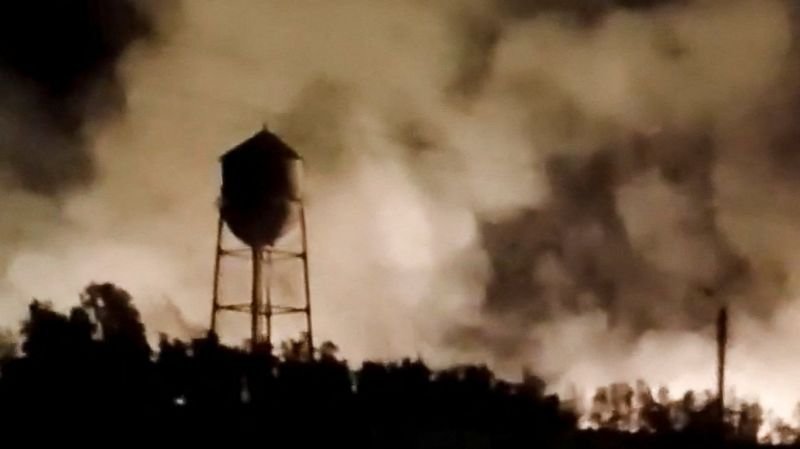
• At the White House: President Donald Trump says the US and Iran remain in talks and that he believes Tehran is “getting more serious.” Earlier Friday, he met with top advisers and Cabinet officials to discuss a potential escalation if negotiations are not fruitful, a source told CNN.
• Days of renewed strikes: A US bombing campaign against Iran has continued for 13 consecutive nights after their ceasefire agreement crumbled earlier this month. Trump said Friday that Washington’s exit strategy for the conflict could come either diplomatically or militarily.
• On the ground: Kuwait, Bahrain and Jordan said they fended off Iranian attacks again on Friday. Tehran targeted American military assets in the region hours after US strikes killed four people and partly damaged an Islamic Revolutionary Guard Corps facility, according to state media.
28 Posts
President Donald Trump said Friday that he and his energy secretary hadn’t discussed the US-Saudi nuclear deal when asked if he’d authorized Chris Wright to sign it.
“We didn’t talk about it, but it was always understood — and Chris knew and Saudi Arabia knew — that if they didn’t join the Abraham Accords… I’m not going to do the deal,” Trump told reporters as his energy secretary stood behind him in the Oval Office.
CNN reported Thursday night that Trump upended the long-negotiated nuclear pact with Saudi Arabia after being blindsided by the Energy Department’s announcement of the agreement on Wednesday, and as criticism grew from conservative allies about the original terms of the deal.
Earlier in the Oval Office on Friday, Trump quickly changed the topic when asked if his energy secretary had jumped the gun on announcing the deal.
“No, nobody got out ahead,” he said. “I just say that in order to do it, they have to be a member of the Abraham Accords, which has been very successful.”
The morning after the deal’s announcement, Trump added the requirement that Saudi Arabia join the Abraham Accords as a way of normalizing relations with Israel, surprising his own nuclear negotiators.
“They and others didn’t want to do it because of the problem that they had with Iran,” Trump said Friday of Saudi Arabia normalizing relations. “You don’t have that problem anymore, you don’t have a great power there anymore.”
The president added that the condition was “very important for the future of the Middle East.”
“At some point, they’ll join,” Trump said.
A Saudi vessel sustained minor damage to its hull after an attack in the Red Sea on Friday, the official press agency of Saudi Arabia reported, citing the kingdom’s transport authority.
The crew’s safety was confirmed and the vessel continued to its destination, the agency reported.
Soon after the attack was reported, Houthi affiliate al-Masirah TV said that Saudi airstrikes hit the major port city of Hodeidah in Yemen. A worker at a telecommunications building in Hodeidah was injured in the strikes, al-Masirah reported.
Yemen’s Iran-backed Houthis have previously announced a blockade of Saudi shipping in the Red Sea.
President Donald Trump said Friday his administration’s exit strategy from the Iran war could come through continued military action or a diplomatic deal.
“I think there’s a lot of them,” Trump told reporters in the Oval Office when asked what his exit strategy is.
“There’s a military exit where we just keep going just the way we are, and we can even make it a heavier dose, and it’s knocking out everything,” he said.
“Or there’s a smarter strategy, and that’s you make a deal, and they want to make a deal. I just don’t think they’re ready yet, but they do want to make a deal.”
The president said negotiations with Tehran are ongoing after the 13th consecutive night of US strikes.
“We could do it in a more rapid fashion, which we might do, or we can negotiate with them, which we’re also doing right now,” Trump said, adding, “we’re talking to them.”
President Donald Trump said on Friday that the US and Iran are talking and that he believes Tehran is getting “more serious.”
“We are talking to them. I think they’re getting more and more serious as the days go by, for maybe the obvious reason, but we are talking to them right now,” Trump told reporters in the Oval Office.
“I think they are being by far the most serious that we’ve seen. But that doesn’t mean we get there,” he added.
When asked who from the US side was engaged in discussions with the Iranians, the president said “sorta everybody,” while adding that Vice President JD Vance and Secretary of State Marco Rubio are involved.
The president said that he’s not in a hurry to reach a deal before the November midterms.
“We have to do it right,” Trump said.
President Donald Trump met with top advisers and Cabinet officials at the White House Friday to discuss a potential escalation in Iran, a source familiar with the matter told CNN.
Speaking to reporters after the meeting, Trump stressed that US officials were actively negotiating with Iran, though he also said it was possible the military could continue its bombing campaign or “make it a heavier dose.” He said Iran seemed to be getting “more serious” in ongoing talks.
“So I think while we’re talking, we’ll see what comes,” Trump said.
If you’re just tuning in, the war with Iran has been impacting US allies in the Middle East, oil markets and other areas.
Here’s what to know:
• Global oil prices have dipped back below $100 a barrel after reaching the century mark this week for the first time in two months.
• Yemen’s Iran-backed Houthi rebels targeted Saudi tankers in the Red Sea this week, introducing further uncertainty for global oil shipping already hampered by the effective closure of the Strait of Hormuz. Average gas prices in the United States remain well over $4 a gallon. United Nations Secretary-General António Guterres said today he is “deeply alarmed” about Houthi attacks on commercial vessels and called for de-escalation.
• US allies Bahrain, Kuwait and Jordan said they intercepted Iranian attacks on Friday.
• The Pentagon’s tracker on war casualties remains incorrect nearly a day after the totals for US service member deaths and injuries in the war were reduced in what Defense Department officials called a “data disruption.” Four deaths and dozens of injuries disappeared from the totals on Thursday after the Defense Casualty Analysis System website had correctly listed the total number of US troops killed in the war at 18 earlier in the week.
Meanwhile, in diplomatic news:
• US President Donald Trump said he does not believe China or Russia are providing weapons to Iran, citing assurances he says he received from the countries’ leaders.
• Israeli Prime Minister Benjamin Netanyahu will meet Trump at the White House on Tuesday, the Israeli leader’s office said in a statement.
CNN’s Alejandra Jaramillo, Ibrahim Dahman, Aida Karimi, Billy Stockwell, Sana Noor Haq, Billy stockwell, Tal Shalev, Davis Winkie and Aleena Fayaz contributed to the report.
Global oil prices have dipped back below $100 a barrel after reaching the century mark this week for the first time in two months.
Yemen’s Iran-backed Houthi rebels targeted Saudi tankers in the Red Sea this week, introducing further uncertainty for global oil shipping already hampered by the effective closure of the Strait of Hormuz. Average gas prices in the United States remain well over $4 a gallon:
President Donald Trump said Friday that he does not believe China or Russia are providing weapons to Iran, citing assurances he says he received from both countries’ leaders.
“President Xi, at our recent meeting in Beijing, China, told me that he would not, under any circumstances, give or sell Weapons to the Islamic Republic of Iran — And that statement included Chinese Companies,” Trump wrote on Truth Social.
“Considering our relationship, I take him at his word and, besides, l am doing him very big favors, also,” Trump added.
Trump also said Russian President Vladimir Putin told him Moscow would not sell weapons to Iran.
“Therefore, two major Countries that people speak of often in terms of Iran are, in my opinion, not participating,” Trump wrote. “If they did, it would be very bad for them — Certainly not in their best interests.”
Earlier this week, Defense Secretary Pete Hegseth told a Senate hearing that China and Russia are “at different levels” enabling some of Iran’s activity during the war.
“[T]here are many ways that we deter that … and the depth and extent of it ought to remain classified,” Hegseth said before the Senate Appropriations Committee.
“But there are ways in which both of those countries are … at different levels, enabling some of the things Iran is doing,” he said.
Two waves of sirens rang through Bahrain on Friday, just as Iran claimed responsibility for targeted strikes on US assets in several Arab countries.
The Bahraini Ministry of Interior called on residents to “remain calm” after alarms were activated at 12:47 a.m. ET and again at 3:47 a.m. ET, in posts on X, before the defense ministry said forces “intercepted and destroyed” Iranian airstrikes.
Further north, the Jordanian military downed seven missiles and six drones from Iran on Friday, according to Jordan’s Armed Forces.
In Kuwait, air defenses were “intercepting hostile targets” from Iran, the Kuwaiti army said at Friday evening local time.
Iran’s Islamic Revolutionary Guard Corps (IRGC) targeted “three ammunition and equipment storage” facilities at Kuwait’s Al-Adairi Base, according to the semi-official agency Tasnim. The IRGC also targeted the control tower of the US Navy’s Fifth Fleet in Bahrain, Tasnim said.
Earlier on Friday, Tehran aimed drones at Bahrain’s Sheikh Isa Air Base and Jordan’s Al-Azraq Air Base, according to Iran’s Press TV.
CNN cannot independently verify the claims.
Tehran has intensified attacks on US-allied nations in the region after Washington unleashed a fresh assault on Iran in mid-July. Several of those countries under Iranian fire, including Kuwait, Bahrain and Jordan, house US military bases.
At least four US service members have been killed in the most recent wave of Iranian attacks over the past week, according to the Pentagon. Three of those were killed in Jordan, and one was killed in a controlled Iranian drone detonation in Iraq.
Iran’s latest salvo has also prompted travel restrictions and stark warnings from foreign consulates. Just on Thursday, the UK Foreign Office issued travel guidance advising against “all but essential travel” for Kuwait and Bahrain.
CNN’s Aleena Fayaz, Lex Harvey, Kareem El Damanhoury and Eyad Kourdi contributed reporting.
This post has been updated with the latest information.
United Nations Secretary-General António Guterres said today he is “deeply alarmed” about recent Houthi attacks on commercial vessels in the Red Sea and called for de-escalation, as the Iran war expands to new fronts.
Guterres called for “immediate de-escalation” and urged the Houthis, one of Iran’s principal allies in the region, to refrain from further attacks or “other escalatory actions.”
Earlier this week, the Houthi group in Yemen – which has long warned it could take action to block the critical Bab al-Mandeb Strait at the southern end of the Red Sea – declared a maritime blockade on Saudi shipping, an escalation that could further threaten global oil supplies.
Israeli Prime Minister Benjamin Netanyahu will meet US President Donald Trump at the White House on Tuesday, the Israeli leader’s office said in a statement.
Netanyahu’s office said the visit comes at the invitation of Trump. CNN has reached out to the White House for comment.
Netanyahu’s seventh visit to the US to meet Trump comes after two weeks of daily American strikes on Iran and Trump threatening to strike bridges and power plans for every vessel Iran attacks in the Strait of Hormuz.
Netanyahu has long been skeptical of Iran’s intentions behind nuclear negotiations and has favored renewed strikes on Iran.
During his visit to the US, Netanyahu will also attend the funeral of the late Sen. Lindsey Graham, whom Netanyahu has called “one of [Israel’s] greatest friends.”
Iran spurned media reports that officials rejected an Iraqi-presented US ceasefire proposal this week, instead laying blame on the Trump administration for the latest uptick in regional violence.
Officials condemned Washington’s “breach of its promises” as stated in the memorandum of understanding — which laid out a pathway to long-term peace — and criticized a “misleading” New York Times article that detailed Tehran’s rejection of a temporary deal. Baghdad also rebuffed the story on Friday.
Neither US nor Iranian officials have verbally signaled a return to diplomacy, even as the human cost of lethal attacks in the past month has spiraled. In Iran, 59 people have been killed and 666 others injured since June 27, according to Hossein Kermanpour, a spokesperson for the country’s health ministry.
At least four US service members have been killed in the most recent wave of Iranian strikes, according to the Pentagon.
Here’s what you need to know:
Iranian strikes hit Gulf countries: Bahrain’s military intercepted a number of “Iranian aerial attacks” on Friday, the country’s Defense Forces posted on X. Late on Thursday, Kuwaiti air defenses also intercepted Iranian strikes, Kuwait’s army said.
US strike targeted IRGC headquarters, Iran says: A missile attack partly damaged a key facility for Iran’s Islamic Revolutionary Guard Corps (IRGC) in the northern Gilan province, Iran’s state media IRNA said Friday. CNN cannot independently verify the report. US Central Command said it targeted “Iranian military command centers” late Thursday.
Boats carrying Saudi oil sail through Red Sea: Two oil tankers transporting about 4 million barrels worth of Saudi crude were crossing the Gulf of Aden as of Friday afternoon local time, according to MarineTraffic tracking data. It comes as Yemen’s Iran-backed Houthi rebels declared a maritime blockade on Saudi shipping this week and claimed to have attacked two Saudi oil tankers in the Red Sea yesterday.
Tehran’s oil revenue peaked this year: For the first four months of the Iranian calendar — from late March onwards — officials recorded an additional $2.5 billion in oil revenue compared to 2025, Iran’s semi-official Fars news said Friday, after the US temporarily lifted crippling sanctions.
CNN’s Aida Karimi, Ibrahim Dahman, Billy Stockwell, Aqeel Najim and Lex Harvey contributed reporting.
A US official disputed a report indicating that Iran had rejected a new ceasefire proposal, telling CNN that the account was “not accurate.”
The New York Times reported yesterday that Iran rejected a ceasefire proposal from President Donald Trump conveyed to Tehran via Iraqi Prime Minister Ali al-Zaidi, who recently met with Trump in Washington.
The substance of that plan was not clear, but Iran, the report said, was not interested in a temporary deal that did not resolve outstanding questions around control of the Strait of Hormuz.
Iranian state media also on Friday characterized the report as “diversionary and misleading,” while the Iraqi prime minister’s office disputed the report as “unfounded.”
US Ambassador to Turkey Tom Barrack amplified Iraq’s post on social media, adding, “Iraq getting the record straight.”
A laden oil tanker has been re-routed to avoid sailing through the southern Red Sea due to the “security situation” in the region, the vessel’s owner Torm told CNN Friday.
“This reflects our cautious approach to crew safety,” the spokesperson added.
Yemen’s Iran-backed Houthis recently threatened to disrupt shipping through the Bab al-Mandeb Strait, a chokepoint at the southern end of the Red Sea. The group’s threat has persuaded some ships to abandon their plans to exit the Red Sea heading south, but streams of traffic through the waterway continue.
Maritime tracking agency MarineTraffic said 49 vessels traversed the Bab al-Mandeb Strait on Thursday, an increase of 16% compared to the previous day – including 24 which entered the Red Sea and 25 which exited the Red Sea.
No Saudi-flagged vessels crossed the strait on Thursday, MarineTraffic said, after the Houthis declared a blockade on Saudi shipping earlier this week.
Shipping firm Torm said Friday it had paused transits through the southern part of the Red Sea since January 2024, but several vessels were transiting the area this summer after careful case-by-case assessments.
CNN’s Maisie Linford contributed reporting.
Global oil prices fell on Friday, hours after they settled above $100 a barrel for the first time in two months.
The price of a barrel of Brent crude, the global benchmark, hit the triple-digit milestone on Thursday and has soared 33% so far this month as the 60-day ceasefire between the United States and Iran has all but collapsed.
On Friday, Brent futures ticked down 2.8% to trade at nearly $98 a barrel by early morning ET while WTI, the US benchmark, was trading 2.3% lower at $90 a barrel. However, both contracts were on track for hefty weekly gains.
Oil markets are nervous after Iran-backed Houthi militants based in Yemen targeted Saudi Arabian tankers in the Red Sea – threatening to slam shut an alternative exit for Riyadh’s barrels as traffic through the Strait of Hormuz grinds to an effective halt once again.
However, two oil tankers carrying Saudi crude crossed the Bab al-Mandeb Strait on Thursday, according to data from MarineTraffic.
The United Nations human rights chief has called for urgent action to help thousands of seafarers stranded in the Persian Gulf, saying some have been abandoned by their employers without access to food, medical care or any means to communicate with their families.
At least 6,000 seafarers were unable to evacuate during the ceasefire and remain stranded aboard some 400 vessels, according to data from the International Maritime Organization.
Nine ships in Iranian ports carrying at least 93 seafarers have been completely abandoned by their owners, the UN said in a statement. It said the seafarers face “prolonged isolation and confinement in a conflict zone, with uncertainty about their safety and disembarkation – risking a severe toll on their mental and physical well-being.”
Two Indian seafarers were killed last week in a drone attack along the Strait of Hormuz.
In June, US forces enforcing a blockade on Iran’s ports launched a strike on a Palau-flagged vessel, killing three Indian sailors and sparking outrage in India.
“Parties to the conflict should urgently work to facilitate safe passage for stranded seafarers to safely evacuate and disembark, as well as ensure the delivery of critical supplies,” the UN statement said.
Iraq has rejected as “entirely unfounded” a New York Times report that Iran turned down a US ceasefire deal presented to Tehran by the Iraqi prime minister.
The New York Times reported on Thursday that Iran had rejected the US ceasefire deal, citing unnamed Iranian and Iraqi officials. Iranian officials said Tehran was not interested in a temporary deal that left the question of control of the Strait of Hormuz unresolved, the report said.
The Iraqi prime minister’s media office said Friday the allegations in the report “bear no relation to reality.”
The office called on all media outlets to “refrain from circulating unverified information or information attributed to anonymous sources.”
Tehran also pushed back on the report, calling it “misleading,” according to Iranian state media IRNA. “The problem of the escalation of conflict in the region stems exclusively from the United States’ breach of its promises,” IRNA cited an unnamed Iranian official as saying.
CNN’s Lex Harvey and Aida Karimi contributed reporting.
The value of Iran’s oil revenue in dollars peaked by one-and-a-half times from April through July compared to the same period last year, according to Iranian media, after the US temporarily lifted crippling sanctions.
That spike “was achieve despite the wartime conditions prevailing the country,” the semi-official agency Fars news said on Friday, citing Iran’s Ministry of Oil.
For the first four months of the Iranian calendar this year – from late March onwards – officials recorded $7.5 billion in oil revenue. In 2025, that figure stood at less than $5 billion in the same period.
Last month, Washington alleviated oil sanctions on Tehran as part of the memorandum of understanding between both parties – which laid out a long term path to peace. However, that deal fell apart after the US unleashed a fresh wave of attacks on Iran in mid-July, following Iranian strikes on vessels in the choked Strait of Hormuz.
The temporary waivers marked a central US concession for Iran to reopen the crucial waterway, reaping almost immediate financial benefit for Tehran. Last week, US President Donald Trump claimed he did not regret easing oil levies before the renewed fighting, telling reporters in the Oval Office, “I gave them (Iran) a chance.”
Two oil tankers carrying millions of barrels of Saudi crude are sailing through the Gulf of Aden, having successfully traversed the Bab al-Mandeb Strait despite Houthi threats to disrupt Saudi shipping, tracking data shows.
This week, Yemen’s Iran-backed Houthi rebels declared a maritime blockade on Saudi shipping. On Thursday, they claimed to have attacked two Saudi oil tankers in the Red Sea, in what appeared to be the group’s first enforcement action of the blockade.
Later on Thursday, Xin Long Yang, a Singapore-flagged laden crude oil tanker, and Cosnew Lake, a Hong Kong-flagged laden crude oil tanker, crossed the Bab al-Mandeb Strait, according to MarineTraffic, which tracks ships worldwide in real time.
The ships, which are now sailing off Yemen’s coast, are carrying a combined 4 million barrels of Saudi crude, MarineTraffic posted on X.
There is a risk the Houthis “may broaden their interpretation of ‘Saudi-linked shipping’ to include foreign-flagged vessels trading with Saudi ports, carrying Saudi cargoes or operating under Saudi commercial interests,” maritime risk consultancy Marisks said Thursday.
Despite the heightened risk, commercial traffic continues to transit steadily through the Red Sea and the Strait, according to the UK Maritime Trade Operations (UKMTO), which provides maritime security warnings and incident updates.
Yemen’s Iran-backed Houthis represent the country’s Shia Muslim minority, the Zaidis, and are formally known as Ansar Allah – “Partisans of God.”
They emerged as an armed group in the 1990s and fought a series of rebellions against Yemen’s central government over two decades.
After the Arab Spring in 2011, they seized a northern province and later the capital Sanaa, which they still hold, along with most of Yemen’s Red Sea coastline. In the process they became part of Iran’s “Axis of Resistance” across the region, receiving weapons and missile technology.
Tehran has provided the group with sea mines, ballistic and cruise missiles, as well as unmanned aerial vehicles (UAVs, or drones), according to a 2021 report from the Center for Strategic and International Studies.
After Israel’s war with Hamas in Gaza began in October 2023, the Houthis launched missiles against Israel and began targeting shipping in the Red Sea. Israel responded with strikes on Houthi infrastructure and killed a number of senior Houthi officials.
Amid the US-Iran war, the militant group has repeatedly warned they could take action to block the Bab al-Mandeb Strait, a chokepoint at the southern end of the Red Sea. Earlier this week, the group declared a maritime blockade on Saudi ships in the strait, threatening to create a new front in the Iran war.
CNN’s Lex Harvey contributed reporting.
• At the White House: President Donald Trump says the US and Iran remain in talks and that he believes Tehran is “getting more serious.” Earlier Friday, he met with top advisers and Cabinet officials to discuss a potential escalation if negotiations are not fruitful, a source told CNN.
• Days of renewed strikes: A US bombing campaign against Iran has continued for 13 consecutive nights after their ceasefire agreement crumbled earlier this month. Trump said Friday that Washington’s exit strategy for the conflict could come either diplomatically or militarily.
• On the ground: Kuwait, Bahrain and Jordan said they fended off Iranian attacks again on Friday. Tehran targeted American military assets in the region hours after US strikes killed four people and partly damaged an Islamic Revolutionary Guard Corps facility, according to state media.
President Donald Trump said Friday that he and his energy secretary hadn’t discussed the US-Saudi nuclear deal when asked if he’d authorized Chris Wright to sign it.
“We didn’t talk about it, but it was always understood — and Chris knew and Saudi Arabia knew — that if they didn’t join the Abraham Accords… I’m not going to do the deal,” Trump told reporters as his energy secretary stood behind him in the Oval Office.
CNN reported Thursday night that Trump upended the long-negotiated nuclear pact with Saudi Arabia after being blindsided by the Energy Department’s announcement of the agreement on Wednesday, and as criticism grew from conservative allies about the original terms of the deal.
Earlier in the Oval Office on Friday, Trump quickly changed the topic when asked if his energy secretary had jumped the gun on announcing the deal.
“No, nobody got out ahead,” he said. “I just say that in order to do it, they have to be a member of the Abraham Accords, which has been very successful.”
The morning after the deal’s announcement, Trump added the requirement that Saudi Arabia join the Abraham Accords as a way of normalizing relations with Israel, surprising his own nuclear negotiators.
“They and others didn’t want to do it because of the problem that they had with Iran,” Trump said Friday of Saudi Arabia normalizing relations. “You don’t have that problem anymore, you don’t have a great power there anymore.”
The president added that the condition was “very important for the future of the Middle East.”
“At some point, they’ll join,” Trump said.
A Saudi vessel sustained minor damage to its hull after an attack in the Red Sea on Friday, the official press agency of Saudi Arabia reported, citing the kingdom’s transport authority.
The crew’s safety was confirmed and the vessel continued to its destination, the agency reported.
Soon after the attack was reported, Houthi affiliate al-Masirah TV said that Saudi airstrikes hit the major port city of Hodeidah in Yemen. A worker at a telecommunications building in Hodeidah was injured in the strikes, al-Masirah reported.
Yemen’s Iran-backed Houthis have previously announced a blockade of Saudi shipping in the Red Sea.
President Donald Trump said Friday his administration’s exit strategy from the Iran war could come through continued military action or a diplomatic deal.
“I think there’s a lot of them,” Trump told reporters in the Oval Office when asked what his exit strategy is.
“There’s a military exit where we just keep going just the way we are, and we can even make it a heavier dose, and it’s knocking out everything,” he said.
“Or there’s a smarter strategy, and that’s you make a deal, and they want to make a deal. I just don’t think they’re ready yet, but they do want to make a deal.”
The president said negotiations with Tehran are ongoing after the 13th consecutive night of US strikes.
“We could do it in a more rapid fashion, which we might do, or we can negotiate with them, which we’re also doing right now,” Trump said, adding, “we’re talking to them.”
President Donald Trump said on Friday that the US and Iran are talking and that he believes Tehran is getting “more serious.”
“We are talking to them. I think they’re getting more and more serious as the days go by, for maybe the obvious reason, but we are talking to them right now,” Trump told reporters in the Oval Office.
“I think they are being by far the most serious that we’ve seen. But that doesn’t mean we get there,” he added.
When asked who from the US side was engaged in discussions with the Iranians, the president said “sorta everybody,” while adding that Vice President JD Vance and Secretary of State Marco Rubio are involved.
The president said that he’s not in a hurry to reach a deal before the November midterms.
“We have to do it right,” Trump said.
President Donald Trump met with top advisers and Cabinet officials at the White House Friday to discuss a potential escalation in Iran, a source familiar with the matter told CNN.
Speaking to reporters after the meeting, Trump stressed that US officials were actively negotiating with Iran, though he also said it was possible the military could continue its bombing campaign or “make it a heavier dose.” He said Iran seemed to be getting “more serious” in ongoing talks.
“So I think while we’re talking, we’ll see what comes,” Trump said.
If you’re just tuning in, the war with Iran has been impacting US allies in the Middle East, oil markets and other areas.
Here’s what to know:
• Global oil prices have dipped back below $100 a barrel after reaching the century mark this week for the first time in two months.
• Yemen’s Iran-backed Houthi rebels targeted Saudi tankers in the Red Sea this week, introducing further uncertainty for global oil shipping already hampered by the effective closure of the Strait of Hormuz. Average gas prices in the United States remain well over $4 a gallon. United Nations Secretary-General António Guterres said today he is “deeply alarmed” about Houthi attacks on commercial vessels and called for de-escalation.
• US allies Bahrain, Kuwait and Jordan said they intercepted Iranian attacks on Friday.
• The Pentagon’s tracker on war casualties remains incorrect nearly a day after the totals for US service member deaths and injuries in the war were reduced in what Defense Department officials called a “data disruption.” Four deaths and dozens of injuries disappeared from the totals on Thursday after the Defense Casualty Analysis System website had correctly listed the total number of US troops killed in the war at 18 earlier in the week.
Meanwhile, in diplomatic news:
• US President Donald Trump said he does not believe China or Russia are providing weapons to Iran, citing assurances he says he received from the countries’ leaders.
• Israeli Prime Minister Benjamin Netanyahu will meet Trump at the White House on Tuesday, the Israeli leader’s office said in a statement.
CNN’s Alejandra Jaramillo, Ibrahim Dahman, Aida Karimi, Billy Stockwell, Sana Noor Haq, Billy stockwell, Tal Shalev, Davis Winkie and Aleena Fayaz contributed to the report.
Global oil prices have dipped back below $100 a barrel after reaching the century mark this week for the first time in two months.
Yemen’s Iran-backed Houthi rebels targeted Saudi tankers in the Red Sea this week, introducing further uncertainty for global oil shipping already hampered by the effective closure of the Strait of Hormuz. Average gas prices in the United States remain well over $4 a gallon:
President Donald Trump said Friday that he does not believe China or Russia are providing weapons to Iran, citing assurances he says he received from both countries’ leaders.
“President Xi, at our recent meeting in Beijing, China, told me that he would not, under any circumstances, give or sell Weapons to the Islamic Republic of Iran — And that statement included Chinese Companies,” Trump wrote on Truth Social.
“Considering our relationship, I take him at his word and, besides, l am doing him very big favors, also,” Trump added.
Trump also said Russian President Vladimir Putin told him Moscow would not sell weapons to Iran.
“Therefore, two major Countries that people speak of often in terms of Iran are, in my opinion, not participating,” Trump wrote. “If they did, it would be very bad for them — Certainly not in their best interests.”
Earlier this week, Defense Secretary Pete Hegseth told a Senate hearing that China and Russia are “at different levels” enabling some of Iran’s activity during the war.
“[T]here are many ways that we deter that … and the depth and extent of it ought to remain classified,” Hegseth said before the Senate Appropriations Committee.
“But there are ways in which both of those countries are … at different levels, enabling some of the things Iran is doing,” he said.
Two waves of sirens rang through Bahrain on Friday, just as Iran claimed responsibility for targeted strikes on US assets in several Arab countries.
The Bahraini Ministry of Interior called on residents to “remain calm” after alarms were activated at 12:47 a.m. ET and again at 3:47 a.m. ET, in posts on X, before the defense ministry said forces “intercepted and destroyed” Iranian airstrikes.
Further north, the Jordanian military downed seven missiles and six drones from Iran on Friday, according to Jordan’s Armed Forces.
In Kuwait, air defenses were “intercepting hostile targets” from Iran, the Kuwaiti army said at Friday evening local time.
Iran’s Islamic Revolutionary Guard Corps (IRGC) targeted “three ammunition and equipment storage” facilities at Kuwait’s Al-Adairi Base, according to the semi-official agency Tasnim. The IRGC also targeted the control tower of the US Navy’s Fifth Fleet in Bahrain, Tasnim said.
Earlier on Friday, Tehran aimed drones at Bahrain’s Sheikh Isa Air Base and Jordan’s Al-Azraq Air Base, according to Iran’s Press TV.
CNN cannot independently verify the claims.
Tehran has intensified attacks on US-allied nations in the region after Washington unleashed a fresh assault on Iran in mid-July. Several of those countries under Iranian fire, including Kuwait, Bahrain and Jordan, house US military bases.
At least four US service members have been killed in the most recent wave of Iranian attacks over the past week, according to the Pentagon. Three of those were killed in Jordan, and one was killed in a controlled Iranian drone detonation in Iraq.
Iran’s latest salvo has also prompted travel restrictions and stark warnings from foreign consulates. Just on Thursday, the UK Foreign Office issued travel guidance advising against “all but essential travel” for Kuwait and Bahrain.
CNN’s Aleena Fayaz, Lex Harvey, Kareem El Damanhoury and Eyad Kourdi contributed reporting.
This post has been updated with the latest information.
United Nations Secretary-General António Guterres said today he is “deeply alarmed” about recent Houthi attacks on commercial vessels in the Red Sea and called for de-escalation, as the Iran war expands to new fronts.
Guterres called for “immediate de-escalation” and urged the Houthis, one of Iran’s principal allies in the region, to refrain from further attacks or “other escalatory actions.”
Earlier this week, the Houthi group in Yemen – which has long warned it could take action to block the critical Bab al-Mandeb Strait at the southern end of the Red Sea – declared a maritime blockade on Saudi shipping, an escalation that could further threaten global oil supplies.
Israeli Prime Minister Benjamin Netanyahu will meet US President Donald Trump at the White House on Tuesday, the Israeli leader’s office said in a statement.
Netanyahu’s office said the visit comes at the invitation of Trump. CNN has reached out to the White House for comment.
Netanyahu’s seventh visit to the US to meet Trump comes after two weeks of daily American strikes on Iran and Trump threatening to strike bridges and power plans for every vessel Iran attacks in the Strait of Hormuz.
Netanyahu has long been skeptical of Iran’s intentions behind nuclear negotiations and has favored renewed strikes on Iran.
During his visit to the US, Netanyahu will also attend the funeral of the late Sen. Lindsey Graham, whom Netanyahu has called “one of [Israel’s] greatest friends.”
Iran spurned media reports that officials rejected an Iraqi-presented US ceasefire proposal this week, instead laying blame on the Trump administration for the latest uptick in regional violence.
Officials condemned Washington’s “breach of its promises” as stated in the memorandum of understanding — which laid out a pathway to long-term peace — and criticized a “misleading” New York Times article that detailed Tehran’s rejection of a temporary deal. Baghdad also rebuffed the story on Friday.
Neither US nor Iranian officials have verbally signaled a return to diplomacy, even as the human cost of lethal attacks in the past month has spiraled. In Iran, 59 people have been killed and 666 others injured since June 27, according to Hossein Kermanpour, a spokesperson for the country’s health ministry.
At least four US service members have been killed in the most recent wave of Iranian strikes, according to the Pentagon.
Here’s what you need to know:
Iranian strikes hit Gulf countries: Bahrain’s military intercepted a number of “Iranian aerial attacks” on Friday, the country’s Defense Forces posted on X. Late on Thursday, Kuwaiti air defenses also intercepted Iranian strikes, Kuwait’s army said.
US strike targeted IRGC headquarters, Iran says: A missile attack partly damaged a key facility for Iran’s Islamic Revolutionary Guard Corps (IRGC) in the northern Gilan province, Iran’s state media IRNA said Friday. CNN cannot independently verify the report. US Central Command said it targeted “Iranian military command centers” late Thursday.
Boats carrying Saudi oil sail through Red Sea: Two oil tankers transporting about 4 million barrels worth of Saudi crude were crossing the Gulf of Aden as of Friday afternoon local time, according to MarineTraffic tracking data. It comes as Yemen’s Iran-backed Houthi rebels declared a maritime blockade on Saudi shipping this week and claimed to have attacked two Saudi oil tankers in the Red Sea yesterday.
Tehran’s oil revenue peaked this year: For the first four months of the Iranian calendar — from late March onwards — officials recorded an additional $2.5 billion in oil revenue compared to 2025, Iran’s semi-official Fars news said Friday, after the US temporarily lifted crippling sanctions.
CNN’s Aida Karimi, Ibrahim Dahman, Billy Stockwell, Aqeel Najim and Lex Harvey contributed reporting.
A US official disputed a report indicating that Iran had rejected a new ceasefire proposal, telling CNN that the account was “not accurate.”
The New York Times reported yesterday that Iran rejected a ceasefire proposal from President Donald Trump conveyed to Tehran via Iraqi Prime Minister Ali al-Zaidi, who recently met with Trump in Washington.
The substance of that plan was not clear, but Iran, the report said, was not interested in a temporary deal that did not resolve outstanding questions around control of the Strait of Hormuz.
Iranian state media also on Friday characterized the report as “diversionary and misleading,” while the Iraqi prime minister’s office disputed the report as “unfounded.”
US Ambassador to Turkey Tom Barrack amplified Iraq’s post on social media, adding, “Iraq getting the record straight.”
A laden oil tanker has been re-routed to avoid sailing through the southern Red Sea due to the “security situation” in the region, the vessel’s owner Torm told CNN Friday.
“This reflects our cautious approach to crew safety,” the spokesperson added.
Yemen’s Iran-backed Houthis recently threatened to disrupt shipping through the Bab al-Mandeb Strait, a chokepoint at the southern end of the Red Sea. The group’s threat has persuaded some ships to abandon their plans to exit the Red Sea heading south, but streams of traffic through the waterway continue.
Maritime tracking agency MarineTraffic said 49 vessels traversed the Bab al-Mandeb Strait on Thursday, an increase of 16% compared to the previous day – including 24 which entered the Red Sea and 25 which exited the Red Sea.
No Saudi-flagged vessels crossed the strait on Thursday, MarineTraffic said, after the Houthis declared a blockade on Saudi shipping earlier this week.
Shipping firm Torm said Friday it had paused transits through the southern part of the Red Sea since January 2024, but several vessels were transiting the area this summer after careful case-by-case assessments.
CNN’s Maisie Linford contributed reporting.
Global oil prices fell on Friday, hours after they settled above $100 a barrel for the first time in two months.
The price of a barrel of Brent crude, the global benchmark, hit the triple-digit milestone on Thursday and has soared 33% so far this month as the 60-day ceasefire between the United States and Iran has all but collapsed.
On Friday, Brent futures ticked down 2.8% to trade at nearly $98 a barrel by early morning ET while WTI, the US benchmark, was trading 2.3% lower at $90 a barrel. However, both contracts were on track for hefty weekly gains.
Oil markets are nervous after Iran-backed Houthi militants based in Yemen targeted Saudi Arabian tankers in the Red Sea – threatening to slam shut an alternative exit for Riyadh’s barrels as traffic through the Strait of Hormuz grinds to an effective halt once again.
However, two oil tankers carrying Saudi crude crossed the Bab al-Mandeb Strait on Thursday, according to data from MarineTraffic.
The United Nations human rights chief has called for urgent action to help thousands of seafarers stranded in the Persian Gulf, saying some have been abandoned by their employers without access to food, medical care or any means to communicate with their families.
At least 6,000 seafarers were unable to evacuate during the ceasefire and remain stranded aboard some 400 vessels, according to data from the International Maritime Organization.
Nine ships in Iranian ports carrying at least 93 seafarers have been completely abandoned by their owners, the UN said in a statement. It said the seafarers face “prolonged isolation and confinement in a conflict zone, with uncertainty about their safety and disembarkation – risking a severe toll on their mental and physical well-being.”
Two Indian seafarers were killed last week in a drone attack along the Strait of Hormuz.
In June, US forces enforcing a blockade on Iran’s ports launched a strike on a Palau-flagged vessel, killing three Indian sailors and sparking outrage in India.
“Parties to the conflict should urgently work to facilitate safe passage for stranded seafarers to safely evacuate and disembark, as well as ensure the delivery of critical supplies,” the UN statement said.
Iraq has rejected as “entirely unfounded” a New York Times report that Iran turned down a US ceasefire deal presented to Tehran by the Iraqi prime minister.
The New York Times reported on Thursday that Iran had rejected the US ceasefire deal, citing unnamed Iranian and Iraqi officials. Iranian officials said Tehran was not interested in a temporary deal that left the question of control of the Strait of Hormuz unresolved, the report said.
The Iraqi prime minister’s media office said Friday the allegations in the report “bear no relation to reality.”
The office called on all media outlets to “refrain from circulating unverified information or information attributed to anonymous sources.”
Tehran also pushed back on the report, calling it “misleading,” according to Iranian state media IRNA. “The problem of the escalation of conflict in the region stems exclusively from the United States’ breach of its promises,” IRNA cited an unnamed Iranian official as saying.
CNN’s Lex Harvey and Aida Karimi contributed reporting.
The value of Iran’s oil revenue in dollars peaked by one-and-a-half times from April through July compared to the same period last year, according to Iranian media, after the US temporarily lifted crippling sanctions.
That spike “was achieve despite the wartime conditions prevailing the country,” the semi-official agency Fars news said on Friday, citing Iran’s Ministry of Oil.
For the first four months of the Iranian calendar this year – from late March onwards – officials recorded $7.5 billion in oil revenue. In 2025, that figure stood at less than $5 billion in the same period.
Last month, Washington alleviated oil sanctions on Tehran as part of the memorandum of understanding between both parties – which laid out a long term path to peace. However, that deal fell apart after the US unleashed a fresh wave of attacks on Iran in mid-July, following Iranian strikes on vessels in the choked Strait of Hormuz.
The temporary waivers marked a central US concession for Iran to reopen the crucial waterway, reaping almost immediate financial benefit for Tehran. Last week, US President Donald Trump claimed he did not regret easing oil levies before the renewed fighting, telling reporters in the Oval Office, “I gave them (Iran) a chance.”
Two oil tankers carrying millions of barrels of Saudi crude are sailing through the Gulf of Aden, having successfully traversed the Bab al-Mandeb Strait despite Houthi threats to disrupt Saudi shipping, tracking data shows.
This week, Yemen’s Iran-backed Houthi rebels declared a maritime blockade on Saudi shipping. On Thursday, they claimed to have attacked two Saudi oil tankers in the Red Sea, in what appeared to be the group’s first enforcement action of the blockade.
Later on Thursday, Xin Long Yang, a Singapore-flagged laden crude oil tanker, and Cosnew Lake, a Hong Kong-flagged laden crude oil tanker, crossed the Bab al-Mandeb Strait, according to MarineTraffic, which tracks ships worldwide in real time.
The ships, which are now sailing off Yemen’s coast, are carrying a combined 4 million barrels of Saudi crude, MarineTraffic posted on X.
There is a risk the Houthis “may broaden their interpretation of ‘Saudi-linked shipping’ to include foreign-flagged vessels trading with Saudi ports, carrying Saudi cargoes or operating under Saudi commercial interests,” maritime risk consultancy Marisks said Thursday.
Despite the heightened risk, commercial traffic continues to transit steadily through the Red Sea and the Strait, according to the UK Maritime Trade Operations (UKMTO), which provides maritime security warnings and incident updates.
Yemen’s Iran-backed Houthis represent the country’s Shia Muslim minority, the Zaidis, and are formally known as Ansar Allah – “Partisans of God.”
They emerged as an armed group in the 1990s and fought a series of rebellions against Yemen’s central government over two decades.
After the Arab Spring in 2011, they seized a northern province and later the capital Sanaa, which they still hold, along with most of Yemen’s Red Sea coastline. In the process they became part of Iran’s “Axis of Resistance” across the region, receiving weapons and missile technology.
Tehran has provided the group with sea mines, ballistic and cruise missiles, as well as unmanned aerial vehicles (UAVs, or drones), according to a 2021 report from the Center for Strategic and International Studies.
After Israel’s war with Hamas in Gaza began in October 2023, the Houthis launched missiles against Israel and began targeting shipping in the Red Sea. Israel responded with strikes on Houthi infrastructure and killed a number of senior Houthi officials.
Amid the US-Iran war, the militant group has repeatedly warned they could take action to block the Bab al-Mandeb Strait, a chokepoint at the southern end of the Red Sea. Earlier this week, the group declared a maritime blockade on Saudi ships in the strait, threatening to create a new front in the Iran war.
CNN’s Lex Harvey contributed reporting.





Responses