
• Regional flare-up: Kuwait reported early Sunday that its air defenses were intercepting attacks as Iran said it targeted US military sites in Kuwait and Bahrain. Meanwhile, Israel’s military launched a drone attack in southern Lebanon, a day after agreeing to withdraw some troops from the region.
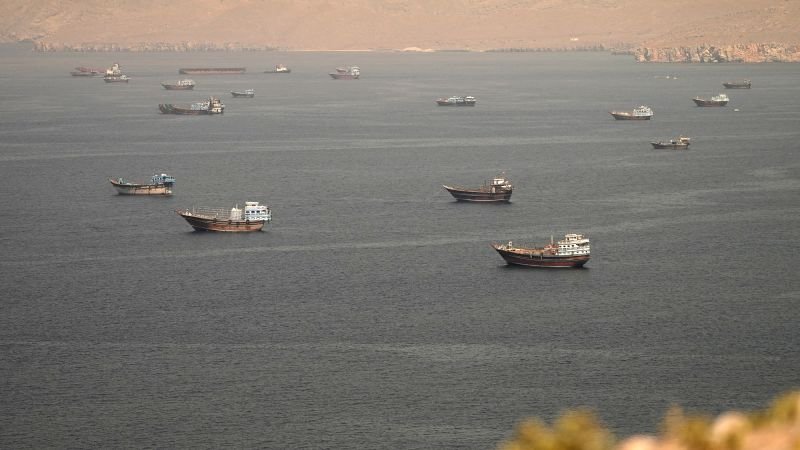
• Strait of Hormuz: The US military launched more strikes on Iranian sites around the key waterway, saying they came in response to “continued Iranian aggression,” including a drone launch and an attack on a cargo ship.
• Truce tested: The flurry of attacks strains the initial US-Iran agreement signed this month, which was intended to expand on the ceasefire and restore traffic through the Strait of Hormuz. US President Donald Trump threatened more military action if Iranian strikes continue. Iran’s Islamic Revolutionary Guard Corps countered that the US strikes violated the ceasefire and “will result in the complete halt of all diplomatic processes.”
19 Posts
There have been no US casualties or major damage to American facilities in the Persian Gulf area after Iran said it targeted them in attacks early Sunday, a US official told Reuters.
A US official said Iran had launched multiple missiles and drones at its neighbors including Bahrain and Kuwait, according to the news agency.
Earlier on Sunday, Kuwait said it was intercepting attacks, while Bahrain activated sirens and told residents to head to a safe place.
Iran targeted US military facilities in Kuwait and Bahrain with missiles and drones in response to earlier US strikes on Iran, the country’s Islamic Revolutionary Guard Corps said, according to a Reuters report.
The IRGC said the US strikes violated the ceasefire and “will result in the complete halt of all diplomatic processes,” Reuters reported, citing Iran’s state-run Press TV.
Kuwait’s army said early Sunday its air defenses were intercepting attacks. And in Bahrain, the interior ministry said in an X post on Sunday sirens had been activated, telling residents to head to the nearest safe place.
On Saturday, US Central Command said US “military aircraft targeted Iranian military surveillance infrastructure, communication systems, air defense sites, drone storage facilities, and minelayer capabilities,” in response to earlier Iranian attacks on commercial shipping.
CNN has contacted CENTCOM for comment on the latest Iranian claims.
This post has been updated with additional information.
The Kuwaiti Army said early Sunday its air defenses were intercepting attacks.
“Any explosions that may be heard are the result of air defense systems intercepting hostile targets,” it said in a statement on X.
“The public is urged to adhere to safety and security instructions issued by the relevant authorities,” the statement added.
President Donald Trump threatened Iran on Saturday, saying the US may be forced to use more military action if Tehran continues to launch strikes.
Trump said that Iran violated the ceasefire agreement and that US aircraft struck Iranian missile and drone storage locations, as well as coastal radar sites.
“It is very possible that they will never learn! There may come a point when we are no longer able to be reasonable, and will be forced to militarily complete the job that we very successfully started,” Trump wrote on Truth Social.
The president warned that Iran “will no longer exist” should the US use more military action.
The US military on Saturday conducted more strikes against Iranian targets at the president’s direction “in direct response to continued Iranian aggression,” US Central Command said.
“U.S. military aircraft targeted Iranian military surveillance infrastructure, communication systems, air defense sites, drone storage facilities, and minelayer capabilities,” CENTCOM said in a statement.
The additional strikes come after an Iranian attack Thursday against a commercial vessel near the Strait of Hormuz. The US then launched strikes against Iran around the Strait of Hormuz on Friday.
“After yesterday’s U.S. strikes in response to the Iranian attack on M/V Ever Lovely, Iran was given a chance to honor the ceasefire agreement but elected not to when its forces launched a one-way attack drone that hit M/T Kiku this morning at 4:30 a.m. ET,” the CENTCOM statement said.
The statement noted that commercial vessels are continuing to operate in the Strait of Hormuz.
The US is conducting more strikes on Iranian targets around the Strait of Hormuz, according to a US official.
They come after the US conducted strikes around the Strait of Hormuz on Friday, targeting Iranian missile and drone storage locations and coastal radar sites.
Lebanese President Joseph Aoun said US President Donald Trump spoke with him on the phone on Saturday evening about the US-brokered Israel-Lebanon ceasefire framework agreement.
The White House has not confirmed the call or released any details from it. CNN has reached out to the White House for comment.
According to an Arabic-language readout of the call posted to X by the Lebanese presidency, Trump “emphasized his country’s support for Lebanon and the Lebanese people, indicating he is working to provide everything necessary to implement the agreement’s provisions of restoring security and stability to Lebanon.”
The statement added that Aoun “expressed hope that the United States would also contribute to preventing any breaches of this agreement and ensuring compliance with all the commitments agreed upon, especially through pressuring Israel to withdraw from the lands it occupies in Southern Lebanon in order to facilitate the army’s deployment to the international borders.”
Although Lebanese officials appear optimistic by the deal’s prospects for peace, it has drawn mixed reactions from within the country’s various political and sectarian factions, with opponents suggesting it does not adequately address Israeli military hostilities.
The deal, which comes as Israeli-Lebanese hostilities complicate an already-fragile ceasefire of the US-Iran war, mandates the Israeli Defense Forces (IDF) to withdraw from two Southern Lebanese areas.
Throughout the day, we’ve been covering the latest test for a tenuous ceasefire agreement signed earlier this month by Washington and Tehran, including recent strikes around the Strait of Hormuz.
If you’re just joining us, here’s a breakdown:
Hezbollah’s main political ally in Lebanon rejected the newly signed agreement with Israel, calling it “unbalanced.”
The Amal movement, which supports Hezbollah, said in a statement on Saturday evening that it rejected direct negotiations with Israel. Amal said that it “entrenches realities in favor of the enemy at the expense of the national interest.”
The Amal movement said the agreement “carries political and sovereign risks and cannot be accepted.”
After the signing of the agreement on Friday, Hassan Fadallah, a Hezbollah member of the Lebanese parliament, rejected the agreement, calling on the country to “retract these negotiations and all the decisions they have made against their people.”
The Islamic Group of Lebanon, a Sunni Islamist political and armed organization, also rejected the agreement.
The group, a former affiliate of the Muslim Brotherhood, argued that the agreement should include several measures, including “the preservation of full sovereignty” and “guaranteeing the Israeli withdrawal from all occupied territories.”
In his first press conference since the announcement of an agreement with Lebanon and the US, Israeli Prime Minister Benjamin Netanyahu showed a map detailing two areas from which the Israeli military will withdraw under the deal.
The two sites represent relatively small areas in southern Lebanon along the so-called “yellow line,” which delineates Israeli-occupied territory. In a statement on Friday evening, Netanyahu said one of the areas would be north of the line, while the second would be south of it. Both areas in the vicinity of the Lebanese city of Nabatiyeh, which has been the focus of fighting recently.
Netanyahu called the deal signed with Lebanon under the auspices of the Trump administration a “tremendous achievement” that forced Iran out of the picture.
“We are breaking the Iranian axis – the axis of Iranian terror – but we are also breaking Iran’s political axis,” he said. Netanyahu also asserted that Israel will continue to occupy a broader security zone in southern Lebanon.
But even as Netanyahu celebrated the agreement, his far-right coalition partner, Itamar Ben Gvir, called it a “big mistake.” In a statement on Saturday evening, he said he had requested a cabinet vote on the agreement. “The State of Lebanon will not disarm Hezbollah, members of the Lebanese government are Hezbollah ministers, and Lebanon cannot be trusted to take Hezbollah’s weapons,” he said.
Israeli airstrikes hit the southern Lebanese town of Nabatieh al-Fawqa on Saturday evening, Lebanon’s official National News Agency (NNA) reported.
The attacks killed one person and wounded two others, the country’s health ministry said.
Though Israel and Lebanon signed a framework agreement on Friday, attacks have continued.
“If any vessel attempts to transit in the Strait without our permission … or outside of the designated route, it is responsible for any consequences.”
The warning was broadcast on Thursday by Iran’s Revolutionary Guards to ships passing through the Strait of Hormuz, the vital oil chokepoint which is emerging as one of the biggest tests of the initial agreement between Iran and the United States to end their war.
Just hours later, the Singapore-flagged container ship Ever Lovely was struck by an Iranian drone, a US official told CNN. The attack, the first on a vessel since the pact was signed, was described by US President Donald Trump as a “foolish violation of our Ceasefire Agreement.”
In retaliation, the US military conducted strikes Friday against Iranian military targets around the strait. The next day, Iran said it, in turn, had targeted US military positions in the region. A US official told CNN that Iranian drones were detected but did not reach their targets.
Earlier Saturday, maritime authorities also said a tanker in the Strait of Hormuz was struck by an “unidentified projectile” — highlighting yet again the unsettled nature of safety in the strait.
The ceasefire agreement stipulates that Iran will make “arrangements using its best efforts” to ensure the safe passage of commercial vessels in the Strait of Hormuz. Ensuring unobstructed transit was Iran’s main concession to the US.
But for Iran, reopening the strait does not mean relinquishing control of it. A vaguely worded article in the agreement said Iran and Oman would work together to “define the future administration” of the waterway, effectively giving Tehran a formal role in managing it.
Read more here on the state of play in the Strait of Hormuz.
The US “detected a couple drones” as Iran said it had launched strikes on American military targets in the Middle East, but those drones did not reach their targets, a US official told CNN Saturday.
Iran had said it had struck the targets in response to US strikes around the Strait of Hormuz, per Iranian state media Press TV, as tensions over the key waterway have strained a peace deal between the two nations.
The latest escalation in the Middle East began with an Iranian attack on Thursday against a commercial vessel near the Strait of Hormuz, which US President Donald Trump described as a “foolish violation” of the initial agreement to end the war.
The US military then conducted strikes on Friday against Iranian military targets around the Strait of Hormuz. “US aircraft struck Iranian missile and drone storage locations and coastal radar sites,” CENTCOM said. “The unwarranted aggression against commercial shipping by Iranian forces clearly violated the ceasefire.”
That was followed by Tehran’s announcement that it launched strikes on US military targets on Saturday. The US military “detected a couple drones” but no assets were hit, a US official told CNN.
Earlier Saturday, Bahrain had reported Iranian drone attacks on its territory, which hosts a US military base. And a tanker in the Strait of Hormuz was struck by an “unidentified projectile,” according to the United Kingdom Maritime Trade Operations, which said the vessel sustained damage but all crew members were uninjured.
Big picture: A US official previously played down the prospect of escalation following recent strikes in the region, telling CNN they do not reflect a return to major combat operations — at least for now.
This post has been updated with additional developments from the region.
Israel’s military carried out a drone attack in southern Lebanon Saturday, a day after agreeing to withdraw some troops from the region, highlighting the fragility of a ceasefire between the two countries.
An Israel Defense Forces (IDF) official told CNN the strike was aimed at eliminating a threat to its troops.
The attack underscores the challenges that remain in securing an enduring peace agreement in Lebanon, where the IDF has been waging a sustained war against the Iran-backed militant group Hezbollah, further complicating peace talks between Washington and Tehran.
Under a US-brokered deal, Israel has agreed to withdraw troops from areas north and south of the Litani River, transferring the sites to the Lebanese military. Both Lebanon and Israel framed the agreement as a first step, with each claiming victory for their respective countries.
Hezbollah, meanwhile, has rejected the deal. In a lengthy statement Saturday, the group’s Secretary-General Sheikh Naim Qassem said the agreement was “a squandering of Lebanon’s sovereignty.”
Eyad Kourdi and Eugenia Yosef contributed reporting to this post.
This week’s developments mark the latest in a series of back-and-forth strikes centered around the Strait of Hormuz, casting uncertainty over the US-Iran agreement signed earlier this month, which stipulates the gradual restoration of normal marine traffic.
The Joint Maritime Information Center (JMIC), which is overseen by the US Navy, raised the threat level in the strait to “substantial” on Saturday, a step it said it took following attacks on merchant vessels.
Meanwhile, a route through the Strait of Hormuz near Oman has been expanded to allow for greater passage of marine traffic in both directions, the JMIC said, suggesting the US is pushing back at Iran’s control over the waterway.
Iran’s reported attacks on US military targets in the Middle East come after US strikes around the Strait of Hormuz on Friday.
US Central Command has released video of the Friday strikes, which it said targeted Iranian missile and drone storage locations and coastal radar sites.
Iran said it has struck US military targets in the Middle East region in response to US strikes around the Strait of Hormuz as tensions over the key waterway strain a peace deal between the two nations.
Iran’s Revolutionary Guards said Saturday that it targeted US military positions, Iranian state media Press TV reported, with the foreign ministry accusing the US of violating their agreement. The US military has not confirmed any strikes but the exchanges are the first since the memorandum of understanding was signed last week.
CNN has reached out to the White House and CENTCOM for comment.
Bahrain, which hosts a US military base, reported Iranian drone attacks on its territory early Saturday morning. The country’s foreign affairs ministry condemned the strikes as “a flagrant violation of Bahrain’s sovereignty.” The target was unclear and there has been no initial comment from Tehran.
Iran says it has struck US military targets in the Middle East, in response to US strikes on Friday against Iranian sites around the Strait of Hormuz.
Those US strikes came after Tehran’s Thursday attack against a commercial vessel near the key waterway, according to US Central Command.
• Regional flare-up: Kuwait reported early Sunday that its air defenses were intercepting attacks as Iran said it targeted US military sites in Kuwait and Bahrain. Meanwhile, Israel’s military launched a drone attack in southern Lebanon, a day after agreeing to withdraw some troops from the region.
• Strait of Hormuz: The US military launched more strikes on Iranian sites around the key waterway, saying they came in response to “continued Iranian aggression,” including a drone launch and an attack on a cargo ship.
• Truce tested: The flurry of attacks strains the initial US-Iran agreement signed this month, which was intended to expand on the ceasefire and restore traffic through the Strait of Hormuz. US President Donald Trump threatened more military action if Iranian strikes continue. Iran’s Islamic Revolutionary Guard Corps countered that the US strikes violated the ceasefire and “will result in the complete halt of all diplomatic processes.”
There have been no US casualties or major damage to American facilities in the Persian Gulf area after Iran said it targeted them in attacks early Sunday, a US official told Reuters.
A US official said Iran had launched multiple missiles and drones at its neighbors including Bahrain and Kuwait, according to the news agency.
Earlier on Sunday, Kuwait said it was intercepting attacks, while Bahrain activated sirens and told residents to head to a safe place.
Iran targeted US military facilities in Kuwait and Bahrain with missiles and drones in response to earlier US strikes on Iran, the country’s Islamic Revolutionary Guard Corps said, according to a Reuters report.
The IRGC said the US strikes violated the ceasefire and “will result in the complete halt of all diplomatic processes,” Reuters reported, citing Iran’s state-run Press TV.
Kuwait’s army said early Sunday its air defenses were intercepting attacks. And in Bahrain, the interior ministry said in an X post on Sunday sirens had been activated, telling residents to head to the nearest safe place.
On Saturday, US Central Command said US “military aircraft targeted Iranian military surveillance infrastructure, communication systems, air defense sites, drone storage facilities, and minelayer capabilities,” in response to earlier Iranian attacks on commercial shipping.
CNN has contacted CENTCOM for comment on the latest Iranian claims.
This post has been updated with additional information.
The Kuwaiti Army said early Sunday its air defenses were intercepting attacks.
“Any explosions that may be heard are the result of air defense systems intercepting hostile targets,” it said in a statement on X.
“The public is urged to adhere to safety and security instructions issued by the relevant authorities,” the statement added.
President Donald Trump threatened Iran on Saturday, saying the US may be forced to use more military action if Tehran continues to launch strikes.
Trump said that Iran violated the ceasefire agreement and that US aircraft struck Iranian missile and drone storage locations, as well as coastal radar sites.
“It is very possible that they will never learn! There may come a point when we are no longer able to be reasonable, and will be forced to militarily complete the job that we very successfully started,” Trump wrote on Truth Social.
The president warned that Iran “will no longer exist” should the US use more military action.
The US military on Saturday conducted more strikes against Iranian targets at the president’s direction “in direct response to continued Iranian aggression,” US Central Command said.
“U.S. military aircraft targeted Iranian military surveillance infrastructure, communication systems, air defense sites, drone storage facilities, and minelayer capabilities,” CENTCOM said in a statement.
The additional strikes come after an Iranian attack Thursday against a commercial vessel near the Strait of Hormuz. The US then launched strikes against Iran around the Strait of Hormuz on Friday.
“After yesterday’s U.S. strikes in response to the Iranian attack on M/V Ever Lovely, Iran was given a chance to honor the ceasefire agreement but elected not to when its forces launched a one-way attack drone that hit M/T Kiku this morning at 4:30 a.m. ET,” the CENTCOM statement said.
The statement noted that commercial vessels are continuing to operate in the Strait of Hormuz.
The US is conducting more strikes on Iranian targets around the Strait of Hormuz, according to a US official.
They come after the US conducted strikes around the Strait of Hormuz on Friday, targeting Iranian missile and drone storage locations and coastal radar sites.
Lebanese President Joseph Aoun said US President Donald Trump spoke with him on the phone on Saturday evening about the US-brokered Israel-Lebanon ceasefire framework agreement.
The White House has not confirmed the call or released any details from it. CNN has reached out to the White House for comment.
According to an Arabic-language readout of the call posted to X by the Lebanese presidency, Trump “emphasized his country’s support for Lebanon and the Lebanese people, indicating he is working to provide everything necessary to implement the agreement’s provisions of restoring security and stability to Lebanon.”
The statement added that Aoun “expressed hope that the United States would also contribute to preventing any breaches of this agreement and ensuring compliance with all the commitments agreed upon, especially through pressuring Israel to withdraw from the lands it occupies in Southern Lebanon in order to facilitate the army’s deployment to the international borders.”
Although Lebanese officials appear optimistic by the deal’s prospects for peace, it has drawn mixed reactions from within the country’s various political and sectarian factions, with opponents suggesting it does not adequately address Israeli military hostilities.
The deal, which comes as Israeli-Lebanese hostilities complicate an already-fragile ceasefire of the US-Iran war, mandates the Israeli Defense Forces (IDF) to withdraw from two Southern Lebanese areas.
Throughout the day, we’ve been covering the latest test for a tenuous ceasefire agreement signed earlier this month by Washington and Tehran, including recent strikes around the Strait of Hormuz.
If you’re just joining us, here’s a breakdown:
Hezbollah’s main political ally in Lebanon rejected the newly signed agreement with Israel, calling it “unbalanced.”
The Amal movement, which supports Hezbollah, said in a statement on Saturday evening that it rejected direct negotiations with Israel. Amal said that it “entrenches realities in favor of the enemy at the expense of the national interest.”
The Amal movement said the agreement “carries political and sovereign risks and cannot be accepted.”
After the signing of the agreement on Friday, Hassan Fadallah, a Hezbollah member of the Lebanese parliament, rejected the agreement, calling on the country to “retract these negotiations and all the decisions they have made against their people.”
The Islamic Group of Lebanon, a Sunni Islamist political and armed organization, also rejected the agreement.
The group, a former affiliate of the Muslim Brotherhood, argued that the agreement should include several measures, including “the preservation of full sovereignty” and “guaranteeing the Israeli withdrawal from all occupied territories.”
In his first press conference since the announcement of an agreement with Lebanon and the US, Israeli Prime Minister Benjamin Netanyahu showed a map detailing two areas from which the Israeli military will withdraw under the deal.
The two sites represent relatively small areas in southern Lebanon along the so-called “yellow line,” which delineates Israeli-occupied territory. In a statement on Friday evening, Netanyahu said one of the areas would be north of the line, while the second would be south of it. Both areas in the vicinity of the Lebanese city of Nabatiyeh, which has been the focus of fighting recently.
Netanyahu called the deal signed with Lebanon under the auspices of the Trump administration a “tremendous achievement” that forced Iran out of the picture.
“We are breaking the Iranian axis – the axis of Iranian terror – but we are also breaking Iran’s political axis,” he said. Netanyahu also asserted that Israel will continue to occupy a broader security zone in southern Lebanon.
But even as Netanyahu celebrated the agreement, his far-right coalition partner, Itamar Ben Gvir, called it a “big mistake.” In a statement on Saturday evening, he said he had requested a cabinet vote on the agreement. “The State of Lebanon will not disarm Hezbollah, members of the Lebanese government are Hezbollah ministers, and Lebanon cannot be trusted to take Hezbollah’s weapons,” he said.
Israeli airstrikes hit the southern Lebanese town of Nabatieh al-Fawqa on Saturday evening, Lebanon’s official National News Agency (NNA) reported.
The attacks killed one person and wounded two others, the country’s health ministry said.
Though Israel and Lebanon signed a framework agreement on Friday, attacks have continued.
“If any vessel attempts to transit in the Strait without our permission … or outside of the designated route, it is responsible for any consequences.”
The warning was broadcast on Thursday by Iran’s Revolutionary Guards to ships passing through the Strait of Hormuz, the vital oil chokepoint which is emerging as one of the biggest tests of the initial agreement between Iran and the United States to end their war.
Just hours later, the Singapore-flagged container ship Ever Lovely was struck by an Iranian drone, a US official told CNN. The attack, the first on a vessel since the pact was signed, was described by US President Donald Trump as a “foolish violation of our Ceasefire Agreement.”
In retaliation, the US military conducted strikes Friday against Iranian military targets around the strait. The next day, Iran said it, in turn, had targeted US military positions in the region. A US official told CNN that Iranian drones were detected but did not reach their targets.
Earlier Saturday, maritime authorities also said a tanker in the Strait of Hormuz was struck by an “unidentified projectile” — highlighting yet again the unsettled nature of safety in the strait.
The ceasefire agreement stipulates that Iran will make “arrangements using its best efforts” to ensure the safe passage of commercial vessels in the Strait of Hormuz. Ensuring unobstructed transit was Iran’s main concession to the US.
But for Iran, reopening the strait does not mean relinquishing control of it. A vaguely worded article in the agreement said Iran and Oman would work together to “define the future administration” of the waterway, effectively giving Tehran a formal role in managing it.
Read more here on the state of play in the Strait of Hormuz.
The US “detected a couple drones” as Iran said it had launched strikes on American military targets in the Middle East, but those drones did not reach their targets, a US official told CNN Saturday.
Iran had said it had struck the targets in response to US strikes around the Strait of Hormuz, per Iranian state media Press TV, as tensions over the key waterway have strained a peace deal between the two nations.
The latest escalation in the Middle East began with an Iranian attack on Thursday against a commercial vessel near the Strait of Hormuz, which US President Donald Trump described as a “foolish violation” of the initial agreement to end the war.
The US military then conducted strikes on Friday against Iranian military targets around the Strait of Hormuz. “US aircraft struck Iranian missile and drone storage locations and coastal radar sites,” CENTCOM said. “The unwarranted aggression against commercial shipping by Iranian forces clearly violated the ceasefire.”
That was followed by Tehran’s announcement that it launched strikes on US military targets on Saturday. The US military “detected a couple drones” but no assets were hit, a US official told CNN.
Earlier Saturday, Bahrain had reported Iranian drone attacks on its territory, which hosts a US military base. And a tanker in the Strait of Hormuz was struck by an “unidentified projectile,” according to the United Kingdom Maritime Trade Operations, which said the vessel sustained damage but all crew members were uninjured.
Big picture: A US official previously played down the prospect of escalation following recent strikes in the region, telling CNN they do not reflect a return to major combat operations — at least for now.
This post has been updated with additional developments from the region.
Israel’s military carried out a drone attack in southern Lebanon Saturday, a day after agreeing to withdraw some troops from the region, highlighting the fragility of a ceasefire between the two countries.
An Israel Defense Forces (IDF) official told CNN the strike was aimed at eliminating a threat to its troops.
The attack underscores the challenges that remain in securing an enduring peace agreement in Lebanon, where the IDF has been waging a sustained war against the Iran-backed militant group Hezbollah, further complicating peace talks between Washington and Tehran.
Under a US-brokered deal, Israel has agreed to withdraw troops from areas north and south of the Litani River, transferring the sites to the Lebanese military. Both Lebanon and Israel framed the agreement as a first step, with each claiming victory for their respective countries.
Hezbollah, meanwhile, has rejected the deal. In a lengthy statement Saturday, the group’s Secretary-General Sheikh Naim Qassem said the agreement was “a squandering of Lebanon’s sovereignty.”
Eyad Kourdi and Eugenia Yosef contributed reporting to this post.
This week’s developments mark the latest in a series of back-and-forth strikes centered around the Strait of Hormuz, casting uncertainty over the US-Iran agreement signed earlier this month, which stipulates the gradual restoration of normal marine traffic.
The Joint Maritime Information Center (JMIC), which is overseen by the US Navy, raised the threat level in the strait to “substantial” on Saturday, a step it said it took following attacks on merchant vessels.
Meanwhile, a route through the Strait of Hormuz near Oman has been expanded to allow for greater passage of marine traffic in both directions, the JMIC said, suggesting the US is pushing back at Iran’s control over the waterway.
Iran’s reported attacks on US military targets in the Middle East come after US strikes around the Strait of Hormuz on Friday.
US Central Command has released video of the Friday strikes, which it said targeted Iranian missile and drone storage locations and coastal radar sites.
Iran said it has struck US military targets in the Middle East region in response to US strikes around the Strait of Hormuz as tensions over the key waterway strain a peace deal between the two nations.
Iran’s Revolutionary Guards said Saturday that it targeted US military positions, Iranian state media Press TV reported, with the foreign ministry accusing the US of violating their agreement. The US military has not confirmed any strikes but the exchanges are the first since the memorandum of understanding was signed last week.
CNN has reached out to the White House and CENTCOM for comment.
Bahrain, which hosts a US military base, reported Iranian drone attacks on its territory early Saturday morning. The country’s foreign affairs ministry condemned the strikes as “a flagrant violation of Bahrain’s sovereignty.” The target was unclear and there has been no initial comment from Tehran.
Iran says it has struck US military targets in the Middle East, in response to US strikes on Friday against Iranian sites around the Strait of Hormuz.
Those US strikes came after Tehran’s Thursday attack against a commercial vessel near the key waterway, according to US Central Command.





Responses