
• Iran-Qatar talks: Today’s discussions will cover the implementation of Tehran’s agreement with the US, as well as its frozen assets, Iranian Foreign Ministry spokesperson Esmaeil Baghaei said yesterday. He added that Iran’s negotiating team had no plan to meet with the American delegation in the coming days.
• US-Iran talks: The Iran–Qatar talks come a day after US envoy Steve Witkoff and President Donald Trump’s son-in-law Jared Kushner held meetings in Doha with Qatari mediators on Tuesday.
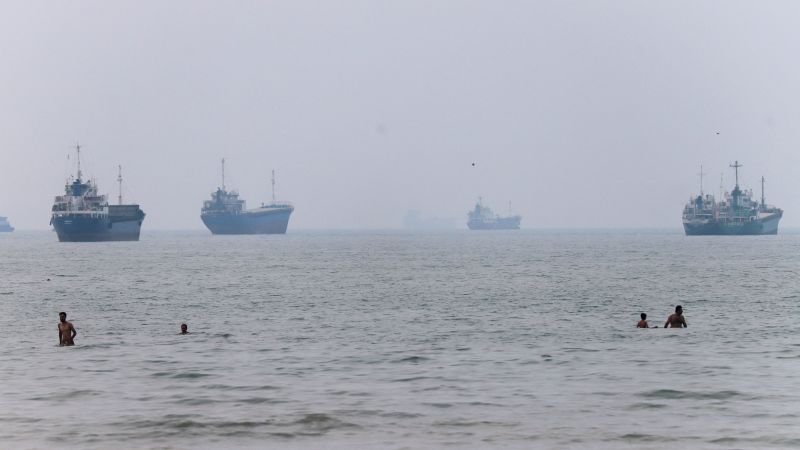
• Strait of Hormuz: Oman recently delivered a proposal to the US and other allies on the future of the vital waterway, according to a regional diplomat and a US source familiar. The security threat level for the critical strait has been raised to “substantial” due to the risk of mines and clearance operations, according to the Joint Maritime Information Center.
3 Posts
China has emerged as the main beneficiary of the Strait of Hormuz closure, according to Washington D.C.-based strategic advisory firm The Asia Group.
In a report published this week, it said the stoppage of crude oil and other commodities from the Middle East has unevenly impacted economies in Asia, which relies heavily on imports for its fuel.
But China’s ability to diversify its energy supply and tap into emergency reserves has given it strategic advantages in an otherwise widely disruptive crisis, The Asia Group said.
China has helped cushion the global oil shock, seen its clean energy tech exports surge and framed the war in Iran as another example in which Chinese leadership could supersede the US in ending global conflicts.
If the energy shortages persist, China may still suffer further from higher material prices and a broader global economic slowdown, which would hit demand for Chinese exports at a time when the economy has become increasingly reliant on them to maintain growth.
Still, The Asia Group argues that China is well-positioned to weather further macroeconomic volatility.
Iran-Qatar talks today will cover the implementation of Tehran’s agreement with the US, as well as its frozen assets, Iranian Foreign Ministry spokesperson Esmaeil Baghaei said Tuesday.
He said that Iran’s negotiating team had no plan to meet with the American delegation in the coming days.
He added that $6 billion of Iran’s frozen funds have not been transferred to Tehran, but he said this would happen “according to the advancement of negotiations.”
Iranian authorities plan to hold funeral ceremonies for slain Supreme Leader Ali Khamenei from July 4 to July 9 across Iran and Iraq, months after his death.
The delay has raised questions about the condition of his son and successor and criticism from detractors who say the state is trying to inflate attendance.
Iraq has confirmed that funeral processions for Khamenei will be held in Najaf and Karbala, two Shiite holy cities south of Baghdad. Iraq’s Popular Mobilization Units have invited local and foreign media to register for accreditation to cover the events.
More on the funeral schedule below:
A tribute ceremony for foreign leaders and senior officials is planned in Tehran on July 3, with public farewell ceremonies set for July 4 and 5 at the capital’s Imam Khomeini Mosalla, according to a schedule published by Iran’s semi-official Fars News Agency.
A funeral procession in the capital is scheduled for July 6.
Further ceremonies are planned for July 7 in Qom, July 8 in Najaf and Karbala, and July 9 in Mashhad, which is considered Iran’s Shiite spiritual capital. The northeastern city is also Khamenei’s hometown, and he is to be buried there at the Shrine of Imam Reza, one of the holiest sites in Shiite Islam and a major pilgrimage destination.
• Iran-Qatar talks: Today’s discussions will cover the implementation of Tehran’s agreement with the US, as well as its frozen assets, Iranian Foreign Ministry spokesperson Esmaeil Baghaei said yesterday. He added that Iran’s negotiating team had no plan to meet with the American delegation in the coming days.
• US-Iran talks: The Iran–Qatar talks come a day after US envoy Steve Witkoff and President Donald Trump’s son-in-law Jared Kushner held meetings in Doha with Qatari mediators on Tuesday.
• Strait of Hormuz: Oman recently delivered a proposal to the US and other allies on the future of the vital waterway, according to a regional diplomat and a US source familiar. The security threat level for the critical strait has been raised to “substantial” due to the risk of mines and clearance operations, according to the Joint Maritime Information Center.
China has emerged as the main beneficiary of the Strait of Hormuz closure, according to Washington D.C.-based strategic advisory firm The Asia Group.
In a report published this week, it said the stoppage of crude oil and other commodities from the Middle East has unevenly impacted economies in Asia, which relies heavily on imports for its fuel.
But China’s ability to diversify its energy supply and tap into emergency reserves has given it strategic advantages in an otherwise widely disruptive crisis, The Asia Group said.
China has helped cushion the global oil shock, seen its clean energy tech exports surge and framed the war in Iran as another example in which Chinese leadership could supersede the US in ending global conflicts.
If the energy shortages persist, China may still suffer further from higher material prices and a broader global economic slowdown, which would hit demand for Chinese exports at a time when the economy has become increasingly reliant on them to maintain growth.
Still, The Asia Group argues that China is well-positioned to weather further macroeconomic volatility.
Iran-Qatar talks today will cover the implementation of Tehran’s agreement with the US, as well as its frozen assets, Iranian Foreign Ministry spokesperson Esmaeil Baghaei said Tuesday.
He said that Iran’s negotiating team had no plan to meet with the American delegation in the coming days.
He added that $6 billion of Iran’s frozen funds have not been transferred to Tehran, but he said this would happen “according to the advancement of negotiations.”
Iranian authorities plan to hold funeral ceremonies for slain Supreme Leader Ali Khamenei from July 4 to July 9 across Iran and Iraq, months after his death.
The delay has raised questions about the condition of his son and successor and criticism from detractors who say the state is trying to inflate attendance.
Iraq has confirmed that funeral processions for Khamenei will be held in Najaf and Karbala, two Shiite holy cities south of Baghdad. Iraq’s Popular Mobilization Units have invited local and foreign media to register for accreditation to cover the events.
More on the funeral schedule below:
A tribute ceremony for foreign leaders and senior officials is planned in Tehran on July 3, with public farewell ceremonies set for July 4 and 5 at the capital’s Imam Khomeini Mosalla, according to a schedule published by Iran’s semi-official Fars News Agency.
A funeral procession in the capital is scheduled for July 6.
Further ceremonies are planned for July 7 in Qom, July 8 in Najaf and Karbala, and July 9 in Mashhad, which is considered Iran’s Shiite spiritual capital. The northeastern city is also Khamenei’s hometown, and he is to be buried there at the Shrine of Imam Reza, one of the holiest sites in Shiite Islam and a major pilgrimage destination.



Responses