
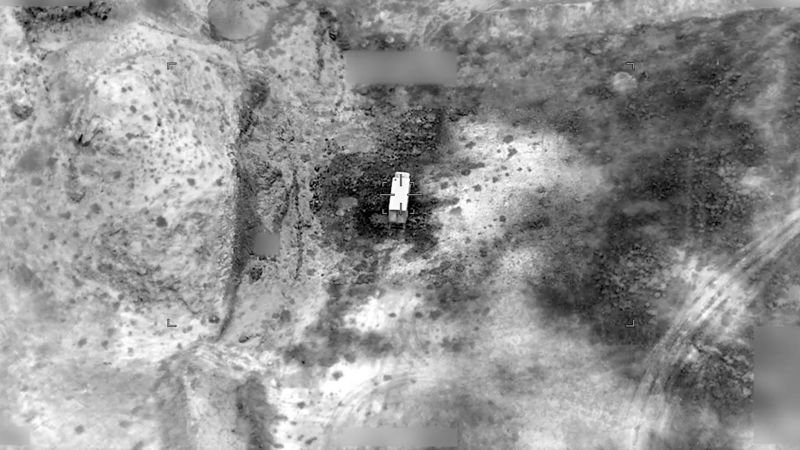
• Iran’s threat: The Iranian military warned the Strait of Hormuz was an “unbreakable red line,” after exchanges of fire with the US escalated. The military added it would destroy “all infrastructure throughout the region” if President Donald Trump acted on his threat to attack Iranian infrastructure.
• Fifth day of strikes: The US military launched more waves of attacks on Iran on Wednesday, largely focused on the south but also penetrating deep into Iran. Trump is also weighing options to expand the US military operation, sources told CNN. Iran responded with more attacks on Gulf states.
• Blockade underway: The US military struck an empty oil tanker bound for Kharg Island, an economic lifeline for Tehran, marking the first vessel disabled since the naval blockade of Iranian ports went back into effect. As traffic in the waterway decreases, the oil market is facing the same squeeze that has taken millions of barrels offline per day since March.
22 Posts
Diplomatic gains have reversed over the past week after the US attacked Iranian cities in response to Tehran’s strikes on shipping in the Strait of Hormuz.
And in a familiar pattern, US President Donald Trump once again threatened to strike Iranian bridges and power plants, prompting the Iranian military to issue counterthreats of expanding its targets across the region and blocking other maritime straits.
In four months of hostilities, Iran and the US have exchanged similar threats and engaged in tit-for-tat military escalation, yet diplomacy has continued. Despite this latest round of strikes being the most intense since the April ceasefire, Iranian officials have yet to follow Trump in declaring the truce “over.”
Since the war began, Iran has been keen to demonstrate its ability to withstand pressure and respond to any escalation by inflicting pain of its own. It has sought to send a clear signal that it too possesses military options, and will use them. This round is no different.
“If America’s hostile actions against Iran continue, the Islamic Republic’s response will be beyond the enemy’s calculations, and new arenas of confrontation will be formed,” the Iranian army spokesperson Mohammad Akraminia reiterated, according to Iranian state-affiliated media.
Amid growing domestic pressure and US threats to withdraw from the agreement, Iran’s top negotiator, Mohammed Bagher Ghalibaf, warned that Iran could also abandon the deal and resume the war. Yet in the same breath he signaled that diplomacy remains equally important — and the deal remains in place.
“We have never sought war and we are not seeking it now,” the negotiator and speaker of parliament said in a statement Wednesday, “but we must always be prepared for confrontation.”
India has ordered shipowners and operators not to deploy the country’s seafarers on vessels traveling through the Strait of Hormuz amid renewed hostilities in the region.
“No deployment of Indian seafarers on vessels undertaking voyages involving passage through the Strait of Hormuz until further orders,” the Directorate General of Shipping said in a notice issued late Wednesday.
The notice referred to several recent drone attack on shipping in and around the strait, in which two Indian seafarers have been killed.
India is the world’s third-largest supplier of seafarers, with more than 300,000 sailors working across global shipping fleets, according to the government.
An estimated 15,000 Indian seafarers are still stranded on the west of the Strait of Hormuz, according to the Forward Seamen’s Union of India.
Kuwait is “confronting attacks by hostile drones” from Iran, the army said on Thursday, hours after Tehran launched a round of strikes on US-allied nations in the region.
Kuwait’s army said its air defenses were “intercepting hostile attacks” in a post on X around 2 p.m. local time (7 a.m. ET).
The Kuwaiti foreign ministry warned such attacks represent a “serious breach” of international law. “The State of Kuwait holds Iran fully responsible for the continuation of these attacks and their consequences,” the ministry said in a statement on Thursday.
The Iranian military has not commented on the latest round of strikes in Kuwait.
The Persian Gulf’s Arab states were willing to overlook the flaws of the US-Iran memorandum of understanding (MOU) ceasefire agreement because they feared their economies would take another hit if a full-scale war returned, a regional expert said.
“There have been deleterious effects on the economies already as a result of the last couple of weeks, but nothing like what we saw earlier this year,” said H.A. Hellyer from the Royal United Services Institute.
“Even though the MOU was frankly not very well negotiated, you saw the Gulf efforts to come to an MOU because the alternative was returning to wholescale war,” he told CNN’s Lynda Kinkade on “Newsroom.”
Since the MOU collapsed, Iran has targeted US military bases across the Gulf and threatened to destroy “all infrastructure throughout the region.”
The warning came after the US threatened to strike bridges and power plants in Iran next week unless Tehran returns to the negotiating table. On Wednesday, the US military launched a fifth day of strikes on Iran.
Background: The 14-point MOU addressed several touchy subjects between the US and Iran, including extending the ceasefire to Lebanon, where Iranian-backed militias have been at war with Israel, and ending hostilities around the critical shipping route, the Strait of Hormuz.
Amid a flare-up in the conflict between the United States and Iran over control of the Strait of Hormuz, shipping through the critical waterway remains very limited.
Only 13 merchant ships were recorded transiting the Strait on Wednesday, according to data from maritime intelligence analysts at Kpler. Eight left the Persian Gulf; five entered.
Only one vessel — a bulk carrier entering the Gulf — was reported to have used the southern route close to the Omani coast, which has been promoted by the US military as a safer passage.
Most vessels transiting Wednesday used a route close to the Iranian coast, according to Kpler. On Thursday, the MarineTraffic site showed two oil tankers leaving the Gulf close to Iran and another sailing close to the Omani coaat.
The volume of shipping is about one-tenth of the pre-war average, though some vessels are crossing without transponders that would show their location.
Iran has consistently warned that all shipping requires its permission to use the waterway. A military spokesman said Thursday that implementation of Iranian regulations was the only way to reopen the strait, which it declared closed as the recent round of US strikes got underway.
After drone attacks on several ships close to the strait in the last week, US forces said Thursday they had again struck Iran’s missile and drone capabilities as well as coastal surveillance facilities “to further degrade Iran’s ability to threaten innocent mariners crewing commercial vessels transiting the Strait of Hormuz.”
US President Donald Trump is weighing options for expanding military operations in Iran, including a plan to take Kharg Island, a critical Iranian export hub.
It comes as the US escalates its attacks on Iran and as peace talks between Washington and Tehran appear to have stalled.
The tiny island, roughly a third the size of Manhattan, lies just 25 kilometers (15 miles) off Iran’s coast in the Persian Gulf. US officials have described it as the “nexus for all the Iranian oil supply,” and its deep-water jetties are among the few in the region able to accommodate supertankers, making it an important site for oil distribution.
The coral outcrop handles about 90% of Iran’s crude oil exports and is a critical lifeline for the country’s economy.
A declassified 1984 CIA document called Kharg’s facilities “the most vital in Iran’s oil system.”
This isn’t the first time Trump has floated seizing the island, and the US has struck the island multiple times during the war.
And as far back as 1988, decades before he was elected, Trump has talked about invading it.
Inside the administration, opinions are split.
Some White House officials believe taking the island would financially cripple Iran’s Revolutionary Guard and could hasten an end to the war, but others inside the administration are wary, given the ground troops such an operation would require.
The world’s crude oil stocks are falling, eroding one of the major buffers against history’s biggest oil supply shock, the International Energy Agency has warned.
“The global economy is not off the hook yet,” IEA executive director Fatih Birol told CNN’s Jim Sciutto on “The Brief” Wednesday.
Countries have compensated for the loss of oil from the Middle East by relying on increased production from elsewhere. Alternative routes to ship crude out of the region, such as Saudi Arabia’s East-West pipeline, have also helped cushion against higher oil prices, Birol said.
“But this cannot last very long because global crude stocks are going down,” he cautioned.
The world has relied heavily on strategic oil stockpiles to absorb the loss of more than 1 billion barrels of oil since the start of the Iran war. Global oil stockpiles plunged by 360 million barrels between March and May, rebounding slightly in June thanks to rising volumes of oil on water, even as countries continued to draw down on strategic reserves, according to the IEA.
Oil prices have surged this month, after falling to pre-war levels in recent weeks. Brent crude, the global oil benchmark, is up around $13 to almost $85 a barrel. West Texas Intermediate, the US benchmark, has jumped by more than $10 to just under $80 a barrel.
US forces launched a fifth night of attacks on Iran late Wednesday – and appeared to hit areas beyond the southern coast towards the northern Semnan province, Iranian media reported.
As in previous days, the targets were largely in southern and coastal locations, including an area near a cancer hospital in Khuzestan province, Iran’s semi-official agency Mehr News said.
However, strikes were reported as far north as Semnan, just east of Tehran and home to a ballistic missile complex, pointing to a broader range of locations than in previous salvoes. CNN has reached out to CENTCOM for comment.
It comes as Tehran warned forces would “crush” regional infrastructure if US President Donald Trump executed his threat to hit bridges and power plants, insisting the strikes would be “more destructive than ever before.”
Here’s what you need to know:
Iran’s “red line”: A senior Iranian military official cautioned that Tehran would “under no circumstances” allow any US interference in the key Strait of Hormuz, describing such actions as “Iran’s unbreakable red line.” The flare-up in violence stems from tensions over Hormuz.
US strikes overnight: CENTCOM said it struck areas “to further degrade Iran’s ability to threaten innocent mariners crewing commercial vessels transiting the Strait of Hormuz” on Wednesday. At least 35 people have been killed and more than 300 others injured by the recent US strikes, Iran’s health ministry said Wednesday.
Tehran hits regional nations: Authorities in Jordan downed eight Iranian missiles early Thursday, the country’s state media said. Elsewhere, Bahrain’s interior ministry said sirens were sounding and Kuwaiti army officials said air defenses were also fielding drone attacks.
Diplomacy stalemate: Both US and Iranian officials indicated an openness to talks, even as strikes persisted. Iran’s chief negotiator insisted Tehran “must always be prepared for fighting” but also “use diplomacy,” while US President JD Vance sought to defend negotiation efforts while renewing hostilities.
CNN’s Lauren Chadwick contributed reporting.
Pakistan has signaled its commitment to bringing the US and Iran back to the negotiating table amid the latest escalation.
The country’s foreign ministry said in a statement today that it is “actively engaged with key interlocutors across the region in support of efforts aimed at de-escalation, dialogue, and a peaceful resolution of the situation.”
A principal mediator in the war, Pakistan also reiterated a call “on all parties to exercise maximum restraint and refrain from any actions that could further undermine regional peace and stability,” saying that it “firmly believes that there is no alternative to sustained engagement, dialogue, and diplomacy.”
Pakistan “will continue to encourage all sides to end the violence” and for talks to resume, the foreign ministry statement said.
It also noted that countries in the Global South are bearing the brunt of the war. Unlike wealthy nations with the reserves and infrastructure to buffer the crisis in the Strait of Hormuz, import-dependent economies are more vulnerable to immediate, cascading supply chain shocks.
More than 300 people have been injured and 35 others killed in recent US strikes against Iran, the country’s Health Ministry said Wednesday.
Among the dead are two women and a teenager, according to Hossein Kermanpour, the Health Ministry’s spokesperson.
Kermanpour said the injuries were sustained during the Iranian month of Tir, which is from June 22 to July 22.
CNN cannot independently verify the figure.
The investigation into a US strike that hit a school in Iran has sat for months with a military command while leaders have held off on ordering a critical, standard intelligence review to help determine what happened, according to three sources familiar with the matter.
Within a week of the strike, the first two stages of a “battle damage assessment” focused on answering basic questions including whether the strike hit and damaged the intended target had been completed, indicating that the US was responsible for striking the Shajareh Tayyiba school in Minab, the sources said.
But a third standard review stage, a step where analysts – typically from the Defense Intelligence Agency – review the entire body of relevant satellite imagery and other intelligence sources to provide a more holistic determination about what took place and how a strike impacted the broader mission, was not ordered, the sources said.
Read the full story here.
If President Donald Trump carries out his threat to hit Iranian infrastructure, then Iran will destroy “all infrastructure throughout the region,” an Iranian military spokesperson said Thursday.
Trump has warned that the US would strike bridges and power plants in Iran next week unless Tehran returns to the negotiating table.
If these threats are carried out, Iran’s response will “not be merely proportionate, it will be superior,” said Ebrahim Zolfaghari, the spokesperson for the Iranian military’s central command, in a statement reported by state broadcaster IRIB.
The region’s infrastructure “will be crushed” in “such a way that no trace of it will remain,” he added.
Iran will “under no circumstances” permit the US to “interfere” with the Strait of Hormuz, he added. “This is Iran’s unbreakable red line.”
A satellite image from the European Space Agency show a warehouse damaged in an Iranian drone strike on Wednesday.
Visible damage and burn marks can be seen at the building.
On Wednesday, CNN reported video appearing to show an Iranian drone striking an already-burning warehouse in an industrial area near Mina Abdullah in Kuwait.
Iran’s revolutionary guards claimed to have struck a US Army logistics and support center located in Mina Abdullah. It’s not clear if there is any US link to the warehouse in the images and video. CNN requested comment from US Central Command on the Iranian claim.
Video released by Iranian state media shows patients being evacuated from Shahid Baghaei Hospital in Iran’s southwestern city of Ahvaz on Wednesday.
Families and patients at the facility, which specializes in the care and treatment of children with cancer, were temporarily evacuated after a projectile from a US strike landed nearby, state-run Islamic Republic of Iran Broadcasting (IRIB) reported.
One hospital staff member told IRIB that many of those evacuated were critically ill.
“One person was holding his child, another was in a wheelchair, another was being carried by others,” the staff member said.
The hospital’s director said 211 patients had to be relocated, according to state news agency IRNA. Valiollah Hayati, deputy governor for security and law enforcement of Khuzestan Province, where Ahvaz is located, reported that a strike caused damage to nearby homes and shattered the windows of some housing units, according to IRIB.
Nikki Nikbakht is one of many Iranian’s abroad fearing for the safety of their loved ones as the Islamic Republic intensifies repression and increases the speed of executions since the war with the US.
Her brothers, Hadi and Fazlollah, are just two of many political prisoners whom the Islamic Republic of Iran gave the death sentence. They are accused of encouraging dissent against the regime and were convicted of broad charges of corruption, CNN’s Isobel Yeung reports.
At least 47 political prisoners have been killed since the conflict broke out, according to the Norway-based Iran Human Rights NGO. The group believes the Iranian regime has ramped up executions under the cover of war.
CNN’s Isobel Yeung has more here:
Nearly two days since its naval blockade of Iranian ports went back into effect, the US has ramped up enforcement in the Strait of Hormuz. Here’s the latest news on the embattled waterway:
Disabled tanker: The US said Wednesday it had disabled an empty oil tanker sailing toward Iran’s Kharg Island by firing hellfire missiles into the ship’s smokestack. The Curacao-flagged ship had “ignored multiple warnings,” US Central Command (CENTCOM) said on X.
Redirected ships: The US military also said it had redirected two “compliant” commercial vessels in the first 24 hours of the blockade. During the first US blockade from mid-April to mid-June, CENTCOM claimed to have redirected 142 ships and disabled nine.
US strikes Tunb: The US military conducted a 90-minute wave of strikes on Greater Tunb Island Wednesday morning, targeting coastal defense systems and cruise missile storage and launch sites with precision munitions, according to CENTCOM. Great Tunb is one of the small islands near the western entrance to the strait which helps form Iran’s “arch defense.” The US said the strikes were intended to degrade Iran’s ability to attack ships in the strait.
Subdued traffic: At least 13 commercial ships passed through the strait in the first 24 hours of the blockade, according to MarineTraffic data. The numbers are consistent with the depressed transit levels recorded over recent days since negotiations fell apart.
CNN’s Aleena Fayaz, Kit Maher and Avery Schmitz.
Jordan’s military said its air defenses intercepted and downed eight Iranian missiles early Thursday local time that were headed toward the country, state media reported.
Debris from the interceptions fell in several locations but no injuries or damage were reported, the Jordanian Armed Forces said, according to the state news agency Petra.
The Iranian Army claimed to have targeted US military assets in Jordan, including launching drone strikes on communications systems and fuel storage at the Al-Azraq air base, Iran’s Islamic Republic News Agency and Press TV reported.
US Central Command has not commented on the Iranian reports, and CNN cannot independently verify the claims.
Other regional attacks: Overnight, Bahrain’s interior ministry said sirens were sounding and warned residents to take shelter.
And Kuwait’s air defenses were “confronting attacks by hostile drones,” according to the General Staff of the Army. Iran claimed to have targeted US infrastructure at military bases in Kuwait, according to the semi-official Tasnim news agency.
The US military carried out a fifth day of attacks on Iran that it said were aimed at degrading its ability to target vessels in the Strait of Hormuz.
President Donald Trump is also weighing options to expand the US military operation, sources told CNN.
If you’re just dropping in, here are the latest headlines:
Fresh strikes: Explosions were heard in several areas across Iran, including Bandar Abbas and the southern cities of Ahvaz and Chabahar, late Wednesday, state media reported. Air defenses were also activated in parts of Tehran early Thursday local time, according to state media, and a resident told CNN they were awoken by a loud explosion. Iranian media reported locations in the center and north of the country have also been struck in recent hours. More than 260 people have been wounded in recent US strikes, the country’s Health Ministry said.
Strait of Hormuz: A second wave of US strikes late Wednesday targeted Iranian command centers, air defense sites, missile and drone capabilities, and coastal surveillance facilities, the military said. In an earlier wave, US forces attacked Greater Tunb, a strategic island in the Persian Gulf that forms part of Iran’s “arch defense.”
Trump mulling expanded operation: Officials have told CNN those strikes could lay the groundwork for a larger military operation. According to two officials, the US president is now weighing an operation to take Kharg Island, the critical Iranian export hub, and to bomb underground complexes at Pickaxe Mountain, believed to be connected to Iran’s nuclear program.
Diplomacy deadlock: Iran will continue to respond “firmly” to US strikes and has no plans for negotiations, Iran’s foreign ministry spokesperson said. At the same time, Iran’s chief negotiator said Tehran must continue to defend itself while also remaining open to diplomatic talks. US Vice President JD Vance, meanwhile, offered a defense of attempting diplomacy with Iran, saying the war will not be won through military force alone.
Blockade continues: The US military said it disabled an empty oil tanker sailing toward Kharg Island. It marks the first vessel disabled since the US naval blockade went back into effect. The US military also said it has redirected two commercial vessels since its naval blockade began. And shipping through the waterway remains subdued, with 13 commercial ships passing through over the last 24 hours.
American freed: Trump said that Iran has released an American woman who he said had been wrongfully detained in the country since December 2024. The woman was identified by her attorney as Dena Karari.
CNN’s Zachary Cohen, Kit Maher, Lex Harvey, Kevin Liptak, Avery Schmitz, Elsie Hammond, Aleena Fayaz, Yasha Saebi, Mitchell McCluskey, and Alejandra Jaramillo contributed reporting.
As traffic has once again slowed to a trickle in the Strait of Hormuz, the oil market is facing the same squeeze that has taken millions of barrels offline per day since March.
But the world is now missing a major buffer that helped ease the potential oil price shock the first time around: strategic crude stockpiles.
According to a Wednesday blog post from the International Monetary Fund, a deficit of about 4 million barrels a day between March and May was supplanted by a drawdown in crude inventories.
During the war in Iran, the International Energy Agency implemented the largest historic release of 400 million barrels of oil from their emergency reserves.
China was also able to help mitigate a global shortage by cutting refinery output and leaning on domestic inventories rather than buying from the market.
However, the IMF said much of that supply shock absorber has been used up.
In a research note this week, Goldman Sachs also said that China may be looking to purchase more crude now as well, as it looks to replenish its own stockpiles and prices have fallen from their May highs.
President Donald Trump said Wednesday that Iran has released an American woman who he said had been wrongfully detained in the country since December 2024 – as the US military continues to strike Iran.
Trump did not identify the person or provide additional details about the circumstances of her release. CNN has reached out to the White House and the Office of the Special Presidential Envoy for Hostage Affairs.
The woman has since been identified by her attorney as Dena Karari.
Here’s what else we know:
Karari was detained, charged and released on bail with an exit ban that blocked her from leaving Iran, a source familiar told CNN.
Karari’s lawyer, Jared Genser, told CNN that Karari had been subjected to “a coercive exit ban” and had been targeted because she operated “a non-profit called the Children of Mehr Foundation, which helped impoverished children in Iran with private donor support and authorization of an OFAC license.”
While Karari was never physically detained, Genser said, she was interrogated by Iranian authorities dozens of times and suffered physical and psychological hardships.
Her lawyer also wrote in a social media post that he was “delighted and excited to report that my client U.S. citizen #DenaKarari, who had been trapped in #Iran since December 2024 on bogus charges is now free.” The lawyer thanked Trump and said his client was “now safe and traveling back to the United States.”
As of last month, the US government was tracking at least six Americans detained in Iran, a US official said, including two who had been designated as wrongfully detained.
• Iran’s threat: The Iranian military warned the Strait of Hormuz was an “unbreakable red line,” after exchanges of fire with the US escalated. The military added it would destroy “all infrastructure throughout the region” if President Donald Trump acted on his threat to attack Iranian infrastructure.
• Fifth day of strikes: The US military launched more waves of attacks on Iran on Wednesday, largely focused on the south but also penetrating deep into Iran. Trump is also weighing options to expand the US military operation, sources told CNN. Iran responded with more attacks on Gulf states.
• Blockade underway: The US military struck an empty oil tanker bound for Kharg Island, an economic lifeline for Tehran, marking the first vessel disabled since the naval blockade of Iranian ports went back into effect. As traffic in the waterway decreases, the oil market is facing the same squeeze that has taken millions of barrels offline per day since March.
Diplomatic gains have reversed over the past week after the US attacked Iranian cities in response to Tehran’s strikes on shipping in the Strait of Hormuz.
And in a familiar pattern, US President Donald Trump once again threatened to strike Iranian bridges and power plants, prompting the Iranian military to issue counterthreats of expanding its targets across the region and blocking other maritime straits.
In four months of hostilities, Iran and the US have exchanged similar threats and engaged in tit-for-tat military escalation, yet diplomacy has continued. Despite this latest round of strikes being the most intense since the April ceasefire, Iranian officials have yet to follow Trump in declaring the truce “over.”
Since the war began, Iran has been keen to demonstrate its ability to withstand pressure and respond to any escalation by inflicting pain of its own. It has sought to send a clear signal that it too possesses military options, and will use them. This round is no different.
“If America’s hostile actions against Iran continue, the Islamic Republic’s response will be beyond the enemy’s calculations, and new arenas of confrontation will be formed,” the Iranian army spokesperson Mohammad Akraminia reiterated, according to Iranian state-affiliated media.
Amid growing domestic pressure and US threats to withdraw from the agreement, Iran’s top negotiator, Mohammed Bagher Ghalibaf, warned that Iran could also abandon the deal and resume the war. Yet in the same breath he signaled that diplomacy remains equally important — and the deal remains in place.
“We have never sought war and we are not seeking it now,” the negotiator and speaker of parliament said in a statement Wednesday, “but we must always be prepared for confrontation.”
India has ordered shipowners and operators not to deploy the country’s seafarers on vessels traveling through the Strait of Hormuz amid renewed hostilities in the region.
“No deployment of Indian seafarers on vessels undertaking voyages involving passage through the Strait of Hormuz until further orders,” the Directorate General of Shipping said in a notice issued late Wednesday.
The notice referred to several recent drone attack on shipping in and around the strait, in which two Indian seafarers have been killed.
India is the world’s third-largest supplier of seafarers, with more than 300,000 sailors working across global shipping fleets, according to the government.
An estimated 15,000 Indian seafarers are still stranded on the west of the Strait of Hormuz, according to the Forward Seamen’s Union of India.
Kuwait is “confronting attacks by hostile drones” from Iran, the army said on Thursday, hours after Tehran launched a round of strikes on US-allied nations in the region.
Kuwait’s army said its air defenses were “intercepting hostile attacks” in a post on X around 2 p.m. local time (7 a.m. ET).
The Kuwaiti foreign ministry warned such attacks represent a “serious breach” of international law. “The State of Kuwait holds Iran fully responsible for the continuation of these attacks and their consequences,” the ministry said in a statement on Thursday.
The Iranian military has not commented on the latest round of strikes in Kuwait.
The Persian Gulf’s Arab states were willing to overlook the flaws of the US-Iran memorandum of understanding (MOU) ceasefire agreement because they feared their economies would take another hit if a full-scale war returned, a regional expert said.
“There have been deleterious effects on the economies already as a result of the last couple of weeks, but nothing like what we saw earlier this year,” said H.A. Hellyer from the Royal United Services Institute.
“Even though the MOU was frankly not very well negotiated, you saw the Gulf efforts to come to an MOU because the alternative was returning to wholescale war,” he told CNN’s Lynda Kinkade on “Newsroom.”
Since the MOU collapsed, Iran has targeted US military bases across the Gulf and threatened to destroy “all infrastructure throughout the region.”
The warning came after the US threatened to strike bridges and power plants in Iran next week unless Tehran returns to the negotiating table. On Wednesday, the US military launched a fifth day of strikes on Iran.
Background: The 14-point MOU addressed several touchy subjects between the US and Iran, including extending the ceasefire to Lebanon, where Iranian-backed militias have been at war with Israel, and ending hostilities around the critical shipping route, the Strait of Hormuz.
Amid a flare-up in the conflict between the United States and Iran over control of the Strait of Hormuz, shipping through the critical waterway remains very limited.
Only 13 merchant ships were recorded transiting the Strait on Wednesday, according to data from maritime intelligence analysts at Kpler. Eight left the Persian Gulf; five entered.
Only one vessel — a bulk carrier entering the Gulf — was reported to have used the southern route close to the Omani coast, which has been promoted by the US military as a safer passage.
Most vessels transiting Wednesday used a route close to the Iranian coast, according to Kpler. On Thursday, the MarineTraffic site showed two oil tankers leaving the Gulf close to Iran and another sailing close to the Omani coaat.
The volume of shipping is about one-tenth of the pre-war average, though some vessels are crossing without transponders that would show their location.
Iran has consistently warned that all shipping requires its permission to use the waterway. A military spokesman said Thursday that implementation of Iranian regulations was the only way to reopen the strait, which it declared closed as the recent round of US strikes got underway.
After drone attacks on several ships close to the strait in the last week, US forces said Thursday they had again struck Iran’s missile and drone capabilities as well as coastal surveillance facilities “to further degrade Iran’s ability to threaten innocent mariners crewing commercial vessels transiting the Strait of Hormuz.”
US President Donald Trump is weighing options for expanding military operations in Iran, including a plan to take Kharg Island, a critical Iranian export hub.
It comes as the US escalates its attacks on Iran and as peace talks between Washington and Tehran appear to have stalled.
The tiny island, roughly a third the size of Manhattan, lies just 25 kilometers (15 miles) off Iran’s coast in the Persian Gulf. US officials have described it as the “nexus for all the Iranian oil supply,” and its deep-water jetties are among the few in the region able to accommodate supertankers, making it an important site for oil distribution.
The coral outcrop handles about 90% of Iran’s crude oil exports and is a critical lifeline for the country’s economy.
A declassified 1984 CIA document called Kharg’s facilities “the most vital in Iran’s oil system.”
This isn’t the first time Trump has floated seizing the island, and the US has struck the island multiple times during the war.
And as far back as 1988, decades before he was elected, Trump has talked about invading it.
Inside the administration, opinions are split.
Some White House officials believe taking the island would financially cripple Iran’s Revolutionary Guard and could hasten an end to the war, but others inside the administration are wary, given the ground troops such an operation would require.
The world’s crude oil stocks are falling, eroding one of the major buffers against history’s biggest oil supply shock, the International Energy Agency has warned.
“The global economy is not off the hook yet,” IEA executive director Fatih Birol told CNN’s Jim Sciutto on “The Brief” Wednesday.
Countries have compensated for the loss of oil from the Middle East by relying on increased production from elsewhere. Alternative routes to ship crude out of the region, such as Saudi Arabia’s East-West pipeline, have also helped cushion against higher oil prices, Birol said.
“But this cannot last very long because global crude stocks are going down,” he cautioned.
The world has relied heavily on strategic oil stockpiles to absorb the loss of more than 1 billion barrels of oil since the start of the Iran war. Global oil stockpiles plunged by 360 million barrels between March and May, rebounding slightly in June thanks to rising volumes of oil on water, even as countries continued to draw down on strategic reserves, according to the IEA.
Oil prices have surged this month, after falling to pre-war levels in recent weeks. Brent crude, the global oil benchmark, is up around $13 to almost $85 a barrel. West Texas Intermediate, the US benchmark, has jumped by more than $10 to just under $80 a barrel.
US forces launched a fifth night of attacks on Iran late Wednesday – and appeared to hit areas beyond the southern coast towards the northern Semnan province, Iranian media reported.
As in previous days, the targets were largely in southern and coastal locations, including an area near a cancer hospital in Khuzestan province, Iran’s semi-official agency Mehr News said.
However, strikes were reported as far north as Semnan, just east of Tehran and home to a ballistic missile complex, pointing to a broader range of locations than in previous salvoes. CNN has reached out to CENTCOM for comment.
It comes as Tehran warned forces would “crush” regional infrastructure if US President Donald Trump executed his threat to hit bridges and power plants, insisting the strikes would be “more destructive than ever before.”
Here’s what you need to know:
Iran’s “red line”: A senior Iranian military official cautioned that Tehran would “under no circumstances” allow any US interference in the key Strait of Hormuz, describing such actions as “Iran’s unbreakable red line.” The flare-up in violence stems from tensions over Hormuz.
US strikes overnight: CENTCOM said it struck areas “to further degrade Iran’s ability to threaten innocent mariners crewing commercial vessels transiting the Strait of Hormuz” on Wednesday. At least 35 people have been killed and more than 300 others injured by the recent US strikes, Iran’s health ministry said Wednesday.
Tehran hits regional nations: Authorities in Jordan downed eight Iranian missiles early Thursday, the country’s state media said. Elsewhere, Bahrain’s interior ministry said sirens were sounding and Kuwaiti army officials said air defenses were also fielding drone attacks.
Diplomacy stalemate: Both US and Iranian officials indicated an openness to talks, even as strikes persisted. Iran’s chief negotiator insisted Tehran “must always be prepared for fighting” but also “use diplomacy,” while US President JD Vance sought to defend negotiation efforts while renewing hostilities.
CNN’s Lauren Chadwick contributed reporting.
Pakistan has signaled its commitment to bringing the US and Iran back to the negotiating table amid the latest escalation.
The country’s foreign ministry said in a statement today that it is “actively engaged with key interlocutors across the region in support of efforts aimed at de-escalation, dialogue, and a peaceful resolution of the situation.”
A principal mediator in the war, Pakistan also reiterated a call “on all parties to exercise maximum restraint and refrain from any actions that could further undermine regional peace and stability,” saying that it “firmly believes that there is no alternative to sustained engagement, dialogue, and diplomacy.”
Pakistan “will continue to encourage all sides to end the violence” and for talks to resume, the foreign ministry statement said.
It also noted that countries in the Global South are bearing the brunt of the war. Unlike wealthy nations with the reserves and infrastructure to buffer the crisis in the Strait of Hormuz, import-dependent economies are more vulnerable to immediate, cascading supply chain shocks.
More than 300 people have been injured and 35 others killed in recent US strikes against Iran, the country’s Health Ministry said Wednesday.
Among the dead are two women and a teenager, according to Hossein Kermanpour, the Health Ministry’s spokesperson.
Kermanpour said the injuries were sustained during the Iranian month of Tir, which is from June 22 to July 22.
CNN cannot independently verify the figure.
The investigation into a US strike that hit a school in Iran has sat for months with a military command while leaders have held off on ordering a critical, standard intelligence review to help determine what happened, according to three sources familiar with the matter.
Within a week of the strike, the first two stages of a “battle damage assessment” focused on answering basic questions including whether the strike hit and damaged the intended target had been completed, indicating that the US was responsible for striking the Shajareh Tayyiba school in Minab, the sources said.
But a third standard review stage, a step where analysts – typically from the Defense Intelligence Agency – review the entire body of relevant satellite imagery and other intelligence sources to provide a more holistic determination about what took place and how a strike impacted the broader mission, was not ordered, the sources said.
Read the full story here.
If President Donald Trump carries out his threat to hit Iranian infrastructure, then Iran will destroy “all infrastructure throughout the region,” an Iranian military spokesperson said Thursday.
Trump has warned that the US would strike bridges and power plants in Iran next week unless Tehran returns to the negotiating table.
If these threats are carried out, Iran’s response will “not be merely proportionate, it will be superior,” said Ebrahim Zolfaghari, the spokesperson for the Iranian military’s central command, in a statement reported by state broadcaster IRIB.
The region’s infrastructure “will be crushed” in “such a way that no trace of it will remain,” he added.
Iran will “under no circumstances” permit the US to “interfere” with the Strait of Hormuz, he added. “This is Iran’s unbreakable red line.”
A satellite image from the European Space Agency show a warehouse damaged in an Iranian drone strike on Wednesday.
Visible damage and burn marks can be seen at the building.
On Wednesday, CNN reported video appearing to show an Iranian drone striking an already-burning warehouse in an industrial area near Mina Abdullah in Kuwait.
Iran’s revolutionary guards claimed to have struck a US Army logistics and support center located in Mina Abdullah. It’s not clear if there is any US link to the warehouse in the images and video. CNN requested comment from US Central Command on the Iranian claim.
Video released by Iranian state media shows patients being evacuated from Shahid Baghaei Hospital in Iran’s southwestern city of Ahvaz on Wednesday.
Families and patients at the facility, which specializes in the care and treatment of children with cancer, were temporarily evacuated after a projectile from a US strike landed nearby, state-run Islamic Republic of Iran Broadcasting (IRIB) reported.
One hospital staff member told IRIB that many of those evacuated were critically ill.
“One person was holding his child, another was in a wheelchair, another was being carried by others,” the staff member said.
The hospital’s director said 211 patients had to be relocated, according to state news agency IRNA. Valiollah Hayati, deputy governor for security and law enforcement of Khuzestan Province, where Ahvaz is located, reported that a strike caused damage to nearby homes and shattered the windows of some housing units, according to IRIB.
Nikki Nikbakht is one of many Iranian’s abroad fearing for the safety of their loved ones as the Islamic Republic intensifies repression and increases the speed of executions since the war with the US.
Her brothers, Hadi and Fazlollah, are just two of many political prisoners whom the Islamic Republic of Iran gave the death sentence. They are accused of encouraging dissent against the regime and were convicted of broad charges of corruption, CNN’s Isobel Yeung reports.
At least 47 political prisoners have been killed since the conflict broke out, according to the Norway-based Iran Human Rights NGO. The group believes the Iranian regime has ramped up executions under the cover of war.
CNN’s Isobel Yeung has more here:
Nearly two days since its naval blockade of Iranian ports went back into effect, the US has ramped up enforcement in the Strait of Hormuz. Here’s the latest news on the embattled waterway:
Disabled tanker: The US said Wednesday it had disabled an empty oil tanker sailing toward Iran’s Kharg Island by firing hellfire missiles into the ship’s smokestack. The Curacao-flagged ship had “ignored multiple warnings,” US Central Command (CENTCOM) said on X.
Redirected ships: The US military also said it had redirected two “compliant” commercial vessels in the first 24 hours of the blockade. During the first US blockade from mid-April to mid-June, CENTCOM claimed to have redirected 142 ships and disabled nine.
US strikes Tunb: The US military conducted a 90-minute wave of strikes on Greater Tunb Island Wednesday morning, targeting coastal defense systems and cruise missile storage and launch sites with precision munitions, according to CENTCOM. Great Tunb is one of the small islands near the western entrance to the strait which helps form Iran’s “arch defense.” The US said the strikes were intended to degrade Iran’s ability to attack ships in the strait.
Subdued traffic: At least 13 commercial ships passed through the strait in the first 24 hours of the blockade, according to MarineTraffic data. The numbers are consistent with the depressed transit levels recorded over recent days since negotiations fell apart.
CNN’s Aleena Fayaz, Kit Maher and Avery Schmitz.
Jordan’s military said its air defenses intercepted and downed eight Iranian missiles early Thursday local time that were headed toward the country, state media reported.
Debris from the interceptions fell in several locations but no injuries or damage were reported, the Jordanian Armed Forces said, according to the state news agency Petra.
The Iranian Army claimed to have targeted US military assets in Jordan, including launching drone strikes on communications systems and fuel storage at the Al-Azraq air base, Iran’s Islamic Republic News Agency and Press TV reported.
US Central Command has not commented on the Iranian reports, and CNN cannot independently verify the claims.
Other regional attacks: Overnight, Bahrain’s interior ministry said sirens were sounding and warned residents to take shelter.
And Kuwait’s air defenses were “confronting attacks by hostile drones,” according to the General Staff of the Army. Iran claimed to have targeted US infrastructure at military bases in Kuwait, according to the semi-official Tasnim news agency.
The US military carried out a fifth day of attacks on Iran that it said were aimed at degrading its ability to target vessels in the Strait of Hormuz.
President Donald Trump is also weighing options to expand the US military operation, sources told CNN.
If you’re just dropping in, here are the latest headlines:
Fresh strikes: Explosions were heard in several areas across Iran, including Bandar Abbas and the southern cities of Ahvaz and Chabahar, late Wednesday, state media reported. Air defenses were also activated in parts of Tehran early Thursday local time, according to state media, and a resident told CNN they were awoken by a loud explosion. Iranian media reported locations in the center and north of the country have also been struck in recent hours. More than 260 people have been wounded in recent US strikes, the country’s Health Ministry said.
Strait of Hormuz: A second wave of US strikes late Wednesday targeted Iranian command centers, air defense sites, missile and drone capabilities, and coastal surveillance facilities, the military said. In an earlier wave, US forces attacked Greater Tunb, a strategic island in the Persian Gulf that forms part of Iran’s “arch defense.”
Trump mulling expanded operation: Officials have told CNN those strikes could lay the groundwork for a larger military operation. According to two officials, the US president is now weighing an operation to take Kharg Island, the critical Iranian export hub, and to bomb underground complexes at Pickaxe Mountain, believed to be connected to Iran’s nuclear program.
Diplomacy deadlock: Iran will continue to respond “firmly” to US strikes and has no plans for negotiations, Iran’s foreign ministry spokesperson said. At the same time, Iran’s chief negotiator said Tehran must continue to defend itself while also remaining open to diplomatic talks. US Vice President JD Vance, meanwhile, offered a defense of attempting diplomacy with Iran, saying the war will not be won through military force alone.
Blockade continues: The US military said it disabled an empty oil tanker sailing toward Kharg Island. It marks the first vessel disabled since the US naval blockade went back into effect. The US military also said it has redirected two commercial vessels since its naval blockade began. And shipping through the waterway remains subdued, with 13 commercial ships passing through over the last 24 hours.
American freed: Trump said that Iran has released an American woman who he said had been wrongfully detained in the country since December 2024. The woman was identified by her attorney as Dena Karari.
CNN’s Zachary Cohen, Kit Maher, Lex Harvey, Kevin Liptak, Avery Schmitz, Elsie Hammond, Aleena Fayaz, Yasha Saebi, Mitchell McCluskey, and Alejandra Jaramillo contributed reporting.
As traffic has once again slowed to a trickle in the Strait of Hormuz, the oil market is facing the same squeeze that has taken millions of barrels offline per day since March.
But the world is now missing a major buffer that helped ease the potential oil price shock the first time around: strategic crude stockpiles.
According to a Wednesday blog post from the International Monetary Fund, a deficit of about 4 million barrels a day between March and May was supplanted by a drawdown in crude inventories.
During the war in Iran, the International Energy Agency implemented the largest historic release of 400 million barrels of oil from their emergency reserves.
China was also able to help mitigate a global shortage by cutting refinery output and leaning on domestic inventories rather than buying from the market.
However, the IMF said much of that supply shock absorber has been used up.
In a research note this week, Goldman Sachs also said that China may be looking to purchase more crude now as well, as it looks to replenish its own stockpiles and prices have fallen from their May highs.
President Donald Trump said Wednesday that Iran has released an American woman who he said had been wrongfully detained in the country since December 2024 – as the US military continues to strike Iran.
Trump did not identify the person or provide additional details about the circumstances of her release. CNN has reached out to the White House and the Office of the Special Presidential Envoy for Hostage Affairs.
The woman has since been identified by her attorney as Dena Karari.
Here’s what else we know:
Karari was detained, charged and released on bail with an exit ban that blocked her from leaving Iran, a source familiar told CNN.
Karari’s lawyer, Jared Genser, told CNN that Karari had been subjected to “a coercive exit ban” and had been targeted because she operated “a non-profit called the Children of Mehr Foundation, which helped impoverished children in Iran with private donor support and authorization of an OFAC license.”
While Karari was never physically detained, Genser said, she was interrogated by Iranian authorities dozens of times and suffered physical and psychological hardships.
Her lawyer also wrote in a social media post that he was “delighted and excited to report that my client U.S. citizen #DenaKarari, who had been trapped in #Iran since December 2024 on bogus charges is now free.” The lawyer thanked Trump and said his client was “now safe and traveling back to the United States.”
As of last month, the US government was tracking at least six Americans detained in Iran, a US official said, including two who had been designated as wrongfully detained.




Responses