
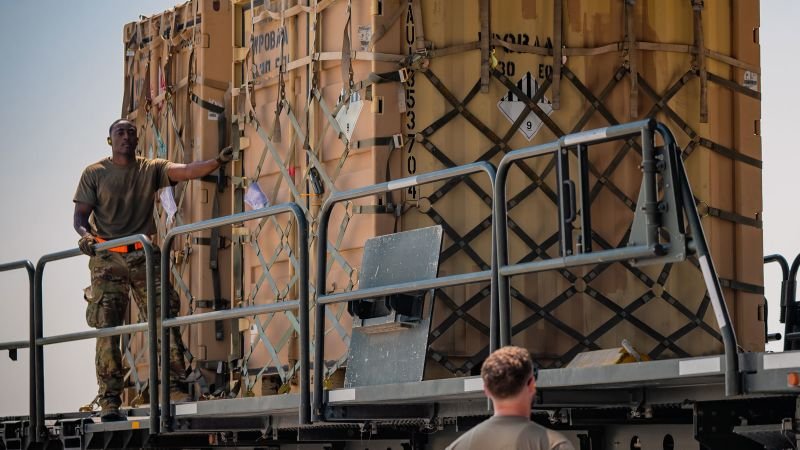
Missile stockpiles: The US military has burned through nearly 80% of its interceptors for a key missile defense system as commanders warn the Pentagon’s munitions stockpile is “dangerously low,” according to sources familiar with the matter.
War talks: President Donald Trump says the Strait of Hormuz would be reopened “soon” or he would launch a harsh new attack on Iran. Efforts to resolve the US-Iran conflict are “in very progressive stages,” Qatar’s Foreign Ministry said, adding that drafts of a potential agreement are “being circulated” but that there are no direct talks between the two sides.
Critical waterway: Iran says it is continuing negotiations with Oman over safe shipping routes through Hormuz, while Qatar called for freedom of navigation and consensus among regional states on any future arrangements. US Secretary of State Marco Rubio said there has been progress “but not finality” on an agreement.
4 Posts
The United States has used up nearly 80% of interceptors for a key missile defense system as senior US military commanders are warning the Pentagon’s munitions stockpile is “dangerously low,” according to sources familiar with the matter, while mediators seek to bring Washington and Tehran back to the negotiating table.
Here’s a look at today’s top headlines:
Missile stockpiles: The US military has burned through nearly four-fifths of its THAAD missile inventory and roughly half of its Patriot interceptors since the start of the war, according to two sources familiar with the matter. Gulf allies have also raised fresh concerns about how a shortage of air defense systems could impact their ability to repel potential Iranian retaliation.
Trump warning: The US President said “very good discussions” were underway with Tehran, but warned if Iran backed out of their commitments he would return to strikes. Trump told Fox News his first choice was not renewing attacks but instead pursuing a diplomatic agreement.
War talks: His comments came after drafts of a possible deal between the US and Iran are “being circulated,” and are “in very progressive stages,” a spokesperson from Qatar’s Foreign Ministry told reporters. The ministry emphasized that this is for a short-term diplomatic solution, and that negotiators “don’t have anything on the books when it comes to direct talks.”
Iran-Oman negotiations: Iran said Tuesday it is continuing negotiations with Oman over safe shipping routes through the Strait of Hormuz. Qatar’s Foreign Ministry spokesperson said freedom of navigation through the strait must be protected and the waterway should not be used for political pressure. However, Iran’s goal in talks “is to set temporary arrangements” — lasting up to three months — where Tehran can control a route through the strait, an official said.
Strait of Hormuz: The Trump administration is signaling optimism on a deal for the crucial waterway, with US Secretary of State Marco Rubio saying there has been progress “but not finality” on an agreement and US Treasury Secretary Scott Bessent floating a potential consensus. Shipping analysts are less upbeat.
US troop casualties: Two top Democratic lawmakers have criticized the Pentagon’s Iran war casualty accounting, and said they are “investigating” the department’s public reporting of US troops killed and wounded in the ongoing war with Iran. CNN previously reported that the Pentagon has been slow to disclose news of wounded troops throughout the conflict.
President Trump says the Strait of Hormuz would be reopened “soon” or he would launch a harsh new attack on Iran.
Speaking in an interview on Fox News, Trump said “very good discussions” were underway with Tehran, but warned if Iran backed out of their commitments he would return to strikes.
Trump said his first choice was not renewing attacks but instead pursuing a diplomatic agreement.
“We hit them very, very hard. But the hard hit is yet to come and hopefully we won’t have to use it,” he said. “I hope we won’t – we’re having very good discussions. They don’t like to admit that.”
Iran has denied it is holding direct discussions with the United States. Instead, Tehran has said it is working with Oman on an arrangement to reopen the Strait.
Mediators hope once the Strait is reopened the US and Iran can resume nuclear talks.
The US military has exhausted nearly 80% of its interceptors for a key missile defense system as senior US military commanders are warning that the Pentagon’s munitions stockpile is “dangerously low,” according to multiple sources familiar with the matter.
Stockpiles of key air defense systems have been particularly depleted during the war with Iran.
The US military has burned through nearly four-fifths of its THAAD missile inventory and roughly half of its Patriot interceptors since the start of the war, according to two sources familiar with the latest inventory report.
The disclosure of the low THAAD inventory has not been previously reported.
The Center for Strategic and International Studies estimates the United States had around 2,200 Patriot interceptors (of the platform’s two most modern variants) and 452 THAAD missiles in its stockpile before the Iran war started.
Gulf allies have also raised fresh concerns about how a shortage of air defense systems could impact their ability to repel potential Iranian retaliation if President Donald Trump decides to escalate the ongoing conflict.
Several of those countries rely on US air defense systems and have acknowledged the stockpile shortage could hinder their own ability to intercept incoming Iranian missile and drone attacks – particularly if they are targeted in response to any American escalation, multiple officials said.
Read the full story here.
Iran said Tuesday it is continuing negotiations with Oman over safe shipping routes through the Strait of Hormuz, while Qatar called for freedom of navigation and consensus among regional states on any future arrangements governing the strategic waterway.
Iranian Foreign Ministry spokesperson Esmaeil Baghaei said the talks between Iran and Oman, the two countries bordering the strait, were focused on establishing safe inbound and outbound shipping routes while protecting both countries’ sovereign rights and national security interests, as cited by Iran’s state-run Islamic Republic News Agency (IRNA).
Separately, Qatar’s Foreign Ministry spokesperson, Majed al-Ansari, said Tuesday that freedom of navigation through the strait must be protected under international law. He said the waterway should not be used for political pressure or unilateral interests and that any future arrangements should be agreed upon by all affected regional countries.
Al-Ansari also said that Qatar, Oman and Pakistan are working to facilitate engagement between Iran and the United States but that no final agreement has been reached.
The office of Qatar’s emir, Sheikh Tamim bin Hamad Al Thani, said later Tuesday that he received a phone call from US President Donald Trump and that they discussed ways to de-escalate tensions and bridge differences between the United States and Iran. The emir’s office did not provide details.
Missile stockpiles: The US military has burned through nearly 80% of its interceptors for a key missile defense system as commanders warn the Pentagon’s munitions stockpile is “dangerously low,” according to sources familiar with the matter.
War talks: President Donald Trump says the Strait of Hormuz would be reopened “soon” or he would launch a harsh new attack on Iran. Efforts to resolve the US-Iran conflict are “in very progressive stages,” Qatar’s Foreign Ministry said, adding that drafts of a potential agreement are “being circulated” but that there are no direct talks between the two sides.
Critical waterway: Iran says it is continuing negotiations with Oman over safe shipping routes through Hormuz, while Qatar called for freedom of navigation and consensus among regional states on any future arrangements. US Secretary of State Marco Rubio said there has been progress “but not finality” on an agreement.
The United States has used up nearly 80% of interceptors for a key missile defense system as senior US military commanders are warning the Pentagon’s munitions stockpile is “dangerously low,” according to sources familiar with the matter, while mediators seek to bring Washington and Tehran back to the negotiating table.
Here’s a look at today’s top headlines:
Missile stockpiles: The US military has burned through nearly four-fifths of its THAAD missile inventory and roughly half of its Patriot interceptors since the start of the war, according to two sources familiar with the matter. Gulf allies have also raised fresh concerns about how a shortage of air defense systems could impact their ability to repel potential Iranian retaliation.
Trump warning: The US President said “very good discussions” were underway with Tehran, but warned if Iran backed out of their commitments he would return to strikes. Trump told Fox News his first choice was not renewing attacks but instead pursuing a diplomatic agreement.
War talks: His comments came after drafts of a possible deal between the US and Iran are “being circulated,” and are “in very progressive stages,” a spokesperson from Qatar’s Foreign Ministry told reporters. The ministry emphasized that this is for a short-term diplomatic solution, and that negotiators “don’t have anything on the books when it comes to direct talks.”
Iran-Oman negotiations: Iran said Tuesday it is continuing negotiations with Oman over safe shipping routes through the Strait of Hormuz. Qatar’s Foreign Ministry spokesperson said freedom of navigation through the strait must be protected and the waterway should not be used for political pressure. However, Iran’s goal in talks “is to set temporary arrangements” — lasting up to three months — where Tehran can control a route through the strait, an official said.
Strait of Hormuz: The Trump administration is signaling optimism on a deal for the crucial waterway, with US Secretary of State Marco Rubio saying there has been progress “but not finality” on an agreement and US Treasury Secretary Scott Bessent floating a potential consensus. Shipping analysts are less upbeat.
US troop casualties: Two top Democratic lawmakers have criticized the Pentagon’s Iran war casualty accounting, and said they are “investigating” the department’s public reporting of US troops killed and wounded in the ongoing war with Iran. CNN previously reported that the Pentagon has been slow to disclose news of wounded troops throughout the conflict.
President Trump says the Strait of Hormuz would be reopened “soon” or he would launch a harsh new attack on Iran.
Speaking in an interview on Fox News, Trump said “very good discussions” were underway with Tehran, but warned if Iran backed out of their commitments he would return to strikes.
Trump said his first choice was not renewing attacks but instead pursuing a diplomatic agreement.
“We hit them very, very hard. But the hard hit is yet to come and hopefully we won’t have to use it,” he said. “I hope we won’t – we’re having very good discussions. They don’t like to admit that.”
Iran has denied it is holding direct discussions with the United States. Instead, Tehran has said it is working with Oman on an arrangement to reopen the Strait.
Mediators hope once the Strait is reopened the US and Iran can resume nuclear talks.
The US military has exhausted nearly 80% of its interceptors for a key missile defense system as senior US military commanders are warning that the Pentagon’s munitions stockpile is “dangerously low,” according to multiple sources familiar with the matter.
Stockpiles of key air defense systems have been particularly depleted during the war with Iran.
The US military has burned through nearly four-fifths of its THAAD missile inventory and roughly half of its Patriot interceptors since the start of the war, according to two sources familiar with the latest inventory report.
The disclosure of the low THAAD inventory has not been previously reported.
The Center for Strategic and International Studies estimates the United States had around 2,200 Patriot interceptors (of the platform’s two most modern variants) and 452 THAAD missiles in its stockpile before the Iran war started.
Gulf allies have also raised fresh concerns about how a shortage of air defense systems could impact their ability to repel potential Iranian retaliation if President Donald Trump decides to escalate the ongoing conflict.
Several of those countries rely on US air defense systems and have acknowledged the stockpile shortage could hinder their own ability to intercept incoming Iranian missile and drone attacks – particularly if they are targeted in response to any American escalation, multiple officials said.
Read the full story here.
Iran said Tuesday it is continuing negotiations with Oman over safe shipping routes through the Strait of Hormuz, while Qatar called for freedom of navigation and consensus among regional states on any future arrangements governing the strategic waterway.
Iranian Foreign Ministry spokesperson Esmaeil Baghaei said the talks between Iran and Oman, the two countries bordering the strait, were focused on establishing safe inbound and outbound shipping routes while protecting both countries’ sovereign rights and national security interests, as cited by Iran’s state-run Islamic Republic News Agency (IRNA).
Separately, Qatar’s Foreign Ministry spokesperson, Majed al-Ansari, said Tuesday that freedom of navigation through the strait must be protected under international law. He said the waterway should not be used for political pressure or unilateral interests and that any future arrangements should be agreed upon by all affected regional countries.
Al-Ansari also said that Qatar, Oman and Pakistan are working to facilitate engagement between Iran and the United States but that no final agreement has been reached.
The office of Qatar’s emir, Sheikh Tamim bin Hamad Al Thani, said later Tuesday that he received a phone call from US President Donald Trump and that they discussed ways to de-escalate tensions and bridge differences between the United States and Iran. The emir’s office did not provide details.





Responses