
New York —
The CPAP Baddies assembled in Vancouver, Canada.
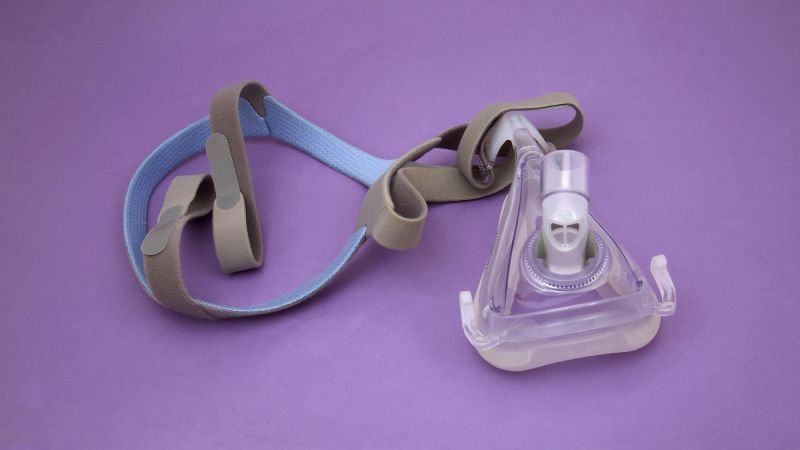
The first official hangout for users of the sleep apnea treatment device was an influencer-style event hosted by medical company ResMed, complete with merchandise, hors d’oeuvres and a photobooth.
At a podcast-style corner, a host asked the attendees, who scored invites through an Instagram link open to the public: “When you first heard ‘CPAP baddie,’ what did you think?” Their answers were later posted on social media.
ResMed, which dominates the market for the medical devices, is among the companies shifting towards influencer-style videos – but with regular customers and employees, not cultivated internet personalities. This can mean having employees post content with a fuzzy mic while on the clock, hosting influencer-type events for customers or other efforts.
These tactics often cater to baddies — Gen Z-speak for any fashionable, confident person — to reach younger, usually female audiences. ResMed started its baddies page this spring and began creating social media content with CPAP users.
Last year, Polymarket started Telegram and X pages for the “Baddies of Polymarket” last year for girlies who want to get into betting markets. And Starbucks announced last year that some of its employees would create social media content like influencers for the company’s official accounts.
Brands are “recognizing that ‘normal people’ content outperforms polished campaigns,” Keith Bendes, chief strategy officer at influencer marketing agency Linqia, told CNN over email. ResMed said the CPAP Baddies pages reached 4.2 million views over the past 30 days and have 6,200 followers across Instagram and TikTok.
But even if the content with “normal people” seems authentic, it’s part of a detailed strategy from companies that often have huge marketing budgets. Some of these “baddies” are paid through brand partnerships or ad revenue on posts. (The CPAP Baddies attending events did not receive any extra cash.)
And influencer-style marketing doesn’t always work. The Baddies of Polymarket page, for example, hasn’t posted anything since April on X , and the company faced fierce scrutiny this year for its deceptive marketing tactics using paid creators.
At the end of the day, these campaigns are “essentially brands spinning up a ‘fan account’ that they themselves operate,” Bendes said.
Anti-marketing is the vibe companies are going for these days. Consumers have outgrown TV commercials and billboards, and a review from an influencer can come off as more authentic t han a TV advertisement.
A GoDaddy survey of 1,000 consumers in 2024 showed that 40% of Gen Z trusted a product posted they’re by an influencer over a business, and more likely to buy something recommended by an influencer over a friend.
“You’ve probably never seen (our ads) on linear television,” ResMed Chief Marketing Officer Katrin Pucknat told CNN. “We are running a lot of experiments to see what works.”
But paid influencer marketing might have reached its peak – and not every company has the kind of trendy product influencers want to work with. Instead, companies like ResMed are now seeing a payoff from more organic ambassadors.
The internet was charmed earlier this year by the “Staples Baddie,” TikTok user Kaeden Rowland, who worked as a print specialist at a Staples in upstate New York.
She taught viewers different ways they could utilize their local Staples: create direct mail campaigns, renew their passports and get their “shawty a 40% off mug.”
“I don’t have any formal training in marketing,” Rowland told CNN previously. “I’m just opinionated with cheekbones.”
ResMed had to get creative with marketing an unsexy product like a CPAP machine. It’s also facing headwinds from recent US Food and Drug Administration approval for a GLP1 to treat sleep apnea in adults with obesity, which analysts estimated could lead to a $270 million to $300 million reduction in annual device sales over the next decade .
That’s why ResMed customers are seeing big shifts toward offline meetups and community pages, which help build brand loyalty in a different way. Unlike billboards and radio commercials, influencers — or influencer-like content — can be a part of and engage with these communities.
And it doesn’t take much to become a CPAP Baddie, according to the Instagram account. You’re a certified CPAP Baddie if you use the device, sleep next to someone who does or simply support the sleep apnea community. The company works with its employees to make videos such as a dance to Jordin Spark’s “No Air” wearing CPAP machines.
“The idea was not to engage a lot of influencers and amplify the message but really engage with these real humans (who use the machines),” Pucknat said.
LeAnn Day, a 43-year-old from Indiana, is part of ResMed’s CPAP Baddies page and said she’s been invited to events by the company. She said she isn’t paid by ResMed.
She began using a CPAP machine two years ago, and eight months ago, she started making CPAP content on TikTok. Some of her videos have almost 5 million views. Her first video’s virality – one of her lying in a bed with a machine on with a popular audio – took her by surprise.
“There’s so many people out there that have sleep apnea that don’t talk about it,” she told CNN. “There’s a stigma attached to it.”
Normalizing sleep apnea treatments is the goal of the CPAP Baddies page, Pucknat told CNN. Women especially go disproportionately undiagnosed, she said.
Marketing tactics have drawn intense scrutiny at other companies, such as Polymarket. But a corporation-backed community page doesn’t seem to bother this CPAP Baddie.
ResMed sees “how many people are resonating with other people posting positively about (using CPAP machines). I think they kind of wanted to jump in on that,” Day said. “I don’t necessarily think that’s a bad thing.”
CNN’s Harmeet Kaur contributed to this report.





Responses