
• Iranian leader pledges “revenge”: In his first message since the funeral of his father and predecessor, Supreme Leader Mojtaba Khamenei said in a written statement attributed to him read on state media that “revenge is the demand of our nation and must certainly be carried out.”
• Trump’s threat: US President Donald Trump said in a post late Friday evening that “missiles are locked and loaded” ready to strike Iran, should Tehran try to assassinate him. The American leader’s threat comes as Israeli intelligence operatives had shared news of alleged threats to assassinate him.
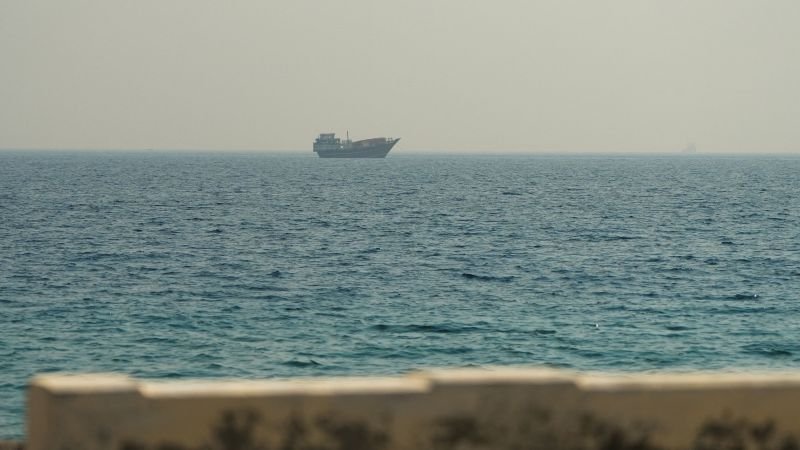
• Diplomatic efforts: Iran’s Foreign Minister Abbas Araghchi is in Oman to discuss the Strait of Hormuz, where traffic has once again slowed following the recent US-Iran strikes. Mediators have been working to get talks between the US and Iran on track amid the tensions. Meanwhile, senior US officials said Washington expects Tehran to issue a statement soon that the strait is open and commercial vessels won’t be attacked.
12 Posts
Earlier this week, with talks between Washington and Tehran paused for the funeral of late Iranian Supreme Leader Ayatollah Ali Khamenei, the US carried out a series of strikes on Iran in what it said was retaliation for Iranian attacks on commercial ships near the Strait of Hormuz.
Tehran said that it would deliver a “crushing response,” claiming that it had launched missiles and drones at dozens of US military targets across Bahrain and Kuwait.
Here’s what both sides have said about the status of talks between them since then:
After the strikes on Wednesday morning local time, Iran’s foreign ministry accused Washington of “treaty-breaking,” saying the US was responsible for the escalation.
US President Donald Trump said Wednesday morning that he believed his country’s Memorandum of Understanding with Iran was “over,” adding: “It’s a waste of time dealing with them.”
Later in the day, after Trump threatened to carry out more attacks on Iran, a US official told CNN’s Pamela Brown that the ceasefire had “at least temporarily ceased.” Trump also claimed that Iran had called him asking to make a deal after the repeated US strikes, but that he didn’t know if the country was “worthy of making a deal.”
On Thursday, Mohammad Bagher Ghalibaf, Iran’s lead negotiator, warned the US that “if you strike, you’ll get hit.” He posted on X: “America still hasn’t learned that bullying and breaking promises are no longer cost-free.” Iran’s Foreign Ministry accused the US of committing a “blatant war crime” after strikes on two bridges in eastern Iran.
A US official said the same day that Washington and Tehran were continuing to engage in technical negotiations on nuclear issues, despite the exchanges of fire. The US is “still committed to finding a resolution, and technical talks continue,” the official said.
Yesterday, Trump said that the US had agreed to continue talks with Iran, but also that Washington had informed Tehran that the ceasefire was no longer in effect.
Hours later, Ghalibaf said that Tehran is prepared for “all-out defense” if the US breaks the MoU signed last month.
Meanwhile, a senior US official told CNN that the opposing sides will “never” move on to negotiations on nuclear weapons if Iran doesn’t allow tankers to freely traverse the Strait of Hormuz.
CNN’s Lex Harvey, Kevin Liptak, Betsy Klein, Pamela Brown, Dalia Abdelwahab, Helen Regan, Mostafa Salem, Alejandra Jaramillo, Aida Karimi, Lauren Kent and Kit Maher contributed to this reporting.
Iran’s supreme leader, Mojtaba Khamenei, thanked what he described as the “tens of millions” of people he said attended recent funeral ceremonies for his father, the late Ayatollah Ali Khamenei, in a purported message released by Iranian media today.
There were no signs that Mojtaba attended the days-long funeral events after significant speculation about his whereabouts and health.
Khamenei’s funeral events were crowded with millions of mourners, but with a population of around 90 million, many others in Iran did not take part, and some were even angry at the spectacle.
Over several days of mourning, Iran’s Health Ministry said around 15 million people were expected to take part, but they did not reveal how that figure was calculated. CNN cannot independently verify how many people attended.
Mojtaba has not been seen in public since the war began in February, only communicating with his supporters via written statements attributed to him.
Iran’s Supreme Leader Mojtaba Khamenei said that “revenge” must be carried out for the killing of his father Ayatollah Ali Khamenei by the United States and Israel.
“Revenge is the demand of our nation and must certainly be carried out,” a statement carried by state-linked Fars news agency and attributed to him read.
The pledge will be fulfilled “soon” whether “we are present or not,” the statement read.
The warning came just hours after US President Donald Trump threatened to “decimate” Iran if it tries to kill him.
Israeli intelligence operatives recently told the Trump administration of alleged threats to assassinate the US leader. The threats, according to an Israeli source and a US official, reflect a desire among some factions of Tehran’s hardline leadership. However, two US sources familiar with the matter said recent US intelligence assessments show no indication of a new, specific Iranian plot to kill Trump, but rather a steady drumbeat of chatter about various Iranian actors wanting to do so.
The new supreme leader has yet to appear in public since his appointment.
Believed to have been wounded in the February attack by Israel and the US that killed his father, mother and wife, the new supreme leader has remained in hiding since the war began, communicating with his supporters only through written statements, never showing his face or using his voice.
Saturday’s message is one of a handful of messages that have been released since Khamenei’s appointment.
CNN’s Mostafa Salem, Zachary Cohen and Tal Shalev contributed reporting.
Iran’s foreign minister landed in Oman today to discuss the Strait of Hormuz after renewed clashes threatened the fragile US-Iran ceasefire this week. But Oman hasn’t been publicly leading mediation efforts, so why are high-stakes meetings taking place in Muscat?
The memorandum of understanding reached between the US and Iran last month stipulates that Iran “will conduct dialog” with Oman “to define the future administration and maritime services” in the strait.
The current crisis started after the US retaliated against Iran for attacking vessels transiting via a route on the Omani side of the strait that Tehran hadn’t approved. Iran insists on retaining control over shipping through the waterway and says vessels should instead use routes through its own territorial waters.
Iran’s Foreign Ministry says Araghchi’s visit is “part of ongoing bilateral consultations between Iran and Oman.” It’s unclear if Oman is now playing a bigger role in calming tensions but US officials say that Washington expects Tehran to issue a statement after Araghchi’s visit declaring the strait open and saying commercial vessels won’t be attacked.
Oman had been mediating earlier rounds of talks between the US and Iran. But after the US and Israel began striking Iran this year, Oman was usually blunt, becoming an outspoken critic of Trump’s decision to go to war.
Omani Foreign Minister Badr Albusaidi condemned the initial February strikes as a “catastrophe” and a “grave miscalculation.”
Meanwhile, the task of mediation was taken up by Qatar and Pakistan, with Pakistan becoming an unlikely host due to a combination of geographic necessity, deft diplomacy, and shifting regional alliances, analysts say.
In May, after reports that Oman and Iran were considering jointly charging ships to transit the strait, Trump issued a threat, telling reporters: “Oman will behave just like everybody else, or we’ll have to blow them up.”
The US Treasury followed by threatening sanctions against the longstanding US ally in the Gulf.
Still, Oman remains key to resolving this conflict. The ceasefire framework explicitly designates Iran and Oman to negotiate the strategic waterway’s future management, giving Araghchi’s visit to Muscat particular significance.
Iran’s new supreme leader, Mojtaba Khamenei, is expected to issue a message in the coming hours to mark the recent funeral of his father, the late Ayatollah Ali Khamenei, according to semi-official Tasnim news agency.
Mojtaba is thought to have been wounded in the February attack by Israel and the US that killed his father, mother and wife.
He has not been seen in public since, only communicating with his supporters via written statements attributed to him.
CNN’s Pamela Brown goes on board the USS Frank E. Petersen destroyer, the closest Navy ship to Iran, as tensions have risen in the region.
Iran’s foreign minister Abbas Araghchi arrived in Muscat on Saturday, where he will speak with his Omani counterpart about the Strait of Hormuz.
Araghchi’s visit is “part of ongoing bilateral consultations between Iran and Oman on regional developments, particularly the issue of the Strait of Hormuz,” according to a statement from Esmaeil Baghaei, spokesperson for Iran’s Ministry of Foreign Affairs.
The foreign ministers “will discuss and exchange views on establishing appropriate mechanisms to ensure the safe passage of ships through the Strait of Hormuz,” Baghaei said.
His visit comes as interlocutors try to revive the faltering diplomatic process after recent strikes between the US and Iran.
US President Donald Trump previously said that the US-Iran Memorandum of Understanding is “over,” but said that talks with Iran would continue.
Senior US officials have said Washington expects Tehran to issue a public statement in the coming days that the Strait of Hormuz is open and commercial vessels attempting to cross the waterway won’t be attacked.
The officials declined to specify the consequences for Iran if it does not issue such a public declaration. But in broad terms, they warned the US could take further action.
For just the second time in the nearly 50-year history of the Islamic Republic, the country has buried a supreme leader. Ali Khamenei ruled Iran – as a spiritual leader and an iron-fisted autocrat – for nearly four decades. For many in Iran, he’s the only leader they have known.
Then, as the frenzied funeral events reached their climax, US bombs and missiles struck across the country in retaliation at Iranian strikes on civilian shipping in the Strait of Hormuz. After two wars in nine months, there was a sense of tired resignation when news of the airstrikes hit Tehran Wednesday.
The funeral events – especially Monday’s procession through Tehran – were highly emotional affairs. Anger at America – and above all Trump – was everywhere. Every day, dozens of mourners would come up to us with promises to kill the US president in revenge for the assassination of their leader.
That doesn’t mean we only heard blind obedience to the party line.
Scrawled in chalk on the walls segregating men and women at the giant Mosalla mosque complex where Khamenei lay in state this week were slogans of “no negotiation with Satan” and “curse be upon he who negotiates.” Meanwhile, video circulated on social media by both pro and anti-government accounts this week puportedly showing a rock being thrown at the Iranian Foreign Minister Abbas Araghchi as he walked through the streets of Tehran. CNN has not been able to independently verify the video.
Just a week in the Iranian capital has offered an eye-opening insight into where the country is today. Read about it here.
CNN operates in Iran only with the permission of the government but maintains full editorial control of its reports.
Iranian Foreign Minister Abbas Araghchi is expected to travel to Oman on Saturday to discuss the Strait of Hormuz and broader regional developments, a source familiar with the matter told CNN Friday.
Iranian state media IRNA has also reported that Araghchi will travel to Oman on Saturday along with a diplomatic delegation, particularly to discuss the situation in the strait.
The expected visit comes as interlocutors try to revive the faltering diplomatic process. On Friday, US President Donald Trump again declared that the US-Iran Memorandum of Understanding (MoU) is “over,” but said talks with Iran would continue.
Meanwhile, Araghchi accused the United States of violating a clause on Tehran’s nuclear program in their MoU.
The ninth paragraph states that pending the final deal, Iran will “maintain the current status quo of its nuclear program” and that the US will “not impose any new sanctions and will not deploy additional forces in the region.”
Iran’s chief negotiator also said Tehran is prepared for “all-out defense” if the United States breaks the MoU.
The Strait of Hormuz – which runs between Iran and Oman, with their Exclusive Economic Zones (EEZ) meeting in the middle – has emerged as the key stumbling block to the ceasefire, as Iran has continued to assert control over parts of the key waterway and fired on ships earlier this week. In response, the US launched days of military strikes on Iranian targets.
Although US officials have said Iran cannot control the strait, the MoU does not explicitly spell that out. Instead, it is ambiguous, calling for Iran to “make arrangements… for the safe passage of commercial vessels” and engage with Oman “to define the future administration” of the waterway.
CNN’s Rhea Mogul, Eyad Kourdi and Mitchell McCluskey contributed reporting.
American social media influencers have been seen attending the funeral of the late Supreme Leader Ayatollah Ali Khamenei in Iran.
They claim to be showing solidarity with Iran and questioning Western coverage of the country, but are they serving as propaganda for the regime? CNN’s Isobel Yeung talked to one American who was there.
US President Donald Trump has threatened Iran with “1000 Missiles… Locked and Loaded,” adding that the US is “ready, willing, and able, for a one year period of time, subject to extension, to completely decimate and destroy all areas” of the country if its leadership attempts to assassinate him.
Israel’s intelligence had recently shared with the Trump administration Iranian threats to assassinate him. Two US sources familiar with the matter said recent US intelligence assessments show no indication of a new, specific Iranian plot to kill Trump, but rather a steady drumbeat of chatter about various Iranian actors wanting to do so.
Here’s what else to know:
Strait of Hormuz updates: Senior US officials said Washington expects Tehran to issue a public statement in the coming days that the Strait of Hormuz is open. Without safe passage assured in the waterway, the two sides will “never” move on to negotiations on nuclear weapons, a senior US official said. The officials declined to specify the consequences for Iran if it does not issue such a public declaration. But in broad terms, they warned the US could take further action.
New sanctions: Following the Iranian attacks on commercial ships in the strait, the Trump administration on Friday imposed fresh sanctions on Tehran. As traffic in the strait remains muted, at least 15 commercial vessels transited the waterway in the past 24 hours, according to MarineTraffic data.
Iran “distrustful” of US: Foreign Minister Abbas Araghchi accused the United States of violating a clause in their agreement on Tehran’s nuclear program, adding that “Iran has so far kept its word.” Top negotiator Mohammad Bagher Ghalibaf also said that they remain “distrustful of the Americans.” He said: “I made it clear to the US vice president that we have no trust in you.”
On an Iran deal: Any final deal with Iran must include the US obtaining Iran’s enriched uranium, a senior US official insisted Friday, telling reporters: “If we don’t get the dust, we do not have a deal with Iran.”
Travels to Oman: Araghchi is expected to travel to Oman on Saturday to discuss the Strait of Hormuz and broader regional developments, a source familiar with the matter told CNN. Ghalibaf has said Tehran is prepared for “all-out defense” if the US breaks the Memorandum of Understanding signed last month.
Official talks: Prince Mohammed bin Salman bin Abdulaziz Al Saud of Saudi Arabia had a phone call with US President Donald Trump, where the two leaders “reviewed cooperation between the Kingdom and the United States and ways to strengthen it in several areas,” according to a readout of the call.
More talks: Also on Friday, US Secretary of State Marco Rubio spoke with Saudi Foreign Minister Faisal bin Farhan about “the importance of close coordination to promote regional security and stability,” according to a readout from the US State Department. Their call comes a day after Rubio met with the Saudi ambassador to the US, and as regional countries try to stop recent US-Iran tensions from escalating.
CNN’s Rhea Mogul, Jennifer Hansler, Eyad Kourdi, Lauren Kent, Kevin Liptak, Kit Maher and Aida Karimi contributed reporting.
US President Donald Trump has said “missiles are locked and loaded” and ready to strike Iran, should Tehran try to assassinate him.
“1000 Missiles are Locked and Loaded and aimed at the Islamic Republic of Iran, with thousands of more to immediately follow, should the Iranian Government act on its threat, pronounced in many corners of the Globe, to assassinate, or attempt to assassinate, the sitting President of the United States of America, in this case, ME!,” Trump wrote on his Truth Social platform Friday.
He added that “orders have already been given” and the US military is “ready, willing, and able, for a one year period of time, subject to extension, to completely decimate and destroy all areas of Iran.”
Some context: Israel’s intelligence had recently shared with the Trump administration Iranian threats to assassinate him. Two US sources familiar with the matter said recent US intelligence assessments show no indication of a new, specific Iranian plot to kill Trump, but rather a steady drumbeat of chatter about various Iranian actors wanting to do so.
• Iranian leader pledges “revenge”: In his first message since the funeral of his father and predecessor, Supreme Leader Mojtaba Khamenei said in a written statement attributed to him read on state media that “revenge is the demand of our nation and must certainly be carried out.”
• Trump’s threat: US President Donald Trump said in a post late Friday evening that “missiles are locked and loaded” ready to strike Iran, should Tehran try to assassinate him. The American leader’s threat comes as Israeli intelligence operatives had shared news of alleged threats to assassinate him.
• Diplomatic efforts: Iran’s Foreign Minister Abbas Araghchi is in Oman to discuss the Strait of Hormuz, where traffic has once again slowed following the recent US-Iran strikes. Mediators have been working to get talks between the US and Iran on track amid the tensions. Meanwhile, senior US officials said Washington expects Tehran to issue a statement soon that the strait is open and commercial vessels won’t be attacked.
Earlier this week, with talks between Washington and Tehran paused for the funeral of late Iranian Supreme Leader Ayatollah Ali Khamenei, the US carried out a series of strikes on Iran in what it said was retaliation for Iranian attacks on commercial ships near the Strait of Hormuz.
Tehran said that it would deliver a “crushing response,” claiming that it had launched missiles and drones at dozens of US military targets across Bahrain and Kuwait.
Here’s what both sides have said about the status of talks between them since then:
After the strikes on Wednesday morning local time, Iran’s foreign ministry accused Washington of “treaty-breaking,” saying the US was responsible for the escalation.
US President Donald Trump said Wednesday morning that he believed his country’s Memorandum of Understanding with Iran was “over,” adding: “It’s a waste of time dealing with them.”
Later in the day, after Trump threatened to carry out more attacks on Iran, a US official told CNN’s Pamela Brown that the ceasefire had “at least temporarily ceased.” Trump also claimed that Iran had called him asking to make a deal after the repeated US strikes, but that he didn’t know if the country was “worthy of making a deal.”
On Thursday, Mohammad Bagher Ghalibaf, Iran’s lead negotiator, warned the US that “if you strike, you’ll get hit.” He posted on X: “America still hasn’t learned that bullying and breaking promises are no longer cost-free.” Iran’s Foreign Ministry accused the US of committing a “blatant war crime” after strikes on two bridges in eastern Iran.
A US official said the same day that Washington and Tehran were continuing to engage in technical negotiations on nuclear issues, despite the exchanges of fire. The US is “still committed to finding a resolution, and technical talks continue,” the official said.
Yesterday, Trump said that the US had agreed to continue talks with Iran, but also that Washington had informed Tehran that the ceasefire was no longer in effect.
Hours later, Ghalibaf said that Tehran is prepared for “all-out defense” if the US breaks the MoU signed last month.
Meanwhile, a senior US official told CNN that the opposing sides will “never” move on to negotiations on nuclear weapons if Iran doesn’t allow tankers to freely traverse the Strait of Hormuz.
CNN’s Lex Harvey, Kevin Liptak, Betsy Klein, Pamela Brown, Dalia Abdelwahab, Helen Regan, Mostafa Salem, Alejandra Jaramillo, Aida Karimi, Lauren Kent and Kit Maher contributed to this reporting.
Iran’s supreme leader, Mojtaba Khamenei, thanked what he described as the “tens of millions” of people he said attended recent funeral ceremonies for his father, the late Ayatollah Ali Khamenei, in a purported message released by Iranian media today.
There were no signs that Mojtaba attended the days-long funeral events after significant speculation about his whereabouts and health.
Khamenei’s funeral events were crowded with millions of mourners, but with a population of around 90 million, many others in Iran did not take part, and some were even angry at the spectacle.
Over several days of mourning, Iran’s Health Ministry said around 15 million people were expected to take part, but they did not reveal how that figure was calculated. CNN cannot independently verify how many people attended.
Mojtaba has not been seen in public since the war began in February, only communicating with his supporters via written statements attributed to him.
Iran’s Supreme Leader Mojtaba Khamenei said that “revenge” must be carried out for the killing of his father Ayatollah Ali Khamenei by the United States and Israel.
“Revenge is the demand of our nation and must certainly be carried out,” a statement carried by state-linked Fars news agency and attributed to him read.
The pledge will be fulfilled “soon” whether “we are present or not,” the statement read.
The warning came just hours after US President Donald Trump threatened to “decimate” Iran if it tries to kill him.
Israeli intelligence operatives recently told the Trump administration of alleged threats to assassinate the US leader. The threats, according to an Israeli source and a US official, reflect a desire among some factions of Tehran’s hardline leadership. However, two US sources familiar with the matter said recent US intelligence assessments show no indication of a new, specific Iranian plot to kill Trump, but rather a steady drumbeat of chatter about various Iranian actors wanting to do so.
The new supreme leader has yet to appear in public since his appointment.
Believed to have been wounded in the February attack by Israel and the US that killed his father, mother and wife, the new supreme leader has remained in hiding since the war began, communicating with his supporters only through written statements, never showing his face or using his voice.
Saturday’s message is one of a handful of messages that have been released since Khamenei’s appointment.
CNN’s Mostafa Salem, Zachary Cohen and Tal Shalev contributed reporting.
Iran’s foreign minister landed in Oman today to discuss the Strait of Hormuz after renewed clashes threatened the fragile US-Iran ceasefire this week. But Oman hasn’t been publicly leading mediation efforts, so why are high-stakes meetings taking place in Muscat?
The memorandum of understanding reached between the US and Iran last month stipulates that Iran “will conduct dialog” with Oman “to define the future administration and maritime services” in the strait.
The current crisis started after the US retaliated against Iran for attacking vessels transiting via a route on the Omani side of the strait that Tehran hadn’t approved. Iran insists on retaining control over shipping through the waterway and says vessels should instead use routes through its own territorial waters.
Iran’s Foreign Ministry says Araghchi’s visit is “part of ongoing bilateral consultations between Iran and Oman.” It’s unclear if Oman is now playing a bigger role in calming tensions but US officials say that Washington expects Tehran to issue a statement after Araghchi’s visit declaring the strait open and saying commercial vessels won’t be attacked.
Oman had been mediating earlier rounds of talks between the US and Iran. But after the US and Israel began striking Iran this year, Oman was usually blunt, becoming an outspoken critic of Trump’s decision to go to war.
Omani Foreign Minister Badr Albusaidi condemned the initial February strikes as a “catastrophe” and a “grave miscalculation.”
Meanwhile, the task of mediation was taken up by Qatar and Pakistan, with Pakistan becoming an unlikely host due to a combination of geographic necessity, deft diplomacy, and shifting regional alliances, analysts say.
In May, after reports that Oman and Iran were considering jointly charging ships to transit the strait, Trump issued a threat, telling reporters: “Oman will behave just like everybody else, or we’ll have to blow them up.”
The US Treasury followed by threatening sanctions against the longstanding US ally in the Gulf.
Still, Oman remains key to resolving this conflict. The ceasefire framework explicitly designates Iran and Oman to negotiate the strategic waterway’s future management, giving Araghchi’s visit to Muscat particular significance.
Iran’s new supreme leader, Mojtaba Khamenei, is expected to issue a message in the coming hours to mark the recent funeral of his father, the late Ayatollah Ali Khamenei, according to semi-official Tasnim news agency.
Mojtaba is thought to have been wounded in the February attack by Israel and the US that killed his father, mother and wife.
He has not been seen in public since, only communicating with his supporters via written statements attributed to him.
CNN’s Pamela Brown goes on board the USS Frank E. Petersen destroyer, the closest Navy ship to Iran, as tensions have risen in the region.
Iran’s foreign minister Abbas Araghchi arrived in Muscat on Saturday, where he will speak with his Omani counterpart about the Strait of Hormuz.
Araghchi’s visit is “part of ongoing bilateral consultations between Iran and Oman on regional developments, particularly the issue of the Strait of Hormuz,” according to a statement from Esmaeil Baghaei, spokesperson for Iran’s Ministry of Foreign Affairs.
The foreign ministers “will discuss and exchange views on establishing appropriate mechanisms to ensure the safe passage of ships through the Strait of Hormuz,” Baghaei said.
His visit comes as interlocutors try to revive the faltering diplomatic process after recent strikes between the US and Iran.
US President Donald Trump previously said that the US-Iran Memorandum of Understanding is “over,” but said that talks with Iran would continue.
Senior US officials have said Washington expects Tehran to issue a public statement in the coming days that the Strait of Hormuz is open and commercial vessels attempting to cross the waterway won’t be attacked.
The officials declined to specify the consequences for Iran if it does not issue such a public declaration. But in broad terms, they warned the US could take further action.
For just the second time in the nearly 50-year history of the Islamic Republic, the country has buried a supreme leader. Ali Khamenei ruled Iran – as a spiritual leader and an iron-fisted autocrat – for nearly four decades. For many in Iran, he’s the only leader they have known.
Then, as the frenzied funeral events reached their climax, US bombs and missiles struck across the country in retaliation at Iranian strikes on civilian shipping in the Strait of Hormuz. After two wars in nine months, there was a sense of tired resignation when news of the airstrikes hit Tehran Wednesday.
The funeral events – especially Monday’s procession through Tehran – were highly emotional affairs. Anger at America – and above all Trump – was everywhere. Every day, dozens of mourners would come up to us with promises to kill the US president in revenge for the assassination of their leader.
That doesn’t mean we only heard blind obedience to the party line.
Scrawled in chalk on the walls segregating men and women at the giant Mosalla mosque complex where Khamenei lay in state this week were slogans of “no negotiation with Satan” and “curse be upon he who negotiates.” Meanwhile, video circulated on social media by both pro and anti-government accounts this week puportedly showing a rock being thrown at the Iranian Foreign Minister Abbas Araghchi as he walked through the streets of Tehran. CNN has not been able to independently verify the video.
Just a week in the Iranian capital has offered an eye-opening insight into where the country is today. Read about it here.
CNN operates in Iran only with the permission of the government but maintains full editorial control of its reports.
Iranian Foreign Minister Abbas Araghchi is expected to travel to Oman on Saturday to discuss the Strait of Hormuz and broader regional developments, a source familiar with the matter told CNN Friday.
Iranian state media IRNA has also reported that Araghchi will travel to Oman on Saturday along with a diplomatic delegation, particularly to discuss the situation in the strait.
The expected visit comes as interlocutors try to revive the faltering diplomatic process. On Friday, US President Donald Trump again declared that the US-Iran Memorandum of Understanding (MoU) is “over,” but said talks with Iran would continue.
Meanwhile, Araghchi accused the United States of violating a clause on Tehran’s nuclear program in their MoU.
The ninth paragraph states that pending the final deal, Iran will “maintain the current status quo of its nuclear program” and that the US will “not impose any new sanctions and will not deploy additional forces in the region.”
Iran’s chief negotiator also said Tehran is prepared for “all-out defense” if the United States breaks the MoU.
The Strait of Hormuz – which runs between Iran and Oman, with their Exclusive Economic Zones (EEZ) meeting in the middle – has emerged as the key stumbling block to the ceasefire, as Iran has continued to assert control over parts of the key waterway and fired on ships earlier this week. In response, the US launched days of military strikes on Iranian targets.
Although US officials have said Iran cannot control the strait, the MoU does not explicitly spell that out. Instead, it is ambiguous, calling for Iran to “make arrangements… for the safe passage of commercial vessels” and engage with Oman “to define the future administration” of the waterway.
CNN’s Rhea Mogul, Eyad Kourdi and Mitchell McCluskey contributed reporting.
American social media influencers have been seen attending the funeral of the late Supreme Leader Ayatollah Ali Khamenei in Iran.
They claim to be showing solidarity with Iran and questioning Western coverage of the country, but are they serving as propaganda for the regime? CNN’s Isobel Yeung talked to one American who was there.
US President Donald Trump has threatened Iran with “1000 Missiles… Locked and Loaded,” adding that the US is “ready, willing, and able, for a one year period of time, subject to extension, to completely decimate and destroy all areas” of the country if its leadership attempts to assassinate him.
Israel’s intelligence had recently shared with the Trump administration Iranian threats to assassinate him. Two US sources familiar with the matter said recent US intelligence assessments show no indication of a new, specific Iranian plot to kill Trump, but rather a steady drumbeat of chatter about various Iranian actors wanting to do so.
Here’s what else to know:
Strait of Hormuz updates: Senior US officials said Washington expects Tehran to issue a public statement in the coming days that the Strait of Hormuz is open. Without safe passage assured in the waterway, the two sides will “never” move on to negotiations on nuclear weapons, a senior US official said. The officials declined to specify the consequences for Iran if it does not issue such a public declaration. But in broad terms, they warned the US could take further action.
New sanctions: Following the Iranian attacks on commercial ships in the strait, the Trump administration on Friday imposed fresh sanctions on Tehran. As traffic in the strait remains muted, at least 15 commercial vessels transited the waterway in the past 24 hours, according to MarineTraffic data.
Iran “distrustful” of US: Foreign Minister Abbas Araghchi accused the United States of violating a clause in their agreement on Tehran’s nuclear program, adding that “Iran has so far kept its word.” Top negotiator Mohammad Bagher Ghalibaf also said that they remain “distrustful of the Americans.” He said: “I made it clear to the US vice president that we have no trust in you.”
On an Iran deal: Any final deal with Iran must include the US obtaining Iran’s enriched uranium, a senior US official insisted Friday, telling reporters: “If we don’t get the dust, we do not have a deal with Iran.”
Travels to Oman: Araghchi is expected to travel to Oman on Saturday to discuss the Strait of Hormuz and broader regional developments, a source familiar with the matter told CNN. Ghalibaf has said Tehran is prepared for “all-out defense” if the US breaks the Memorandum of Understanding signed last month.
Official talks: Prince Mohammed bin Salman bin Abdulaziz Al Saud of Saudi Arabia had a phone call with US President Donald Trump, where the two leaders “reviewed cooperation between the Kingdom and the United States and ways to strengthen it in several areas,” according to a readout of the call.
More talks: Also on Friday, US Secretary of State Marco Rubio spoke with Saudi Foreign Minister Faisal bin Farhan about “the importance of close coordination to promote regional security and stability,” according to a readout from the US State Department. Their call comes a day after Rubio met with the Saudi ambassador to the US, and as regional countries try to stop recent US-Iran tensions from escalating.
CNN’s Rhea Mogul, Jennifer Hansler, Eyad Kourdi, Lauren Kent, Kevin Liptak, Kit Maher and Aida Karimi contributed reporting.
US President Donald Trump has said “missiles are locked and loaded” and ready to strike Iran, should Tehran try to assassinate him.
“1000 Missiles are Locked and Loaded and aimed at the Islamic Republic of Iran, with thousands of more to immediately follow, should the Iranian Government act on its threat, pronounced in many corners of the Globe, to assassinate, or attempt to assassinate, the sitting President of the United States of America, in this case, ME!,” Trump wrote on his Truth Social platform Friday.
He added that “orders have already been given” and the US military is “ready, willing, and able, for a one year period of time, subject to extension, to completely decimate and destroy all areas of Iran.”
Some context: Israel’s intelligence had recently shared with the Trump administration Iranian threats to assassinate him. Two US sources familiar with the matter said recent US intelligence assessments show no indication of a new, specific Iranian plot to kill Trump, but rather a steady drumbeat of chatter about various Iranian actors wanting to do so.



Responses