
• Hormuz deal: There is a “50-50” chance that Iran and Oman will reach a deal on the Strait of Hormuz by Friday, a senior Gulf official said. Still, such an agreement would still not automatically open the waterway. Iran has also denied any talks with the US, saying its talks with Oman are strictly bilateral.
• “Messy” peace talks: US Vice President JD Vance said during a Fox News interview that deal talks with Iran would “be messy” and that “the Iranians are extraordinarily difficult people” with a “fractured system.”
• Attacks on shipping: Yemen’s Iran-backed Houthi militants said they targeted the Saudi oil tanker Daisy in another key waterway, the Gulf of Aden, claiming they struck the vessel with a ballistic missile and forced it to change course and turn back.
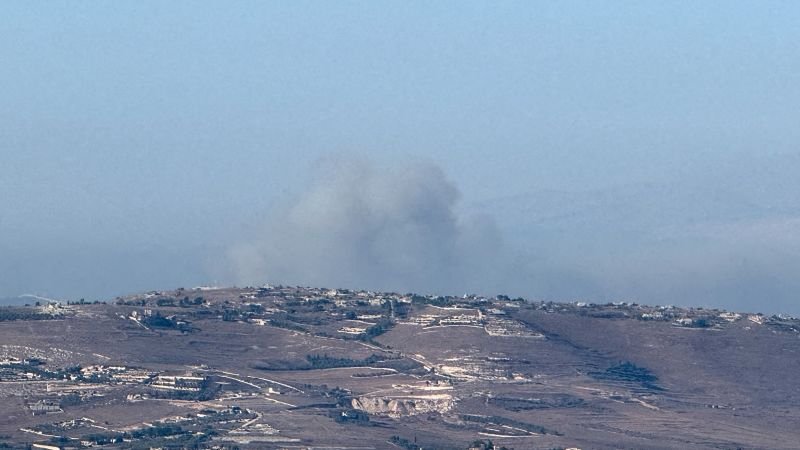
• Israeli strikes in Lebanon: Meanwhile, US-mediated talks between Israel and Lebanon ended earlier than expected Wednesday amid renewed Israeli strikes on southern Lebanon.
4 Posts
As Tehran denies talks with Washington, US Vice President JD Vance said Wednesday that peace negotiations with Iran would “be messy” and take time.
He added that “the Iranians are extraordinarily difficult people” with “a fractured system.” During his interview with Fox News Wednesday evening, Vance said: “Our job is to navigate through that and get the best outcome for the American people, but for the president of the United States as well.”
“But we’re kind of in the middle of the game, and I think people are trying to prejudge exactly how this is going to go,” Vance said.
Earlier on Wednesday, Iranian Deputy Foreign Minister Kazem Gharibabadi said Iran has not yet decided whether to proceed toward the implementation of the previously signed US-Iran memorandum of understanding.
Iran and Oman are close to finalizing a proposed framework for commercial shipping through the Strait of Hormuz. However, the agreement would not automatically reopen the waterway, Iranian Deputy Foreign Minister Kazem Gharibabadi said in an interview with the state-run Islamic Republic News Agency (IRNA).
The ongoing talks between Iran and Oman are critically important because they could lead to the full reopening of the world’s most critical energy chokepoint.
Here’s what the talks have covered:
Gharibabadi said negotiations have continued for more than three weeks and produced broad agreement on proposed inbound and outbound shipping routes.
The talks also covered technical arrangements, the security and sovereignty of Iran and Oman, and a proposed joint coordination center to manage maritime traffic and collect information from vessels.
Under the proposed arrangement, temporary routes near Iran’s Larak Island in the Strait of Hormuz and through Omani territorial waters would close.
Parts of the new inbound and outbound corridors would pass through Iranian waters, marking a departure from a decades-old system under which commercial traffic traveled through Omani waters, Gharibabadi said.
The proposed route would initially operate for two to four months or possibly longer, according to Gharibabadi. Its implementation would require a separate decision by Iran’s senior leadership.
CNN has reached out to the government of Oman for comment on the details shared by the Iranian official.
Gharibabadi said those conditions largely concerned the United States, which he accused of reinstating a naval blockade, resuming hostilities and reimposing sanctions. The US has said it resumed strikes after Iran fired on vessels transiting the strait.
Executions and death sentences in Iran have been on the rise since March, the United Nations’ High Commissioner for Human Rights said Wednesday.
At least 56 people have been executed in Iran on national security-related charges since March 19, including 27 whose cases were linked to the widespread anti-regime protests earlier this year, Volker Türk said in a statement.
The UN human rights chief urged Iranian authorities to stop all executions and move towards abolishing the death penalty.
Türk’s comments come as non-governmental organizations — including the Oslo-based group Iran Human Rights (IHR), which operates with members inside and outside Iran — say that they believe the regime has ramped up executions under the cover of conflict.
Human rights organizations and UN experts have condemned the omission of rights protections from the 14-point Islamabad Memorandum of Understanding (MoU) signed by the United States and Iran in June, warning that it has allowed Tehran to accelerate internal crackdowns and executions.
Mostafa Tajzadeh, a political prisoner and veteran Iranian reformist politician who became one of the most outspoken critics of Iran’s political system from within the establishment, issued an open letter from Evin Prison on Monday, calling for an immediate halt to the executions of the “young protesters.”
He described the executions as “playing with fire,” warning that they “could once again engulf the country in devastating flames.”
Aida Karimi contributed reporting.
Iran and Oman are close to finalizing a proposed framework for commercial shipping through the Strait of Hormuz, according to Iran’s deputy foreign minister. However, it still wouldn’t automatically reopen the critical waterway.
If you’re just dropping in, here’s where things stand:
Negotiations between Iran and Oman on reopening the strait have continued for more than three weeks and produced broad agreement on proposed inbound and outbound shipping routes, Iranian Deputy Foreign Minister Kazem Gharibabadi told state-run media.
However, Gharibabadi denied that Iran is currently negotiating with the US over the waterway, even as President Donald Trump said earlier Wednesday that the Strait of Hormuz would be reopened “soon.” Trump also told Fox News that “very good discussions” were underway with Tehran.
One Gulf official familiar with the talks said there is a “50:50” chance Iran and Oman will reach a deal on Friday.
Italian Foreign Minister Antonio Tajani said he spoke with Iranian Foreign Minister Abbas Araghchi about Iran’s negotiations with Oman. Tajani and Araghchi also had talks with American negotiators on the situation in Lebanon, the Italian foreign ministry said.
Iranian President Masoud Pezeshkian says Iran continues to face mounting pressure from sanctions and conflict. In an interview with state-run media, he said the external pressure was intended to weaken public support for the government.
MarineTraffic data on Wednesday shows at least 10 commercial ships passed through the Strait of Hormuz over the last 25 hours.
In another important waterway, a vessel sank after it was attacked in the Red Sea’s Bab al-Mandeb Strait, the UK Maritime Trade Operations (UKMTO) center reported. Iran-backed Houthis have repeatedly threatened to disrupt shipping through the strait.
Global oil prices rose yesterday, having slid sharply at the start of the week, after signs of disruption to shipping in the Red Sea and conflicting messages about the Strait of Hormuz.
US-mediated talks between Israel and Lebanon ended earlier than expected Wednesday amid renewed Israeli strikes on southern Lebanon.
CNN’s Mohammed Tawfeeq, Aida Karimi, Jennifer Hansler, Christian Edwards, Charbel Mallo, Tim Lister, Sana Noor Haq and Anna Cooban contributed reporting.
• Hormuz deal: There is a “50-50” chance that Iran and Oman will reach a deal on the Strait of Hormuz by Friday, a senior Gulf official said. Still, such an agreement would still not automatically open the waterway. Iran has also denied any talks with the US, saying its talks with Oman are strictly bilateral.
• “Messy” peace talks: US Vice President JD Vance said during a Fox News interview that deal talks with Iran would “be messy” and that “the Iranians are extraordinarily difficult people” with a “fractured system.”
• Attacks on shipping: Yemen’s Iran-backed Houthi militants said they targeted the Saudi oil tanker Daisy in another key waterway, the Gulf of Aden, claiming they struck the vessel with a ballistic missile and forced it to change course and turn back.
• Israeli strikes in Lebanon: Meanwhile, US-mediated talks between Israel and Lebanon ended earlier than expected Wednesday amid renewed Israeli strikes on southern Lebanon.
As Tehran denies talks with Washington, US Vice President JD Vance said Wednesday that peace negotiations with Iran would “be messy” and take time.
He added that “the Iranians are extraordinarily difficult people” with “a fractured system.” During his interview with Fox News Wednesday evening, Vance said: “Our job is to navigate through that and get the best outcome for the American people, but for the president of the United States as well.”
“But we’re kind of in the middle of the game, and I think people are trying to prejudge exactly how this is going to go,” Vance said.
Earlier on Wednesday, Iranian Deputy Foreign Minister Kazem Gharibabadi said Iran has not yet decided whether to proceed toward the implementation of the previously signed US-Iran memorandum of understanding.
Iran and Oman are close to finalizing a proposed framework for commercial shipping through the Strait of Hormuz. However, the agreement would not automatically reopen the waterway, Iranian Deputy Foreign Minister Kazem Gharibabadi said in an interview with the state-run Islamic Republic News Agency (IRNA).
The ongoing talks between Iran and Oman are critically important because they could lead to the full reopening of the world’s most critical energy chokepoint.
Here’s what the talks have covered:
Gharibabadi said negotiations have continued for more than three weeks and produced broad agreement on proposed inbound and outbound shipping routes.
The talks also covered technical arrangements, the security and sovereignty of Iran and Oman, and a proposed joint coordination center to manage maritime traffic and collect information from vessels.
Under the proposed arrangement, temporary routes near Iran’s Larak Island in the Strait of Hormuz and through Omani territorial waters would close.
Parts of the new inbound and outbound corridors would pass through Iranian waters, marking a departure from a decades-old system under which commercial traffic traveled through Omani waters, Gharibabadi said.
The proposed route would initially operate for two to four months or possibly longer, according to Gharibabadi. Its implementation would require a separate decision by Iran’s senior leadership.
CNN has reached out to the government of Oman for comment on the details shared by the Iranian official.
Gharibabadi said those conditions largely concerned the United States, which he accused of reinstating a naval blockade, resuming hostilities and reimposing sanctions. The US has said it resumed strikes after Iran fired on vessels transiting the strait.
Executions and death sentences in Iran have been on the rise since March, the United Nations’ High Commissioner for Human Rights said Wednesday.
At least 56 people have been executed in Iran on national security-related charges since March 19, including 27 whose cases were linked to the widespread anti-regime protests earlier this year, Volker Türk said in a statement.
The UN human rights chief urged Iranian authorities to stop all executions and move towards abolishing the death penalty.
Türk’s comments come as non-governmental organizations — including the Oslo-based group Iran Human Rights (IHR), which operates with members inside and outside Iran — say that they believe the regime has ramped up executions under the cover of conflict.
Human rights organizations and UN experts have condemned the omission of rights protections from the 14-point Islamabad Memorandum of Understanding (MoU) signed by the United States and Iran in June, warning that it has allowed Tehran to accelerate internal crackdowns and executions.
Mostafa Tajzadeh, a political prisoner and veteran Iranian reformist politician who became one of the most outspoken critics of Iran’s political system from within the establishment, issued an open letter from Evin Prison on Monday, calling for an immediate halt to the executions of the “young protesters.”
He described the executions as “playing with fire,” warning that they “could once again engulf the country in devastating flames.”
Aida Karimi contributed reporting.
Iran and Oman are close to finalizing a proposed framework for commercial shipping through the Strait of Hormuz, according to Iran’s deputy foreign minister. However, it still wouldn’t automatically reopen the critical waterway.
If you’re just dropping in, here’s where things stand:
Negotiations between Iran and Oman on reopening the strait have continued for more than three weeks and produced broad agreement on proposed inbound and outbound shipping routes, Iranian Deputy Foreign Minister Kazem Gharibabadi told state-run media.
However, Gharibabadi denied that Iran is currently negotiating with the US over the waterway, even as President Donald Trump said earlier Wednesday that the Strait of Hormuz would be reopened “soon.” Trump also told Fox News that “very good discussions” were underway with Tehran.
One Gulf official familiar with the talks said there is a “50:50” chance Iran and Oman will reach a deal on Friday.
Italian Foreign Minister Antonio Tajani said he spoke with Iranian Foreign Minister Abbas Araghchi about Iran’s negotiations with Oman. Tajani and Araghchi also had talks with American negotiators on the situation in Lebanon, the Italian foreign ministry said.
Iranian President Masoud Pezeshkian says Iran continues to face mounting pressure from sanctions and conflict. In an interview with state-run media, he said the external pressure was intended to weaken public support for the government.
MarineTraffic data on Wednesday shows at least 10 commercial ships passed through the Strait of Hormuz over the last 25 hours.
In another important waterway, a vessel sank after it was attacked in the Red Sea’s Bab al-Mandeb Strait, the UK Maritime Trade Operations (UKMTO) center reported. Iran-backed Houthis have repeatedly threatened to disrupt shipping through the strait.
Global oil prices rose yesterday, having slid sharply at the start of the week, after signs of disruption to shipping in the Red Sea and conflicting messages about the Strait of Hormuz.
US-mediated talks between Israel and Lebanon ended earlier than expected Wednesday amid renewed Israeli strikes on southern Lebanon.
CNN’s Mohammed Tawfeeq, Aida Karimi, Jennifer Hansler, Christian Edwards, Charbel Mallo, Tim Lister, Sana Noor Haq and Anna Cooban contributed reporting.





Responses