
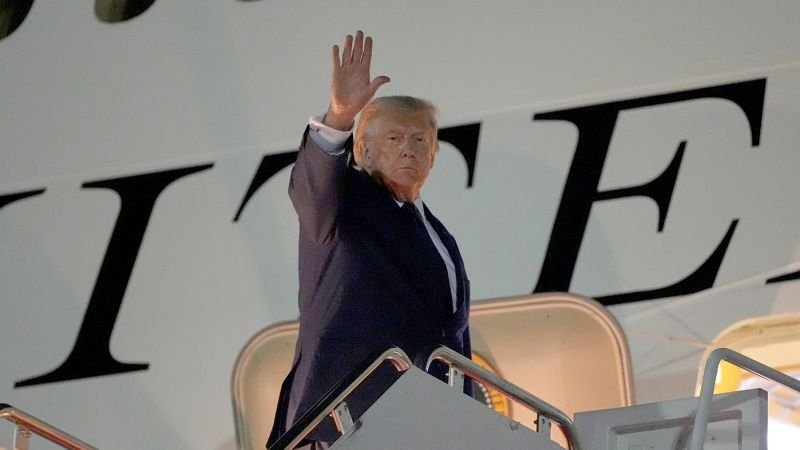
• Global stakes: President Donald Trump is en route to the NATO summit in the Turkish capital of Ankara, as his growing criticism continues to strain the 77-year-old alliance. NATO’s chief says US allies have made “remarkable progress” with defense spending — a salient issue for Trump, who has called on them to “step up.”
• Turkey jet sales: Trump is expected to signal at the summit that he is willing to sell Turkey F-35 fighter jets, according to two US officials, reversing a ban he put in place during his first term that has since been ratified into law.
• Ukraine in focus: The president is also expected to meet with Ukrainian President Volodymyr Zelensky in Ankara. Trump vowed to end Russia’s war within 24 hours of taking office — but his administration has yet to find a path to peace.
• Iran war looms: The Trump administration anticipates that security in the Strait of Hormuz to be among the key topics discussed by NATO leaders, according to a senior US official.
9 Posts
NATO Secretary General Mark Rutte said the alliance has made “remarkable progress” a year on from setting its mission to strengthen cooperation through investment in defense and localized production that reduces reliance on non-allied suppliers.
Rutte’s comments at the outset of the summit highlight European commitments to defense spending, a salient issue for US President Donald Trump who has repeatedly criticized the alliance and called on allies to “step up.”
Rutte emphasized that industries across Europe are working “hand in hand” with their North American counterparts to innovate and develop next generation capabilities.
Meanwhile, Danish Prime Minister Mette Frederiksen supported Rutte’s claim, confirming that Denmark is meeting NATO’s targets. “Europe must arm ourselves so that we can take care of our people and our society. From the Danish side, we are delivering,” Frederiksen revealed.
The Danish leader threw attention to the perceived threat Europe faces from Russia, as Russian President Vladimir Putin’s war against Ukraine persists.
CNN’s James Frater contributed to this reporting.
World leaders are in Turkey for a NATO summit, but a key player, US President Donald Trump, has had a rocky relationship with the alliance.
Trump has threatened to withdraw from NATO and questioned whether it is valuable for the United States, which he argues is underwriting Europe’s security, to remain a member.
In recent months, that sentiment was on full display as the US entered into a conflict with Iran.
What this means: The NATO alliance itself dates back 77 years, and American and European security structures have become intertwined during that time. But Trump did not consult his European and NATO allies before launching the war in Iran and has lashed out at the alliance and individual leaders over their unwillingness to get involved and assist in securing the Strait of Hormuz.
But, at the same time, Trump has also taken credit for boosting members’ defense spending and periodically reaffirms his commitment to NATO’s collective defense agreement.
In addition to the Iran war, another thorny point in the NATO-Trump relationship was the US president’s threat to use military force to take Greenland.
Trump asserted that controlling Greenland — a territory of NATO ally Denmark — was necessary for national security and he would take it “whether they like it or not.”
That drew quick condemnation from allies and rattled the entire Western alliance. Trump later dropped it, but still threatened tariffs against those who opposed his grab — deepening the rift.
Ahead of the NATO summit, CNN’s Bianna Golodryga speaks to Michael Kofman, a Senior Fellow at the Carnegie Endowment for International Peace, about whether the alliance is prepared for a potential Russia threat after Ukraine.
As President Donald Trump was raging during a White House meeting this spring that fellow members of the NATO alliance had refused to join his war in Iran, he had a thought.
What if he cut American forces in Europe by a third, he asked, according to two people familiar with the conversation. Would that send the so-called allies the right message?
Around the time Trump floated the idea, the Pentagon abruptly canceled two US military deployments to Europe and ordered the removal of other personnel from the continent.
Defense Secretary Pete Hegseth planned to announce at a June NATO meeting even steeper cuts that could add up to the one-third reduction Trump raised, according to two sources. But the plan changed after consultations with other senior administration officials, and Hegseth instead unveiled a six-month review of US forces in Europe.
Trump’s fury — and his threats — are straining the 77-year-old NATO alliance. Never particularly enthusiastic in pledging US support for Europe’s defense, Trump has grown even more skeptical, claiming America’s oldest allies weren’t there when he needed them after he launched a war in Iran.
He has never explicitly ruled out attempting to withdraw from NATO, and consistently questions its value for the US, which he argues is underwriting Europe’s security.
Trump has also threatened to seize Greenland from a fellow NATO member, and has shown periodic deference to Russian President Vladimir Putin, who some European officials fear could be planning operations in NATO territory as a test of the alliance’s resolve.
Ukraine’s capital Kyiv came under a deadly Russian attack early Monday morning, the day before the war is set to be a key topic of discussions among world leaders at the NATO summit in Turkey.
Ballistic missiles and drones hammered parts of Kyiv, killing at least 19 people in the city and six others in the surrounding region, with dozens more wounded, city officials said.
Ukrainian President Volodymyr Zelensky had warned just hours earlier that Moscow was “preparing a new massive strike,” and the fresh assault comes just days after a ferocious Russian attack on Kyiv killed 30 people last Thursday – the third-deadliest attack on the capital since the war began.
US President Donald Trump is expected to meet with Zelensky during the NATO summit this week. The pair spoke on the phone on Saturday.
The lethality of the Russian assaults on Kyiv in the past week displays the challenge Ukraine faces in protecting its capital as Russia innovates and steps up its attacks.
Ahead of the summit, Zelensky used the attacks on Kyiv to renew his plea for allies to supply Ukraine with missiles for Patriot systems.
President Donald Trump is expected to signal this week in Turkey that he is willing to sell the country F-35 fighter jets, according to two US officials familiar with the plans, reversing a ban he put in place during his first term that has since been ratified into law.
How, exactly, Trump plans to get around the congressional ban on the fighter jet sales remained unclear. But he said ahead of his trip he intends to arrive in Turkey with a “gift” for President Recep Tayyip Erdogan that would “make him very happy.”
Trump banned Turkey from purchasing the American-made F-35s in 2019 after the country purchased the Russian air defense system named S-400. He did so reluctantly, however, blaming the Obama administration for the situation and sympathizing with Erdogan for the “very tough situation that they’ve been forced in.”
Congress codified the ban into law in 2020, and said the F-35s could be transferred if Turkey no longer possessed the S-400s.
The Russian system is built to defeat US stealth technology, leading officials in Washington to worry that if Turkey took delivery of F-35s, the Russian system could be used to collect valuable information about the fifth-generation fighter jet.
Many Republicans in Congress are skeptical of transferring F-35s to Turkey, as is Israeli Prime Minister Benjamin Netanyahu, who said on Fox News this week that such a move would “upset the balance of power in the Middle East, which is ultimately guaranteed by Israel’s air superiority and also America’s posture in the Middle East.”
But Trump considers Erdogan a friend, and had tasked senior administration officials with reviewing the matter to find a solution that would adhere to the law.
US President Donald Trump is currently on his way to Ankara, Turkey, for this year’s NATO summit.
The summit is playing out against the backdrop of Russia’s war in Ukraine and comes just after deadly Russian strikes on Ukraine’s capital city of Kyiv.
Trump is expected to meet with Ukrainian President Volodymyr Zelensky during the summit. The pair spoke on the phone on Saturday.
Trump then offered again to help end the war on Sunday during a nearly 90-minute call with Russian President Vladimir Putin, according to Russia’s foreign ministry.
The US president had vowed to solve the war within 24 hours of taking office for a second time, but more than 500 days into his current term, the administration has yet to find a path to peace between the neighbors, despite multiple attempts.
The Trump administration expects security in the Strait of Hormuz to be among the topics discussed by NATO leaders when they gather this week in Ankara, Turkey, a senior US official said Sunday.
The official said several NATO allies have expressed a willingness to contribute to maritime security efforts but argued that many “don’t have the necessary ships or assets to contribute to a meaningful maritime effort.”
The official added that the administration’s broader message to allies remains focused on increasing defense spending and military readiness.
President Donald Trump is expected to depart Monday night for the NATO summit in Ankara.
President Trump is attending the NATO summit this week, despite rising tensions with the alliance in recent months. CNN’s Kristen Holmes explains what to watch for.
• Global stakes: President Donald Trump is en route to the NATO summit in the Turkish capital of Ankara, as his growing criticism continues to strain the 77-year-old alliance. NATO’s chief says US allies have made “remarkable progress” with defense spending — a salient issue for Trump, who has called on them to “step up.”
• Turkey jet sales: Trump is expected to signal at the summit that he is willing to sell Turkey F-35 fighter jets, according to two US officials, reversing a ban he put in place during his first term that has since been ratified into law.
• Ukraine in focus: The president is also expected to meet with Ukrainian President Volodymyr Zelensky in Ankara. Trump vowed to end Russia’s war within 24 hours of taking office — but his administration has yet to find a path to peace.
• Iran war looms: The Trump administration anticipates that security in the Strait of Hormuz to be among the key topics discussed by NATO leaders, according to a senior US official.
NATO Secretary General Mark Rutte said the alliance has made “remarkable progress” a year on from setting its mission to strengthen cooperation through investment in defense and localized production that reduces reliance on non-allied suppliers.
Rutte’s comments at the outset of the summit highlight European commitments to defense spending, a salient issue for US President Donald Trump who has repeatedly criticized the alliance and called on allies to “step up.”
Rutte emphasized that industries across Europe are working “hand in hand” with their North American counterparts to innovate and develop next generation capabilities.
Meanwhile, Danish Prime Minister Mette Frederiksen supported Rutte’s claim, confirming that Denmark is meeting NATO’s targets. “Europe must arm ourselves so that we can take care of our people and our society. From the Danish side, we are delivering,” Frederiksen revealed.
The Danish leader threw attention to the perceived threat Europe faces from Russia, as Russian President Vladimir Putin’s war against Ukraine persists.
CNN’s James Frater contributed to this reporting.
World leaders are in Turkey for a NATO summit, but a key player, US President Donald Trump, has had a rocky relationship with the alliance.
Trump has threatened to withdraw from NATO and questioned whether it is valuable for the United States, which he argues is underwriting Europe’s security, to remain a member.
In recent months, that sentiment was on full display as the US entered into a conflict with Iran.
What this means: The NATO alliance itself dates back 77 years, and American and European security structures have become intertwined during that time. But Trump did not consult his European and NATO allies before launching the war in Iran and has lashed out at the alliance and individual leaders over their unwillingness to get involved and assist in securing the Strait of Hormuz.
But, at the same time, Trump has also taken credit for boosting members’ defense spending and periodically reaffirms his commitment to NATO’s collective defense agreement.
In addition to the Iran war, another thorny point in the NATO-Trump relationship was the US president’s threat to use military force to take Greenland.
Trump asserted that controlling Greenland — a territory of NATO ally Denmark — was necessary for national security and he would take it “whether they like it or not.”
That drew quick condemnation from allies and rattled the entire Western alliance. Trump later dropped it, but still threatened tariffs against those who opposed his grab — deepening the rift.
Ahead of the NATO summit, CNN’s Bianna Golodryga speaks to Michael Kofman, a Senior Fellow at the Carnegie Endowment for International Peace, about whether the alliance is prepared for a potential Russia threat after Ukraine.
As President Donald Trump was raging during a White House meeting this spring that fellow members of the NATO alliance had refused to join his war in Iran, he had a thought.
What if he cut American forces in Europe by a third, he asked, according to two people familiar with the conversation. Would that send the so-called allies the right message?
Around the time Trump floated the idea, the Pentagon abruptly canceled two US military deployments to Europe and ordered the removal of other personnel from the continent.
Defense Secretary Pete Hegseth planned to announce at a June NATO meeting even steeper cuts that could add up to the one-third reduction Trump raised, according to two sources. But the plan changed after consultations with other senior administration officials, and Hegseth instead unveiled a six-month review of US forces in Europe.
Trump’s fury — and his threats — are straining the 77-year-old NATO alliance. Never particularly enthusiastic in pledging US support for Europe’s defense, Trump has grown even more skeptical, claiming America’s oldest allies weren’t there when he needed them after he launched a war in Iran.
He has never explicitly ruled out attempting to withdraw from NATO, and consistently questions its value for the US, which he argues is underwriting Europe’s security.
Trump has also threatened to seize Greenland from a fellow NATO member, and has shown periodic deference to Russian President Vladimir Putin, who some European officials fear could be planning operations in NATO territory as a test of the alliance’s resolve.
Ukraine’s capital Kyiv came under a deadly Russian attack early Monday morning, the day before the war is set to be a key topic of discussions among world leaders at the NATO summit in Turkey.
Ballistic missiles and drones hammered parts of Kyiv, killing at least 19 people in the city and six others in the surrounding region, with dozens more wounded, city officials said.
Ukrainian President Volodymyr Zelensky had warned just hours earlier that Moscow was “preparing a new massive strike,” and the fresh assault comes just days after a ferocious Russian attack on Kyiv killed 30 people last Thursday – the third-deadliest attack on the capital since the war began.
US President Donald Trump is expected to meet with Zelensky during the NATO summit this week. The pair spoke on the phone on Saturday.
The lethality of the Russian assaults on Kyiv in the past week displays the challenge Ukraine faces in protecting its capital as Russia innovates and steps up its attacks.
Ahead of the summit, Zelensky used the attacks on Kyiv to renew his plea for allies to supply Ukraine with missiles for Patriot systems.
President Donald Trump is expected to signal this week in Turkey that he is willing to sell the country F-35 fighter jets, according to two US officials familiar with the plans, reversing a ban he put in place during his first term that has since been ratified into law.
How, exactly, Trump plans to get around the congressional ban on the fighter jet sales remained unclear. But he said ahead of his trip he intends to arrive in Turkey with a “gift” for President Recep Tayyip Erdogan that would “make him very happy.”
Trump banned Turkey from purchasing the American-made F-35s in 2019 after the country purchased the Russian air defense system named S-400. He did so reluctantly, however, blaming the Obama administration for the situation and sympathizing with Erdogan for the “very tough situation that they’ve been forced in.”
Congress codified the ban into law in 2020, and said the F-35s could be transferred if Turkey no longer possessed the S-400s.
The Russian system is built to defeat US stealth technology, leading officials in Washington to worry that if Turkey took delivery of F-35s, the Russian system could be used to collect valuable information about the fifth-generation fighter jet.
Many Republicans in Congress are skeptical of transferring F-35s to Turkey, as is Israeli Prime Minister Benjamin Netanyahu, who said on Fox News this week that such a move would “upset the balance of power in the Middle East, which is ultimately guaranteed by Israel’s air superiority and also America’s posture in the Middle East.”
But Trump considers Erdogan a friend, and had tasked senior administration officials with reviewing the matter to find a solution that would adhere to the law.
US President Donald Trump is currently on his way to Ankara, Turkey, for this year’s NATO summit.
The summit is playing out against the backdrop of Russia’s war in Ukraine and comes just after deadly Russian strikes on Ukraine’s capital city of Kyiv.
Trump is expected to meet with Ukrainian President Volodymyr Zelensky during the summit. The pair spoke on the phone on Saturday.
Trump then offered again to help end the war on Sunday during a nearly 90-minute call with Russian President Vladimir Putin, according to Russia’s foreign ministry.
The US president had vowed to solve the war within 24 hours of taking office for a second time, but more than 500 days into his current term, the administration has yet to find a path to peace between the neighbors, despite multiple attempts.
The Trump administration expects security in the Strait of Hormuz to be among the topics discussed by NATO leaders when they gather this week in Ankara, Turkey, a senior US official said Sunday.
The official said several NATO allies have expressed a willingness to contribute to maritime security efforts but argued that many “don’t have the necessary ships or assets to contribute to a meaningful maritime effort.”
The official added that the administration’s broader message to allies remains focused on increasing defense spending and military readiness.
President Donald Trump is expected to depart Monday night for the NATO summit in Ankara.
President Trump is attending the NATO summit this week, despite rising tensions with the alliance in recent months. CNN’s Kristen Holmes explains what to watch for.





Responses