
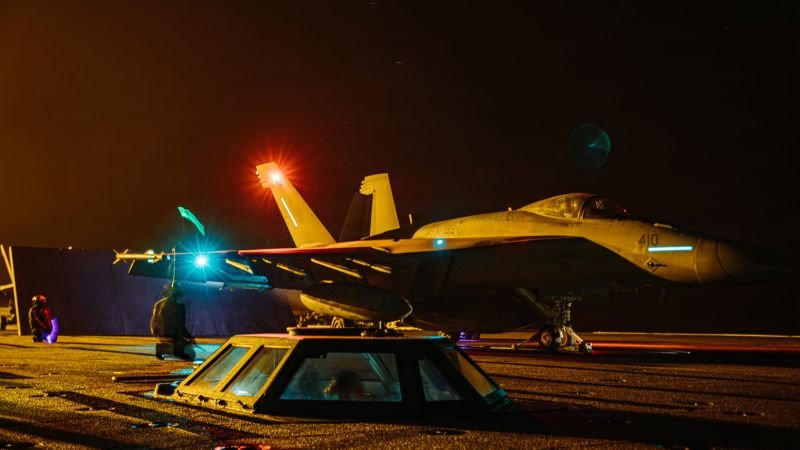
US fighter jets conducted new “self-defense” strikes Tuesday, using “precision munitions” to target an Iranian missile launch site on Qeshm Island, according to an American military official.
The strike “was in response to IRGC aggression targeting American personnel and assets,” the official said, noting that US Central Command remains “highly vigilant and fully postured to protect Americans across the region.”
Iranian state media reported that an area on the outskirts of a city on Qeshm Island had been targeted in an “enemy attack.” The deputy governor of Hormozgan province for political and security affairs Ahmad Nafisi said the strike caused no damage to vital infrastructure, commercial or residential areas.
Tuesday’s strikes appear similar to others in recent weeks around the Strait of Hormuz, which US officials have also characterized as defensive in nature, rather than marking a significant escalation by American forces.
Kuwait’s military said its air defenses were responding to “hostile drone attacks,” early Wednesday morning. There were no immediate details on the origin of the drones, their intended targets, or whether the attacks caused any damage or casualties.
Sirens sounded in nearby Bahrain with the military saying it had intercepted “a number of Iranian aerial attacks” early Wednesday. Bahrain has come under Iranian attack several times in the past week. The Kingdom’s military accused the Islamic republic of staging attacks saying “Iran continues its systematic hostile approach through its criminal attacks targeting the Kingdom of Bahrain.”
A third US aircraft carrier strike group recently entered CENTCOM’s area of responsibility, where it is expected to — at least temporarily — join ongoing operations that include enforcing a blockade of Iranian ports and conducting escort operations for commercial ships willing to transit the Strait.
There is little indication of an imminent diplomatic agreement to end the conflict and President Donald Trump has warned he could resume full combat operations if Tehran refuses to accept the US administration’s demands.
Trump was widely expected to hold off on restarting those combat operations until after the US midterm elections but appears to still be mulling how to proceed, absent a last-minute deal.
With Democrats poised to take control of the House and Senate in January, Trump’s window to decide on a path forward in Iran appears to be shrinking. CNN has previously reported that it is likely untenable for the US military to maintain the status quo indefinitely, but only Trump has the power to decide when the war is over.
CNN’s Mohammed Tawfeeq contributed reporting.





Responses