
• New strikes: The Middle East saw waves of attacks for a second day as the US and Iran traded strikes again, further threatening their fragile ceasefire. The US military said it hit 90 targets along Iran’s coastline. In response, Iran’s Revolutionary Guards said they targeted US military bases in Kuwait and Bahrain, while the army said it targeted a US military site in Qatar.
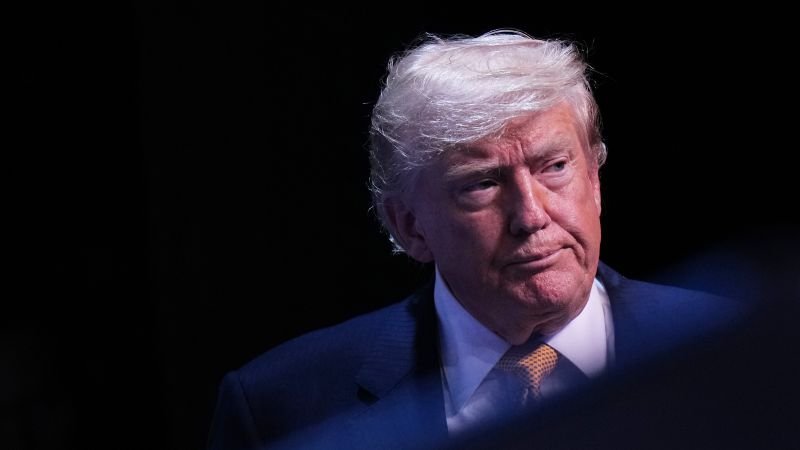
• Threats traded: President Donald Trump warned Iran that the strikes would “get much worse” if it attacked more ships in the Strait of Hormuz, after saying he thought the ceasefire was “over.” Iran’s top negotiator said it would retaliate against any attacks, and that the strait “will only open with ‘Iranian arrangements,’ not American threats.”
• Funeral’s final day: The marathon ceremonies for slain Supreme Leader Ali Khamenei will culminate today, with all eyes on whether his son and successor Mojtaba will make an appearance.
14 Posts
The average gas price in the United States surged 5 cents a gallon to nearly $3.85 on Thursday, according to AAA, after the United States resumed attacks on Iran.
The increase was the biggest one-day gain since May 6.
Gas prices have fallen steadily over the past month and a half, sinking more than 70 cents from their peak, after a ceasefire and a Memorandum of Understanding mostly put an end to military attacks in the Persian Gulf.
Retail gas prices rose after gasoline futures surged nearly 6% Wednesday. Gas futures rose yesterday along with oil, which gained the most in a single day since April. Gasoline futures rose another 1% Thursday.
Oil futures were mostly flat Thursday. Brent crude gained 0.3% just above $78 a barrel. US oil also rose 0.2% to just under $74 a barrel.
US gas prices have quite a ways to go to get back to $2.98 – the price from the day before the war started.
One person was injured in Kuwait after debris fell from interceptions following an Iranian missile and drone attack on the Gulf Arab country, the Kuwaiti military said in a statement.
Iran fired three ballistic missiles, one cruise missile, and 10 drones at Kuwait, which were “successfully intercepted,” the Kuwaiti military said in a statement, adding that the interceptions left material damage.
In neighboring Bahrain, the military said its air defenses intercepted an Iranian missile and drone attack this morning, without providing more details.
There have been several explosions in an Iranian coastal province Thursday, following a fresh round of US strikes overnight, according to the semi-official Iranian news agency Mehr.
“According to initial reports from local sources, several explosions were heard around midday (about 3:30 a.m. ET) on Thursday in the Bushehr Province area,” Mehr reported, without specifying the location or cause of the blasts.
Bushehr is home to port facilities and a civilian nuclear reactor, as well as an extensive military presence. The Iranian army said Wednesday that eight personnel had been killed during US strikes in the area.
Strikes continue: The US military says it has carried out about 170 strikes over the last two nights. It said that on Wednesday night it targeted “90 Iranian military targets including air defense systems, coastal surveillance assets, missile and drone storage sites, naval capabilities, and military logistics infrastructure along Iran’s coastline.”
Iran summoned the British ambassador to Tehran, Hugo Shorter, on Thursday over what the Islamic Republic said were “baseless accusations” against the country, the state news agency IRNA said.
CNN has reached out to the British foreign office for comment.
This follows the arrest of two Romanian men on Friday for their part in a “targeted” knife attack, which left a prominent exiled Iranian journalist hospitalized.
Pouria Zeraati, a television anchor at the UK-based Iran International, was stabbed three times in his thigh outside his home in Wimbledon, southwest London in March 2024.
Overwhelming evidence pointed to this attack being carried out on behalf of the Iranian regime, said the trial’s presiding judge Justice Bobbie Cheema-Grubb, according to the British news agency PA Media.
On Thursday, Iran protested what is said were unfounded claims by British officials that Iran had sought to carry out “anti-security actions in Britain,” IRNA said, adding that Britain is accused of “hosting of terrorist networks allegedly funded and directed by Israel.”
“Following repeated ‘false and baseless’ accusations by British officials against the Islamic Republic of Iran, the British ambassador in Tehran was summoned by Alireza Yousefi, assistant minister and director general for Western Europe at Iran’s Foreign Ministry. Iran’s protest over what it called the British government’s inappropriate approach toward the Iranian nation was conveyed to him,” IRNA said.
In many ways it was already the ceasefire that never was. But with the United States and Iran claiming to have hit dozens of targets each with air, drone and missile strikes in the past 48 hours, it’s increasingly hard to see where this goes next.
The new strikes are the latest in a series of back-and-forth attacks since the two sides first agreed to a shaky ceasefire in April and signed a Memorandum of Understanding in June that was supposed to set the stage for a permanent end to the fighting.
What we now have is the US military pounding multiple, mostly coastal, targets in Iran. Yet Iranian forces are still able to fire back, sending missiles and drones toward US bases in Kuwait and Bahrain.
Things also remain precarious in the Strait of Hormuz – and experts say the latest attacks likely won’t remove Iran’s ability to threaten shipping in one of the world’s most important energy arteries.
Because the latest strikes from both sides are less intense than those launched when the war began in late February, some suggest a peace process still has a chance.
But others see little reason for optimism.
The IRGC are Iran’s elite troops, fully separate from the regular forces. They control the country’s missile arsenal, and their job is to protect the country’s Islamic revolution. They report only to the supreme leader, and they’ve shown little interest in making a deal with Washington – at least on terms President Donald Trump would be happy with.
Iran accused the United States of committing a “blatant war crime” after strikes on two bridges in eastern Iran.
Iran’s foreign ministry said in a statement Thursday that the US military had struck several locations in the southern coastal provinces, as well as “two bridges in the eastern provinces on the railway route” to Mashhad.
In a statement, US Central Command said US forces struck “90 Iranian military targets” along the coastlines. It did not mention a bridge.
The statement from Iran’s foreign ministry said the US committed “criminal attacks” in the past 48 hours, and violated the UN charter and the ceasefire agreement signed between Washington and Tehran last month.
The body of slain Supreme Leader Ali Khamenei has arrived via plane to the Iranian city of Mashhad, where he is set to be buried, the state broadcaster IRIB reported Thursday.
“The aircraft carrying the body of the martyred leader of the Revolution, along with members of his family, has arrived at Mashhad’s Shahid Hasheminejad Airport,” IRIB said, adding that the funeral procession in the city is due to begin at 2 p.m. local time (6:30 a.m. Eastern Time).
This is the final day of a six-day procession commemorating the late Khamenei and members of his family killed at the outset of the war with the United States and Israel.
Iran’s army said it launched attack drones toward a “satellite antenna” in Qatar, the semi-official Tasnim news outlet reported, in the first admission the Gulf nation had been a target of Tehran’s latest strikes.
The army’s public relations office said its drones had targeted a Patriot air defense system in Kuwait, the satellite antenna in Qatar, and fuel storage facilities belonging to the US military in Bahrain overnight into Thursday, Tasnim reported.
Residents of Qatar, which has been a key interlocutor between the US and Iran in recent months, received a security alert on their phones in the early hours of Thursday morning which was quickly followed by another message saying the threat had been “eliminated.”
Earlier, Iran’s Islamic Revolutionary Guard Corps (IRGC) said it had targeted US military bases in Kuwait and Bahrain in response to the latest wave of US strikes, state broadcaster IRIB reported.
The IRGC operates separately from the rest of the Iranian armed forces and has its own army, navy, air force, intelligence and special forces branches. Its role is to preserve the Islamic republic, and it reports directly to the supreme leader.
Bahrain’s air defences intercepted and destroyed several Iranian air attacks Thursday, the country’s military said.
The Bahrain Defence Force said on X that “the deliberate use of missiles and drones to target civilians and private property constitutes a flagrant violation of international humanitarian law.”
Iran’s Islamic Revolutionary Guard Corps (IRGC) earlier said it targeted US military bases in Kuwait and Bahrain in response to the latest wave of US strikes, in a statement published by state broadcaster IRIB.
The IRGC said it targeted Bahrain’s Shaikh Isa Air Base and the Juffair district, which is home to the Naval Support Activity — the primary US Navy base in the Persian Gulf, which hosts the US Fifth Fleet.
Mourners traveling to farewell Iran’s slain supreme leader Ayatollah Ali Khamenei as he is laid to rest in the city of Mashhad today are facing disruptions, after trains to-and-from the capital Tehran were suspended.
Iran’s state railway operator said passenger train services had been temporarily suspended after a reported US strike on a railway bridge between the cities, according to state broadcaster IRIB.
Masshad, considered a holy city in Iran’s northeast, is where this week’s funeral proceedings for Khamenei will culminate. The city is his birthplace.
The Islamic Republic of Iran Railways said teams were working to repair the damage and restore the route, and that other arrangements are being made to transport passengers to Mashhad via road, IRIB said.
Earlier, Iran’s Islamic Revolutionary Guard Corps said the US had struck a railway bridge in Aqqala and claimed the strike was an attempt to overshadow Khamenei’s burial, state media said
Video from Iranian media, geolocated by CNN, showed a damaged railway bridge close to Aqqala.
The US has not taken responsibility for the strike. In a statement, US Central Command said US forces struck “90 Iranian military targets” along the coastlines, but did not mention the bridge. CNN has reached out to CENTCOM for comment.
Iran’s leadership has railed against the United States after the two countries exchanged a second night of strikes on Thursday local time.
The IRGC: Iran’s powerful Islamic Revolutionary Guard Corps said it launched joint drone and missile attacks on US infrastructure and facilities in Bahrain and Kuwait in response to the latest US attacks, according to state broadcaster IRIB. The guards warned their response would expand to other American bases in the region if the US retaliates.
Top negotiator: One of Iran’s most powerful political figures warned the US that “if you strike, you’ll get hit.” Mohammad Bagher Ghalibaf, Iran’s parliament speaker who is leading negotiations with the US, said “America still hasn’t learned that bullying and breaking promises are no longer cost-free.”
Foreign Ministry: Spokesperson Esmail Baghaei issued a warning to Europe on Thursday after several NATO leaders expressed support for the US’s initial round of strikes on Wednesday. “Those who provided their territories, military bases, and infrastructure to enable the aggression cannot evade responsibility for their contribution to an unprovoked aggression and its grave consequences,” he said on X.
Some context: On Wednesday, NATO Secretary General Mark Rutte called the US strikes “absolutely necessary.” In response, Baghaei called him a “fawning courtier” of US President Donald Trump and criticized his “willful complicity” in the war.
The US military said it struck at least 170 targets in Iran over the past two days, after President Donald Trump declared he thought the ceasefire agreement was “over” – leaving more questions than answers about the future of negotiations and control over the Strait of Hormuz.
Here’s the latest:
US attacks: The US said it hit around 90 military targets in its latest round of strikes against Iran overnight into Thursday. This comes after the US military hit 80 targets the night before. Most attacks targeted Iran’s southern coast, though some were further inland and to the north. 14 people have been killed and 78 wounded in the past two days, Iran’s Health Ministry spokesperson said on Thursday.
Infrastructure hit: Iran says the the US struck a railway bridge in Aqqala, northeast of Tehran – in what would be a rare case of key infrastructure being targeted during the recent strikes. Video from Iranian media, geolocated by CNN, shows a damaged railway bridge close to Aqqala. The targeting of critical civilian infrastructure like water and power plants could be considered a war crime.
Iran’s response: Iran’s Revolutionary Guards retaliated by attacking US bases in Kuwait and Bahrain for the last two nights, and warned it will extend attacks to other American bases in the region if the US retaliates further. Iran’s top negotiator warned: “If you strike, you’ll get hit.”
What Trump said: At this week’s NATO summit, Trump blasted Tehran’s leadership as “cuckoo” and “scum,” suggesting that those leaders “may be gone” following the resumption of hostilities. Despite the exchange of fire, he maintained he doesn’t think the Iran war is “going to start again.”
Trump’s frustrations: The president’s decision to strike Iran for a second day was partly due to his anger over the strait not being fully reopened, and partly because Iran hit ships transiting the chokepoint while he was attending the NATO summit, a US official said. Another official told CNN the ceasefire “has at least temporarily ceased,” and that the US military is in a wait-and-see mode.
Oil prices: Oil surged on Wednesday, with brent crude, the international benchmark, rising 5.4% – the biggest single-day gain for oil since April 29. Oil rose above $80 a barrel for the first time since June 19 and settled at $78.02.
Iran’s Health Ministry said on Thursday that 14 people have been killed and 78 wounded in the past two days of US strikes.
The latest US salvo hit more than 90 targets across Iran, US Central Command (CENTCOM) has said, with Iranian media reporting explosions and strikes in cities on Iran’s southern coast, and the country’s northern Golestan province on the Caspian Sea.
Here’s what we’ve seen so far overnight into Thursday:
Chabahar, the port city on the northern coast of the Gulf of Oman, near Iran’s border with Pakistan, suffered power outages and explosions. A hospital was struck by debris and two piers and a maritime traffic control tower were also targeted, according to Iranian state media.
In Iranshahr, a city in southeastern Iran, a firefighter was killed in a US attack on Iranshahr Airport that damaged the airport’s flight operations building and meteorological station, according to Iranian media.
Explosions were heard in the port city of Bushehr, Iranian state media reported. Iran’s UN ambassador, Amir Saeid Iravani said US strikes had targeted facilities in the city and islands in the Persian Gulf.
Projectiles struck the coastal city of Bandar Abbas, according to the semi-official Tasnim News Agency. Video geolocated by CNN shows multiple explosions and large fires near the city’s Haqani port.
Iranian media also reported strikes and explosions in the Persian Gulf island of Abu Musa, near the Strait of Hormuz, and in the coastal southern cities of Sirik, Jask and Konarak.
A railway bridge in Aqqala, a city in northern Iran’s Golestan province was also hit in what state broadcaster IRIB said was a US strike. While CENTCOM said it had struck locations on Iran’s coastline, it did not reference any strikes in the north of Iran in its statement.
In Iran’s southwestern Khuzestan, three people were killed near the town of Ahvaz, the semi-official Fars news agency reported the province’s deputy governor as saying. The US attack wounded several others, he added.
Yesterday, eight members of the Iranian air force and navy were killed in strikes on Bandar Abbas and Bushehr, state media said.
The marathon weeklong funeral for Iran’s Supreme Leader Ali Khamenei will culminate today when his body is transported to its final burial site at the Imam Reza shrine in the northeastern city of Mashhad – Khamenei’s birthplace.
Iranian state media reported on Thursday morning that Khamenei’s body had departed Iraq’s Najaf airport, bound for Iran.
A central question that has loomed over the funeral is whether Mojtaba Khamenei, the new supreme leader and son of the slain ayatollah, will make an appearance.
Mojtaba has not yet been seen in public and his absence has fueled doubts about his health and questions over who is leading the nation. He is thought to have been wounded in the joint US-Israeli attack that killed his father, mother and wife and other relatives.
Mojtaba’s first public appearance would be a huge moment. He has remained in hiding since the war began in late February, said to be communicating with his supporters only through written statements shared by Iranian media and attributed to him.
Iran’s Islamic Propagation Coordination Council announced on Thursday that a memorial ceremony will be held on Friday in the city of Qom “under the auspices of Supreme Leader Ayatollah Imam Seyyed Mojtaba Khamenei,” the official Islamic Republic News Agency reported Thursday.
Whether this indicates that Mojtaba could make an appearance remains unclear. A more likely scenario is that the ceremony is being held on behalf of the supreme leader.
An appearance in Qom could make sense, however. The city is widely considered the second most sacred in Iran and the center of Shiite religious studies — Mojtaba studied there himself. On Tuesday, huge crowds filled the city’s streets for Khamenei’s funeral ceremonies, though the supreme leader remained absent.
CNN’s Mostafa Salem and Lex Harvey contributed reporting.
• New strikes: The Middle East saw waves of attacks for a second day as the US and Iran traded strikes again, further threatening their fragile ceasefire. The US military said it hit 90 targets along Iran’s coastline. In response, Iran’s Revolutionary Guards said they targeted US military bases in Kuwait and Bahrain, while the army said it targeted a US military site in Qatar.
• Threats traded: President Donald Trump warned Iran that the strikes would “get much worse” if it attacked more ships in the Strait of Hormuz, after saying he thought the ceasefire was “over.” Iran’s top negotiator said it would retaliate against any attacks, and that the strait “will only open with ‘Iranian arrangements,’ not American threats.”
• Funeral’s final day: The marathon ceremonies for slain Supreme Leader Ali Khamenei will culminate today, with all eyes on whether his son and successor Mojtaba will make an appearance.
The average gas price in the United States surged 5 cents a gallon to nearly $3.85 on Thursday, according to AAA, after the United States resumed attacks on Iran.
The increase was the biggest one-day gain since May 6.
Gas prices have fallen steadily over the past month and a half, sinking more than 70 cents from their peak, after a ceasefire and a Memorandum of Understanding mostly put an end to military attacks in the Persian Gulf.
Retail gas prices rose after gasoline futures surged nearly 6% Wednesday. Gas futures rose yesterday along with oil, which gained the most in a single day since April. Gasoline futures rose another 1% Thursday.
Oil futures were mostly flat Thursday. Brent crude gained 0.3% just above $78 a barrel. US oil also rose 0.2% to just under $74 a barrel.
US gas prices have quite a ways to go to get back to $2.98 – the price from the day before the war started.
One person was injured in Kuwait after debris fell from interceptions following an Iranian missile and drone attack on the Gulf Arab country, the Kuwaiti military said in a statement.
Iran fired three ballistic missiles, one cruise missile, and 10 drones at Kuwait, which were “successfully intercepted,” the Kuwaiti military said in a statement, adding that the interceptions left material damage.
In neighboring Bahrain, the military said its air defenses intercepted an Iranian missile and drone attack this morning, without providing more details.
There have been several explosions in an Iranian coastal province Thursday, following a fresh round of US strikes overnight, according to the semi-official Iranian news agency Mehr.
“According to initial reports from local sources, several explosions were heard around midday (about 3:30 a.m. ET) on Thursday in the Bushehr Province area,” Mehr reported, without specifying the location or cause of the blasts.
Bushehr is home to port facilities and a civilian nuclear reactor, as well as an extensive military presence. The Iranian army said Wednesday that eight personnel had been killed during US strikes in the area.
Strikes continue: The US military says it has carried out about 170 strikes over the last two nights. It said that on Wednesday night it targeted “90 Iranian military targets including air defense systems, coastal surveillance assets, missile and drone storage sites, naval capabilities, and military logistics infrastructure along Iran’s coastline.”
Iran summoned the British ambassador to Tehran, Hugo Shorter, on Thursday over what the Islamic Republic said were “baseless accusations” against the country, the state news agency IRNA said.
CNN has reached out to the British foreign office for comment.
This follows the arrest of two Romanian men on Friday for their part in a “targeted” knife attack, which left a prominent exiled Iranian journalist hospitalized.
Pouria Zeraati, a television anchor at the UK-based Iran International, was stabbed three times in his thigh outside his home in Wimbledon, southwest London in March 2024.
Overwhelming evidence pointed to this attack being carried out on behalf of the Iranian regime, said the trial’s presiding judge Justice Bobbie Cheema-Grubb, according to the British news agency PA Media.
On Thursday, Iran protested what is said were unfounded claims by British officials that Iran had sought to carry out “anti-security actions in Britain,” IRNA said, adding that Britain is accused of “hosting of terrorist networks allegedly funded and directed by Israel.”
“Following repeated ‘false and baseless’ accusations by British officials against the Islamic Republic of Iran, the British ambassador in Tehran was summoned by Alireza Yousefi, assistant minister and director general for Western Europe at Iran’s Foreign Ministry. Iran’s protest over what it called the British government’s inappropriate approach toward the Iranian nation was conveyed to him,” IRNA said.
In many ways it was already the ceasefire that never was. But with the United States and Iran claiming to have hit dozens of targets each with air, drone and missile strikes in the past 48 hours, it’s increasingly hard to see where this goes next.
The new strikes are the latest in a series of back-and-forth attacks since the two sides first agreed to a shaky ceasefire in April and signed a Memorandum of Understanding in June that was supposed to set the stage for a permanent end to the fighting.
What we now have is the US military pounding multiple, mostly coastal, targets in Iran. Yet Iranian forces are still able to fire back, sending missiles and drones toward US bases in Kuwait and Bahrain.
Things also remain precarious in the Strait of Hormuz – and experts say the latest attacks likely won’t remove Iran’s ability to threaten shipping in one of the world’s most important energy arteries.
Because the latest strikes from both sides are less intense than those launched when the war began in late February, some suggest a peace process still has a chance.
But others see little reason for optimism.
The IRGC are Iran’s elite troops, fully separate from the regular forces. They control the country’s missile arsenal, and their job is to protect the country’s Islamic revolution. They report only to the supreme leader, and they’ve shown little interest in making a deal with Washington – at least on terms President Donald Trump would be happy with.
Iran accused the United States of committing a “blatant war crime” after strikes on two bridges in eastern Iran.
Iran’s foreign ministry said in a statement Thursday that the US military had struck several locations in the southern coastal provinces, as well as “two bridges in the eastern provinces on the railway route” to Mashhad.
In a statement, US Central Command said US forces struck “90 Iranian military targets” along the coastlines. It did not mention a bridge.
The statement from Iran’s foreign ministry said the US committed “criminal attacks” in the past 48 hours, and violated the UN charter and the ceasefire agreement signed between Washington and Tehran last month.
The body of slain Supreme Leader Ali Khamenei has arrived via plane to the Iranian city of Mashhad, where he is set to be buried, the state broadcaster IRIB reported Thursday.
“The aircraft carrying the body of the martyred leader of the Revolution, along with members of his family, has arrived at Mashhad’s Shahid Hasheminejad Airport,” IRIB said, adding that the funeral procession in the city is due to begin at 2 p.m. local time (6:30 a.m. Eastern Time).
This is the final day of a six-day procession commemorating the late Khamenei and members of his family killed at the outset of the war with the United States and Israel.
Iran’s army said it launched attack drones toward a “satellite antenna” in Qatar, the semi-official Tasnim news outlet reported, in the first admission the Gulf nation had been a target of Tehran’s latest strikes.
The army’s public relations office said its drones had targeted a Patriot air defense system in Kuwait, the satellite antenna in Qatar, and fuel storage facilities belonging to the US military in Bahrain overnight into Thursday, Tasnim reported.
Residents of Qatar, which has been a key interlocutor between the US and Iran in recent months, received a security alert on their phones in the early hours of Thursday morning which was quickly followed by another message saying the threat had been “eliminated.”
Earlier, Iran’s Islamic Revolutionary Guard Corps (IRGC) said it had targeted US military bases in Kuwait and Bahrain in response to the latest wave of US strikes, state broadcaster IRIB reported.
The IRGC operates separately from the rest of the Iranian armed forces and has its own army, navy, air force, intelligence and special forces branches. Its role is to preserve the Islamic republic, and it reports directly to the supreme leader.
Bahrain’s air defences intercepted and destroyed several Iranian air attacks Thursday, the country’s military said.
The Bahrain Defence Force said on X that “the deliberate use of missiles and drones to target civilians and private property constitutes a flagrant violation of international humanitarian law.”
Iran’s Islamic Revolutionary Guard Corps (IRGC) earlier said it targeted US military bases in Kuwait and Bahrain in response to the latest wave of US strikes, in a statement published by state broadcaster IRIB.
The IRGC said it targeted Bahrain’s Shaikh Isa Air Base and the Juffair district, which is home to the Naval Support Activity — the primary US Navy base in the Persian Gulf, which hosts the US Fifth Fleet.
Mourners traveling to farewell Iran’s slain supreme leader Ayatollah Ali Khamenei as he is laid to rest in the city of Mashhad today are facing disruptions, after trains to-and-from the capital Tehran were suspended.
Iran’s state railway operator said passenger train services had been temporarily suspended after a reported US strike on a railway bridge between the cities, according to state broadcaster IRIB.
Masshad, considered a holy city in Iran’s northeast, is where this week’s funeral proceedings for Khamenei will culminate. The city is his birthplace.
The Islamic Republic of Iran Railways said teams were working to repair the damage and restore the route, and that other arrangements are being made to transport passengers to Mashhad via road, IRIB said.
Earlier, Iran’s Islamic Revolutionary Guard Corps said the US had struck a railway bridge in Aqqala and claimed the strike was an attempt to overshadow Khamenei’s burial, state media said
Video from Iranian media, geolocated by CNN, showed a damaged railway bridge close to Aqqala.
The US has not taken responsibility for the strike. In a statement, US Central Command said US forces struck “90 Iranian military targets” along the coastlines, but did not mention the bridge. CNN has reached out to CENTCOM for comment.
Iran’s leadership has railed against the United States after the two countries exchanged a second night of strikes on Thursday local time.
The IRGC: Iran’s powerful Islamic Revolutionary Guard Corps said it launched joint drone and missile attacks on US infrastructure and facilities in Bahrain and Kuwait in response to the latest US attacks, according to state broadcaster IRIB. The guards warned their response would expand to other American bases in the region if the US retaliates.
Top negotiator: One of Iran’s most powerful political figures warned the US that “if you strike, you’ll get hit.” Mohammad Bagher Ghalibaf, Iran’s parliament speaker who is leading negotiations with the US, said “America still hasn’t learned that bullying and breaking promises are no longer cost-free.”
Foreign Ministry: Spokesperson Esmail Baghaei issued a warning to Europe on Thursday after several NATO leaders expressed support for the US’s initial round of strikes on Wednesday. “Those who provided their territories, military bases, and infrastructure to enable the aggression cannot evade responsibility for their contribution to an unprovoked aggression and its grave consequences,” he said on X.
Some context: On Wednesday, NATO Secretary General Mark Rutte called the US strikes “absolutely necessary.” In response, Baghaei called him a “fawning courtier” of US President Donald Trump and criticized his “willful complicity” in the war.
The US military said it struck at least 170 targets in Iran over the past two days, after President Donald Trump declared he thought the ceasefire agreement was “over” – leaving more questions than answers about the future of negotiations and control over the Strait of Hormuz.
Here’s the latest:
US attacks: The US said it hit around 90 military targets in its latest round of strikes against Iran overnight into Thursday. This comes after the US military hit 80 targets the night before. Most attacks targeted Iran’s southern coast, though some were further inland and to the north. 14 people have been killed and 78 wounded in the past two days, Iran’s Health Ministry spokesperson said on Thursday.
Infrastructure hit: Iran says the the US struck a railway bridge in Aqqala, northeast of Tehran – in what would be a rare case of key infrastructure being targeted during the recent strikes. Video from Iranian media, geolocated by CNN, shows a damaged railway bridge close to Aqqala. The targeting of critical civilian infrastructure like water and power plants could be considered a war crime.
Iran’s response: Iran’s Revolutionary Guards retaliated by attacking US bases in Kuwait and Bahrain for the last two nights, and warned it will extend attacks to other American bases in the region if the US retaliates further. Iran’s top negotiator warned: “If you strike, you’ll get hit.”
What Trump said: At this week’s NATO summit, Trump blasted Tehran’s leadership as “cuckoo” and “scum,” suggesting that those leaders “may be gone” following the resumption of hostilities. Despite the exchange of fire, he maintained he doesn’t think the Iran war is “going to start again.”
Trump’s frustrations: The president’s decision to strike Iran for a second day was partly due to his anger over the strait not being fully reopened, and partly because Iran hit ships transiting the chokepoint while he was attending the NATO summit, a US official said. Another official told CNN the ceasefire “has at least temporarily ceased,” and that the US military is in a wait-and-see mode.
Oil prices: Oil surged on Wednesday, with brent crude, the international benchmark, rising 5.4% – the biggest single-day gain for oil since April 29. Oil rose above $80 a barrel for the first time since June 19 and settled at $78.02.
Iran’s Health Ministry said on Thursday that 14 people have been killed and 78 wounded in the past two days of US strikes.
The latest US salvo hit more than 90 targets across Iran, US Central Command (CENTCOM) has said, with Iranian media reporting explosions and strikes in cities on Iran’s southern coast, and the country’s northern Golestan province on the Caspian Sea.
Here’s what we’ve seen so far overnight into Thursday:
Chabahar, the port city on the northern coast of the Gulf of Oman, near Iran’s border with Pakistan, suffered power outages and explosions. A hospital was struck by debris and two piers and a maritime traffic control tower were also targeted, according to Iranian state media.
In Iranshahr, a city in southeastern Iran, a firefighter was killed in a US attack on Iranshahr Airport that damaged the airport’s flight operations building and meteorological station, according to Iranian media.
Explosions were heard in the port city of Bushehr, Iranian state media reported. Iran’s UN ambassador, Amir Saeid Iravani said US strikes had targeted facilities in the city and islands in the Persian Gulf.
Projectiles struck the coastal city of Bandar Abbas, according to the semi-official Tasnim News Agency. Video geolocated by CNN shows multiple explosions and large fires near the city’s Haqani port.
Iranian media also reported strikes and explosions in the Persian Gulf island of Abu Musa, near the Strait of Hormuz, and in the coastal southern cities of Sirik, Jask and Konarak.
A railway bridge in Aqqala, a city in northern Iran’s Golestan province was also hit in what state broadcaster IRIB said was a US strike. While CENTCOM said it had struck locations on Iran’s coastline, it did not reference any strikes in the north of Iran in its statement.
In Iran’s southwestern Khuzestan, three people were killed near the town of Ahvaz, the semi-official Fars news agency reported the province’s deputy governor as saying. The US attack wounded several others, he added.
Yesterday, eight members of the Iranian air force and navy were killed in strikes on Bandar Abbas and Bushehr, state media said.
The marathon weeklong funeral for Iran’s Supreme Leader Ali Khamenei will culminate today when his body is transported to its final burial site at the Imam Reza shrine in the northeastern city of Mashhad – Khamenei’s birthplace.
Iranian state media reported on Thursday morning that Khamenei’s body had departed Iraq’s Najaf airport, bound for Iran.
A central question that has loomed over the funeral is whether Mojtaba Khamenei, the new supreme leader and son of the slain ayatollah, will make an appearance.
Mojtaba has not yet been seen in public and his absence has fueled doubts about his health and questions over who is leading the nation. He is thought to have been wounded in the joint US-Israeli attack that killed his father, mother and wife and other relatives.
Mojtaba’s first public appearance would be a huge moment. He has remained in hiding since the war began in late February, said to be communicating with his supporters only through written statements shared by Iranian media and attributed to him.
Iran’s Islamic Propagation Coordination Council announced on Thursday that a memorial ceremony will be held on Friday in the city of Qom “under the auspices of Supreme Leader Ayatollah Imam Seyyed Mojtaba Khamenei,” the official Islamic Republic News Agency reported Thursday.
Whether this indicates that Mojtaba could make an appearance remains unclear. A more likely scenario is that the ceremony is being held on behalf of the supreme leader.
An appearance in Qom could make sense, however. The city is widely considered the second most sacred in Iran and the center of Shiite religious studies — Mojtaba studied there himself. On Tuesday, huge crowds filled the city’s streets for Khamenei’s funeral ceremonies, though the supreme leader remained absent.
CNN’s Mostafa Salem and Lex Harvey contributed reporting.


Responses