
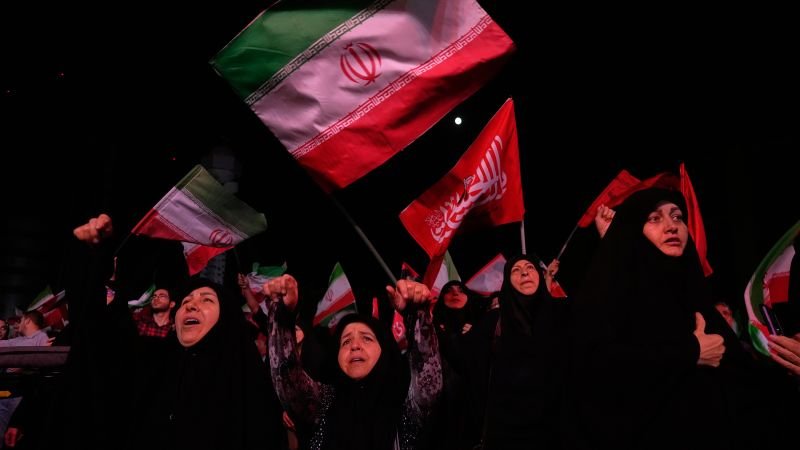
• Iranian attack: The US military intercepted multiple ballistic missiles fired by Iran in an attempted “surprise attack” on US forces in the Middle East, US Central Command said this evening. The attack came roughly a day after President Donald Trump said the US had halted strikes on Iran.
• Diplomatic activity: Trump met earlier today with Prime Minister Benjamin Netanyahu at the White House. The Israeli leader described the meeting as “one of the best conversations” they’ve had, citing close coordination on Iran and other security issues.
• Zelensky meeting: Trump also met with Ukrainian President Volodymyr Zelensky, who said they spoke about air defenses and diplomacy. Separately, Iranian and Ukrainian officials signaled their desire to de-escalate tensions after the weekend attack by Ukraine on what Tehran said was an Iranian vessel in the Caspian Sea.
25 Posts
Oil prices rose 5% after the US military said it intercepted a “surprise” missile attack from Iran.
Brent crude, the global oil benchmark, rose 1.13% to $83 per barrel. WTI, the US benchmark, rose 4.11% to $83 per barrel.
The rise partially reversed a tumble in oil prices on Monday after the Trump administration said it had paused plans to escalate its war with Iran.
Oil prices had declined 8%.
CNN’s David Goldman and Anna Cooban contributed to this post.
The US military successfully intercepted an Iranian “surprise attack” on US forces in the Middle East, US Central Command announced tonight.
“At 5:45 p.m. ET today, Islamic Revolutionary Guard Corps forces launched multiple ballistic missiles from Iran in an attempted surprise attack on US forces based in the Middle East,” CENTCOM said in a post to social media. “All Iranian missiles were successfully intercepted. US forces remain vigilant and at a high state of readiness.”
There were no more than four ballistic missiles according to initial estimates, a US official told CNN.
The attack came roughly a day after President Donald Trump said the US had halted strikes on Iran and that the country had wanted to talk. Iranian Foreign Ministry spokesman Esmaeil Baghaei appeared to contradict Trump at the time: “We have no negotiations with the United States at present.”
The United States and Iran remain poles apart on key issues but there have been developments in diplomatic conversations between heads of state.
Here’s the key things you need to know:
• White House meetings: President Donald Trump hosted two closed-door meetings, with Israeli Prime Minister Benjamin Netanyahu and Ukrainian President Volodymyr Zelensky. White House press secretary Karoline Leavitt described both meetings as “positive and productive,” while Netanyahu hailed “one of the best conversations” he and Trump have had, citing close coordination on Iran and other security issues. All the leaders later attended the funeral for Sen. Lindsey Graham at the National Cathedral.
• Ukraine-Iran tensions: Ukrainian Foreign Minister Andrii Sybiha said he stressed the need to avoid “unnecessary escalation” in a “frank” call with his Iranian counterpart Abbas Araghchi. Iranian officials have ramped up threats toward Kyiv after a recent attack by Ukraine on what Tehran said was an Iranian vessel in the Caspian Sea.
• Iran’s energy consumption: Israeli Defense Minister Israel Katz said the US has been preventing Israel from striking Iranian energy infrastructure due to economic and energy concerns. Meanwhile, Iranian officials are urging the public to reduce their energy use and warning of possible power outages as Iran has lost around 230 million cubic metres per day of natural gas production capacity since the start of the war, Iran’s Islamic Republic News Agency (IRNA) reported.
• Weapons production: Iran’s defense industry is expanding production and prioritizing air- and sea-based capabilities, a senior Iranian defense official claimed on Tuesday. That’s in contrast to US Defense Secretary Pete Hegseth’s statement in March that Iran’s defense industrial base was nearing “complete destruction” and that its ballistic missile production capacity had been “functionally defeated.” CNN reported in May that Iran was rebuilding its damaged military industrial base faster than expected.
• Strait of Hormuz: Iran’s military warned that any ships belonging to a country or company using frozen Iranian assets will be blocked from transiting the strategic waterway, according to the state-run broadcaster. The warning came after Trump said last week that any damage done to ships or cargo “will be paid for by Iranian money that the US has in its possession, and controls.”
CNN’s Aida Karimi, Victoria Butenko and Billy Stockwell, Aileen Graef, Tal Shalev, Mohammed Tawfeeq, Mustafa Qadri, Svitlana Vlasova and Dana Karni contributed to this report.
Israeli Prime Minister Benjamin Netanyahu described his meeting with US President Donald Trump on Tuesday as “one of the best conversations” the two leaders have had, citing close coordination on Iran and other security issues.
“It was a conversation of full partnership, of mutual support, with an understanding of the shared goal to ensure that Iran will not have nuclear weapons, and also other goals,” Netanyahu said in Hebrew in a video released by his office following the closed-door meeting.
Netanyahu left the White House at 12:25 p.m. ET after talks that began at 11:03 a.m. ET, according to the White House. Senior officials from both governments attended the meeting, which was not open to reporters.
White House press secretary Karoline Leavitt called the talks “positive and productive.” An Israeli official said the leaders also discussed US-Israeli cooperation and “various opportunities in the Middle East.”
Ukrainian Foreign Minister Andrii Sybiha said Tuesday that he held a “frank” call with his Iranian counterpart, Abbas Araghchi, in which he stressed the need to avoid “unnecessary escalation” between the two countries.
Iranian officials have ramped up threats toward Kyiv after a recent attack by Ukraine on what Tehran said was an Iranian vessel in the Caspian Sea.
This weekend, Ukraine said its drones had struck two Russian vessels carrying military cargoes in the Caspian. It asserted that both had left Iran for a Russian port. Iran countered that one of its commercial vessels carrying a cargo of iron had been struck, killing one seafarer and injuring three others.
In the call, Sybiha said he reiterated to Araghchi that “all of Ukraine’s actions are aimed solely at defending our country from Russian aggression and never intended to target civilian vessels or people.”
Iranian Foreign Minister Abbas Araghchi said later Tuesday that his Ukrainian counterpart had assured him a recent attack on an Iranian ship was unintentional and that Kyiv did not seek an escalation between the two countries.
“Iran does not seek escalation either, but made clear any attack on our citizens or interests is unacceptable,” Araghchi wrote on X after speaking with Sybiha. “There must be restitution for losses.”
In Washington earlier today, Ukrainian President Volodymyr Zelensky met with US President Donald Trump at the White House.
CNN’s Aida Karimi contributed to this report.
Israeli Prime Minister Benjamin departed the White House at 12:25 p.m. ET after concluding a meeting with President Donald Trump, which, per the White House, began at 11:03 a.m. ET.
“President Trump has concluded his meetings in the Oval Office with President Zelenskyy and Prime Minister Netanyahu. Both meetings were positive and productive!” White House press secretary Karoline Leavitt posted on X after Trump’s separate meetings with Netanyahu and Ukrainian President Volodymyr Zelensky.
An Israeli official briefed on the Netanyahu-Trump meeting echoed the White House’s comments, saying “it was a very positive meeting, conducted in a good spirit together with senior members of the administration.”
“The excellent chemistry between the leaders was evident,” the official said. The leaders also reiterated their shared objective “that under no circumstances should Iran be allowed to have nuclear weapons,” the official added. The two also discussed the partnership between Israel and the United States, “which is stronger than ever, as well as various opportunities in the Middle East.”
Both meetings remained closed to the press.
This post has been updated with more details from the meetings.
Iran’s defense industry is expanding production and prioritizing air- and sea-based capabilities, a senior Iranian defense official claimed on Tuesday.
The assertion contrasts with US Defense Secretary Pete Hegseth’s statement in March that Iran’s defense industrial base was nearing “complete destruction” and that its ballistic missile production capacity had been “functionally defeated” and “destroyed.”
Iran’s acting minister of defense and armed forces logistics, Brig. Gen. Majid Ebnolreza, told the semi-official Tasnim News Agency that “defense industry production lines are more active than ever.” Tasnim is closely tied to the Islamic Revolutionary Guard Corps.
He also claimed that strikes on strategic defense facilities had failed to halt Iranian weapons production.
Hegseth was questioned at a Senate hearing last week about his earlier assertion that Iran’s military had been “destroyed” and rendered “combat ineffective,” but he declined to say directly whether that assessment was accurate.
Neither Ebnolreza’s claims about Iran’s current production capacity nor the full extent of the damage caused by US and Israeli strikes could be independently verified by CNN.
CNN reported in May that Iran was rebuilding its damaged military industrial base faster than expected.
Any ships belonging to a country or company using frozen Iranian assets will be blocked from transiting the Strait of Hormuz, Iran’s military has warned, according to the state-run broadcaster.
The warning came after President Donald Trump said in a Truth Social post last week that any damage done to ships or cargo “will be paid for by Iranian money that the US has in its possession, and controls.”
According to a post on the Islamic Republic of Iran Broadcasting (IRIB) Telegram channel, a spokesperson for the Khatam al-Anbiya Central Headquarters, Iran’s top military command, said:
“We declare to all companies and countries that welcome Trump’s proposal and make use of Iran’s frozen assets… (that) the armed forces of the Islamic Republic of Iran will not permit any of their vessels to transit through the Strait of Hormuz.”
It is difficult to put a definitive total on the amount of frozen Iranian assets, which are spread across various financial networks.
Ukrainian President Volodymyr Zelensky said today he spoke with US President Donald Trump about Kyiv’s access to Patriot missile interceptors and reviving diplomacy during a “good meeting” at the White House.
“Thank you for everything we do together to protect the lives of Ukrainians and advance peace,” Zelensky posted on X following the talks.
In the meeting, the pair discussed licenses for Patriot interceptor production, as well as reigniting diplomatic efforts to end the war in Ukraine.
“It’s important that the diplomatic process be reinvigorated. Our teams will arrange the details of their further communication,” Zelensky said.
The Ukrainian leader also offered his condolences to Trump on the day of the late Sen. Lindsey Graham’s funeral, while calling him “a true friend of Ukraine.”
Israeli Prime Minister Benjamin Netanyahu arrived at the White House at 10:57 a.m. ET for a meeting with President Donald Trump.
A White House official told CNN they are expected to discuss the war in Iran, progress on negotiations with Lebanon and efforts to expand the Abraham Accords.
We’ll bring you updates as we get them.
The two sides may have largely stopped shooting at each other, but listen to Washington and Tehran’s version of events and it’s clear they remain poles apart.
On Monday, US President Donald Trump said Washington had halted strikes on Iran at the regime’s own request.
“They asked us very nicely, ‘Please stop, let’s meet’,” Trump said.
But Tehran sees it differently and appears prepared to dig in for the long haul to secure its demands.
The same day, Iranian Foreign Ministry spokesman Esmaeil Baghaei appeared to contradict Trump. “We have no negotiations with the United States at present.”
Earlier, Deputy Foreign Minister Kazem Gharibabadi said “there was no begging from the Iranian delegation to continue the negotiations.”
During the lull, Iran has engaged in talks – not with the US, but with Oman, about the Strait of Hormuz. On Tuesday, Baghaei made Iran’s position even more definitive, saying talks with Oman are “constructive” but “unrelated” to the US.
If Oman gets a breakthrough over the waterway, whereby Iran concedes its demands to retain full control and charge a toll to ships, then Trump could count the lull as a win. But that doesn’t seem to be happening just yet.
Baghaei says the current talks are “for Iran and Oman, as two coastal states, to establish mechanisms to ensure safe shipping in the Strait of Hormuz while respecting the sovereign rights and sovereignty of both coastal states and observing Iran’s security and national interests.”
The kicker is in the last line. In diplomatic terms, “observing security and national interests” can have an ambiguous meaning, giving both parties – and end users like the US – space to interpret broadly enough to mean no tolls.
However, ambiguity is already an issue. The agreement reached between Iran and the US last month was riddled with it, designed to bring the two into further talks.
At the moment there is no evidence Iran’s interpretation of any proposal by Oman will be any more favorable to the US than the June agreement, further entrenching the impression Iran can keep this going longer than Trump has political capital, or patience.
Israeli Defense Minister Israel Katz said Tuesday that the United States has been preventing Israel from striking Iranian energy infrastructure due to economic and energy concerns.
“We very much want to strike Iran’s energy targets – the US is not approving it at this time,” Katz said. Washington is concerned that such attacks could prompt Iranian retaliation against neighboring states and trigger a global oil crisis, he added.
Speaking at a conference held by Israel’s Channel 14, Katz also confirmed that American fighter jets operate from Israel en route to strikes on Iran.
Katz reiterated Israel’s warning of a forceful response to any direct attack. “If Israel is attacked, we will strike back with full force. We have struck Iran twice, and we are prepared to strike a third time.”
His remarks came hours before US President Donald Trump and Israeli Prime Minister Benjamin Netanyahu were scheduled to meet in the White House Tuesday for the first time since the Iran war.
Katz acknowledged gaps between the two countries over how to proceed with the Iran strategy.
“The US has interests in Iran that go beyond Israel’s,” he said. “At the moment, we are not alone – we have the United States. Let’s see what it does: whether it returns to the campaign or chooses to act in other ways.”
Iranian officials are urging the public to reduce their energy use and warning of possible power outages as the country struggles to cope with the rising demand.
Iran has lost around 230 million cubic metres per day of natural gas production capacity since the start of the war with the United States and Israel, government spokeswoman Fatemeh Mohajerani said on Tuesday, according to Iran’s Islamic Republic News Agency (IRNA).
“Lower gas production means less feedstock can be supplied to refineries and less fuel can be delivered to power plants. For this reason, we ask the public to conserve energy,” Mohajerani said.
In a separate announcement on Tuesday, Iran’s Chamber of Commerce Energy Commission said the country’s daily gas shortfall has risen from the 300 to 450 million cubic meters a day, while the country also faces an electricity shortfall of more than 15,000 megawatts and petrol production remains below demand, as reported by Iranian news agency Entekhab.
“The government may also be forced to cut gas supplies to villages and instead provide liquid fuel and the necessary equipment to help residents get through the winter,” said Arash Najafi, head of the commission.
Iran’s energy ministry had previously called on Iranians to limit their use of air conditioning to allow for a more stable supply of electricity to the southern parts of Iran. Temperatures in southern Iran have recently soared above 50 degrees Celsius (122 degrees Fahrenheit), according to Iranian state media.
US President Donald Trump batted down any pressure to escalate the war with Iran from Israeli Prime Minister Benjamin Netanyahu ahead of their White House meeting today.
Iran’s Foreign Minister Abbas Araghchi spoke to his Omani and Saudi counterparts late on Monday to discuss the Strait of Hormuz, just days after a delegation from Muscat visited Tehran to relieve ships traveling along the crucial waterway.
Over the weekend, officials from Iran and Oman held talks on maritime navigation through the strait — a key bargaining chip that could help renew stagnant peace negotiations between Tehran and Washington.
The cost of Brent crude oil — the international barometer — has dropped by 2.9% to almost $86 a barrel by 5.32 a.m. ET, following reports that the US and Iran were preparing to restart shaky ceasefire talks after lethal strikes petered out last week.
Here’s what you need to know:
Trump demurs Netanyahu’s calls to escalate fighting with Iran: US President Donald Trump commented on reports Israeli Prime Minister Benjamin Netanyahu plans to share intelligence on Iran’s nuclear program during their meeting today, telling Fox News, “I heard Bibi announce that. I said why didn’t you just tell it me, why do you have to announce it to the world?”
Renewed threat on infrastructure: Despite attempts to resume diplomatic talks, Trump again warned he would destroy Iranian bridges and power plants if a ceasefire deal isn’t made. I could take out most of their bridges in less than an hour, less than an hour,” he said.
Iran’s top diplomat calls Gulf nations: Araghchi called the foreign ministers in Oman and Saudi Arabia to “establish stability in the region” and “remove the imposed insecurity in the Strait of Hormuz,” he posted on Telegram. There was no immediate readout from the Saudi or Omani state.
Tehran publicly executes two protesters: Iranian officials publicly executed two men accused of participating in sweeping anti-regime demonstrations earlier this year, the US-based Human Rights Activists News Agency (HRANA) reported Tuesday. Abolfazl Sepahi Badjani and Amirhossein Safari Hosseinabadi were among 14 who were sentenced to death in the same case linked to the rallies.
Vital medical supplies arrive in Iran after US seizure: An Iranian cargo vessel carrying treatment for up to 44,000 patients facing dialysis was released after being seized by the US and held for 95 days, Iran’s semi-official Tasnim news agency said. The Iranian-flagged ship was seized by US Marines after resisting Washington’s blockade on Iran’s ports.
Jordanian forces intercept drone: The Jordanian Armed Forces shot down a drone on Tuesday local time, a statement from the military said. The drone breached the country’s airspace at dawn and was shot down in the eastern desert, the statement said.
CNN’s Aida Karimi, Anna Cooban, Mustafa Qadri, Chris Lau and Betsy Klein contributed reporting.
US President Donald Trump again threatened to destroy Iranian bridges and power plants despite attempts to resume diplomatic talks.
“And if I go back and finish up the job, as some people would like, with the bridges … very easy, I could take out most of their bridges in less than an hour, less than an hour,” he added.
Trump said he could also target power plants: “The hardest thing to build is a power plant. The longest thing to build is a bridge.”
Trump said he would avoid attacking desalination plants.
“And who am I hurting there? I’m hurting the people. So I’m not looking to do that,” he said.
US President Donald Trump pushed back on Israel’s Prime Minister Benjamin Netanyahu this morning ahead of a consequential meeting with his Israeli counterpart, underscoring a strain in the relationship as he downplayed pressure to escalate the war with Iran.
Trump was asked during an interview on Fox News’ “Fox & Friends” about reports of Netanyahu’s plans to share intelligence regarding Iran rebuilding its nuclear program.
“I don’t need Bibi to tell me that. Bibi is telling me that because he wants me to stay involved,” Trump said.
The US, he said, is closely tracking Iran’s nuclear efforts.
“I heard Bibi announce that. I said why didn’t you just tell it me, why do you have to announce it to the world?” the president said hours before he sits down with Netanyahu in the Oval Office.
Trump told Fox News that he knows exactly “what is going on at Pickaxe” Mountain referring to an area that is believed to be an Iranian nuclear site as “not a big problem.”
“We took out their nuclear sites and we’ll have to take out Pickaxe Mountain if they don’t make a deal,” he said.
A proposal to charge vessels for services in the Strait of Hormuz, which previously drew little interest from Iran, may yet offer a way to break the deadlock and revive peace negotiations.
Despite an impasse in negotiations between Iran and the United States, Iran’s Foreign Ministry spokesperson, Esmaeil Baghaei, said Iran is engaged in “constructive” talks with Oman on the strait that are unrelated to the US.
How would it work, and who would be charged?
Since the war, Iran has sought to charge ships for safe passage through the critical waterway, arguing that the strait lies within Iranian and Omani territorial waters. Before the war, about 20% of global oil and liquefied natural gas were passed through it.
Oman has resisted the imposition of transit fees, upholding the position that international law already protects the right to safe transit passage through straits used for international navigation, rendering any form of toll arbitrary.
However, Oman has for weeks been touting a compromise that may offer a way to address Iran’s position while remaining consistent with international maritime law.
A proposal, if made, is likely to be modeled on the funding mechanism actioned on the Strait of Malacca – the waterway connecting the Indian Ocean with the Pacific Ocean and bordered by Malaysia, Indonesia and Singapore.
The vital transit passage exercises a non-mandatory, voluntary-contribution system whereby financial donations support with navigation costs, environmental protection and search-and-rescue operations, remaining in line with international maritime law.
If Iran and Oman agree to pursue a voluntary framework, shipping companies and governments will be among those expected to make payments to help cover the cost of a well-maintained, functioning shipping lane that facilitates safe passage for all.
The US previously expressed concern about a fee-based system emerging in the strait, as transit through international waterways is protected by United Nations conventions.
CNN’s Hanna Ziady, Zachary Cohen, Aileen Graef and Nic Robertson contributed reporting.
Iranian officials publicly executed two men accused of participating in sweeping anti-regime demonstrations earlier this year, human rights officials say, as Tehran tightened its noose on dissidents.
Abolfazl Sepahi Badjani and Amirhossein Safari Hosseinabadi were “executed at dawn” in Ali Khani Square, US-based Human Rights Activists News Agency (HRANA) reported Tuesday.
Both men were arrested after allegedly protesting in the central city of Esfahan, as part of nationwide rallies against the ruling theocratic government between late December and January this year. The two men were among 14 who were sentenced to death in the same case linked to the demonstrations earlier this year.
Authorities in Iran accused the protesters of using “deadly violence against security forces,” wielding “firearms, bladed weapons and incendiary devices,” damaging public property and “setting fire to the bodies of those killed,” HRANA said.
The agency has not independently verified the allegations, and it warned that defense lawyers had “limited access to case files” while families were “not provided with full details of verdicts.”
“The case should be viewed in the context of longstanding allegations by international human rights groups that Iranian authorities have relied on coerced confessions, torture and other forms of ill-treatment in national security prosecutions,” HRANA said. “Iranian authorities have consistently rejected such allegations.”
Some background: Tehran ramped up executions of political dissidents after the US-Israeli assault in late February. Before launching lethal strikes, the Trump administration had repeatedly declared solidarity with those killed. However, the memorandum of understanding between the US and Iran, which laid out a long-term pathway to peace, made no mention of protesters, persecuted dissidents or human rights.
An Iranian cargo vessel carrying vital supplies needed for medical treatment has been released after being seized by the US and held for 95 days, according to Iran’s semi-official Tasnim news agency.
The vessel, the M/V Touska, which was detained on April 20, is said to be carrying eight containers containing materials that can aid up to 44,000 patients facing dialysis – a medical treatment that filters waste from the body when the kidneys fails.
This comes after the Iranian Red Crescent Society collaborated with 17 international and humanitarian organizations to secure the cargo’s return, according to the report.
Part of the cargo was delivered yesterday and the remainder today to a company affiliated with the Iranian Red Crescent, according to Iran’s semi-official Mehr news agency.
“This vessel, which on April 20 this year was carrying supplies and equipment needed for dialysis patients, was seized by American pirates,” an Iranian Red Crescent spokesperson told Mehr.
“With the arrival of this shipment, the treatment needs of approximately 44,000 dialysis patients across the country for essential dialysis equipment will be met,” the spokesperson added.
Some background: The Iranian-flagged ship was seized by US Marines after defying Washington’s blockade on Iran’s ports. US Central Command said it warned the Touska repeatedly over a six-hour period, during which time the container ship was steaming in the Arabian Sea toward Bandar Abbas, Iran.
Oil prices continued to drop on Tuesday on signals that the United States and Iran are preparing to restart peace talks following a pause in fighting.
Brent, the global benchmark, fell 2.9% to trade at almost $86 a barrel by 5.32 a.m. ET while WTI, the US benchmark, was down 2.6% to $80 a barrel by the same time.
Both contracts tumbled on Monday, posting their largest declines in several weeks, after an apparent pause in strikes between the US and Iran.
Despite a slowing of traffic through the Strait of Hormuz in recent days and the threat of attacks by Iran-backed Houthi rebels against tankers in the Red Sea, oil traders appear relieved at the prospect of a ceasefire.
On Monday evening local time, Iran’s Foreign Minister Abbas Araghchi held separate phone calls with his counterparts in Oman and Saudi Arabia on regional peace and the Strait of Hormuz, according to a statement on his Telegram channel.
• Iranian attack: The US military intercepted multiple ballistic missiles fired by Iran in an attempted “surprise attack” on US forces in the Middle East, US Central Command said this evening. The attack came roughly a day after President Donald Trump said the US had halted strikes on Iran.
• Diplomatic activity: Trump met earlier today with Prime Minister Benjamin Netanyahu at the White House. The Israeli leader described the meeting as “one of the best conversations” they’ve had, citing close coordination on Iran and other security issues.
• Zelensky meeting: Trump also met with Ukrainian President Volodymyr Zelensky, who said they spoke about air defenses and diplomacy. Separately, Iranian and Ukrainian officials signaled their desire to de-escalate tensions after the weekend attack by Ukraine on what Tehran said was an Iranian vessel in the Caspian Sea.
Oil prices rose 5% after the US military said it intercepted a “surprise” missile attack from Iran.
Brent crude, the global oil benchmark, rose 1.13% to $83 per barrel. WTI, the US benchmark, rose 4.11% to $83 per barrel.
The rise partially reversed a tumble in oil prices on Monday after the Trump administration said it had paused plans to escalate its war with Iran.
Oil prices had declined 8%.
CNN’s David Goldman and Anna Cooban contributed to this post.
The US military successfully intercepted an Iranian “surprise attack” on US forces in the Middle East, US Central Command announced tonight.
“At 5:45 p.m. ET today, Islamic Revolutionary Guard Corps forces launched multiple ballistic missiles from Iran in an attempted surprise attack on US forces based in the Middle East,” CENTCOM said in a post to social media. “All Iranian missiles were successfully intercepted. US forces remain vigilant and at a high state of readiness.”
There were no more than four ballistic missiles according to initial estimates, a US official told CNN.
The attack came roughly a day after President Donald Trump said the US had halted strikes on Iran and that the country had wanted to talk. Iranian Foreign Ministry spokesman Esmaeil Baghaei appeared to contradict Trump at the time: “We have no negotiations with the United States at present.”
The United States and Iran remain poles apart on key issues but there have been developments in diplomatic conversations between heads of state.
Here’s the key things you need to know:
• White House meetings: President Donald Trump hosted two closed-door meetings, with Israeli Prime Minister Benjamin Netanyahu and Ukrainian President Volodymyr Zelensky. White House press secretary Karoline Leavitt described both meetings as “positive and productive,” while Netanyahu hailed “one of the best conversations” he and Trump have had, citing close coordination on Iran and other security issues. All the leaders later attended the funeral for Sen. Lindsey Graham at the National Cathedral.
• Ukraine-Iran tensions: Ukrainian Foreign Minister Andrii Sybiha said he stressed the need to avoid “unnecessary escalation” in a “frank” call with his Iranian counterpart Abbas Araghchi. Iranian officials have ramped up threats toward Kyiv after a recent attack by Ukraine on what Tehran said was an Iranian vessel in the Caspian Sea.
• Iran’s energy consumption: Israeli Defense Minister Israel Katz said the US has been preventing Israel from striking Iranian energy infrastructure due to economic and energy concerns. Meanwhile, Iranian officials are urging the public to reduce their energy use and warning of possible power outages as Iran has lost around 230 million cubic metres per day of natural gas production capacity since the start of the war, Iran’s Islamic Republic News Agency (IRNA) reported.
• Weapons production: Iran’s defense industry is expanding production and prioritizing air- and sea-based capabilities, a senior Iranian defense official claimed on Tuesday. That’s in contrast to US Defense Secretary Pete Hegseth’s statement in March that Iran’s defense industrial base was nearing “complete destruction” and that its ballistic missile production capacity had been “functionally defeated.” CNN reported in May that Iran was rebuilding its damaged military industrial base faster than expected.
• Strait of Hormuz: Iran’s military warned that any ships belonging to a country or company using frozen Iranian assets will be blocked from transiting the strategic waterway, according to the state-run broadcaster. The warning came after Trump said last week that any damage done to ships or cargo “will be paid for by Iranian money that the US has in its possession, and controls.”
CNN’s Aida Karimi, Victoria Butenko and Billy Stockwell, Aileen Graef, Tal Shalev, Mohammed Tawfeeq, Mustafa Qadri, Svitlana Vlasova and Dana Karni contributed to this report.
Israeli Prime Minister Benjamin Netanyahu described his meeting with US President Donald Trump on Tuesday as “one of the best conversations” the two leaders have had, citing close coordination on Iran and other security issues.
“It was a conversation of full partnership, of mutual support, with an understanding of the shared goal to ensure that Iran will not have nuclear weapons, and also other goals,” Netanyahu said in Hebrew in a video released by his office following the closed-door meeting.
Netanyahu left the White House at 12:25 p.m. ET after talks that began at 11:03 a.m. ET, according to the White House. Senior officials from both governments attended the meeting, which was not open to reporters.
White House press secretary Karoline Leavitt called the talks “positive and productive.” An Israeli official said the leaders also discussed US-Israeli cooperation and “various opportunities in the Middle East.”
Ukrainian Foreign Minister Andrii Sybiha said Tuesday that he held a “frank” call with his Iranian counterpart, Abbas Araghchi, in which he stressed the need to avoid “unnecessary escalation” between the two countries.
Iranian officials have ramped up threats toward Kyiv after a recent attack by Ukraine on what Tehran said was an Iranian vessel in the Caspian Sea.
This weekend, Ukraine said its drones had struck two Russian vessels carrying military cargoes in the Caspian. It asserted that both had left Iran for a Russian port. Iran countered that one of its commercial vessels carrying a cargo of iron had been struck, killing one seafarer and injuring three others.
In the call, Sybiha said he reiterated to Araghchi that “all of Ukraine’s actions are aimed solely at defending our country from Russian aggression and never intended to target civilian vessels or people.”
Iranian Foreign Minister Abbas Araghchi said later Tuesday that his Ukrainian counterpart had assured him a recent attack on an Iranian ship was unintentional and that Kyiv did not seek an escalation between the two countries.
“Iran does not seek escalation either, but made clear any attack on our citizens or interests is unacceptable,” Araghchi wrote on X after speaking with Sybiha. “There must be restitution for losses.”
In Washington earlier today, Ukrainian President Volodymyr Zelensky met with US President Donald Trump at the White House.
CNN’s Aida Karimi contributed to this report.
Israeli Prime Minister Benjamin departed the White House at 12:25 p.m. ET after concluding a meeting with President Donald Trump, which, per the White House, began at 11:03 a.m. ET.
“President Trump has concluded his meetings in the Oval Office with President Zelenskyy and Prime Minister Netanyahu. Both meetings were positive and productive!” White House press secretary Karoline Leavitt posted on X after Trump’s separate meetings with Netanyahu and Ukrainian President Volodymyr Zelensky.
An Israeli official briefed on the Netanyahu-Trump meeting echoed the White House’s comments, saying “it was a very positive meeting, conducted in a good spirit together with senior members of the administration.”
“The excellent chemistry between the leaders was evident,” the official said. The leaders also reiterated their shared objective “that under no circumstances should Iran be allowed to have nuclear weapons,” the official added. The two also discussed the partnership between Israel and the United States, “which is stronger than ever, as well as various opportunities in the Middle East.”
Both meetings remained closed to the press.
This post has been updated with more details from the meetings.
Iran’s defense industry is expanding production and prioritizing air- and sea-based capabilities, a senior Iranian defense official claimed on Tuesday.
The assertion contrasts with US Defense Secretary Pete Hegseth’s statement in March that Iran’s defense industrial base was nearing “complete destruction” and that its ballistic missile production capacity had been “functionally defeated” and “destroyed.”
Iran’s acting minister of defense and armed forces logistics, Brig. Gen. Majid Ebnolreza, told the semi-official Tasnim News Agency that “defense industry production lines are more active than ever.” Tasnim is closely tied to the Islamic Revolutionary Guard Corps.
He also claimed that strikes on strategic defense facilities had failed to halt Iranian weapons production.
Hegseth was questioned at a Senate hearing last week about his earlier assertion that Iran’s military had been “destroyed” and rendered “combat ineffective,” but he declined to say directly whether that assessment was accurate.
Neither Ebnolreza’s claims about Iran’s current production capacity nor the full extent of the damage caused by US and Israeli strikes could be independently verified by CNN.
CNN reported in May that Iran was rebuilding its damaged military industrial base faster than expected.
Any ships belonging to a country or company using frozen Iranian assets will be blocked from transiting the Strait of Hormuz, Iran’s military has warned, according to the state-run broadcaster.
The warning came after President Donald Trump said in a Truth Social post last week that any damage done to ships or cargo “will be paid for by Iranian money that the US has in its possession, and controls.”
According to a post on the Islamic Republic of Iran Broadcasting (IRIB) Telegram channel, a spokesperson for the Khatam al-Anbiya Central Headquarters, Iran’s top military command, said:
“We declare to all companies and countries that welcome Trump’s proposal and make use of Iran’s frozen assets… (that) the armed forces of the Islamic Republic of Iran will not permit any of their vessels to transit through the Strait of Hormuz.”
It is difficult to put a definitive total on the amount of frozen Iranian assets, which are spread across various financial networks.
Ukrainian President Volodymyr Zelensky said today he spoke with US President Donald Trump about Kyiv’s access to Patriot missile interceptors and reviving diplomacy during a “good meeting” at the White House.
“Thank you for everything we do together to protect the lives of Ukrainians and advance peace,” Zelensky posted on X following the talks.
In the meeting, the pair discussed licenses for Patriot interceptor production, as well as reigniting diplomatic efforts to end the war in Ukraine.
“It’s important that the diplomatic process be reinvigorated. Our teams will arrange the details of their further communication,” Zelensky said.
The Ukrainian leader also offered his condolences to Trump on the day of the late Sen. Lindsey Graham’s funeral, while calling him “a true friend of Ukraine.”
Israeli Prime Minister Benjamin Netanyahu arrived at the White House at 10:57 a.m. ET for a meeting with President Donald Trump.
A White House official told CNN they are expected to discuss the war in Iran, progress on negotiations with Lebanon and efforts to expand the Abraham Accords.
We’ll bring you updates as we get them.
The two sides may have largely stopped shooting at each other, but listen to Washington and Tehran’s version of events and it’s clear they remain poles apart.
On Monday, US President Donald Trump said Washington had halted strikes on Iran at the regime’s own request.
“They asked us very nicely, ‘Please stop, let’s meet’,” Trump said.
But Tehran sees it differently and appears prepared to dig in for the long haul to secure its demands.
The same day, Iranian Foreign Ministry spokesman Esmaeil Baghaei appeared to contradict Trump. “We have no negotiations with the United States at present.”
Earlier, Deputy Foreign Minister Kazem Gharibabadi said “there was no begging from the Iranian delegation to continue the negotiations.”
During the lull, Iran has engaged in talks – not with the US, but with Oman, about the Strait of Hormuz. On Tuesday, Baghaei made Iran’s position even more definitive, saying talks with Oman are “constructive” but “unrelated” to the US.
If Oman gets a breakthrough over the waterway, whereby Iran concedes its demands to retain full control and charge a toll to ships, then Trump could count the lull as a win. But that doesn’t seem to be happening just yet.
Baghaei says the current talks are “for Iran and Oman, as two coastal states, to establish mechanisms to ensure safe shipping in the Strait of Hormuz while respecting the sovereign rights and sovereignty of both coastal states and observing Iran’s security and national interests.”
The kicker is in the last line. In diplomatic terms, “observing security and national interests” can have an ambiguous meaning, giving both parties – and end users like the US – space to interpret broadly enough to mean no tolls.
However, ambiguity is already an issue. The agreement reached between Iran and the US last month was riddled with it, designed to bring the two into further talks.
At the moment there is no evidence Iran’s interpretation of any proposal by Oman will be any more favorable to the US than the June agreement, further entrenching the impression Iran can keep this going longer than Trump has political capital, or patience.
Israeli Defense Minister Israel Katz said Tuesday that the United States has been preventing Israel from striking Iranian energy infrastructure due to economic and energy concerns.
“We very much want to strike Iran’s energy targets – the US is not approving it at this time,” Katz said. Washington is concerned that such attacks could prompt Iranian retaliation against neighboring states and trigger a global oil crisis, he added.
Speaking at a conference held by Israel’s Channel 14, Katz also confirmed that American fighter jets operate from Israel en route to strikes on Iran.
Katz reiterated Israel’s warning of a forceful response to any direct attack. “If Israel is attacked, we will strike back with full force. We have struck Iran twice, and we are prepared to strike a third time.”
His remarks came hours before US President Donald Trump and Israeli Prime Minister Benjamin Netanyahu were scheduled to meet in the White House Tuesday for the first time since the Iran war.
Katz acknowledged gaps between the two countries over how to proceed with the Iran strategy.
“The US has interests in Iran that go beyond Israel’s,” he said. “At the moment, we are not alone – we have the United States. Let’s see what it does: whether it returns to the campaign or chooses to act in other ways.”
Iranian officials are urging the public to reduce their energy use and warning of possible power outages as the country struggles to cope with the rising demand.
Iran has lost around 230 million cubic metres per day of natural gas production capacity since the start of the war with the United States and Israel, government spokeswoman Fatemeh Mohajerani said on Tuesday, according to Iran’s Islamic Republic News Agency (IRNA).
“Lower gas production means less feedstock can be supplied to refineries and less fuel can be delivered to power plants. For this reason, we ask the public to conserve energy,” Mohajerani said.
In a separate announcement on Tuesday, Iran’s Chamber of Commerce Energy Commission said the country’s daily gas shortfall has risen from the 300 to 450 million cubic meters a day, while the country also faces an electricity shortfall of more than 15,000 megawatts and petrol production remains below demand, as reported by Iranian news agency Entekhab.
“The government may also be forced to cut gas supplies to villages and instead provide liquid fuel and the necessary equipment to help residents get through the winter,” said Arash Najafi, head of the commission.
Iran’s energy ministry had previously called on Iranians to limit their use of air conditioning to allow for a more stable supply of electricity to the southern parts of Iran. Temperatures in southern Iran have recently soared above 50 degrees Celsius (122 degrees Fahrenheit), according to Iranian state media.
US President Donald Trump batted down any pressure to escalate the war with Iran from Israeli Prime Minister Benjamin Netanyahu ahead of their White House meeting today.
Iran’s Foreign Minister Abbas Araghchi spoke to his Omani and Saudi counterparts late on Monday to discuss the Strait of Hormuz, just days after a delegation from Muscat visited Tehran to relieve ships traveling along the crucial waterway.
Over the weekend, officials from Iran and Oman held talks on maritime navigation through the strait — a key bargaining chip that could help renew stagnant peace negotiations between Tehran and Washington.
The cost of Brent crude oil — the international barometer — has dropped by 2.9% to almost $86 a barrel by 5.32 a.m. ET, following reports that the US and Iran were preparing to restart shaky ceasefire talks after lethal strikes petered out last week.
Here’s what you need to know:
Trump demurs Netanyahu’s calls to escalate fighting with Iran: US President Donald Trump commented on reports Israeli Prime Minister Benjamin Netanyahu plans to share intelligence on Iran’s nuclear program during their meeting today, telling Fox News, “I heard Bibi announce that. I said why didn’t you just tell it me, why do you have to announce it to the world?”
Renewed threat on infrastructure: Despite attempts to resume diplomatic talks, Trump again warned he would destroy Iranian bridges and power plants if a ceasefire deal isn’t made. I could take out most of their bridges in less than an hour, less than an hour,” he said.
Iran’s top diplomat calls Gulf nations: Araghchi called the foreign ministers in Oman and Saudi Arabia to “establish stability in the region” and “remove the imposed insecurity in the Strait of Hormuz,” he posted on Telegram. There was no immediate readout from the Saudi or Omani state.
Tehran publicly executes two protesters: Iranian officials publicly executed two men accused of participating in sweeping anti-regime demonstrations earlier this year, the US-based Human Rights Activists News Agency (HRANA) reported Tuesday. Abolfazl Sepahi Badjani and Amirhossein Safari Hosseinabadi were among 14 who were sentenced to death in the same case linked to the rallies.
Vital medical supplies arrive in Iran after US seizure: An Iranian cargo vessel carrying treatment for up to 44,000 patients facing dialysis was released after being seized by the US and held for 95 days, Iran’s semi-official Tasnim news agency said. The Iranian-flagged ship was seized by US Marines after resisting Washington’s blockade on Iran’s ports.
Jordanian forces intercept drone: The Jordanian Armed Forces shot down a drone on Tuesday local time, a statement from the military said. The drone breached the country’s airspace at dawn and was shot down in the eastern desert, the statement said.
CNN’s Aida Karimi, Anna Cooban, Mustafa Qadri, Chris Lau and Betsy Klein contributed reporting.
US President Donald Trump again threatened to destroy Iranian bridges and power plants despite attempts to resume diplomatic talks.
“And if I go back and finish up the job, as some people would like, with the bridges … very easy, I could take out most of their bridges in less than an hour, less than an hour,” he added.
Trump said he could also target power plants: “The hardest thing to build is a power plant. The longest thing to build is a bridge.”
Trump said he would avoid attacking desalination plants.
“And who am I hurting there? I’m hurting the people. So I’m not looking to do that,” he said.
US President Donald Trump pushed back on Israel’s Prime Minister Benjamin Netanyahu this morning ahead of a consequential meeting with his Israeli counterpart, underscoring a strain in the relationship as he downplayed pressure to escalate the war with Iran.
Trump was asked during an interview on Fox News’ “Fox & Friends” about reports of Netanyahu’s plans to share intelligence regarding Iran rebuilding its nuclear program.
“I don’t need Bibi to tell me that. Bibi is telling me that because he wants me to stay involved,” Trump said.
The US, he said, is closely tracking Iran’s nuclear efforts.
“I heard Bibi announce that. I said why didn’t you just tell it me, why do you have to announce it to the world?” the president said hours before he sits down with Netanyahu in the Oval Office.
Trump told Fox News that he knows exactly “what is going on at Pickaxe” Mountain referring to an area that is believed to be an Iranian nuclear site as “not a big problem.”
“We took out their nuclear sites and we’ll have to take out Pickaxe Mountain if they don’t make a deal,” he said.
A proposal to charge vessels for services in the Strait of Hormuz, which previously drew little interest from Iran, may yet offer a way to break the deadlock and revive peace negotiations.
Despite an impasse in negotiations between Iran and the United States, Iran’s Foreign Ministry spokesperson, Esmaeil Baghaei, said Iran is engaged in “constructive” talks with Oman on the strait that are unrelated to the US.
How would it work, and who would be charged?
Since the war, Iran has sought to charge ships for safe passage through the critical waterway, arguing that the strait lies within Iranian and Omani territorial waters. Before the war, about 20% of global oil and liquefied natural gas were passed through it.
Oman has resisted the imposition of transit fees, upholding the position that international law already protects the right to safe transit passage through straits used for international navigation, rendering any form of toll arbitrary.
However, Oman has for weeks been touting a compromise that may offer a way to address Iran’s position while remaining consistent with international maritime law.
A proposal, if made, is likely to be modeled on the funding mechanism actioned on the Strait of Malacca – the waterway connecting the Indian Ocean with the Pacific Ocean and bordered by Malaysia, Indonesia and Singapore.
The vital transit passage exercises a non-mandatory, voluntary-contribution system whereby financial donations support with navigation costs, environmental protection and search-and-rescue operations, remaining in line with international maritime law.
If Iran and Oman agree to pursue a voluntary framework, shipping companies and governments will be among those expected to make payments to help cover the cost of a well-maintained, functioning shipping lane that facilitates safe passage for all.
The US previously expressed concern about a fee-based system emerging in the strait, as transit through international waterways is protected by United Nations conventions.
CNN’s Hanna Ziady, Zachary Cohen, Aileen Graef and Nic Robertson contributed reporting.
Iranian officials publicly executed two men accused of participating in sweeping anti-regime demonstrations earlier this year, human rights officials say, as Tehran tightened its noose on dissidents.
Abolfazl Sepahi Badjani and Amirhossein Safari Hosseinabadi were “executed at dawn” in Ali Khani Square, US-based Human Rights Activists News Agency (HRANA) reported Tuesday.
Both men were arrested after allegedly protesting in the central city of Esfahan, as part of nationwide rallies against the ruling theocratic government between late December and January this year. The two men were among 14 who were sentenced to death in the same case linked to the demonstrations earlier this year.
Authorities in Iran accused the protesters of using “deadly violence against security forces,” wielding “firearms, bladed weapons and incendiary devices,” damaging public property and “setting fire to the bodies of those killed,” HRANA said.
The agency has not independently verified the allegations, and it warned that defense lawyers had “limited access to case files” while families were “not provided with full details of verdicts.”
“The case should be viewed in the context of longstanding allegations by international human rights groups that Iranian authorities have relied on coerced confessions, torture and other forms of ill-treatment in national security prosecutions,” HRANA said. “Iranian authorities have consistently rejected such allegations.”
Some background: Tehran ramped up executions of political dissidents after the US-Israeli assault in late February. Before launching lethal strikes, the Trump administration had repeatedly declared solidarity with those killed. However, the memorandum of understanding between the US and Iran, which laid out a long-term pathway to peace, made no mention of protesters, persecuted dissidents or human rights.
An Iranian cargo vessel carrying vital supplies needed for medical treatment has been released after being seized by the US and held for 95 days, according to Iran’s semi-official Tasnim news agency.
The vessel, the M/V Touska, which was detained on April 20, is said to be carrying eight containers containing materials that can aid up to 44,000 patients facing dialysis – a medical treatment that filters waste from the body when the kidneys fails.
This comes after the Iranian Red Crescent Society collaborated with 17 international and humanitarian organizations to secure the cargo’s return, according to the report.
Part of the cargo was delivered yesterday and the remainder today to a company affiliated with the Iranian Red Crescent, according to Iran’s semi-official Mehr news agency.
“This vessel, which on April 20 this year was carrying supplies and equipment needed for dialysis patients, was seized by American pirates,” an Iranian Red Crescent spokesperson told Mehr.
“With the arrival of this shipment, the treatment needs of approximately 44,000 dialysis patients across the country for essential dialysis equipment will be met,” the spokesperson added.
Some background: The Iranian-flagged ship was seized by US Marines after defying Washington’s blockade on Iran’s ports. US Central Command said it warned the Touska repeatedly over a six-hour period, during which time the container ship was steaming in the Arabian Sea toward Bandar Abbas, Iran.
Oil prices continued to drop on Tuesday on signals that the United States and Iran are preparing to restart peace talks following a pause in fighting.
Brent, the global benchmark, fell 2.9% to trade at almost $86 a barrel by 5.32 a.m. ET while WTI, the US benchmark, was down 2.6% to $80 a barrel by the same time.
Both contracts tumbled on Monday, posting their largest declines in several weeks, after an apparent pause in strikes between the US and Iran.
Despite a slowing of traffic through the Strait of Hormuz in recent days and the threat of attacks by Iran-backed Houthi rebels against tankers in the Red Sea, oil traders appear relieved at the prospect of a ceasefire.
On Monday evening local time, Iran’s Foreign Minister Abbas Araghchi held separate phone calls with his counterparts in Oman and Saudi Arabia on regional peace and the Strait of Hormuz, according to a statement on his Telegram channel.




Responses