
• US pressure: President Donald Trump claims the financial strength of the US will move the country “toward a very big victory” over Iran, adding that he does not believe Iran’s supreme leader is dead. The US’ wider sanctions against Iran are targeting aviation, shipping, technology, gold and digital assets.
• Oil prices sink: Global oil prices have fallen for a third consecutive day after Iran and Oman said they had discussed a framework to establish a temporary shipping route through the Strait of Hormuz. Experts say this is unlikely to be a straighforward task.
• New route: Iran’s deputy foreign minister said the yet-to-be-finalized deal with Oman would involve closing a UN-authorized — and Tehran-opposed — shipping channel along the coast of Oman. The countries would also start a demining effort in the critical waterway.
20 Posts
Iran has called on the United Nations to investigate the humanitarian consequences of US sanctions, arguing that Washington’s pressure campaign is harming ordinary Iranians and violating international law.
Tehran “requests the United Nations Secretary-General to assess and report on the humanitarian and human rights implications of these actions,” Iranian Foreign Minister Abbas Araghchi wrote in a letter addressed to UN Secretary-General António Guterres, the president of the UN Security Council and UN member states.
The letter, released Wednesday by Iran’s Foreign Ministry, outlined Tehran’s response to what Araghchi described as US “economic terrorism” against his country.
Araghchi asked the United Nations to examine the impact of US measures on access to food, medicine, healthcare, energy, transportation, humanitarian assistance and other necessities.
He called on the Security Council and UN member states to condemn what he described as unilateral coercive measures and secondary sanctions imposed by Washington.
Iran urged governments not to recognize or implement sanctions that it said were designed to force countries to alter their legal economic and trade relationships with Tehran. Araghchi also called on the United States to halt efforts aimed at pressuring third countries and companies to reduce economic ties with Iran.
He made the appeal after the US Treasury Department began its new campaign to tighten sanctions on Iran, targeting aviation, shipping, technology, gold and digital assets such as cryptocurrency. Even though the measures are aimed at the regime, ordinary Iranians will inevitably be affected.
The head of Iran’s Atomic Energy Organization, Mohammad Eslami, accused the US and Israel on Wednesday of pressuring the UN nuclear watchdog to inspect war-damaged Iranian nuclear facilities in order to assess the impact of military strikes, state media reported.
“At a time when the (International Atomic Energy Agency) has no such protocol and is not taking a position either, it is only the United States and Israel that are applying pressure for the Agency to go to the damaged sites and inspect them,” Eslami said. “The reason for this pressure is that they want to see what happened to these sites as a result of the military operations they carried out.”
CNN has reached out to the IAEA for comment.
Eslami also said Iran remains in a “wartime situation” and that damaged nuclear facilities have not yet been secured for inspections.
He argued that facilities affected by military strikes are subject to legislation passed by Iran’s parliament and said the IAEA lacks a clear protocol governing inspections at sites that have come under attack.
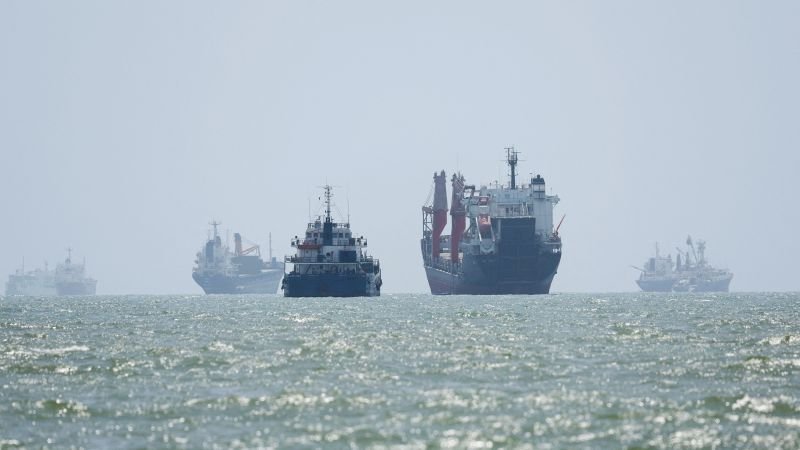
Iran and Oman have outlined a proposal to establish a temporary shipping corridor through the Strait of Hormuz after weeks of negotiations over the strategic waterway, which has become a key issue in stalled US-Iran discussions.
Temporary shipping channel: Iran and Oman discussed a “phased framework” for a joint project to create a temporary shipping route through the Strait of Hormuz. Oman’s foreign minister said he was “hopeful” the two countries would soon formalize the arrangement.
Mine-clearing effort: The proposal also includes a joint initiative to clear mines from the waterway. Technical negotiations are expected to continue as both countries work toward implementation.
Permanent solution still under discussion: Officials said talks will continue with the aim of reaching agreement on a permanent shipping corridor and the future administration of the strait.
A key shipping route could close: Iran said the proposed deal would close a UN-authorized southern shipping route along Oman’s coast, which Iran has opposed. Vessels would instead travel through Iranian waters in both directions, Iranian media reported. An Omani statement did not mention closing the current route.
Part of wider diplomacy: Qatar also discussed the proposal with Tehran and has publicly supported Omani-Iranian efforts to reach an agreement over the strait.
US position: President Donald Trump said earlier that all mines in the Strait of Hormuz have been removed or detonated and warned that any vessel attempting to place new mines would be destroyed. He also said the United States was monitoring “every square inch” of the waterway.
Oil prices fall: Global oil prices have fallen for three consecutive days after Iran and Oman announced the framework. Futures of Brent crude, a major global benchmark, declined 3% to trade at almost $86 a barrel early today, while West Texas Intermediate, the North American benchmark, dropped 2.8% to $80 a barrel. Analysts said traders largely remain in “wait-and-see mode.”
Why it matters: The Strait of Hormuz is one of the world’s most important energy chokepoints. The proposal is the clearest framework so far for restoring navigation after months of disruptions, but major questions remain about implementation, demining, international acceptance of a new route and whether Washington would consent to routing vessels through Iranian-controlled waters.
Iran and Oman have outlined a proposal to jointly establish a temporary shipping channel and to clear mines in the Strait of Hormuz.
The announcement follows US President Donald Trump’s remark that all mines have been detonated or removed.
This raises questions about the difficulties of clearing the waterway of explosives.
Experts say Iran has some demining capability, but they question whether it is sophisticated enough to clear the strait.
Is it possible to demine without Iranian cooperation?
“Iran has some demining capabilities, but most of its mine warfare capacity is designed for laying mines,” Nitya Labh, a Chatham House Schwarzman Academy fellow, told CNN.
Labh said Iran lacks the ability to sweep the ocean meter by meter at varying depths and questioned whether Tehran could be trusted to carry out such an operation.
Paul Heslop, a senior UN mine action expert, said any demining effort would require highly specialized sensors and trained crews, making it an expensive and complex operation. He added that Iranian cooperation remains critical.
Information like the locations of the mines is crucial to help navies predict where the mines may be, their depth and whether they are secured, Heslop said.
Labh added that political commitments like those in the June memorandum of understanding cannot guarantee the strait’s reopening.
“Declarations of a reopening alone cannot remove the hazards of sea mines nor restore market confidence within the shipping and insurance industries,” she said.
High costs at the pump continue to weigh on Americans, with AAA forecasting that gas prices this August could be the highest for this month on record. That’s forcing some folks to cut back on their spending – including summer vacations and driving trips – even more this summer.
Although Trump administration officials promised that the spike in prices would subside, the cost remains far higher than it was when the US-Iran conflict began in late February.
On Wednesday, a gallon of regular gas cost $4.10, on average, nationwide, according to AAA. That compares to $2.98 a gallon on February 28.
Are you taking additional steps to curtail your spending as gas prices remain high? Have you had to cancel or modify summer travel plans?
Tell us more using the form below.
Two major petrochemical facilities in southwestern Iran have suspended production as authorities seek to reduce electricity consumption amid a heat wave and power shortages, according to a Iranian media report.
Arvand Petrochemical Company located in the Mahshahr area said it has suspended production activities since August 22 following instructions from the state-owned National Petrochemical Company, according to Petrochemiha, the country’s news outlet specializing in the petrochemical and energy sectors.
The company said the suspension was due to electricity shortages caused by temperatures soaring while trying to manage energy consumption in Mahshahr, reported Petrochemiha, citing CODAL, Iran’s official stock-market corporate disclosure system.
Ghadir Petrochemical, which is supplied by Arvand, was also forced to shut down until further notice, according to Iran’s Rajanews.
The National Petrochemical Company has been under US sanctions since 2019. The US has now tightened financial measures against Iran in the areas of aviation, shipping, technology, gold and digital assets such as cryptocurrency.
Iran’s official Islamic Republic News Agency reported in July that the country had lost around 230 million cubic meters per day of natural gas production capacity since the start of the US war, while Tehran officials urged the public to limit energy use as temperatures in the south soared above 50 degrees Celsius (122 Fahrenheit).
Tehran announced earlier this month that it will restore 95 million cubic meters per day of lost gas production by repairing gas-processing facilities damaged in Asaluyeh, located by the Persian Gulf.
More from US President Donald Trump, who cast doubt on whether Iranian demonstrators could force a regime change, saying it’s hard to protest when “you have people that are willing to shoot you and kill you.”
Trump said in an interview on Glenn Beck’s radio show that observers are “so surprised that the people aren’t fighting back,” but added that was because of the grave threat they face.
“But you know, they have, really, snipers at the tops of buildings, and people go out to protest, and they get hit. And they don’t have to hit many, but when you see five or six or 10 people go down, and you have 100,000 or 200,000 people, they leave. I don’t care who you are; they leave.”
“It’s very hard to protest when you have people that are willing to shoot you and kill you, and that’s why they’re not protesting,” he continued.
Administration officials, including Trump, have raised the prospect of regime change at various points in the war. But they have also claimed that was not the goal of the US operations. US Treasury Secretary Scott Bessent on Monday said Iranian soldiers should question their military leadership and suggested they could act to bring down the government in Tehran.
President Donald Trump said Wednesday he does not believe Iranian Supreme Leader Mojtaba Khamenei is dead, amid speculation over his whereabouts and condition nearly six months after his appointment.
“I don’t think he’s dead,” Trump told conservative radio host Glenn Beck during a live phone interview.
Trump suggested that if Khamenei is dead, Iranian officials have been maintaining the appearance that he is alive — he said they continue to consult him and seek his “final blessing” on important matters. He added that the Iranian negotiators are “not the most honorable group,” suggesting that anything could be possible.
Asked about the prospects of winning the war, Trump said: “Our financial strength is unbelievable, and those things are going toward a very big victory.”
The US Treasury Department this week announced a campaign to tighten sanctions against Iran, threatening economic consequences against countries that refuse to cut ties with Iran.
Iranian President Masoud Pezeshkian and Russian President Vladimir Putin are expected to meet next week in Kyrgyzstan after the two countries signed a $25 billion plan to build new nuclear plants, according to Iran’s semi-official news agency Mehr.
The two leaders will hold a meeting on the sidelines at the Shanghai Cooperation Organisation (SCO) summit in Bishkek, according to Iran’s Ambassador to Russia, Kazem Jalali, as cited by Mehr.
Jalali said the two countries agreed to a “$25 billion memorandum of understanding” for the construction of new nuclear power plants and land has already been designated for a new nuclear facility near the Persian Gulf.
This is separate to the June memorandum of understanding signed between Iran and the US.
Some context: The Shanghai Cooperation Organisation is a body with 10 members from Europe and Asia, where nations discuss regional stability, trade and threats, according to the body’s website.
It’s members include: China, Russia, Kazakhstan, Kyrgyzstan, Tajikistan, Uzbekistan, India, Pakistan, Belarus and Iran.
Global oil prices have fallen for a third day in a row after Iran and Oman announced a yet-to-be-finalized effort to establish a temporary shipping route through the Strait of Hormuz. Setting up the new route would involve the two countries attempting to “clear mines” from parts of waterway, they said.
Just in: Iran’s Revolutionary Guards spokesperson said “agreements were reached regarding each country’s share of the Strait’s waters” and revenues, but claimed that the US is obstructing that agreement process, causing delays, according to the semi-official news agency Tasnim.
Here’s what else you need to know:
Oil prices drop: Brent futures, the global benchmark, declined 3% to trade at almost $86 a barrel shortly before 6 a.m. ET while WTI, the US benchmark, dropped 2.8% to $80 a barrel.
Iran’s defense capabilities: Iran is expanding its defense capabilities, according to one Iranian army commander, after much equipment was degraded earlier in the war. Tehran is “producing new systems and equipment, all relying entirely on Iranian knowledge and expertise,” the commander claimed.
Economic “D-day”: US officials unveiled a highly-anticipated campaign of further sanctions against Iran this week, dubbed “Operation Economic Outcast.” Israeli Prime Minister Benjamin Netanyahu has praised the measures. But analysts point out that it’s difficult to “tighten the siege” on a country that is already an economic pariah due to previous sanctions.
Iran’s foreign media bill: Iran’s parliament has made a first move toward approving a bill that would criminalize communications with foreign media outlets. But some Iranian politicians oppose the bill.
CNN’s Nadeen Ebrahim, Todd Symons and Anna Cooban contributed to this post.
Israeli Prime Minister Benjamin Netanyahu has praised the latest US economic measures against Iran, saying they would “tighten the siege” by targeting countries that do business with Tehran.
In a speech at the Binyamin Regional Council in the occupied West Bank, Netanyahu acknowledged that the Trump administration did not take significant steps against Iran itself, but rather against the country’s allies.
When Netanyahu last visited Washington in late-July – his first meeting with President Donald Trump since before the start of the war in February – he said he laid out three options for the US: reaching an agreement, a renewed military campaign, or economic pressure.
Choosing to return to sanctions and economic pressure, Netanyahu said that Trump “reaffirmed that decision in a very, very, very strong way” with the latest measures. On Monday, US Treasury Secretary Scott Bessent threatened new sanctions on countries refusing to cut economic ties with Iran but stopped short of imposing major new penalties.
Netanyahu added that “the challenge of Iran has not yet ended” and that he is “determined” to ensure Iran posed no threat.
Iranian politicians are divided over a move by the country’s parliament to approve a bill that would criminalize communications with media outlets deemed hostile to the Islamic Republic.
The bill is yet to become law, with some Iranian members of parliament raising concerns that the wording is too broad and could affect essential activities. Moein Khazaeli, one Iranian human rights lawyer, warned that it could amount to “a fresh legal catastrophe.”
Iranian state news agency IRNA reported earlier this month that politicians were split over bill. Before the parliament vote this month, Ebrahim Azizi, chairman of Parliament’s National Security and Foreign Policy Committee, said he believed the bill was aimed at creating “transparency in channels of communication with foreigners.”
But others said the bill would not solve the problem of foreign interference. Gholamhossein Karbaschi, a reformist political figure, said: “The problem begins when we assume that the main route of infiltration is simply journalists, interviews or foreign media, and that restricting these areas can solve a significant part of the problem.”
Iran has, however, proceeded to prosecute individuals who were in contact with foreign media under other national security and espionage laws, raising questions about what legal gap the new bill is intended to fill.
Iranian photojournalist Yalda Moaiery, whose stories and photographs have appeared around the world, has herself become a target. She was sentenced to 15 years in prison earlier this month by an Iranian court with “activities in furtherance of the interest of the Zionist regime against national security.” She hopes to appeal the decision.
Moaiery appeared on CNN in February and this month. She provided a rare eyewitness account from inside Iran, even as the regime attempted to block communications with the outside world.
Global oil prices fell for a third consecutive day on Wednesday after Iran and Oman said they had discussed a framework to establish a temporary shipping route through the Strait of Hormuz.
Iran and Oman also said they would attempt to “clear mines” from the waterway, according to a press statement from both countries’ foreign ministries.
Brent futures, the global benchmark, declined 3% to trade at almost $86 a barrel shortly before 6 a.m. ET while WTI, the US benchmark, dropped 2.8% to $80 a barrel.
The contracts have fallen 9% and 8%, respectively, this week despite the US Treasury Secretary Scott Bessent having threatened “economic D-Day” on nations refusing to cut business ties with Iran.
In the absence of details or a specific timeline for imposing penalties, traders are mostly in “wait-and-see mode,” Deutsche Bank analysts wrote in a Tuesday note.
The Trump administration appears to have landed on a fallback strategy in the Iran war after military strikes and negotiations failed to deliver victory: threats of harsh economic sanctions.
Treasury Secretary Scott Bessent has called them the “toughest sanctions in history,” which will “collapse this regime.” He’s even called it an “economic D-Day” for Iran, comparing it to the historic invasion of Nazi-occupied France during World War II.
There’s just one problem: Making good on those tough words requires not just getting tough on Iran, but also getting tough on China, which is Tehran’s No. 1 trading partner.
And Trump and his administration have proved quite reluctant to do that.
When Bessent rolled out the economic strategy Monday, he didn’t name specific countries that would be punished if they don’t cut ties. And the announcement notably did not include secondary sanctions on the large Chinese banks that facilitate Beijing’s purchases from Iran.
China buys as much as 90% of Iran’s oil. Economic analysts have told CNN that targeting these banks and Chinese companies would be crucial to exacting a major toll on Iran’s economy.
But not for the first time in recent days, Bessent punted on exactly what would be done on that front. He suggested messages were being sent — saying “no one is above the reach of US sanctions” — but didn’t detail what will happen with China.
Read the full analysis here.
Iran is expanding its defense capabilities, an Iranian army commander said Wednesday, after much of the country’s equipment was degraded by US-Israeli strikes in the early days of the war.
The commander said that based on that experience, Iran is “producing new systems and equipment, all relying entirely on Iranian knowledge and expertise.”
In May, Iran had already restarted some of its drone production during a six-week ceasefire, rapidly rebuilding military capabilities degraded by US-Israeli strikes, according to two sources familiar with US intelligence assessments.
Iran’s status as an economic outcast is nothing new. It’s been a pariah in the eyes of much of the world for literally decades.
Over the years, the United States has slapped Iran with countless sanctions targeting its banking system, shipping companies, oil industry and military.
That’s why Operation Economic Outcast, the highly-anticipated sanctions campaign unveiled by US officials this week, doesn’t pack as much of a punch as the Treasury Department’s “Economic D-Day” rhetoric might suggest.
Years and years of punishing sanctions have limited how much further action the United States can take.
“It’s hard to know what to make of ‘Operation Economic Outcast’ because it’s mostly just an announcement that there will be future announcements,” Justin Wolfers, economics professor at the University of Michigan, wrote in his Substack newsletter.
Read the full story here.
When US Treasury Secretary Scott Bessent unveiled “Operation Economic Outcast,” threatening damaging new sanctions on countries that refuse to stop doing business with Iran, he didn’t name the one country that could decide its success or failure: China.
The world’s second-largest economy has long been a critical economic lifeline for Tehran, buying up the vast majority of its oil exports – worth an estimated tens of billions in US dollars last year – in addition to other trade.
Bringing it on board with the White House’s latest effort to subdue an Iranian leadership stubbornly defiant after almost six months of war, however, is an extremely tall order.
Beijing flatly rejects what it calls “unilateral” US sanctions and has long defended its right to regular trade with partners like Iran and Russia. It also surmises that Washington would be wary of triggering a broader economic confrontation that would hurt both countries, right ahead of the US midterms.
On Tuesday, following Bessent’s press conference, China’s Foreign Ministry vowed to “take all necessary measures” to safeguard its “own legitimate rights and interests” in the face of US sanction threats.
“Economic warfare and maximum pressure will not help resolve the issue; they will only further intensify tensions and conflicts, create spillover risks, disrupt the global economic and financial order,” ministry spokesperson Lin Jian said.
Bessent’s threat also comes ahead of a highly anticipated visit by Chinese leader Xi Jinping to the US next month, where the two sides could make progress on extending a critical trade truce set to expire later this fall.
Read the full analysis here.
A key route currently used by ships transiting the Strait of Hormuz would close under a pending Iran-Oman deal, according to a senior Iranian diplomat.
After weeks of fraught discussions, Tehran and Muscat outlined a proposal Tuesday to jointly establish a temporary shipping channel through the strait, and to “clear mines.”
Iran’s Deputy Foreign Minister Kazem Gharibabadi later said the yet-to-be-finalized deal would see the closure of the southern route, a UN-authorized shipping channel that follows the coast of Oman and that Iran vehemently opposes, state-linked Press TV reported.
The earlier Omani statement did not mention the route’s closure.
In recent weeks, the US government and ship tracking organizations have noted a growing amount of oil is transiting the critical waterway, despite Iran’s insistence it is closed. Much of that is traveling via the Omani route – or has taken that route as “dark” transits, during which ships turn off their tracking transponders, CNN reported last week.
While Iran has attacked dozens of ships that attempted to travel the southern route, many ships have recently chosen to ignore Iran’s demands and cross the strait with the promise of protection from US naval forces.
Gharibabadi said the potential new joint route agreed with Oman would see vessels “pass through Iranian waters in both directions,” the Press TV report said.
But whether the US, which insists the strait is international waters, would accept the new route is unclear. Last week, President Donald Trump threatened to attack Oman if it interfered with US efforts in the waterway.
Washington has worked to undermine Tehran’s claims of control of the strait, warning shipping firms on Monday they could face sanctions or penalties even if they comply with information requests from Iranian agencies over transits.
Iran and Oman outlined a proposal Tuesday to jointly establish a temporary shipping channel through the Strait of Hormuz, according to regional officials, after weeks of fraught discussions between the two countries.
Tehran and Muscat discussed a “phased framework” for a joint project facilitating a “temporary shipping corridor” and to “clear mines,” a press statement from the Iranian and Omani foreign ministries said.
Officials will carry on talks “with the aim of reaching agreement on a permanent shipping corridor and the future administration of the Strait,” the statement added.
Omani Foreign Minister Badr bin Hamad Al Busaidi visited Iran and held consultations with Iranian Foreign Minister Abbas Araghchi, the state-run Oman News Agency (ONA) reported earlier.
After the meeting, the Omani foreign minister said he was “hopeful” both nations would “soon announce a temporary corridor” for the strait. “Future management of the Strait and a permanent solution will follow in due course,” he posted on X. “Discussions with regional partners will be conducted in support of peace and cooperation, stability and freedom of navigation,” Al Busaidi added.
Araghchi wrote in a post on X that the proposed deal showed that “Iran’s commitment to peace and stability is matched by steadfast diplomacy with our neighbors.”
Over the past few weeks, Tehran and Muscat held negotiations to stabilize shipping in the waterway, which has emerged as a key bargaining chip in stalled discussions between Iran and the US, following months of regional violence.
Earlier today, US President Donald Trump reiterated that all mines in the Strait of Hormuz have been removed or detonated, and he threatened to destroy any boats that try to place more. “We are watching every square inch of the strait,” he said.
Meanwhile, Qatar Prime Minister Sheikh Mohammed bin Abdulrahman bin Jassim Al-Thani and Iranian Foreign Minister Abbas Araghchi held a telephone call and discussed the proposed temporary shipping channel, the Qatar foreign ministry said Tuesday.
Qatar has previously voiced support for the efforts between Oman and Iran to reach an agreement over the Strait of Hormuz, despite US President Donald Trump’s threat to attack Oman if it interferes with US operations in the strategic waterway.
A sweeping new US sanctions campaign targeting Iran and its economic partners is drawing criticism from China and defiance from Tehran, with senior Iranian officials vowing Washington’s economic pressure will fail.
Iranian Parliament Speaker Mohammad Bagher Ghalibaf claimed Tuesday that after suffering defeat “in the military and political war,” the United States “will also be defeated in its economic actions,” according to Iran’s semi-official Tasnim News Agency.
Here’s a look at what’s in the new measures under the Trump administration’s “Operation Economic Outcast,” a campaign Treasury Secretary Scott Bessent described as an effort to “sever every economic lifeline” sustaining Iran’s government.
Sanctions on more than 60 targets: According to Bessent, the Treasury Department’s Office of Foreign Assets Control is sanctioning “over 60 entities, individuals, and vessels across the world” accused of helping Iran procure nuclear and missile technology, conduct cyber operations and generate oil revenue.
Five sectors targeted : The administration announced new sanctions determinations covering five sectors that Washington views as critical to Iran’s economy: digital assets, technology, gold, aviation and shipping. Bessent said the measures increase the risk of sanctions for foreign companies and individuals that continue doing business with Iran in those sectors.
Pressure on countries dealing with Iran: The treasury secretary said US officials are meeting governments worldwide and informing them that Washington expects action against economic activities linked to Iran. “Every country has a defined timeline to shut down activities we have identified,” Bessent said. “If they do not take action, we will do so unilaterally through Treasury authorities.”
Iranian financial networks in focus: Bessent specifically singled out Iran’s Bank Melli, saying: “Every Bank Melli branch must be shuttered.” He also warned that entities facilitating money laundering on behalf of Iran could lose access to the US dollar system.
Oil exports and sanctions evasion: The treasury secretary said Washington has mapped Iran’s networks used to “smuggle oil and evade sanctions” and pledged a “zero-leakage approach” to cut off revenue streams that fund the Iranian government and the Islamic Revolutionary Guard Corps.
• US pressure: President Donald Trump claims the financial strength of the US will move the country “toward a very big victory” over Iran, adding that he does not believe Iran’s supreme leader is dead. The US’ wider sanctions against Iran are targeting aviation, shipping, technology, gold and digital assets.
• Oil prices sink: Global oil prices have fallen for a third consecutive day after Iran and Oman said they had discussed a framework to establish a temporary shipping route through the Strait of Hormuz. Experts say this is unlikely to be a straighforward task.
• New route: Iran’s deputy foreign minister said the yet-to-be-finalized deal with Oman would involve closing a UN-authorized — and Tehran-opposed — shipping channel along the coast of Oman. The countries would also start a demining effort in the critical waterway.
Iran has called on the United Nations to investigate the humanitarian consequences of US sanctions, arguing that Washington’s pressure campaign is harming ordinary Iranians and violating international law.
Tehran “requests the United Nations Secretary-General to assess and report on the humanitarian and human rights implications of these actions,” Iranian Foreign Minister Abbas Araghchi wrote in a letter addressed to UN Secretary-General António Guterres, the president of the UN Security Council and UN member states.
The letter, released Wednesday by Iran’s Foreign Ministry, outlined Tehran’s response to what Araghchi described as US “economic terrorism” against his country.
Araghchi asked the United Nations to examine the impact of US measures on access to food, medicine, healthcare, energy, transportation, humanitarian assistance and other necessities.
He called on the Security Council and UN member states to condemn what he described as unilateral coercive measures and secondary sanctions imposed by Washington.
Iran urged governments not to recognize or implement sanctions that it said were designed to force countries to alter their legal economic and trade relationships with Tehran. Araghchi also called on the United States to halt efforts aimed at pressuring third countries and companies to reduce economic ties with Iran.
He made the appeal after the US Treasury Department began its new campaign to tighten sanctions on Iran, targeting aviation, shipping, technology, gold and digital assets such as cryptocurrency. Even though the measures are aimed at the regime, ordinary Iranians will inevitably be affected.
The head of Iran’s Atomic Energy Organization, Mohammad Eslami, accused the US and Israel on Wednesday of pressuring the UN nuclear watchdog to inspect war-damaged Iranian nuclear facilities in order to assess the impact of military strikes, state media reported.
“At a time when the (International Atomic Energy Agency) has no such protocol and is not taking a position either, it is only the United States and Israel that are applying pressure for the Agency to go to the damaged sites and inspect them,” Eslami said. “The reason for this pressure is that they want to see what happened to these sites as a result of the military operations they carried out.”
CNN has reached out to the IAEA for comment.
Eslami also said Iran remains in a “wartime situation” and that damaged nuclear facilities have not yet been secured for inspections.
He argued that facilities affected by military strikes are subject to legislation passed by Iran’s parliament and said the IAEA lacks a clear protocol governing inspections at sites that have come under attack.
Iran and Oman have outlined a proposal to establish a temporary shipping corridor through the Strait of Hormuz after weeks of negotiations over the strategic waterway, which has become a key issue in stalled US-Iran discussions.
Temporary shipping channel: Iran and Oman discussed a “phased framework” for a joint project to create a temporary shipping route through the Strait of Hormuz. Oman’s foreign minister said he was “hopeful” the two countries would soon formalize the arrangement.
Mine-clearing effort: The proposal also includes a joint initiative to clear mines from the waterway. Technical negotiations are expected to continue as both countries work toward implementation.
Permanent solution still under discussion: Officials said talks will continue with the aim of reaching agreement on a permanent shipping corridor and the future administration of the strait.
A key shipping route could close: Iran said the proposed deal would close a UN-authorized southern shipping route along Oman’s coast, which Iran has opposed. Vessels would instead travel through Iranian waters in both directions, Iranian media reported. An Omani statement did not mention closing the current route.
Part of wider diplomacy: Qatar also discussed the proposal with Tehran and has publicly supported Omani-Iranian efforts to reach an agreement over the strait.
US position: President Donald Trump said earlier that all mines in the Strait of Hormuz have been removed or detonated and warned that any vessel attempting to place new mines would be destroyed. He also said the United States was monitoring “every square inch” of the waterway.
Oil prices fall: Global oil prices have fallen for three consecutive days after Iran and Oman announced the framework. Futures of Brent crude, a major global benchmark, declined 3% to trade at almost $86 a barrel early today, while West Texas Intermediate, the North American benchmark, dropped 2.8% to $80 a barrel. Analysts said traders largely remain in “wait-and-see mode.”
Why it matters: The Strait of Hormuz is one of the world’s most important energy chokepoints. The proposal is the clearest framework so far for restoring navigation after months of disruptions, but major questions remain about implementation, demining, international acceptance of a new route and whether Washington would consent to routing vessels through Iranian-controlled waters.
Iran and Oman have outlined a proposal to jointly establish a temporary shipping channel and to clear mines in the Strait of Hormuz.
The announcement follows US President Donald Trump’s remark that all mines have been detonated or removed.
This raises questions about the difficulties of clearing the waterway of explosives.
Experts say Iran has some demining capability, but they question whether it is sophisticated enough to clear the strait.
Is it possible to demine without Iranian cooperation?
“Iran has some demining capabilities, but most of its mine warfare capacity is designed for laying mines,” Nitya Labh, a Chatham House Schwarzman Academy fellow, told CNN.
Labh said Iran lacks the ability to sweep the ocean meter by meter at varying depths and questioned whether Tehran could be trusted to carry out such an operation.
Paul Heslop, a senior UN mine action expert, said any demining effort would require highly specialized sensors and trained crews, making it an expensive and complex operation. He added that Iranian cooperation remains critical.
Information like the locations of the mines is crucial to help navies predict where the mines may be, their depth and whether they are secured, Heslop said.
Labh added that political commitments like those in the June memorandum of understanding cannot guarantee the strait’s reopening.
“Declarations of a reopening alone cannot remove the hazards of sea mines nor restore market confidence within the shipping and insurance industries,” she said.
High costs at the pump continue to weigh on Americans, with AAA forecasting that gas prices this August could be the highest for this month on record. That’s forcing some folks to cut back on their spending – including summer vacations and driving trips – even more this summer.
Although Trump administration officials promised that the spike in prices would subside, the cost remains far higher than it was when the US-Iran conflict began in late February.
On Wednesday, a gallon of regular gas cost $4.10, on average, nationwide, according to AAA. That compares to $2.98 a gallon on February 28.
Are you taking additional steps to curtail your spending as gas prices remain high? Have you had to cancel or modify summer travel plans?
Tell us more using the form below.
Two major petrochemical facilities in southwestern Iran have suspended production as authorities seek to reduce electricity consumption amid a heat wave and power shortages, according to a Iranian media report.
Arvand Petrochemical Company located in the Mahshahr area said it has suspended production activities since August 22 following instructions from the state-owned National Petrochemical Company, according to Petrochemiha, the country’s news outlet specializing in the petrochemical and energy sectors.
The company said the suspension was due to electricity shortages caused by temperatures soaring while trying to manage energy consumption in Mahshahr, reported Petrochemiha, citing CODAL, Iran’s official stock-market corporate disclosure system.
Ghadir Petrochemical, which is supplied by Arvand, was also forced to shut down until further notice, according to Iran’s Rajanews.
The National Petrochemical Company has been under US sanctions since 2019. The US has now tightened financial measures against Iran in the areas of aviation, shipping, technology, gold and digital assets such as cryptocurrency.
Iran’s official Islamic Republic News Agency reported in July that the country had lost around 230 million cubic meters per day of natural gas production capacity since the start of the US war, while Tehran officials urged the public to limit energy use as temperatures in the south soared above 50 degrees Celsius (122 Fahrenheit).
Tehran announced earlier this month that it will restore 95 million cubic meters per day of lost gas production by repairing gas-processing facilities damaged in Asaluyeh, located by the Persian Gulf.
More from US President Donald Trump, who cast doubt on whether Iranian demonstrators could force a regime change, saying it’s hard to protest when “you have people that are willing to shoot you and kill you.”
Trump said in an interview on Glenn Beck’s radio show that observers are “so surprised that the people aren’t fighting back,” but added that was because of the grave threat they face.
“But you know, they have, really, snipers at the tops of buildings, and people go out to protest, and they get hit. And they don’t have to hit many, but when you see five or six or 10 people go down, and you have 100,000 or 200,000 people, they leave. I don’t care who you are; they leave.”
“It’s very hard to protest when you have people that are willing to shoot you and kill you, and that’s why they’re not protesting,” he continued.
Administration officials, including Trump, have raised the prospect of regime change at various points in the war. But they have also claimed that was not the goal of the US operations. US Treasury Secretary Scott Bessent on Monday said Iranian soldiers should question their military leadership and suggested they could act to bring down the government in Tehran.
President Donald Trump said Wednesday he does not believe Iranian Supreme Leader Mojtaba Khamenei is dead, amid speculation over his whereabouts and condition nearly six months after his appointment.
“I don’t think he’s dead,” Trump told conservative radio host Glenn Beck during a live phone interview.
Trump suggested that if Khamenei is dead, Iranian officials have been maintaining the appearance that he is alive — he said they continue to consult him and seek his “final blessing” on important matters. He added that the Iranian negotiators are “not the most honorable group,” suggesting that anything could be possible.
Asked about the prospects of winning the war, Trump said: “Our financial strength is unbelievable, and those things are going toward a very big victory.”
The US Treasury Department this week announced a campaign to tighten sanctions against Iran, threatening economic consequences against countries that refuse to cut ties with Iran.
Iranian President Masoud Pezeshkian and Russian President Vladimir Putin are expected to meet next week in Kyrgyzstan after the two countries signed a $25 billion plan to build new nuclear plants, according to Iran’s semi-official news agency Mehr.
The two leaders will hold a meeting on the sidelines at the Shanghai Cooperation Organisation (SCO) summit in Bishkek, according to Iran’s Ambassador to Russia, Kazem Jalali, as cited by Mehr.
Jalali said the two countries agreed to a “$25 billion memorandum of understanding” for the construction of new nuclear power plants and land has already been designated for a new nuclear facility near the Persian Gulf.
This is separate to the June memorandum of understanding signed between Iran and the US.
Some context: The Shanghai Cooperation Organisation is a body with 10 members from Europe and Asia, where nations discuss regional stability, trade and threats, according to the body’s website.
It’s members include: China, Russia, Kazakhstan, Kyrgyzstan, Tajikistan, Uzbekistan, India, Pakistan, Belarus and Iran.
Global oil prices have fallen for a third day in a row after Iran and Oman announced a yet-to-be-finalized effort to establish a temporary shipping route through the Strait of Hormuz. Setting up the new route would involve the two countries attempting to “clear mines” from parts of waterway, they said.
Just in: Iran’s Revolutionary Guards spokesperson said “agreements were reached regarding each country’s share of the Strait’s waters” and revenues, but claimed that the US is obstructing that agreement process, causing delays, according to the semi-official news agency Tasnim.
Here’s what else you need to know:
Oil prices drop: Brent futures, the global benchmark, declined 3% to trade at almost $86 a barrel shortly before 6 a.m. ET while WTI, the US benchmark, dropped 2.8% to $80 a barrel.
Iran’s defense capabilities: Iran is expanding its defense capabilities, according to one Iranian army commander, after much equipment was degraded earlier in the war. Tehran is “producing new systems and equipment, all relying entirely on Iranian knowledge and expertise,” the commander claimed.
Economic “D-day”: US officials unveiled a highly-anticipated campaign of further sanctions against Iran this week, dubbed “Operation Economic Outcast.” Israeli Prime Minister Benjamin Netanyahu has praised the measures. But analysts point out that it’s difficult to “tighten the siege” on a country that is already an economic pariah due to previous sanctions.
Iran’s foreign media bill: Iran’s parliament has made a first move toward approving a bill that would criminalize communications with foreign media outlets. But some Iranian politicians oppose the bill.
CNN’s Nadeen Ebrahim, Todd Symons and Anna Cooban contributed to this post.
Israeli Prime Minister Benjamin Netanyahu has praised the latest US economic measures against Iran, saying they would “tighten the siege” by targeting countries that do business with Tehran.
In a speech at the Binyamin Regional Council in the occupied West Bank, Netanyahu acknowledged that the Trump administration did not take significant steps against Iran itself, but rather against the country’s allies.
When Netanyahu last visited Washington in late-July – his first meeting with President Donald Trump since before the start of the war in February – he said he laid out three options for the US: reaching an agreement, a renewed military campaign, or economic pressure.
Choosing to return to sanctions and economic pressure, Netanyahu said that Trump “reaffirmed that decision in a very, very, very strong way” with the latest measures. On Monday, US Treasury Secretary Scott Bessent threatened new sanctions on countries refusing to cut economic ties with Iran but stopped short of imposing major new penalties.
Netanyahu added that “the challenge of Iran has not yet ended” and that he is “determined” to ensure Iran posed no threat.
Iranian politicians are divided over a move by the country’s parliament to approve a bill that would criminalize communications with media outlets deemed hostile to the Islamic Republic.
The bill is yet to become law, with some Iranian members of parliament raising concerns that the wording is too broad and could affect essential activities. Moein Khazaeli, one Iranian human rights lawyer, warned that it could amount to “a fresh legal catastrophe.”
Iranian state news agency IRNA reported earlier this month that politicians were split over bill. Before the parliament vote this month, Ebrahim Azizi, chairman of Parliament’s National Security and Foreign Policy Committee, said he believed the bill was aimed at creating “transparency in channels of communication with foreigners.”
But others said the bill would not solve the problem of foreign interference. Gholamhossein Karbaschi, a reformist political figure, said: “The problem begins when we assume that the main route of infiltration is simply journalists, interviews or foreign media, and that restricting these areas can solve a significant part of the problem.”
Iran has, however, proceeded to prosecute individuals who were in contact with foreign media under other national security and espionage laws, raising questions about what legal gap the new bill is intended to fill.
Iranian photojournalist Yalda Moaiery, whose stories and photographs have appeared around the world, has herself become a target. She was sentenced to 15 years in prison earlier this month by an Iranian court with “activities in furtherance of the interest of the Zionist regime against national security.” She hopes to appeal the decision.
Moaiery appeared on CNN in February and this month. She provided a rare eyewitness account from inside Iran, even as the regime attempted to block communications with the outside world.
Global oil prices fell for a third consecutive day on Wednesday after Iran and Oman said they had discussed a framework to establish a temporary shipping route through the Strait of Hormuz.
Iran and Oman also said they would attempt to “clear mines” from the waterway, according to a press statement from both countries’ foreign ministries.
Brent futures, the global benchmark, declined 3% to trade at almost $86 a barrel shortly before 6 a.m. ET while WTI, the US benchmark, dropped 2.8% to $80 a barrel.
The contracts have fallen 9% and 8%, respectively, this week despite the US Treasury Secretary Scott Bessent having threatened “economic D-Day” on nations refusing to cut business ties with Iran.
In the absence of details or a specific timeline for imposing penalties, traders are mostly in “wait-and-see mode,” Deutsche Bank analysts wrote in a Tuesday note.
The Trump administration appears to have landed on a fallback strategy in the Iran war after military strikes and negotiations failed to deliver victory: threats of harsh economic sanctions.
Treasury Secretary Scott Bessent has called them the “toughest sanctions in history,” which will “collapse this regime.” He’s even called it an “economic D-Day” for Iran, comparing it to the historic invasion of Nazi-occupied France during World War II.
There’s just one problem: Making good on those tough words requires not just getting tough on Iran, but also getting tough on China, which is Tehran’s No. 1 trading partner.
And Trump and his administration have proved quite reluctant to do that.
When Bessent rolled out the economic strategy Monday, he didn’t name specific countries that would be punished if they don’t cut ties. And the announcement notably did not include secondary sanctions on the large Chinese banks that facilitate Beijing’s purchases from Iran.
China buys as much as 90% of Iran’s oil. Economic analysts have told CNN that targeting these banks and Chinese companies would be crucial to exacting a major toll on Iran’s economy.
But not for the first time in recent days, Bessent punted on exactly what would be done on that front. He suggested messages were being sent — saying “no one is above the reach of US sanctions” — but didn’t detail what will happen with China.
Read the full analysis here.
Iran is expanding its defense capabilities, an Iranian army commander said Wednesday, after much of the country’s equipment was degraded by US-Israeli strikes in the early days of the war.
The commander said that based on that experience, Iran is “producing new systems and equipment, all relying entirely on Iranian knowledge and expertise.”
In May, Iran had already restarted some of its drone production during a six-week ceasefire, rapidly rebuilding military capabilities degraded by US-Israeli strikes, according to two sources familiar with US intelligence assessments.
Iran’s status as an economic outcast is nothing new. It’s been a pariah in the eyes of much of the world for literally decades.
Over the years, the United States has slapped Iran with countless sanctions targeting its banking system, shipping companies, oil industry and military.
That’s why Operation Economic Outcast, the highly-anticipated sanctions campaign unveiled by US officials this week, doesn’t pack as much of a punch as the Treasury Department’s “Economic D-Day” rhetoric might suggest.
Years and years of punishing sanctions have limited how much further action the United States can take.
“It’s hard to know what to make of ‘Operation Economic Outcast’ because it’s mostly just an announcement that there will be future announcements,” Justin Wolfers, economics professor at the University of Michigan, wrote in his Substack newsletter.
Read the full story here.
When US Treasury Secretary Scott Bessent unveiled “Operation Economic Outcast,” threatening damaging new sanctions on countries that refuse to stop doing business with Iran, he didn’t name the one country that could decide its success or failure: China.
The world’s second-largest economy has long been a critical economic lifeline for Tehran, buying up the vast majority of its oil exports – worth an estimated tens of billions in US dollars last year – in addition to other trade.
Bringing it on board with the White House’s latest effort to subdue an Iranian leadership stubbornly defiant after almost six months of war, however, is an extremely tall order.
Beijing flatly rejects what it calls “unilateral” US sanctions and has long defended its right to regular trade with partners like Iran and Russia. It also surmises that Washington would be wary of triggering a broader economic confrontation that would hurt both countries, right ahead of the US midterms.
On Tuesday, following Bessent’s press conference, China’s Foreign Ministry vowed to “take all necessary measures” to safeguard its “own legitimate rights and interests” in the face of US sanction threats.
“Economic warfare and maximum pressure will not help resolve the issue; they will only further intensify tensions and conflicts, create spillover risks, disrupt the global economic and financial order,” ministry spokesperson Lin Jian said.
Bessent’s threat also comes ahead of a highly anticipated visit by Chinese leader Xi Jinping to the US next month, where the two sides could make progress on extending a critical trade truce set to expire later this fall.
Read the full analysis here.
A key route currently used by ships transiting the Strait of Hormuz would close under a pending Iran-Oman deal, according to a senior Iranian diplomat.
After weeks of fraught discussions, Tehran and Muscat outlined a proposal Tuesday to jointly establish a temporary shipping channel through the strait, and to “clear mines.”
Iran’s Deputy Foreign Minister Kazem Gharibabadi later said the yet-to-be-finalized deal would see the closure of the southern route, a UN-authorized shipping channel that follows the coast of Oman and that Iran vehemently opposes, state-linked Press TV reported.
The earlier Omani statement did not mention the route’s closure.
In recent weeks, the US government and ship tracking organizations have noted a growing amount of oil is transiting the critical waterway, despite Iran’s insistence it is closed. Much of that is traveling via the Omani route – or has taken that route as “dark” transits, during which ships turn off their tracking transponders, CNN reported last week.
While Iran has attacked dozens of ships that attempted to travel the southern route, many ships have recently chosen to ignore Iran’s demands and cross the strait with the promise of protection from US naval forces.
Gharibabadi said the potential new joint route agreed with Oman would see vessels “pass through Iranian waters in both directions,” the Press TV report said.
But whether the US, which insists the strait is international waters, would accept the new route is unclear. Last week, President Donald Trump threatened to attack Oman if it interfered with US efforts in the waterway.
Washington has worked to undermine Tehran’s claims of control of the strait, warning shipping firms on Monday they could face sanctions or penalties even if they comply with information requests from Iranian agencies over transits.
Iran and Oman outlined a proposal Tuesday to jointly establish a temporary shipping channel through the Strait of Hormuz, according to regional officials, after weeks of fraught discussions between the two countries.
Tehran and Muscat discussed a “phased framework” for a joint project facilitating a “temporary shipping corridor” and to “clear mines,” a press statement from the Iranian and Omani foreign ministries said.
Officials will carry on talks “with the aim of reaching agreement on a permanent shipping corridor and the future administration of the Strait,” the statement added.
Omani Foreign Minister Badr bin Hamad Al Busaidi visited Iran and held consultations with Iranian Foreign Minister Abbas Araghchi, the state-run Oman News Agency (ONA) reported earlier.
After the meeting, the Omani foreign minister said he was “hopeful” both nations would “soon announce a temporary corridor” for the strait. “Future management of the Strait and a permanent solution will follow in due course,” he posted on X. “Discussions with regional partners will be conducted in support of peace and cooperation, stability and freedom of navigation,” Al Busaidi added.
Araghchi wrote in a post on X that the proposed deal showed that “Iran’s commitment to peace and stability is matched by steadfast diplomacy with our neighbors.”
Over the past few weeks, Tehran and Muscat held negotiations to stabilize shipping in the waterway, which has emerged as a key bargaining chip in stalled discussions between Iran and the US, following months of regional violence.
Earlier today, US President Donald Trump reiterated that all mines in the Strait of Hormuz have been removed or detonated, and he threatened to destroy any boats that try to place more. “We are watching every square inch of the strait,” he said.
Meanwhile, Qatar Prime Minister Sheikh Mohammed bin Abdulrahman bin Jassim Al-Thani and Iranian Foreign Minister Abbas Araghchi held a telephone call and discussed the proposed temporary shipping channel, the Qatar foreign ministry said Tuesday.
Qatar has previously voiced support for the efforts between Oman and Iran to reach an agreement over the Strait of Hormuz, despite US President Donald Trump’s threat to attack Oman if it interferes with US operations in the strategic waterway.
A sweeping new US sanctions campaign targeting Iran and its economic partners is drawing criticism from China and defiance from Tehran, with senior Iranian officials vowing Washington’s economic pressure will fail.
Iranian Parliament Speaker Mohammad Bagher Ghalibaf claimed Tuesday that after suffering defeat “in the military and political war,” the United States “will also be defeated in its economic actions,” according to Iran’s semi-official Tasnim News Agency.
Here’s a look at what’s in the new measures under the Trump administration’s “Operation Economic Outcast,” a campaign Treasury Secretary Scott Bessent described as an effort to “sever every economic lifeline” sustaining Iran’s government.
Sanctions on more than 60 targets: According to Bessent, the Treasury Department’s Office of Foreign Assets Control is sanctioning “over 60 entities, individuals, and vessels across the world” accused of helping Iran procure nuclear and missile technology, conduct cyber operations and generate oil revenue.
Five sectors targeted : The administration announced new sanctions determinations covering five sectors that Washington views as critical to Iran’s economy: digital assets, technology, gold, aviation and shipping. Bessent said the measures increase the risk of sanctions for foreign companies and individuals that continue doing business with Iran in those sectors.
Pressure on countries dealing with Iran: The treasury secretary said US officials are meeting governments worldwide and informing them that Washington expects action against economic activities linked to Iran. “Every country has a defined timeline to shut down activities we have identified,” Bessent said. “If they do not take action, we will do so unilaterally through Treasury authorities.”
Iranian financial networks in focus: Bessent specifically singled out Iran’s Bank Melli, saying: “Every Bank Melli branch must be shuttered.” He also warned that entities facilitating money laundering on behalf of Iran could lose access to the US dollar system.
Oil exports and sanctions evasion: The treasury secretary said Washington has mapped Iran’s networks used to “smuggle oil and evade sanctions” and pledged a “zero-leakage approach” to cut off revenue streams that fund the Iranian government and the Islamic Revolutionary Guard Corps.




Responses