
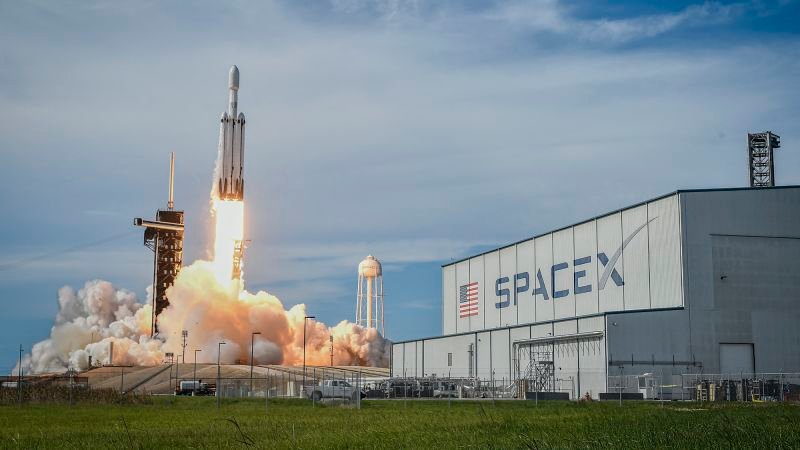
Elon Musk’s SpaceX unveiled plans Wednesday to raise $75 billion in an initial public offering of its stock that would value the company at roughly $1.77 trillion. The blockbuster debut could make Musk – already the world’s richest person – the first trillionaire.
SpaceX plans to sell 555.6 million shares at an initial price of $135 a share, the company said in a filing with the Securities and Exchange Commission. The decision to dictate one price target, as opposed to offering a range, is a unique move that reflects the hot IPO market around the AI craze and Musk’s own tendency for mega-scale goals.
Musk, who currently owns half of SpaceX, would still control nearly half of the company’s total shares after the offering. However, some of those are special shares with greater voting power, and Musk will control 82.4% of the voting power after the IPO, according to the filing.
The debut will be the biggest public offering in history, topping the previous record $29.4 billion raised by oil giant Saudi Aramco in 2019. The eye-popping figures come as the artificial intelligence race has sent startups to startling valuations even before they go public.
Besides its rocket and satellite business, SpaceX has become a major player in artificial intelligence, a sector that’s recently powered a Wall Street rally as tech companies announce developments in rapid succession. But those companies are still figuring out many practical applications for the technology – and how to turn a profit.
SpaceX’s long-anticipated public offering, which is set to start trading next Friday, is the latest sign of the commercialization of space travel and ambitious plans to establish human outposts on the Moon and Mars. But it’s also indicative of Wall Street’s current fixation on AI and the unprecedented wealth concentrated in the hands of technology executives.
The SpaceX IPO documents emphasized not just expanding human space exploration but also the company’s plans for artificial intelligence and putting data centers in space. The company plans to use proceeds from this stock offering, and likely future stock sales, to feed the massive capital expenditure needs of both its space and AI businesses.
When Musk founded SpaceX in 2002, it was focused on building rockets and delivering payloads to outer space. The company expanded into telecommunications in 2021 when it rolled out Starlink, its satellite-based internet service. In February this year, Musk merged SpaceX with xAI, his artificial intelligence company that includes his social media platform, X.
The company’s rockets dominate the corporate space sector, launching not just astronauts but also satellites. But the AI component is a cornerstone of the company’s valuation.
Wall Street has been driving up the value of firms tied to the sector. While profits are still rare in the field, investors are betting that AI will increase productivity and corporate profits in the future, even if that comes at the cost of some existing jobs.
Musk’s stake in SpaceX would be worth $841 billion, assuming the company’s shares do in fact trade at $135 a share. That alone would be roughly what Forbes’ real team billionaire tracker estimates as the combined current net worth of the next three richest people on the list – Google founders Larry Page and Sergey Brin and another software mogul, Larry Ellison.
Add in Musk’s stake in Tesla, worth just less than $300 billion at Wednesday’s closing price, and his net worth could reach up to $1.1 billion, more than the next three richest people, plus number five on the list, Amazon founder Jeff Bezos.
SpaceX revealed its IPO plans last month – but stopped short of disclosing the price it expected its shares to fetch and, therefore, the valuation it is targeting.
SpaceX isn’t the only AI heavyweight preparing to go public: Anthropic has already announced plans, with rival OpenAI expected to follow. Together, the offerings could mint thousands of millionaires – and even some billionaires – despite the fact that these companies have yet to demonstrate a clear path to profitability.
This story has been updated.




Responses