
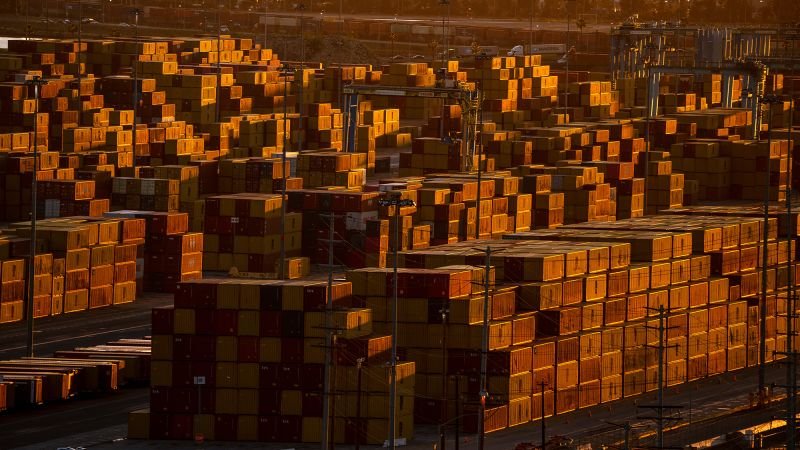
- President Donald Trump is pursuing a fresh wave of tariffs through a new legal approach after courts blocked his earlier attempts.
- The administration released a report Tuesday proposing tariffs of 10% to 12.5% on 60 countries over forced labor concerns.
- The strategy uses Section 301 of the Trade Act, which allows tariffs without limits on level or duration.
AI-generated summary was reviewed by a CNN editor.
President Donald Trump pledged to restore his tariff regime after setbacks in the Supreme Court and other legal challenges. Now, he’s doing it — but not in the blustery, fly-by-the-seat-of-his-pants, all-caps-late-night-Truth-Social-post manner that once defined his tariff policy.
Trump’s quiet, methodical, patient new approach to tariffs is on purpose. The tools he’s now using to rebuild his tariff engine are far more precise than the last ones.
But if he succeeds, his latest tariffs could be just as drastic as his previous ones. And longer lasting.
Late Tuesday night, US Trade Representative Jamieson Greer published a 98-page report detailing the result of a monthslong investigation into trading partners’ policies on buying goods made with forced labor.
The report found that 60 economies the United States does business with have failed to impose or effectively enforce prohibitions on importing items into their countries that were made by people who were working against their will or for insufficient funds. Others, Greer said, have taken “initial steps” on restricting forced labor, but he said each US trading partner has to resolve the issue more swiftly.
“The failure of our most important trading partners to address the importation of goods made with forced labor is unacceptable,” Greer said in a statement. “This creates a dynamic where American workers are forced to compete globally on an unlevel playing field.”
As a remedy, Greer proposed a minimum 10% across-the-board tariff on all of the trading partners the administration investigated, citing authority from Section 301 of the Trade Act of 1974. Several trading blocs that had previously entered into trade negotiations with the United States, including Canada, Mexico, the European Union, Ecuador, Indonesia and Pakistan, would be subject to the new 10% tariff.
Many other countries would face a steeper 12.5% tariff, including China, Brazil, Japan and India. Those are the trading partners the USTR maintains have not even taken initial steps to rid forced labor from their economies of imported goods.
The tariffs won’t go into effect immediately: They’ve entered a public comment period that will last through July 6, and the USTR will hold hearings on the proposal on July 7.
Trump has signaled for a long time that he would use alternate methods to impose his tariffs – even before the Supreme Court in February declared Trump had no authority to use emergency powers to levy import taxes.
Immediately after the Supreme Court ruling, Trump announced a universal 10% tariff for 150 days under Section 122 of the Trade Act of 1974. But in early May, a panel of judges at the US Court of International Trade found the administration lacked the justification to enact tariffs.
That was always intended to be a temporary measure. And the administration has signaled that it could use Section 301 as a more permanent solution.
Section 301 allows the USTR to investigate countries potentially violating other nations’ trade agreements or practices that hurt US business. Trump used Section 301 during his first term to hike tariffs on several Chinese imports, along with aircraft and other European Union goods.
And, unlike Section 122, there’s no limit to the level or duration of tariffs arising from Section 301 investigations.
The administration isn’t done. Greer’s office is also investigating more than a dozen countries for excess manufacturing capacity.
Separately on Tuesday, the Trump administration filed an appeal of a federal judge’s ruling that it must repay all $166 billion in tariffs collected under the emergency authority that the Supreme Court overturned.
The administration began repaying those fees in April but has said it would not immediately repay tens of billions of dollars’ worth of tariffs, including complicated “final” tariff payments for which the importer hasn’t sued the government. It’s unclear when the system will open for all payments subject to refund.
Also, the government appealed a judge’s ruling that Customs and Border Protection Commissioner Rodney Scott testify about the government’s repayment process in person at a future hearing. In its appeal, the administration offered other executives who they say have more in-depth knowledge of the tariff repayment process.



Responses