
• Diplomatic breakthrough: The US and Iran say they have reached an agreement that will take effect on Friday. President Donald Trump said the US is lifting its naval blockade on Iranian ports, and that the Strait of Hormuz will reopen once the framework is signed. The full text of the agreement has not yet been released.
• What comes next: A signing ceremony is scheduled for Friday in Switzerland. US Vice President JD Vance said he will be there and that Trump may also attend. The memorandum of understanding is expected to kick off 60 more days of negotiation on ending the war.
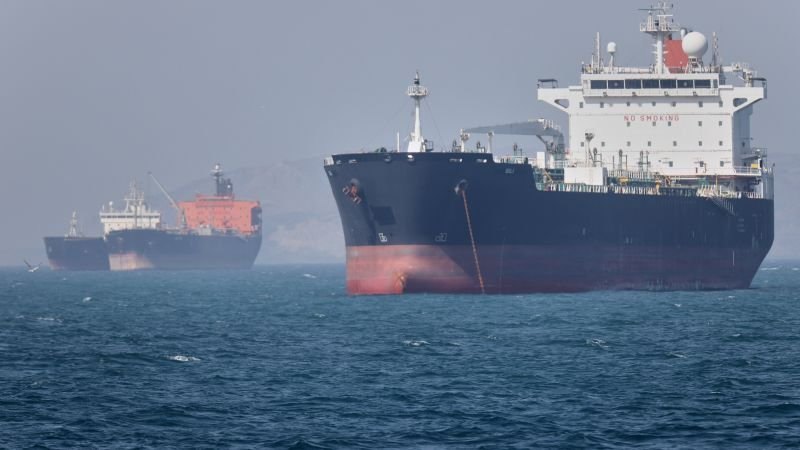
• Oil prices down: Brent crude and US crude prices fell on Sunday after news of the agreement. The Strait of Hormuz is a crucial waterway for global oil supply and has remained effectively closed since the start of the war in February.
54 Posts
Qatari mediators have left Tehran after 17 hours of intensive negotiations, a diplomat with knowledge of the situation told CNN.
According to the source, separate preparatory meetings with each side will now take place in Doha this week, ahead of the official signing in Switzerland on Friday and the start of the technical talks.
It’s a big Sunday for President Donald Trump: He announced an agreement with Iran just hours before he hosts a major sporting spectacle at the White House — on his 80th birthday.
Trump unveiled the Iran news ahead of a UFC event celebrating the country’s upcoming 250th anniversary.
UFC Freedom 250 festivities are already underway at the White House Ellipse, with fights set to begin on the South Lawn around 8 p.m. ET.
Trump isn’t set to give remarks at the event, after which he will head to France for the annual meeting of the Group of Seven leading industrialized nations.
Follow live updates leading up to the UFC fight here.
The leaders of France, Germany, Italy and the United Kingdom called for “the urgent reopening of the Strait of Hormuz with unconditional and unrestricted freedom of navigation” in a joint statement that “warmly” welcomed the announcement of an agreement on the Iran war.
“We are committed to playing our part to achieve this — in accordance with our respective constitutional requirements — including through a strictly defensive and independent mission to reassure commercial shipping and conduct mine clearance operations,” they said.
The leaders said they “are prepared to lift relevant sanctions in response to clear, verifiable steps by Iran on its nuclear programme.” They stressed their readiness to work with the US, Iran and the International Atomic Energy Agency to ensure Tehran never acquires a nuclear weapon.
US President Donald Trump had lambasted European nations at the start of the war for what he said was a lack of support for the United States.
A number of European nations have committed to a UK and French-led defensive mission to help secure the Strait of Hormuz, but their leaders have made clear that the mission would not proceed while the war was ongoing.
British Prime Minister Keir Starmer said he “warmly welcomes” the announced agreement between the US and Iran, calling it a “hugely important step forward in ending the war, ensuring regional stability and re-opening the Strait of Hormuz.”
“We stand ready to support the technical talks that will now begin,” Starmer added in his statement, which he published on social media on Sunday. “Our priority is that this becomes a durable and lasting peace, and we will work with international partners to support that.”
The prime minister said it “remains the UK’s firm and longstanding position that Iran must never have a nuclear weapon.”
President Donald Trump has previously made a few main guarantees about a deal to end the war he started with Iran:
It will ensure that Iran can never have a nuclear weapon
Trump’s deal will be better than President Barack Obama’s
Trump addressed that second point in a post on his social media platform Sunday.
It is impossible to make a direct comparison at this moment since the Trump memo announced Sunday is not a long-term nuclear deal, but rather an agreement to halt the war.
Under Obama, the US was part of an international coalition that reached an agreement with Iran to limit its nuclear program. International monitors verified that Iran was complying, and Iran was able to tap its oil wealth.
Trump tore that deal up during his first term. Iran subsequently also withdrew from the agreement, then kickstarted its enrichment of uranium.
Trump’s apparent new agreement is very different. This one would stop hostilities between the countries and reopen the Strait of Hormuz. The US will reportedly stop its blockade of Iranian ports and Iran will allow shipping traffic through the strait.
A longer-term deal to contain Iran’s nuclear ambitions will likely still have to be negotiated.
Trump has frequently complained that Obama’s deal included the transport of cash from the US to Iran. That was actually the settlement of a long-term dispute over arms Iran bought from the US before the Islamic revolution.
It remains to be seen what financial elements are included in Trump’s agreement.
US Vice President JD Vance on Sunday called the agreement reached with Iran “a big moment for the United States of America,” though he said there’s still work to be done.
Vance said the agreement is built around what he described as three core elements. No. 1 “is the immediate opening of the Strait of Hormuz, and of course, the lifting of the naval blockade that we’ve had on Iran, along with it.”
He said the second element is the assurance Iran will never pursue, procure or buy a nuclear weapon. The third element, he said, is compliance.
“This only happens, to be clear, if Iran delivers on their promise,” Vance said.
The vice president also emphasized the positive economic implications for US consumers, who have been hit by months of high gas prices.
“I guess my primary message to the American people is ‘thank you.’ Because of your patience, I think that we solved the problem that has plagued this country,” for decades, he said.
He said Trump has “certainly been very concerned about” high gas prices, “but what we’re going to be able to do is drive down the cost of energy, not just now but for the long term.”
However, as CNN has reported, even if the Strait of Hormuz reopens, serious damage to the world energy system has already been done and prewar prices won’t return anytime soon.
President Donald Trump announced on Truth Social that the Strait of Hormuz would reopen on Friday, after the agreement between US and Iran is signed.
Brent crude prices on Sunday fell 3.9% to $84 a barrel, and US crude dropped 4.8%, to about $81 a barrel.
President Donald Trump posted late Sunday afternoon on social media that an agreement with Iran “is now complete.” Iran affirmed on Sunday evening that a memorandum of understanding was finalized with the US, adding that it is expected to be signed on Friday.
The agreement could sharply increase commercial vessel traffic through the Strait of Hormuz, a crucial waterway for the global oil supply. Some ships have been charged about $2 million on average for passage, according to a member of Iran’s parliament. The strait has effectively remained closed since the start of the war in late February.
The drop in oil comes after Brent crude, the international benchmark, dropped 3.4%, while US crude fell 3.2% on Friday.
Without an agreement to open up the strait, oil prices could increase to the mid-to-high $100 range, and gas prices could reach “all-time highs” of $5 a gallon, Rapidan Energy President Bob McNally told ABC’s “This Week” on Sunday.
The average price for a gallon of gas in the US settled at $4.07 on Sunday, according to AAA.
Stock futures, meanwhile, climbed on Sunday. Dow futures were up 0.6%, while S&P 500 and Nasdaq futures were each up more than 0.7%.
Qatari Prime Minister Mohammed bin Abdulrahman bin Jassim al-Thani said Sunday that his country “welcomes” the agreement between the US and Iran.
“We look forward to all parties engaging in the forthcoming negotiations in a positive and constructive spirit that will help consolidate this progress and build upon it,” al-Thani wrote in a post on X.
Pakistani Prime Minister Shehbaz Sharif had earlier thanked Qatar for its help in the “mediation effort.”
Iran’s deputy foreign minister for legal and international affairs said the text of a memorandum of understanding with the United States has been finalized and will be formally signed Friday in Switzerland.
“The text of the memorandum of understanding has been finalized, and the official signing of the Islamabad Memorandum of Understanding will take place in Switzerland on Friday,” Kazem Gharibabadi told state media outlets.
“Our commitments will take effect starting Friday,” Gharibabadi stressed.
“Two issues will take effect immediately starting early this morning,” local time, he explained. “1. A permanent and immediate end to the war on all fronts, including Lebanon. 2. The lifting and termination of the naval blockade that the United States had imposed against the Islamic Republic of Iran,” he added.
Gharibabadi said the memorandum of understanding was “not solely the product of diplomatic efforts,” but also what he described as Iran’s “military achievements.”
The comment came after President Donald Trump announced earlier Sunday that an agreement with Iran had been reached and that the United States would end its naval blockade on the country, describing it as the most significant development in months of negotiations.
“The Deal with the Islamic Republic of Iran is now complete. Congratulations to all!” Trump wrote in a post on Truth Social.
President Donald Trump announced Sunday that, following an agreement with Tehran, he was authorizing “the immediate removal of the United States Naval blockade” of Iran’s ports.
Trump ordered the blockade in mid-April, around six weeks into the war, as Iran maintained a de-facto closure of the critical Strait of Hormuz. It was meant to further ratchet up the economic pressure on Tehran by blocking “noncompliant” vessels and cutting off Iran’s cashflow from the energy trade.
Though Trump said Sunday that he was authorizing the “toll free opening of the Strait of Hormuz,” it does not mean that traffic in the waterway will immediately return to prewar levels. Iran has maintained its own restrictions, and US officials say Tehran has also laid mines.
US Central Command on Friday said that it had “redirected 139 compliant commercial ships and disabled 9 non-compliant vessels since April 13.”
The US has had a huge number of assets, including two aircraft carriers and more than a dozen destroyers, in the region throughout the war, many of which were involved in the blockade.
Vice President JD Vance said Sunday evening that he plans to attend the official memorandum of understanding signing ceremony between the US and Iran, though President Donald Trump may attend himself.
“I think we’re still figuring out the logistics on who’s going to attend that signing ceremony,” Vance told Fox News in a brief, televised phone interview, “I certainly plan to be there, but it’s possible the president himself could be there.”
The US Secret Service generally discourages simultaneous appearances by the president and vice president — especially in international settings — for security and succession purposes. Pakistani Prime Minister Shehbaz Sharif, who emerged as a key mediator during the US-Iran war, announced earlier Sunday evening that a formal signing ceremony is scheduled for Friday in Geneva, Switzerland.
This comes shortly after Trump is scheduled to attend the annual G7 summit in nearby Évian-les-Bains, France.
Advisers to President Donald Trump celebrated the announcement of an agreement to end fighting between the US and Iran today, with officials acknowledging that the president had wanted a framework struck before greeting European leaders in France for the G7 summit.
Trump had wanted to enter the G7 summit in a position of strength and, specifically, have an agreement to tout on the Iran war, the sources said.
The war was expected to dominate many of the conversations set to take place in Évian-les-Bains this week, as surging oil prices from the Strait of Hormuz’s closure hung over the gathering. Trump lashed out at nearly all of the leaders he is set to face in France over their refusal to intervene to help reopen the critical waterway.
Trump is scheduled to leave for France after the UFC fight at the White House tonight.
President Donald Trump announced Sunday that an agreement with Iran has been reached and that the US will end its naval blockade on the country, marking the most significant development yet in months of negotiations.
“The Deal with the Islamic Republic of Iran is now complete. Congratulations to all!” Trump declared in a Truth Social post.
Details of the agreement were not immediately released, and Tehran has not commented on the announcement.
The president said he was authorizing the immediate removal of the US naval blockade, writing, “Ships of the World, start your engines. Let the oil flow!”
Trump’s announcement came after he repeatedly expressed confidence throughout the day that an agreement would be finalized Sunday.
President Donald Trump said Sunday that he plans to issue a statement on an agreement with Iran “imminently,” as he continued to project confidence that an accord could be finalized soon.
Trump told The Wall Street Journal that any agreement would be signed electronically by himself or Vice President JD Vance.
The president said the agreement would include a commitment from Iran not to obtain nuclear weapons and an immediate reopening of the Strait of Hormuz.
The president’s comments came as he told Axios earlier Sunday that he still expected an agreement with Iran to be signed before the end of the day, despite uncertainty over whether Tehran will ultimately approve the proposed framework.
“I think they want to get it done. This has never happened to them before,” Trump told The Journal when asked about skepticism that Iran would agree.
The president said the agreement would include inspections, though he did not provide details on how they would be conducted. He also suggested sanctions relief could be considered while insisting Iran would not receive cash. “We’ll see how they behave,” Trump said.
“As far as regime change, I never cared about regime change. This is the third group we’ve dealt with, and this is the most rational group yet,” Trump said.
On Iran’s nuclear material, Trump said, “We’ll get the nuclear dust later on when we’re ready to go in and do it,” adding, “I’d say over the next month or two, there’s no rush,” and describing it as “harmless.”
Pakistani Prime Minister Shehbaz Sharif said Sunday that “the Peace Deal between the United States of America and Islamic Republic of Iran has been REACHED.”
“Both sides have declared the immediate and permanent termination of military operations on all fronts, including in Lebanon,” Sharif said in a post on social media Sunday evening. Neither the US nor Iran is technically fighting in Lebanon. However, Iran’s Foreign Ministry earlier said that it holds the US responsible for Israeli strikes in Dahieh, a suburb of Beirut, on Sunday afternoon.
“The official signing ceremony will be on Friday, 19 June in Switzerland,” the prime minister added, thanking Qatar, Saudi Arabia and Turkey for their help in the “mediation effort.”
“With the agreement now in place, mediators will facilitate a series of meetings this week,” Sharif’s post concluded. “These pre-implementation discussions will lay the foundation for the technical talks and the official signing ceremony.”
US President Donald Trump confirmed the Pakistani prime minister’s announcement minutes later. Iran has not yet officially commented on or confirmed the agreement, though Iran’s official news agency and broadcaster have cited Sharif’s announcement.
Iran’s Foreign Ministry on Sunday blamed the US for Israel’s strike on Beirut’s southern suburbs and said the Islamic Republic is determined to take “all necessary measures” to exercise what it called its “legitimate” right to self-defense.
In a statement , the ministry said Washington bears “direct responsibility” for “the crimes committed by the Israeli regime” and for what it described as “that regime’s repeated violations of the ceasefire against either Lebanon or Iran.”
The ministry also said it “strongly condemns” Israel’s attack in a residential area of Dahieh in Beirut on Sunday afternoon, saying the strike resulted in the “killing and injury of several Lebanese citizens.”
Iran said the attack was “not only a clear violation of Lebanon’s national sovereignty and territorial integrity, but also a blatant violation of the ceasefire understanding dated April 8 2026, between Iran and the United States.”
“It is evident that responsibility for the dangerous consequences of the Israeli regime’s warmongering against regional peace and security will lie with the United States and the Israeli regime,” the statement said.
The US signing of the memorandum with Iran is still on track to take place today despite Israel’s most recent strike in Beirut, President Donald Trump told CNN political and global affairs analyst and Axios reporter Barak Ravid in comments that sharply rebuked Israeli Prime Minister Bibi Netanyahu.
Vice President JD Vance entered the White House West Wing on Sunday afternoon, video captured by CNN shows, hours after President Donald Trump said he still expected an agreement with Iran to be signed same day.
The vice president is expected to take part in any signing if and when a memorandum of understanding is finalized.
Vance entered the West Wing at 4:08 p.m. ET as the White House prepared to host the highly anticipated UFC fight on the South Lawn later Sunday, which also marks Trump’s 80th birthday. Vance is also expected to attend.
Earlier in the day, Vance indicated he planned to attend the fight, writing on X: “Happy Birthday to the GOAT. Looking forward to celebrating later today at the UFC fight!”
Qatari negotiators are still in Tehran to ensure talks remain on track, a diplomat with knowledge of the situation told CNN.
The Qatari negotiators are in the Iranian capital in coordination with the United States, the source said.
President Donald Trump told Axios earlier Sunday that he expects the signing to take place later in the day.
Iranian state media had reported earlier that Tehran had not yet made a final decision on the proposed framework, and that Qatari mediators flew to Iran on Sunday morning in an effort to help finalize the terms.
Israeli Prime Minister Benjamin Netanyahu is seeking an urgent meeting with US President Donald Trump, a Israeli source said, amid what appears to be growing tension over negotiations with Iran and the ceasefire with Hezbollah in Lebanon.
The source said Netanyahu is trying to arrange a meeting after Trump returns from the G7 in Europe next weekend or soon thereafter.
Trump strongly rebuked Israel on Sunday after the Israeli military struck Beirut in response to Hezbollah fire on northern Israel, saying the attack on the Lebanese capital “should not have happened.” He called Hezbollah’s attack “very small and meaningless.”
The public spat sharply contrasts with the unified front the two leaders publicly displayed at the outset of the Iran war and is the latest in a string of visible disagreements as Trump moved to end hostilities. Trump has already restrained Israel’s freedom of operation in Lebanon; he ordered Netanyahu to cancel attack plans on Iran last week after Tehran shot missiles at Israel for the first time since the April ceasefire.
According to the Israeli source, Netanyahu is seeking a meeting with the US president after he returns to the US from the G7 in Europe to clarify and communicate Israel’s positions in the negotiations.
Israel is particularly concerned about preserving its freedom of operation against Hezbollah in Lebanon as Iran pushes for Israeli withdrawal, the source said. Israel also worries the emerging agreement between the US and Iran will ease economic pressure on Tehran without touching the nuclear file, an outcome that would stabilize the Iranian regime at a moment when Israel seeks to further weaken it.
In response to CNN, the Prime Minister’s Office said the report of seeking an urgent meeting with Trump was “fake news.”
This post has been updated with comments from the prime minister’s office.
• Diplomatic breakthrough: The US and Iran say they have reached an agreement that will take effect on Friday. President Donald Trump said the US is lifting its naval blockade on Iranian ports, and that the Strait of Hormuz will reopen once the framework is signed. The full text of the agreement has not yet been released.
• What comes next: A signing ceremony is scheduled for Friday in Switzerland. US Vice President JD Vance said he will be there and that Trump may also attend. The memorandum of understanding is expected to kick off 60 more days of negotiation on ending the war.
• Oil prices down: Brent crude and US crude prices fell on Sunday after news of the agreement. The Strait of Hormuz is a crucial waterway for global oil supply and has remained effectively closed since the start of the war in February.
Qatari mediators have left Tehran after 17 hours of intensive negotiations, a diplomat with knowledge of the situation told CNN.
According to the source, separate preparatory meetings with each side will now take place in Doha this week, ahead of the official signing in Switzerland on Friday and the start of the technical talks.
It’s a big Sunday for President Donald Trump: He announced an agreement with Iran just hours before he hosts a major sporting spectacle at the White House — on his 80th birthday.
Trump unveiled the Iran news ahead of a UFC event celebrating the country’s upcoming 250th anniversary.
UFC Freedom 250 festivities are already underway at the White House Ellipse, with fights set to begin on the South Lawn around 8 p.m. ET.
Trump isn’t set to give remarks at the event, after which he will head to France for the annual meeting of the Group of Seven leading industrialized nations.
Follow live updates leading up to the UFC fight here.
The leaders of France, Germany, Italy and the United Kingdom called for “the urgent reopening of the Strait of Hormuz with unconditional and unrestricted freedom of navigation” in a joint statement that “warmly” welcomed the announcement of an agreement on the Iran war.
“We are committed to playing our part to achieve this — in accordance with our respective constitutional requirements — including through a strictly defensive and independent mission to reassure commercial shipping and conduct mine clearance operations,” they said.
The leaders said they “are prepared to lift relevant sanctions in response to clear, verifiable steps by Iran on its nuclear programme.” They stressed their readiness to work with the US, Iran and the International Atomic Energy Agency to ensure Tehran never acquires a nuclear weapon.
US President Donald Trump had lambasted European nations at the start of the war for what he said was a lack of support for the United States.
A number of European nations have committed to a UK and French-led defensive mission to help secure the Strait of Hormuz, but their leaders have made clear that the mission would not proceed while the war was ongoing.
British Prime Minister Keir Starmer said he “warmly welcomes” the announced agreement between the US and Iran, calling it a “hugely important step forward in ending the war, ensuring regional stability and re-opening the Strait of Hormuz.”
“We stand ready to support the technical talks that will now begin,” Starmer added in his statement, which he published on social media on Sunday. “Our priority is that this becomes a durable and lasting peace, and we will work with international partners to support that.”
The prime minister said it “remains the UK’s firm and longstanding position that Iran must never have a nuclear weapon.”
President Donald Trump has previously made a few main guarantees about a deal to end the war he started with Iran:
It will ensure that Iran can never have a nuclear weapon
Trump’s deal will be better than President Barack Obama’s
Trump addressed that second point in a post on his social media platform Sunday.
It is impossible to make a direct comparison at this moment since the Trump memo announced Sunday is not a long-term nuclear deal, but rather an agreement to halt the war.
Under Obama, the US was part of an international coalition that reached an agreement with Iran to limit its nuclear program. International monitors verified that Iran was complying, and Iran was able to tap its oil wealth.
Trump tore that deal up during his first term. Iran subsequently also withdrew from the agreement, then kickstarted its enrichment of uranium.
Trump’s apparent new agreement is very different. This one would stop hostilities between the countries and reopen the Strait of Hormuz. The US will reportedly stop its blockade of Iranian ports and Iran will allow shipping traffic through the strait.
A longer-term deal to contain Iran’s nuclear ambitions will likely still have to be negotiated.
Trump has frequently complained that Obama’s deal included the transport of cash from the US to Iran. That was actually the settlement of a long-term dispute over arms Iran bought from the US before the Islamic revolution.
It remains to be seen what financial elements are included in Trump’s agreement.
US Vice President JD Vance on Sunday called the agreement reached with Iran “a big moment for the United States of America,” though he said there’s still work to be done.
Vance said the agreement is built around what he described as three core elements. No. 1 “is the immediate opening of the Strait of Hormuz, and of course, the lifting of the naval blockade that we’ve had on Iran, along with it.”
He said the second element is the assurance Iran will never pursue, procure or buy a nuclear weapon. The third element, he said, is compliance.
“This only happens, to be clear, if Iran delivers on their promise,” Vance said.
The vice president also emphasized the positive economic implications for US consumers, who have been hit by months of high gas prices.
“I guess my primary message to the American people is ‘thank you.’ Because of your patience, I think that we solved the problem that has plagued this country,” for decades, he said.
He said Trump has “certainly been very concerned about” high gas prices, “but what we’re going to be able to do is drive down the cost of energy, not just now but for the long term.”
However, as CNN has reported, even if the Strait of Hormuz reopens, serious damage to the world energy system has already been done and prewar prices won’t return anytime soon.
President Donald Trump announced on Truth Social that the Strait of Hormuz would reopen on Friday, after the agreement between US and Iran is signed.
Brent crude prices on Sunday fell 3.9% to $84 a barrel, and US crude dropped 4.8%, to about $81 a barrel.
President Donald Trump posted late Sunday afternoon on social media that an agreement with Iran “is now complete.” Iran affirmed on Sunday evening that a memorandum of understanding was finalized with the US, adding that it is expected to be signed on Friday.
The agreement could sharply increase commercial vessel traffic through the Strait of Hormuz, a crucial waterway for the global oil supply. Some ships have been charged about $2 million on average for passage, according to a member of Iran’s parliament. The strait has effectively remained closed since the start of the war in late February.
The drop in oil comes after Brent crude, the international benchmark, dropped 3.4%, while US crude fell 3.2% on Friday.
Without an agreement to open up the strait, oil prices could increase to the mid-to-high $100 range, and gas prices could reach “all-time highs” of $5 a gallon, Rapidan Energy President Bob McNally told ABC’s “This Week” on Sunday.
The average price for a gallon of gas in the US settled at $4.07 on Sunday, according to AAA.
Stock futures, meanwhile, climbed on Sunday. Dow futures were up 0.6%, while S&P 500 and Nasdaq futures were each up more than 0.7%.
Qatari Prime Minister Mohammed bin Abdulrahman bin Jassim al-Thani said Sunday that his country “welcomes” the agreement between the US and Iran.
“We look forward to all parties engaging in the forthcoming negotiations in a positive and constructive spirit that will help consolidate this progress and build upon it,” al-Thani wrote in a post on X.
Pakistani Prime Minister Shehbaz Sharif had earlier thanked Qatar for its help in the “mediation effort.”
Iran’s deputy foreign minister for legal and international affairs said the text of a memorandum of understanding with the United States has been finalized and will be formally signed Friday in Switzerland.
“The text of the memorandum of understanding has been finalized, and the official signing of the Islamabad Memorandum of Understanding will take place in Switzerland on Friday,” Kazem Gharibabadi told state media outlets.
“Our commitments will take effect starting Friday,” Gharibabadi stressed.
“Two issues will take effect immediately starting early this morning,” local time, he explained. “1. A permanent and immediate end to the war on all fronts, including Lebanon. 2. The lifting and termination of the naval blockade that the United States had imposed against the Islamic Republic of Iran,” he added.
Gharibabadi said the memorandum of understanding was “not solely the product of diplomatic efforts,” but also what he described as Iran’s “military achievements.”
The comment came after President Donald Trump announced earlier Sunday that an agreement with Iran had been reached and that the United States would end its naval blockade on the country, describing it as the most significant development in months of negotiations.
“The Deal with the Islamic Republic of Iran is now complete. Congratulations to all!” Trump wrote in a post on Truth Social.
President Donald Trump announced Sunday that, following an agreement with Tehran, he was authorizing “the immediate removal of the United States Naval blockade” of Iran’s ports.
Trump ordered the blockade in mid-April, around six weeks into the war, as Iran maintained a de-facto closure of the critical Strait of Hormuz. It was meant to further ratchet up the economic pressure on Tehran by blocking “noncompliant” vessels and cutting off Iran’s cashflow from the energy trade.
Though Trump said Sunday that he was authorizing the “toll free opening of the Strait of Hormuz,” it does not mean that traffic in the waterway will immediately return to prewar levels. Iran has maintained its own restrictions, and US officials say Tehran has also laid mines.
US Central Command on Friday said that it had “redirected 139 compliant commercial ships and disabled 9 non-compliant vessels since April 13.”
The US has had a huge number of assets, including two aircraft carriers and more than a dozen destroyers, in the region throughout the war, many of which were involved in the blockade.
Vice President JD Vance said Sunday evening that he plans to attend the official memorandum of understanding signing ceremony between the US and Iran, though President Donald Trump may attend himself.
“I think we’re still figuring out the logistics on who’s going to attend that signing ceremony,” Vance told Fox News in a brief, televised phone interview, “I certainly plan to be there, but it’s possible the president himself could be there.”
The US Secret Service generally discourages simultaneous appearances by the president and vice president — especially in international settings — for security and succession purposes. Pakistani Prime Minister Shehbaz Sharif, who emerged as a key mediator during the US-Iran war, announced earlier Sunday evening that a formal signing ceremony is scheduled for Friday in Geneva, Switzerland.
This comes shortly after Trump is scheduled to attend the annual G7 summit in nearby Évian-les-Bains, France.
Advisers to President Donald Trump celebrated the announcement of an agreement to end fighting between the US and Iran today, with officials acknowledging that the president had wanted a framework struck before greeting European leaders in France for the G7 summit.
Trump had wanted to enter the G7 summit in a position of strength and, specifically, have an agreement to tout on the Iran war, the sources said.
The war was expected to dominate many of the conversations set to take place in Évian-les-Bains this week, as surging oil prices from the Strait of Hormuz’s closure hung over the gathering. Trump lashed out at nearly all of the leaders he is set to face in France over their refusal to intervene to help reopen the critical waterway.
Trump is scheduled to leave for France after the UFC fight at the White House tonight.
President Donald Trump announced Sunday that an agreement with Iran has been reached and that the US will end its naval blockade on the country, marking the most significant development yet in months of negotiations.
“The Deal with the Islamic Republic of Iran is now complete. Congratulations to all!” Trump declared in a Truth Social post.
Details of the agreement were not immediately released, and Tehran has not commented on the announcement.
The president said he was authorizing the immediate removal of the US naval blockade, writing, “Ships of the World, start your engines. Let the oil flow!”
Trump’s announcement came after he repeatedly expressed confidence throughout the day that an agreement would be finalized Sunday.
President Donald Trump said Sunday that he plans to issue a statement on an agreement with Iran “imminently,” as he continued to project confidence that an accord could be finalized soon.
Trump told The Wall Street Journal that any agreement would be signed electronically by himself or Vice President JD Vance.
The president said the agreement would include a commitment from Iran not to obtain nuclear weapons and an immediate reopening of the Strait of Hormuz.
The president’s comments came as he told Axios earlier Sunday that he still expected an agreement with Iran to be signed before the end of the day, despite uncertainty over whether Tehran will ultimately approve the proposed framework.
“I think they want to get it done. This has never happened to them before,” Trump told The Journal when asked about skepticism that Iran would agree.
The president said the agreement would include inspections, though he did not provide details on how they would be conducted. He also suggested sanctions relief could be considered while insisting Iran would not receive cash. “We’ll see how they behave,” Trump said.
“As far as regime change, I never cared about regime change. This is the third group we’ve dealt with, and this is the most rational group yet,” Trump said.
On Iran’s nuclear material, Trump said, “We’ll get the nuclear dust later on when we’re ready to go in and do it,” adding, “I’d say over the next month or two, there’s no rush,” and describing it as “harmless.”
Pakistani Prime Minister Shehbaz Sharif said Sunday that “the Peace Deal between the United States of America and Islamic Republic of Iran has been REACHED.”
“Both sides have declared the immediate and permanent termination of military operations on all fronts, including in Lebanon,” Sharif said in a post on social media Sunday evening. Neither the US nor Iran is technically fighting in Lebanon. However, Iran’s Foreign Ministry earlier said that it holds the US responsible for Israeli strikes in Dahieh, a suburb of Beirut, on Sunday afternoon.
“The official signing ceremony will be on Friday, 19 June in Switzerland,” the prime minister added, thanking Qatar, Saudi Arabia and Turkey for their help in the “mediation effort.”
“With the agreement now in place, mediators will facilitate a series of meetings this week,” Sharif’s post concluded. “These pre-implementation discussions will lay the foundation for the technical talks and the official signing ceremony.”
US President Donald Trump confirmed the Pakistani prime minister’s announcement minutes later. Iran has not yet officially commented on or confirmed the agreement, though Iran’s official news agency and broadcaster have cited Sharif’s announcement.
Iran’s Foreign Ministry on Sunday blamed the US for Israel’s strike on Beirut’s southern suburbs and said the Islamic Republic is determined to take “all necessary measures” to exercise what it called its “legitimate” right to self-defense.
In a statement , the ministry said Washington bears “direct responsibility” for “the crimes committed by the Israeli regime” and for what it described as “that regime’s repeated violations of the ceasefire against either Lebanon or Iran.”
The ministry also said it “strongly condemns” Israel’s attack in a residential area of Dahieh in Beirut on Sunday afternoon, saying the strike resulted in the “killing and injury of several Lebanese citizens.”
Iran said the attack was “not only a clear violation of Lebanon’s national sovereignty and territorial integrity, but also a blatant violation of the ceasefire understanding dated April 8 2026, between Iran and the United States.”
“It is evident that responsibility for the dangerous consequences of the Israeli regime’s warmongering against regional peace and security will lie with the United States and the Israeli regime,” the statement said.
The US signing of the memorandum with Iran is still on track to take place today despite Israel’s most recent strike in Beirut, President Donald Trump told CNN political and global affairs analyst and Axios reporter Barak Ravid in comments that sharply rebuked Israeli Prime Minister Bibi Netanyahu.
Vice President JD Vance entered the White House West Wing on Sunday afternoon, video captured by CNN shows, hours after President Donald Trump said he still expected an agreement with Iran to be signed same day.
The vice president is expected to take part in any signing if and when a memorandum of understanding is finalized.
Vance entered the West Wing at 4:08 p.m. ET as the White House prepared to host the highly anticipated UFC fight on the South Lawn later Sunday, which also marks Trump’s 80th birthday. Vance is also expected to attend.
Earlier in the day, Vance indicated he planned to attend the fight, writing on X: “Happy Birthday to the GOAT. Looking forward to celebrating later today at the UFC fight!”
Qatari negotiators are still in Tehran to ensure talks remain on track, a diplomat with knowledge of the situation told CNN.
The Qatari negotiators are in the Iranian capital in coordination with the United States, the source said.
President Donald Trump told Axios earlier Sunday that he expects the signing to take place later in the day.
Iranian state media had reported earlier that Tehran had not yet made a final decision on the proposed framework, and that Qatari mediators flew to Iran on Sunday morning in an effort to help finalize the terms.
Israeli Prime Minister Benjamin Netanyahu is seeking an urgent meeting with US President Donald Trump, a Israeli source said, amid what appears to be growing tension over negotiations with Iran and the ceasefire with Hezbollah in Lebanon.
The source said Netanyahu is trying to arrange a meeting after Trump returns from the G7 in Europe next weekend or soon thereafter.
Trump strongly rebuked Israel on Sunday after the Israeli military struck Beirut in response to Hezbollah fire on northern Israel, saying the attack on the Lebanese capital “should not have happened.” He called Hezbollah’s attack “very small and meaningless.”
The public spat sharply contrasts with the unified front the two leaders publicly displayed at the outset of the Iran war and is the latest in a string of visible disagreements as Trump moved to end hostilities. Trump has already restrained Israel’s freedom of operation in Lebanon; he ordered Netanyahu to cancel attack plans on Iran last week after Tehran shot missiles at Israel for the first time since the April ceasefire.
According to the Israeli source, Netanyahu is seeking a meeting with the US president after he returns to the US from the G7 in Europe to clarify and communicate Israel’s positions in the negotiations.
Israel is particularly concerned about preserving its freedom of operation against Hezbollah in Lebanon as Iran pushes for Israeli withdrawal, the source said. Israel also worries the emerging agreement between the US and Iran will ease economic pressure on Tehran without touching the nuclear file, an outcome that would stabilize the Iranian regime at a moment when Israel seeks to further weaken it.
In response to CNN, the Prime Minister’s Office said the report of seeking an urgent meeting with Trump was “fake news.”
This post has been updated with comments from the prime minister’s office.


Responses