
• Threat from Washington: US Treasury Secretary Scott Bessent just wrapped a news conference, as the US is threatening damaging new sanctions on countries that refuse to cut economic ties with Iran — but has stopped short of actually imposing big new penalties.
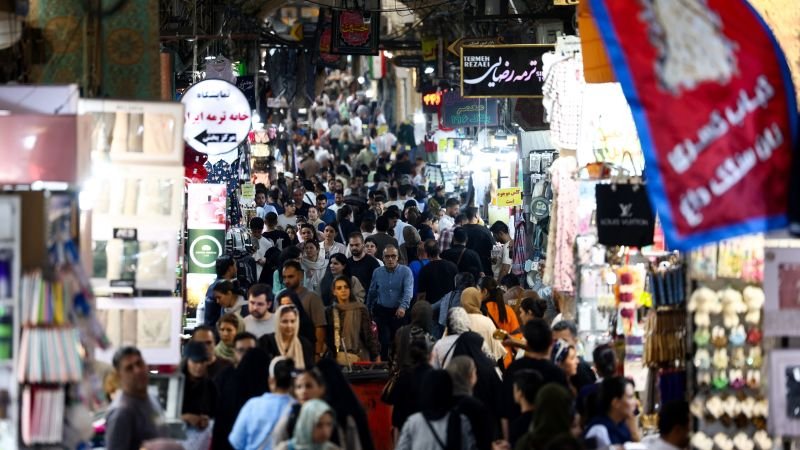
• Economic pressure: Iran’s currency has dropped to a record low against the dollar, and US President Donald Trump insists Tehran is “collapsing.” Even though Iranians are suffering financially, the country is no stranger to economic pain.
• Talks with regional leaders: Pakistan’s army chief met with Iran’s top negotiator in Tehran today, according to Iranian state media. Oman’s foreign minister will visit Iran tomorrow for talks on the Strait of Hormuz, as Iran’s state-controlled Persian Gulf Strait Authority warned that ships violating transit rules in the critical waterway could face penalties.
30 Posts
The United States “must change its behavior,” Iranian security chief Mohsen Rezaei said during a meeting Monday with Pakistan’s army commander, according to state-run Islamic Republic of Iran Broadcasting (IRIB).
Rezaei, secretary of Iran’s Supreme National Security Council, underscored Iran’s distrust of the US and spoke about Iran’s management of the Strait of Hormuz, IRIB reported.
Rezaei previously vowed to “neutralize the economic war” with the US and threatened to halt the flow of oil through the Strait of Hormuz unless the Americans “honor their commitments.”
Treasury Secretary Scott Bessent defended the decision to hold off on issuing crippling sanctions targeting nations tied to Iran, casting the “economic D-Day” announced Monday as a “warning shot.”
“We believe that a warning shot and a level-set of expectations is appropriate,” Bessent told CNN’s Kevin Liptak at a press conference.
The US, he said, is “giving everyone the opportunity to remedy bad behavior,” adding that applying the sanctions immediately without any warning could “blow up the global financial system.”
Bessent added: “We believe that it is important to level-set and give people a cure period, but they should know that that will move very quickly and that we are serious.”
The US is threatening sanctions on countries with economic ties to Iran, with each country given “a defined timeline to shut down the Iran-related activity” identified by the US, the Department of Treasury said in a statement.
Bessent declined to lay out those specific timelines during his press conference, nor did he name the countries that the US has been in contact with.
Treasury Secretary Scott Bessent is threatening to expel groups that help Iran launder money from the US financial system at the heart of the global economy.
“Let me clear: Any entity that facilitates money laundering on behalf of Iran will be removed from the US dollar system. The clock just started ticking,” Bessent said during his prepared remarks on Monday.
In a press release, the Treasury Department used somewhat softer language, saying any entity that facilitate money laundering or sanctions evasion “risks being cut off from the US financial system.”
Asked if Chinese banks could face secondary sanctions for their alleged role in helping Iran, Bessent said the best approach is through “quiet diplomacy,” but added that “no one is above the reach of US sanctions.”
Bessent said the public should expect a major sanctions announcement targeting an unspecified financial institution by the end of this week.
US Treasury Secretary Scott Bessent on Monday sent a message to Iranian soldiers that should question their military leadership and suggested they could act to bring down the government in Tehran.
Administration officials, including President Donald Trump, have raised the prospect of regime change at various points in the war, including at its outset, but have also claimed that was not the goal of the US operations.
It is unclear if “ordinary soldiers” would have been able to see his message, given restrictions in Iran.
Treasury Secretary Scott Bessent declined to lay out specific timelines for when countries must cut economic ties with Iran or face financial penalties from the US.
Bessent said President Donald Trump has been calling world leaders with specific asks regarding the administration’s demand to work with the US to isolate Tehran economically. However, he refused to name which countries Trump has been in communication with.
“We’ve already seen some results,” Bessent claimed, adding that the US Treasury and State departments will follow up with visits and calls of their own. The departments will tell each country “exactly what we expect and the timelines.”
“And I would expect that very quickly, if they do not respond, then you will see the ramifications of their actions,” Bessent said.
US Treasury Secretary Scott Bessent declined to say whether the US is willing to target Chinese banks with sanctions — a move that could jeopardize delicate relations between China and the Trump administration.
Bessent on Monday threatened to penalize countries that refuse to cut economic ties with Iran. But pressed on whether that would include Tehran’s main trading partner, China, he said only that “no one is above the reach of US sanctions.”
“If they facilitate transactions and are part of the ecosystem that turns Iranian oil into money, into repression, they will be targeted,” Bessent said. “We know who they are. They know who they are.”
China has long purchased as much as 90% of Iran’s oil exports, in addition to maintaining a broader trade relationship.
The US Treasury Department threatened damaging new sanctions on countries that refuse to cut economic ties with Iran — but stopped short of actually imposing big new penalties.
“We find that the best way to engage with countries is through quiet diplomacy, and we are level-setting with every country to tell them our expectations,” Treasury Secretary Scott Bessent said. “We know who they are. They know who they are.”
In a new effort to ramp up pressure on Tehran, the Trump administration said Monday that it has expanded the categories of “Iran-related conduct” that the US might sanction in the future, and that it plans to give nations specific defined timelines to end their relationships with the regime.
The new sanctions include penalties that cover sectors like digital assets, technology and shipping that the Treasury Department determined Iran has relied on to prop up its economy.
Yet despite Bessent’s vow of an “economic D-Day” for Iran, the US is holding off on imposing the biggest sanctions that it has threatened.
Instead, the administration said it will work with “counterparts around the world” to shut down their activity tied to Iran.
US Treasury Secretary Scott Bessent is now holding a news conference, after he warned in an op-ed Sunday that an “economic D-Day is coming for Iran.”
He also threatened countries that do business with Tehran but gave little detail.
The secretary’s comments echo remarks by President Donald Trump, who last week also threatened an “economic D-Day” against Iran as the US is seeking to ratchet up the economic pressure to get Tehran to return to the negotiating table.
We’ll have updates as the news conference gets underway.
Pakistan’s army chief, Field Marshal Asim Munir, met Iranian Parliament Speaker Mohammad Bagher Ghalibaf on Monday, as Islamabad continues diplomatic efforts aimed at supporting regional stability and security, according to Iran’s state-run Islamic Republic of Iran Broadcasting (IRIB).
During the meeting, Ghalibaf criticized Washington over what he described as repeated failures to honor commitments under the “Islamabad memorandum of understanding.”
“The commitments of both sides under the memorandum are clear. It was the United States that, by failing to uphold its commitments, prevented stability from being established in the region and provided yet another reason for mistrust,” Ghalibaf said, according to IRIB.
Ghalibaf, the head of Iran’s negotiating team, said Tehran remains committed to implementing the conditions outlined in the agreement and rejected the idea that Iran would yield to pressure.
“We are pursuing the implementation of the conditions set out in the memorandum. It is the United States that must fulfill its commitments under the agreement,” he said.
Munir, for his part, said Pakistan would continue efforts to help restore stability in the region, according to IRIB.
Tensions remain high in the Strait of Hormuz as traffic through the critical waterway continues to be heavily restricted.
The strait has been a major flashpoint since Tehran effectively closed it following US and Israeli airstrikes on February 28.
Oman’s Foreign Minister Sayyid Badr Al-Busaidi is scheduled to visit Tehran tomorrow to discuss the Strait of Hormuz and other regional developments. The two countries have been in talks on new shipping routes through the waterway.
If you’re just joining us, here’s a recap of the latest key developments:
Iran’s state-controlled Persian Gulf Strait Authority (PGSA) warned on Sunday that vessels accused of violating its transit rules in the strategic waterway could face penalties, including detention or confiscation, signaling potential risks for shipping through one of the world’s most strategically important waterways.
Iran has granted permission to a number of Iraqi oil tankers to pass through the Strait of Hormuz, the Reuters news agency reported, citing the Iranian state-run Islamic Republic News Agency (IRNA). IRNA reported that the decision came after repeated appeals from Baghdad, one of its main requests during Iranian Parliament Speaker Mohammed Bagher Ghalibaf’s visit, according to Reuters.
Tehran’s security chief, Mohsen Rezaei, vowed to “neutralize the economic war” with the United States and threatened to halt oil flow out of the Strait of Hormuz, Iran’s state-affiliated Press TV reported. The threat comes despite Iran allowing some Iraqi oil tankers to pass through the waterway.
CNN’s Laura Sharman, Xiaoqian Lin and Mohammed Tawfeeq contributed to this report.
Treasury Secretary Scott Bessent promised new sanctions on Monday that are so punishing it will amount to an “economic D-Day” for Iran.
But to make good on that pledge, he’ll also have to escalate tensions with a far more formidable economic opponent: China.
Bessent’s sanctions plan will need to target Chinese companies and banks to have any shot at cutting off Iran’s main financial lifelines, economic analysts told CNN. That’s a major step that the administration has so far been unwilling to take, amid concerns it would damage the relationship between President Donald Trump and Chinese President Xi Jinping — particularly ahead of an anticipated state visit next month.
China has long bought as much as 90% of Iranian oil exports, in addition to trading a range of other goods, making it Iran’s largest trading partner. The US has sanctioned some smaller Chinese firms since its war with Iran began, but it has refused to act against the larger banks facilitating the country’s purchases from Iran.
Targeting those banks on Monday would signal that the US is serious about isolating Iran and forcing it back to the negotiating table, analysts said. But there’s plenty of skepticism that Trump would greenlight such a move.
Saudi Arabia’s national shipping company Bahri said on Monday that one of its tankers was involved in a security incident in the Red Sea, hours after Yemen’s Iran-backed Houthis claimed they had targeted the vessel in a missile attack.
The Houthis said they had struck the Saudi-linked oil tanker Amzan off the coast of Yanbu with a ballistic missile.
Bahri confirmed that the tanker, which is associated with its fleet, “experienced a security incident in the Red Sea on August 24, 2026.”
Bahri said all crew members were safe and that no injuries had been reported.
“Bahri continues to maintain regular contact with the ship, as well as close coordination with relevant entities and parties within the maritime sector, while closely monitoring the situation’s developments,” it said.
Bahri did not provide details on the nature of the incident, nor did it comment on the Houthi claim of responsibility.
The company said the safety of its personnel, protection of the marine environment and secure operation of the vessel remained its top priorities.
The Houthis have repeatedly said they will continue targeting vessels they consider linked to Saudi Arabia and its allies as part of their broader military campaign.
Treasury Secretary Scott Bessent’s statement in a new op-ed that an “economic D-Day is coming for Iran” signals the latest a series of shifting strategies for the Trump administration in a war that hasn’t gone according to plan.
It’s also a huge gamble: He and the administration are betting that all-out economic pressure will ultimately force Iran to capitulate in a way that military strikes have not.
It could work — the Iranian economy is clearly reeling. Its currency just dropped to a record low against the US dollar.
But similar to the military clashes, Iran benefits from asymmetric warfare on the economic front, too. And the time required to bring Iran to heel might not necessarily be on Trump’s side.
While Iran cannot inflict the same kind of economic pain on the United States that that the US can on it, it has leverage: the 2026 midterm election. Continued high gas prices — currently averaging more than $4 per gallon, according to GasBuddy — filter down to many other aspects of the sputtering US economy. And, crucially, they also serve as an everyday reminder of the stagnant inflation that might be the GOP’s biggest electoral problem.
If gas prices don’t fall in the coming months, the American people won’t suffer like the Iranians will under tough economic sanctions. But American voters might well deliver a significant rebuke to Trump’s party that will leave him politically wounded for his final two years in office.
As of Monday, there are just 71 days until election day.
A narrow waterway that bypasses Iran and Oman, the Strait of Hormuz is the main route for shipping crude from oil-rich countries such as Saudi Arabia and Kuwait to the rest of the world.
The strait has remained a major flashpoint since the start of the conflict, after it was effectively closed by Tehran following airstrikes by the US and Israel on February 28.
Iran controls the strait’s northern side. About 20 million barrels of oil, or about one-fifth of daily global production, used to flow through the strait every day, according to the US Energy Information Administration, which calls the channel a “critical oil chokepoint.”
While some producers, including Saudi Arabia and the United Arab Emirates, have found alternative routes for their exports.
The strait also carries about one-fifth of global trade in liquefied natural gas, largely from Qatar.
US Treasury Secretary Scott Bessent warned in an op-ed Sunday that an “economic D-Day is coming for Iran” and threatened countries that do business with Tehran.
“At dawn begins an economic D-Day — the single greatest financial offensive ever marshalled against an adversary,” he wrote in a Financial Times op-ed.
Bessent will hold a news conference later today on expected US sanctions on Iran.
The Trump administration’s threat could put China, India and even Germany in the firing line.
Iran exported to 147 countries in 2022, according to the most recent data from the World Bank. It imported goods from 114 countries that year.
China is by far Iran’s biggest trading partner, accounting for the bulk of Iran’s oil and non-oil exports. Iranian exports to China amounted to $22.4 billion in 2022, according to the World Bank. Imports from China stood at $15.6 billion.
Other Asian countries, Iraq and the United Arab Emirates are also significant export destinations for Iran. The country’s imports come mostly from the United Arab Emirates, China, Turkey, India and Germany, a 2024 World Bank report shows.
Last year, Germany exported goods worth €962 million ($1.1 billion) to Iran and imported goods worth €235 million ($275 million), according to the country’s statistics office. Imports increased marginally on the prior year, but both exports and imports have plummeted by around half or more since 2018, when the United States reinstated extensive sanctions on Iran.
Bilateral trade between India and Iran amounted to $1.1 billion between April and December 2025, according to India’s commerce ministry. Major Indian exports to Iran include basmati rice, tea, sugar, fresh fruits and pharmaceutical drugs.
CNN’s Aileen Graef contributed reporting.
US President Donald Trump insisted Iran is “COMPLETELY COLLAPSING” ahead of an announcement of economic measures that are expected to put further pressure on the country’s economy.
“IRAN IS COMPLETELY COLLAPSING!!!” Trump wrote in a post on Truth Social.
His post comes as Treasury Secretary Scott Bessent is set to announce a plan to ramp up pressure on the Iranian economy at a press conference on Monday afternoon.
In a Financial Times op-ed on Sunday, Bessent said that an “economic D-Day is coming for Iran” and threatened countries that do business with Tehran but provided few details about what he would announce.
Also on Monday, Iran’s currency dropped to a record low of more than two million to the US dollar on the open market, according to websites that track the currency’s movement.
US President Donald Trump last week declared economic warfare against Iran, vowing to isolate the regime in a move he hopes will bring about what military force has so far failed to achieve — capitulation.
Treasury Secretary Scott Bessent is scheduled to reveal further details of the administration’s plans later this afternoon.
The US is already targeting Iran’s oil sales, enforcing a blockade that is allowing much less Iranian oil to be exported to international buyers, including China. But sanctioning Chinese buyers or banks seems an unlikely move ahead of President Xi Jinping’s state visit to the US in September.
Kpler, which tracks ship movements, estimates that Tehran may have enough oil already outside the blockade to provide it with about four months’ worth of export revenues, but said oil income could drop to zero beyond that if Tehran’s exports are strangled.
Iran’s economy has already taken a major hit from the war and is grappling with rampant inflation, but it could take many months to destroy the economy completely.
Following decades of US sanctions, Iran has developed a “survival economy, which allows them to sustain more economic pain over time,” said Jorge Leon, head of geopolitical analysis at Rystad, a consultancy.
To really tighten the screws, Trump will need to tackle the clandestine trade and banking networks that enable Iran to evade sanctions and procure weapons. Doing so will require a crackdown on networks that operate most prominently through the United Arab Emirates, Hong Kong, and Singapore, according to the US Treasury.
In a significant blow to the Iranian regime, the UAE announced last Wednesday that it had suspended all trade and financial transactions with Iran. Still, restricting all illicit activity – including, Trump said, “oil smuggling, swap limes, cash transfers, exchange houses, ship registries (and) front companies” – will require considerable coordination across multiple countries and won’t happen overnight.
CNN’s Stephen Collinson contributed to this report.
US Treasury Secretary Scott Bessent has warned in an op-ed that an “economic D-Day” is coming for Iran, stopping short of giving further details.
“Now we are entering the endgame. At dawn begins an economic D-Day — the single greatest financial offensive ever marshalled against an adversary,” he wrote in the Financial Times ahead of a scheduled news conference today.
The US has been imposing sanctions on Iran since 1979, after the US embassy in Tehran was seized following the Iranian Revolution, according to the US State Department.
A Congressional Research Service (CRS) report on US sanctions on Iran says they were used to “deter, constrain, and encourage change in the adversarial behavior of the Iranian regime.”
“US sanctions on Iran are arguably the most extensive and comprehensive set of sanctions that the United States maintains on any country,” the report says.
The financial penalties are wide-ranging, banning nearly all US trade with Iran, blocking Iranian government assets in the country and prohibiting foreign assistance and arms sales, the report outlines.
In 2013, the Department of the Treasury’s Office of Foreign Assets Control said that the US could sell food, medicine, and medical devices to Iran.
According to the CRS report, the US is also allowed to provide telecommunications equipment to Iranians to help them circumvent the Iranian regime’s attempts at cutting off internet access.
The US is expected to announce plans to ramp up sanctions on Iran after Treasury Secretary Scott Bessent foreshadowed “the single greatest financial offensive ever marshalled against an adversary.”
He is scheduled to speak this afternoon.
If you’re just joining us, here are the latest regional developments.
Pakistan’s Field Marshal Asim Munir is due in Iran today, according to state media, citing Iran’s Foreign Ministry spokesperson Esmaeil Baghaei.
Oman’s Foreign Minister Sayyid Badr Al-Busaidi will also visit Tehran tomorrow to discuss the Strait of Hormuz and other developments in the region. The two countries have been in talks on new shipping routes through the waterway.
Iran’s currency — the rial — has dropped to a record low of more than two million to the US dollar on the open market, according to websites that track the currency’s movement.
A tanker has been struck by unknown projectile 63 nautical miles west of Saudi Arabia’s port city of Yanbu, according to the UK’s maritime agency. All crew are safe and accounted for.
Iran has warned Bulgaria, a NATO member, against allowing its territory to be used for Israeli or American military action, saying it reserved the right to strike the source of any attack.
CNN’s Tim Lister, Nadeem Ebrahim, Sophia Saifi and Aida Karimi contributed to this post.
A tanker has been struck by unknown projectile 63 nautical miles west of Saudi Arabia’s port city of Yanbu, causing a fire on the vessel’s main deck, the United Kingdom Maritime Trade Operations (UKMTO) reported.
All crew are safe and accounted for and no environmental impact has been reported, UKMTO reported, adding that “vessels are advised to transit with caution and report any suspicious activity.”
Since the effective closure of the Strait of Hormuz, Saudi Arabia has rerouted much of its oil exports through Red Sea ports such as Yanbu.
Maritime intelligence group Marisks said the tanker was likely the Saudi-flagged crude oil tanker AMZAN, which was reportedly proceeding southbound through the Red Sea with its transmissions inactive at the time of the incident.
AMZAN is owned by Bahri, Saudi Arabia’s main shipping and logistics company, Marisks said.
While no group has claimed responsibility, Marisks assessed that Houthi involvement was the leading conclusion.
Yemen’s Iran-backed Houthi rebels have targeted Saudi shipping in the Red Sea for several weeks, threatening an oil-export route that has become increasingly important since the closure of the Strait of Hormuz. Yanbu lies about 900 kilometers (560 miles) from the nearest part of Yemen.
The attacked tanker was approximately 1,000 kilometers from Yemeni territory.
Ambrey, a maritime security company, reported the incident on Monday, saying that following the distress alert, “the Egyptian Navy was reported to have responded and was transiting to the area of interest to conduct a rescue operation.”
Ambrey said that at the time of the attack, the vessel was not transmitting its identification signal.
• Threat from Washington: US Treasury Secretary Scott Bessent just wrapped a news conference, as the US is threatening damaging new sanctions on countries that refuse to cut economic ties with Iran — but has stopped short of actually imposing big new penalties.
• Economic pressure: Iran’s currency has dropped to a record low against the dollar, and US President Donald Trump insists Tehran is “collapsing.” Even though Iranians are suffering financially, the country is no stranger to economic pain.
• Talks with regional leaders: Pakistan’s army chief met with Iran’s top negotiator in Tehran today, according to Iranian state media. Oman’s foreign minister will visit Iran tomorrow for talks on the Strait of Hormuz, as Iran’s state-controlled Persian Gulf Strait Authority warned that ships violating transit rules in the critical waterway could face penalties.
The United States “must change its behavior,” Iranian security chief Mohsen Rezaei said during a meeting Monday with Pakistan’s army commander, according to state-run Islamic Republic of Iran Broadcasting (IRIB).
Rezaei, secretary of Iran’s Supreme National Security Council, underscored Iran’s distrust of the US and spoke about Iran’s management of the Strait of Hormuz, IRIB reported.
Rezaei previously vowed to “neutralize the economic war” with the US and threatened to halt the flow of oil through the Strait of Hormuz unless the Americans “honor their commitments.”
Treasury Secretary Scott Bessent defended the decision to hold off on issuing crippling sanctions targeting nations tied to Iran, casting the “economic D-Day” announced Monday as a “warning shot.”
“We believe that a warning shot and a level-set of expectations is appropriate,” Bessent told CNN’s Kevin Liptak at a press conference.
The US, he said, is “giving everyone the opportunity to remedy bad behavior,” adding that applying the sanctions immediately without any warning could “blow up the global financial system.”
Bessent added: “We believe that it is important to level-set and give people a cure period, but they should know that that will move very quickly and that we are serious.”
The US is threatening sanctions on countries with economic ties to Iran, with each country given “a defined timeline to shut down the Iran-related activity” identified by the US, the Department of Treasury said in a statement.
Bessent declined to lay out those specific timelines during his press conference, nor did he name the countries that the US has been in contact with.
Treasury Secretary Scott Bessent is threatening to expel groups that help Iran launder money from the US financial system at the heart of the global economy.
“Let me clear: Any entity that facilitates money laundering on behalf of Iran will be removed from the US dollar system. The clock just started ticking,” Bessent said during his prepared remarks on Monday.
In a press release, the Treasury Department used somewhat softer language, saying any entity that facilitate money laundering or sanctions evasion “risks being cut off from the US financial system.”
Asked if Chinese banks could face secondary sanctions for their alleged role in helping Iran, Bessent said the best approach is through “quiet diplomacy,” but added that “no one is above the reach of US sanctions.”
Bessent said the public should expect a major sanctions announcement targeting an unspecified financial institution by the end of this week.
US Treasury Secretary Scott Bessent on Monday sent a message to Iranian soldiers that should question their military leadership and suggested they could act to bring down the government in Tehran.
Administration officials, including President Donald Trump, have raised the prospect of regime change at various points in the war, including at its outset, but have also claimed that was not the goal of the US operations.
It is unclear if “ordinary soldiers” would have been able to see his message, given restrictions in Iran.
Treasury Secretary Scott Bessent declined to lay out specific timelines for when countries must cut economic ties with Iran or face financial penalties from the US.
Bessent said President Donald Trump has been calling world leaders with specific asks regarding the administration’s demand to work with the US to isolate Tehran economically. However, he refused to name which countries Trump has been in communication with.
“We’ve already seen some results,” Bessent claimed, adding that the US Treasury and State departments will follow up with visits and calls of their own. The departments will tell each country “exactly what we expect and the timelines.”
“And I would expect that very quickly, if they do not respond, then you will see the ramifications of their actions,” Bessent said.
US Treasury Secretary Scott Bessent declined to say whether the US is willing to target Chinese banks with sanctions — a move that could jeopardize delicate relations between China and the Trump administration.
Bessent on Monday threatened to penalize countries that refuse to cut economic ties with Iran. But pressed on whether that would include Tehran’s main trading partner, China, he said only that “no one is above the reach of US sanctions.”
“If they facilitate transactions and are part of the ecosystem that turns Iranian oil into money, into repression, they will be targeted,” Bessent said. “We know who they are. They know who they are.”
China has long purchased as much as 90% of Iran’s oil exports, in addition to maintaining a broader trade relationship.
The US Treasury Department threatened damaging new sanctions on countries that refuse to cut economic ties with Iran — but stopped short of actually imposing big new penalties.
“We find that the best way to engage with countries is through quiet diplomacy, and we are level-setting with every country to tell them our expectations,” Treasury Secretary Scott Bessent said. “We know who they are. They know who they are.”
In a new effort to ramp up pressure on Tehran, the Trump administration said Monday that it has expanded the categories of “Iran-related conduct” that the US might sanction in the future, and that it plans to give nations specific defined timelines to end their relationships with the regime.
The new sanctions include penalties that cover sectors like digital assets, technology and shipping that the Treasury Department determined Iran has relied on to prop up its economy.
Yet despite Bessent’s vow of an “economic D-Day” for Iran, the US is holding off on imposing the biggest sanctions that it has threatened.
Instead, the administration said it will work with “counterparts around the world” to shut down their activity tied to Iran.
US Treasury Secretary Scott Bessent is now holding a news conference, after he warned in an op-ed Sunday that an “economic D-Day is coming for Iran.”
He also threatened countries that do business with Tehran but gave little detail.
The secretary’s comments echo remarks by President Donald Trump, who last week also threatened an “economic D-Day” against Iran as the US is seeking to ratchet up the economic pressure to get Tehran to return to the negotiating table.
We’ll have updates as the news conference gets underway.
Pakistan’s army chief, Field Marshal Asim Munir, met Iranian Parliament Speaker Mohammad Bagher Ghalibaf on Monday, as Islamabad continues diplomatic efforts aimed at supporting regional stability and security, according to Iran’s state-run Islamic Republic of Iran Broadcasting (IRIB).
During the meeting, Ghalibaf criticized Washington over what he described as repeated failures to honor commitments under the “Islamabad memorandum of understanding.”
“The commitments of both sides under the memorandum are clear. It was the United States that, by failing to uphold its commitments, prevented stability from being established in the region and provided yet another reason for mistrust,” Ghalibaf said, according to IRIB.
Ghalibaf, the head of Iran’s negotiating team, said Tehran remains committed to implementing the conditions outlined in the agreement and rejected the idea that Iran would yield to pressure.
“We are pursuing the implementation of the conditions set out in the memorandum. It is the United States that must fulfill its commitments under the agreement,” he said.
Munir, for his part, said Pakistan would continue efforts to help restore stability in the region, according to IRIB.
Tensions remain high in the Strait of Hormuz as traffic through the critical waterway continues to be heavily restricted.
The strait has been a major flashpoint since Tehran effectively closed it following US and Israeli airstrikes on February 28.
Oman’s Foreign Minister Sayyid Badr Al-Busaidi is scheduled to visit Tehran tomorrow to discuss the Strait of Hormuz and other regional developments. The two countries have been in talks on new shipping routes through the waterway.
If you’re just joining us, here’s a recap of the latest key developments:
Iran’s state-controlled Persian Gulf Strait Authority (PGSA) warned on Sunday that vessels accused of violating its transit rules in the strategic waterway could face penalties, including detention or confiscation, signaling potential risks for shipping through one of the world’s most strategically important waterways.
Iran has granted permission to a number of Iraqi oil tankers to pass through the Strait of Hormuz, the Reuters news agency reported, citing the Iranian state-run Islamic Republic News Agency (IRNA). IRNA reported that the decision came after repeated appeals from Baghdad, one of its main requests during Iranian Parliament Speaker Mohammed Bagher Ghalibaf’s visit, according to Reuters.
Tehran’s security chief, Mohsen Rezaei, vowed to “neutralize the economic war” with the United States and threatened to halt oil flow out of the Strait of Hormuz, Iran’s state-affiliated Press TV reported. The threat comes despite Iran allowing some Iraqi oil tankers to pass through the waterway.
CNN’s Laura Sharman, Xiaoqian Lin and Mohammed Tawfeeq contributed to this report.
Treasury Secretary Scott Bessent promised new sanctions on Monday that are so punishing it will amount to an “economic D-Day” for Iran.
But to make good on that pledge, he’ll also have to escalate tensions with a far more formidable economic opponent: China.
Bessent’s sanctions plan will need to target Chinese companies and banks to have any shot at cutting off Iran’s main financial lifelines, economic analysts told CNN. That’s a major step that the administration has so far been unwilling to take, amid concerns it would damage the relationship between President Donald Trump and Chinese President Xi Jinping — particularly ahead of an anticipated state visit next month.
China has long bought as much as 90% of Iranian oil exports, in addition to trading a range of other goods, making it Iran’s largest trading partner. The US has sanctioned some smaller Chinese firms since its war with Iran began, but it has refused to act against the larger banks facilitating the country’s purchases from Iran.
Targeting those banks on Monday would signal that the US is serious about isolating Iran and forcing it back to the negotiating table, analysts said. But there’s plenty of skepticism that Trump would greenlight such a move.
Saudi Arabia’s national shipping company Bahri said on Monday that one of its tankers was involved in a security incident in the Red Sea, hours after Yemen’s Iran-backed Houthis claimed they had targeted the vessel in a missile attack.
The Houthis said they had struck the Saudi-linked oil tanker Amzan off the coast of Yanbu with a ballistic missile.
Bahri confirmed that the tanker, which is associated with its fleet, “experienced a security incident in the Red Sea on August 24, 2026.”
Bahri said all crew members were safe and that no injuries had been reported.
“Bahri continues to maintain regular contact with the ship, as well as close coordination with relevant entities and parties within the maritime sector, while closely monitoring the situation’s developments,” it said.
Bahri did not provide details on the nature of the incident, nor did it comment on the Houthi claim of responsibility.
The company said the safety of its personnel, protection of the marine environment and secure operation of the vessel remained its top priorities.
The Houthis have repeatedly said they will continue targeting vessels they consider linked to Saudi Arabia and its allies as part of their broader military campaign.
Treasury Secretary Scott Bessent’s statement in a new op-ed that an “economic D-Day is coming for Iran” signals the latest a series of shifting strategies for the Trump administration in a war that hasn’t gone according to plan.
It’s also a huge gamble: He and the administration are betting that all-out economic pressure will ultimately force Iran to capitulate in a way that military strikes have not.
It could work — the Iranian economy is clearly reeling. Its currency just dropped to a record low against the US dollar.
But similar to the military clashes, Iran benefits from asymmetric warfare on the economic front, too. And the time required to bring Iran to heel might not necessarily be on Trump’s side.
While Iran cannot inflict the same kind of economic pain on the United States that that the US can on it, it has leverage: the 2026 midterm election. Continued high gas prices — currently averaging more than $4 per gallon, according to GasBuddy — filter down to many other aspects of the sputtering US economy. And, crucially, they also serve as an everyday reminder of the stagnant inflation that might be the GOP’s biggest electoral problem.
If gas prices don’t fall in the coming months, the American people won’t suffer like the Iranians will under tough economic sanctions. But American voters might well deliver a significant rebuke to Trump’s party that will leave him politically wounded for his final two years in office.
As of Monday, there are just 71 days until election day.
A narrow waterway that bypasses Iran and Oman, the Strait of Hormuz is the main route for shipping crude from oil-rich countries such as Saudi Arabia and Kuwait to the rest of the world.
The strait has remained a major flashpoint since the start of the conflict, after it was effectively closed by Tehran following airstrikes by the US and Israel on February 28.
Iran controls the strait’s northern side. About 20 million barrels of oil, or about one-fifth of daily global production, used to flow through the strait every day, according to the US Energy Information Administration, which calls the channel a “critical oil chokepoint.”
While some producers, including Saudi Arabia and the United Arab Emirates, have found alternative routes for their exports.
The strait also carries about one-fifth of global trade in liquefied natural gas, largely from Qatar.
US Treasury Secretary Scott Bessent warned in an op-ed Sunday that an “economic D-Day is coming for Iran” and threatened countries that do business with Tehran.
“At dawn begins an economic D-Day — the single greatest financial offensive ever marshalled against an adversary,” he wrote in a Financial Times op-ed.
Bessent will hold a news conference later today on expected US sanctions on Iran.
The Trump administration’s threat could put China, India and even Germany in the firing line.
Iran exported to 147 countries in 2022, according to the most recent data from the World Bank. It imported goods from 114 countries that year.
China is by far Iran’s biggest trading partner, accounting for the bulk of Iran’s oil and non-oil exports. Iranian exports to China amounted to $22.4 billion in 2022, according to the World Bank. Imports from China stood at $15.6 billion.
Other Asian countries, Iraq and the United Arab Emirates are also significant export destinations for Iran. The country’s imports come mostly from the United Arab Emirates, China, Turkey, India and Germany, a 2024 World Bank report shows.
Last year, Germany exported goods worth €962 million ($1.1 billion) to Iran and imported goods worth €235 million ($275 million), according to the country’s statistics office. Imports increased marginally on the prior year, but both exports and imports have plummeted by around half or more since 2018, when the United States reinstated extensive sanctions on Iran.
Bilateral trade between India and Iran amounted to $1.1 billion between April and December 2025, according to India’s commerce ministry. Major Indian exports to Iran include basmati rice, tea, sugar, fresh fruits and pharmaceutical drugs.
CNN’s Aileen Graef contributed reporting.
US President Donald Trump insisted Iran is “COMPLETELY COLLAPSING” ahead of an announcement of economic measures that are expected to put further pressure on the country’s economy.
“IRAN IS COMPLETELY COLLAPSING!!!” Trump wrote in a post on Truth Social.
His post comes as Treasury Secretary Scott Bessent is set to announce a plan to ramp up pressure on the Iranian economy at a press conference on Monday afternoon.
In a Financial Times op-ed on Sunday, Bessent said that an “economic D-Day is coming for Iran” and threatened countries that do business with Tehran but provided few details about what he would announce.
Also on Monday, Iran’s currency dropped to a record low of more than two million to the US dollar on the open market, according to websites that track the currency’s movement.
US President Donald Trump last week declared economic warfare against Iran, vowing to isolate the regime in a move he hopes will bring about what military force has so far failed to achieve — capitulation.
Treasury Secretary Scott Bessent is scheduled to reveal further details of the administration’s plans later this afternoon.
The US is already targeting Iran’s oil sales, enforcing a blockade that is allowing much less Iranian oil to be exported to international buyers, including China. But sanctioning Chinese buyers or banks seems an unlikely move ahead of President Xi Jinping’s state visit to the US in September.
Kpler, which tracks ship movements, estimates that Tehran may have enough oil already outside the blockade to provide it with about four months’ worth of export revenues, but said oil income could drop to zero beyond that if Tehran’s exports are strangled.
Iran’s economy has already taken a major hit from the war and is grappling with rampant inflation, but it could take many months to destroy the economy completely.
Following decades of US sanctions, Iran has developed a “survival economy, which allows them to sustain more economic pain over time,” said Jorge Leon, head of geopolitical analysis at Rystad, a consultancy.
To really tighten the screws, Trump will need to tackle the clandestine trade and banking networks that enable Iran to evade sanctions and procure weapons. Doing so will require a crackdown on networks that operate most prominently through the United Arab Emirates, Hong Kong, and Singapore, according to the US Treasury.
In a significant blow to the Iranian regime, the UAE announced last Wednesday that it had suspended all trade and financial transactions with Iran. Still, restricting all illicit activity – including, Trump said, “oil smuggling, swap limes, cash transfers, exchange houses, ship registries (and) front companies” – will require considerable coordination across multiple countries and won’t happen overnight.
CNN’s Stephen Collinson contributed to this report.
US Treasury Secretary Scott Bessent has warned in an op-ed that an “economic D-Day” is coming for Iran, stopping short of giving further details.
“Now we are entering the endgame. At dawn begins an economic D-Day — the single greatest financial offensive ever marshalled against an adversary,” he wrote in the Financial Times ahead of a scheduled news conference today.
The US has been imposing sanctions on Iran since 1979, after the US embassy in Tehran was seized following the Iranian Revolution, according to the US State Department.
A Congressional Research Service (CRS) report on US sanctions on Iran says they were used to “deter, constrain, and encourage change in the adversarial behavior of the Iranian regime.”
“US sanctions on Iran are arguably the most extensive and comprehensive set of sanctions that the United States maintains on any country,” the report says.
The financial penalties are wide-ranging, banning nearly all US trade with Iran, blocking Iranian government assets in the country and prohibiting foreign assistance and arms sales, the report outlines.
In 2013, the Department of the Treasury’s Office of Foreign Assets Control said that the US could sell food, medicine, and medical devices to Iran.
According to the CRS report, the US is also allowed to provide telecommunications equipment to Iranians to help them circumvent the Iranian regime’s attempts at cutting off internet access.
The US is expected to announce plans to ramp up sanctions on Iran after Treasury Secretary Scott Bessent foreshadowed “the single greatest financial offensive ever marshalled against an adversary.”
He is scheduled to speak this afternoon.
If you’re just joining us, here are the latest regional developments.
Pakistan’s Field Marshal Asim Munir is due in Iran today, according to state media, citing Iran’s Foreign Ministry spokesperson Esmaeil Baghaei.
Oman’s Foreign Minister Sayyid Badr Al-Busaidi will also visit Tehran tomorrow to discuss the Strait of Hormuz and other developments in the region. The two countries have been in talks on new shipping routes through the waterway.
Iran’s currency — the rial — has dropped to a record low of more than two million to the US dollar on the open market, according to websites that track the currency’s movement.
A tanker has been struck by unknown projectile 63 nautical miles west of Saudi Arabia’s port city of Yanbu, according to the UK’s maritime agency. All crew are safe and accounted for.
Iran has warned Bulgaria, a NATO member, against allowing its territory to be used for Israeli or American military action, saying it reserved the right to strike the source of any attack.
CNN’s Tim Lister, Nadeem Ebrahim, Sophia Saifi and Aida Karimi contributed to this post.
A tanker has been struck by unknown projectile 63 nautical miles west of Saudi Arabia’s port city of Yanbu, causing a fire on the vessel’s main deck, the United Kingdom Maritime Trade Operations (UKMTO) reported.
All crew are safe and accounted for and no environmental impact has been reported, UKMTO reported, adding that “vessels are advised to transit with caution and report any suspicious activity.”
Since the effective closure of the Strait of Hormuz, Saudi Arabia has rerouted much of its oil exports through Red Sea ports such as Yanbu.
Maritime intelligence group Marisks said the tanker was likely the Saudi-flagged crude oil tanker AMZAN, which was reportedly proceeding southbound through the Red Sea with its transmissions inactive at the time of the incident.
AMZAN is owned by Bahri, Saudi Arabia’s main shipping and logistics company, Marisks said.
While no group has claimed responsibility, Marisks assessed that Houthi involvement was the leading conclusion.
Yemen’s Iran-backed Houthi rebels have targeted Saudi shipping in the Red Sea for several weeks, threatening an oil-export route that has become increasingly important since the closure of the Strait of Hormuz. Yanbu lies about 900 kilometers (560 miles) from the nearest part of Yemen.
The attacked tanker was approximately 1,000 kilometers from Yemeni territory.
Ambrey, a maritime security company, reported the incident on Monday, saying that following the distress alert, “the Egyptian Navy was reported to have responded and was transiting to the area of interest to conduct a rescue operation.”
Ambrey said that at the time of the attack, the vessel was not transmitting its identification signal.





Responses