
Sherman, Maine —
Behind the steering wheel of his silver pickup, Scott Bates fills in the blanks with numbers.
It’s 8:51 a.m., and at $4.85 a gallon, heating oil is 11 cents cheaper than the night before. He could buy 1,000 gallons and sell each for around $5.25. But not $5.55, because this is a crisis.
What if he didn’t get paid for any of the day’s deliveries? Some quick math in his head confirmed that his company, Bates Fuel, would be on the hook for $48,000, and it isn’t even winter yet.
“We need dollar drops,” he said, refreshing an app on his phone that tracks minute-by-minute oil prices. “We’re getting cent drops.”
This is Bates’ front-row seat to Maine’s unique economic hardship. Here, around 50% of homes rely on fuel oil as their main heat source, more than any other state.
The soaring cost of energy and heating oil is one reason why the economy remains a top issue for Maine voters, just days before the midterm elections. Even more so in Bates’ home of Aroostook County, which swallows some 6,700 square miles way up near the Canadian border. In the largest county east of the Mississippi, the closest grocery store can easily be an hour away.
Politicians and pundits call it “affordability.” In Aroostook, that’s an empty kerosene tank, kids sleeping in snowsuits and parents lining their windows with plastic sheets to keep the draft from crawling in.
Republican Sen. Susan Collins and Troy Jackson, the late-breaking Democratic candidate, are neck-and-neck, trying to convince Mainers that they have the answers.
Collins this month announced the early release of $38 million in federal home heating assistance after working with Trump officials. She has worked with the administration to insulate Maine industries from the trade war, including some tariff relief announced on Friday. And she successfully pressed the administration to release more home heating oil that had been in reserve.
Jackson has talked about growing up fearful his family would run out of heat. He says the ultimate answer to today’s crisis is to end the war in Iran. His campaign directs voters to resources like wood banks and programs for overdue bills.
Both candidates know Aroostook’s challenges. Collins is a self-described “County girl” from Caribou. Jackson is a fifth-generation logger from Allagash.
This week, Maine’s Department of Energy Resources said that residents statewide would pay around $750 more than last year to fill a standard 275-gallon tank to capacity. Heating oil costs had just hit a record high of $6.04 per gallon, an 83% increase from this time last year.
That’s $750 many in Aroostook County simply don’t have. Families could easily refill their tanks four or five times from now until spring. And prices won’t necessarily plunge if the Iran war ends.
Bates has been letting so many customers slide that he hasn’t turned a profit since April.
“This is the first time in 36 years I have felt like enough’s enough,” Bates, 69, said. “This is too much for everybody.”
Bates pulls over and checks his phone. It’s 10 a.m., and heating oil is up 6 cents, to $4.91 a gallon. He could wait and hope for a tick down. Or the price could edge past $5, and he’d regret it all night.
He buys 1,000 gallons. An order confirmation pops up – an animated green checkmark decorated with rainbow confetti.
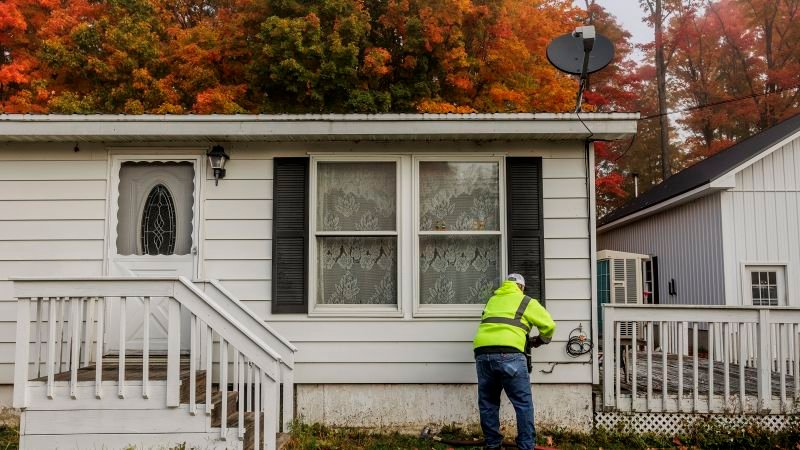
In early October, the trees in Aroostook County are blanketed in fiery reds, oranges and yellows. Already, a third of Bates’ customers are running on credit. His drivers are setting out for more “50s,” shorthand for the households that can only afford 50 gallons at a time.
There’s usually a service charge for such small deliveries. After all, it’s costing a lot more lately to fuel a delivery truck. But Bates waived the fee this season.
The morning fog had lifted as Bates trails one of his delivery trucks and its driver, Lee Wood. Beyond the foliage and some grazing cows was a clear view of Mount Katahdin, Maine’s highest peak.
He points out a power plant that employed locals for decades, then shuttered as the biomass industry struggled.
Founded in 1989, Bates Fuel had made it through the Great Recession and the pandemic. But the math is getting harder. Benchmark prices on the global oil market are set by traders “sitting back in some corporate office somewhere,” Bates said.
Wood pulls the delivery truck up to a house with blue shutters and American flags. It takes him just 38 seconds to pump 50 gallons.
In rural Aroostook County, median household income is $54,400, some $22,000 less than the state median. About 16% of all residents and 12% of seniors live in poverty. Jobs often revolve around trucking, logging and farming.
When someone can’t afford heat, they call nonprofit organization Avec Community Action. In 2025, Avec got almost 8,000 home energy assistance applications from families in northern Maine and distributed more than $3 million in aid.
Its small staff is under remarkable strain. The organization is responsible for Aroostook plus two nearby counties. There are 20 people processing thousands of applications for one-third of the state.
By late September, staffers had 500 voicemails to return.
Heidi Rackliffe, Avec’s chief program officer, was bringing her team in on weekends to call everybody back.
“They rely on these programs,” Rackliffe said of Avec’s customers, “because that’s how they survive.”
Jason Parent, Avec’s CEO, plays a voicemail from a resident who recently paid $500 to fill her tank.
“Anyway, Jason, I’m really, really struggling. I’m still working at the age of 80 to try to make ends meet. Could you please call me today so that the anxiety doesn’t kick in too much?”
Down the hall, Greta Power handles a growing stack of applications from middle-class families seeking help for the first time. Power keeps apples and mini 3 Musketeers in her office, knowing people skip meals to buy fuel.
She gets angry thinking about last winter, when the longest government shutdown in American history delayed federal fuel funds for over a month.
Then, Avec had to triage 80- and 90-year-olds most in need.
“I cannot believe this is the United States,” Power said.
People were calling for emergency deliveries weeks before funds were available. Others made too much money for low-income programs or exhausted their one-time benefits with months of winter still to go. Intake appointments for heating aid were already booking out into February.
Maine’s senior citizens on fixed incomes are among the hardest hit. The state has the nation’s oldest population – 23% of residents are 65 and up.
Ruth Munson, 73, called Avec in late September. Her kerosene tank was almost out, and she needed an emergency fill-up. The chill was slipping through the cracks in her windows and warps in her 48-year-old trailer.
Munson and her husband live off a combined $1,993 a month in Social Security and had been getting Avec’s help for decades. A wooden plaque on the wall said “The Munson Estate,” but the only luxury she bought was cable.
High prices, she said, felt like “hell on wheels.”
Bates keeps sending trucks to the customers who are behind on payments. He isn’t sure how much longer he can manage.
Bates could retire and spend more time making maple syrup with his grandson. The shed behind his home is practically a science lab, full of jugs and evaporators and gallons of sap.
But retirement also means selling all eight of his trucks and laying off workers. And what about his customers? Larger fuel dealers would never excuse so much debt, he said.
“Where are they gonna go?”
That question keeps Michael Fawcett buzzing around the Wytopitlock Food Pantry. He’d found “Pitlock” on the map 25 years ago, when he left Las Vegas in search of cheap land. Now, he leads a group of volunteers who dole out fresh produce, pasta, eggs and more every few weeks.
He hoped to give his community some “margin,” he said. Almost all of the pantry’s customers are seniors, and there’s was a waitlist with a dozen more.
Fawcett scraped together donations and runs the pantry without pay. He crisscrosses the town collecting bottles and cans for the 5 cent deposit. Sometimes his haul yields an extra $25.
But the pantry is about $2,000 in the red every year. Insurance on the pantry truck: $1,100. Fuel: $950 and rising. Cleaning supplies, produce bags and other basics: $500.
Doreen Crawford raised six children in Wytopitlock while her husband worked in trucking. Sometimes they had enough to get by; sometimes not. The 91-year-old has been coming to the pantry for at least 15 years.
Crawford managed to lock in a price with her fuel vendor – $4.29 a gallon from September to May. But she was still sleeping without heat, preferring to “snuggle right down in there.” In the fall, she flicks on the heater for a few hours each morning, “just enough to take the chill out.”
Sho Magby, 50, was already cold as she circled through the pantry and considered a small supermarket cake. She hadn’t taken off her grey beanie.
She said she’d be out of firewood in the next few days. Her heating assistance appointment was over a month out.
“I mean, I could use my oven,” Magby said.
Staring down the months ahead, Bates hopes to keep people from making such a choice.
Surely, the sprawling global market would eventually grant some relief. A bubble would burst. The price would drop.
“I’ll grind through, probably, this winter,” Bates said.
He isn’t counting on the midterms to change much of anything. Bates voted for Trump multiple times but said he doesn’t agree with everything the president has done.
That’s typical around these parts, which Trump carried in 2024 by around 26 points.
“We vote Republican because it’s like the lesser of the two evils,” Bates said. “I don’t look at the Republican Party as my savior or anything. Because they’re not.”
He tallies the gallons he’s bought in the last few days. He counts how long it would take to pay it off. He keeps driving.





Responses