
Shortly after 9 p.m. on Friday, US President Donald Trump made an unusual announcement on his social media platform Truth Social.
Trump said that the US and Venezuela had collaborated to kill Héctor Rusthenford Guerrero Flores, also known as “Niño Guerrero” and identified as the top leader of the notorious criminal gang Tren de Aragua, which the US designated a Foreign Terrorist Organization early on in Trump’s second term.
The attack on Guerrero Flores was “swift and lethal,” Trump announced, adding that under his leadership, the US will “find these vicious murderers and drugs lords anytime, anyplace, and send them to the depths of hell where they belong.”
In his post, Trump included a 10-second video of the alleged assassination, showing a bird’s-eye view of a building with a galvanized metal roof being blown apart.
The government of Venezuela’s acting President Delcy Rodríguez said in a separate statement that the joint operation was carried out “in the southeast of Bolívar state” in Venezuela, adding that the US and Venezuela had exchanged both intelligence and specialized technical support.
Until the joint attack was announced on Friday, Guerrero Flores’ whereabouts had been unknown. The criminal leader, who, authorities say helped found Tren de Aragua, had been a fugitive for years, with a criminal record stretching back decades.
Trump described Guerrero Flores as “infamous” in his announcement, but few Americans likely know anything about him. Those curious would find little information in government records and statements. Guerrero Flores’ State Department wanted page has a single, grainy black and white photo, with his height and weight listed as “unknown.”
So, who was “Niño Guerrero?”
Although the State Department’s biography on Guerrero Flores is thin, it includes his full name and date of birth – though that, strangely enough, differs from the birthday listed in Venezuelan court records. Both documents say that Héctor Rusthenford Guerrero Flores was born in the city of Maracay, capital of the Venezuelan state of Aragua, in 1983.
According to a Venezuelan Supreme Court ruling from 2018, Guerrero Flores’ criminal record began in 2005, when he was arrested for the murder of an official. Years later, in September 2012, he escaped from a notorious prison in Tocorón, Aragua before being recaptured in 2013.
It was after his recapture, sometime between 2013 and 2015, that Tren de Aragua began to approach its current form.
The group gradually accrued more power and territory from within Tocorón Prison, and Tren de Aragua began to ally with other criminal gangs to expand its influence. It eventually came to control the San Vicente neighborhood in Guerrero Flores’ hometown of Maracay, according to the think tank InSight Crime and reports from the Venezuelan Observatory of Violence.
On December 15, 2016, a trial court in the state of Aragua sentenced Guerrero Flores to 17 years and two months in prison for twelve crimes, including intentional homicide, escape from custody, concealment of a weapon of war, drug trafficking and criminal association.
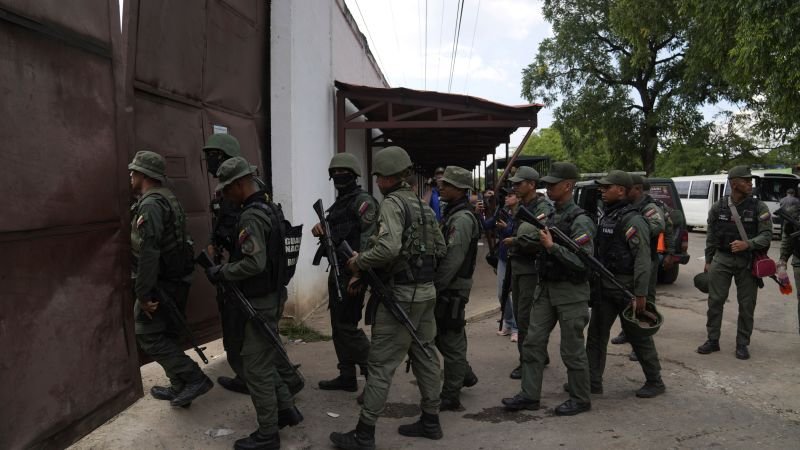
But Tren de Aragua’s control within Tocorón prison was so absolute, with gang-built swimming pools and restaurants within the penitentiary walls, that imprisoning Guerrero Flores there was as effective as letting him go. It was only when the Venezuelan government took full control of the facility in October 2023 that they discovered he had vanished. He had become a fugitive and remained one until his death.
The US Department of State offered a reward of $5 million for information leading to his capture or conviction. In December 2025, the US Attorney’s Office for the Southern District of New York charged Guerrero Flores with ordering, directing, and facilitating acts of terrorism within the United States.
With Guerrero Flores at its head, Tren de Aragua not only expanded its presence in Venezuela, but also reached other countries in the region and even, allegedly, crossed the Atlantic.
According to InSight Crime, the gang maintains a presence in Colombia, Ecuador, Peru, Bolivia and Chile. Meanwhile, Transparencia Venezuela — the Venezuelan arm of the nongovernmental organization Transparency International — says the criminal group operates in Brazil and Costa Rica, as well. Likewise, Mexican authorities have reported the arrests of alleged leaders and people related to Tren de Aragua. In 2023, a CNN investigation documented its presence in the United States.
In March 2024, Guerrero Flores’ brother Gerso was arrested in Barcelona, Spain and extradited to Venezuela a few months later. A little over a year later, Spanish police arrested 13 individuals whom they described as the first known Tren de Aragua cell dismantled in the country.
In July 2024, then-US President Joe Biden designated the Tren de Aragua as a major transnational criminal organization. But at the start of his second term, Trump went a step further, signing an executive order designating the gang as a foreign terrorist organization. Soon afterward, Ecuador, Peru and Argentina followed suit.
Tren de Aragua and other Latin American gangs lie at the center of the Trump administration’s initial wave of deportations. Since his second term began, the president and his allies have argued in and out of court that the presence of alleged gang members within the United States are part of a wider “invasion” of the US from its southern border.
The US government used that rationale to deport hundreds of people in March 2025 after Trump invoked the Foreign Enemies Act.
A few months later, in September, the US Defense Department began pursuing alleged drug trafficking vessels operating in the Caribbean and eastern Pacific, some of which they alleged are linked to the Venezuelan gang.
More than 200 people have died in the US strikes against those vessels. The Trump administration has not presented public evidence of the presence of narcotics on the attacked ships, nor of their links to drug cartels.
CNN’s Michael Williams, Rafael Romo, Ray Sanchez, Belisa Morillo, Laura Weffer, Osmary Hernandez, Max Saltman, Sebastian Jimenez, Pau Mosquera and Jaide Timm-Garcia contributed to this report.




Responses