
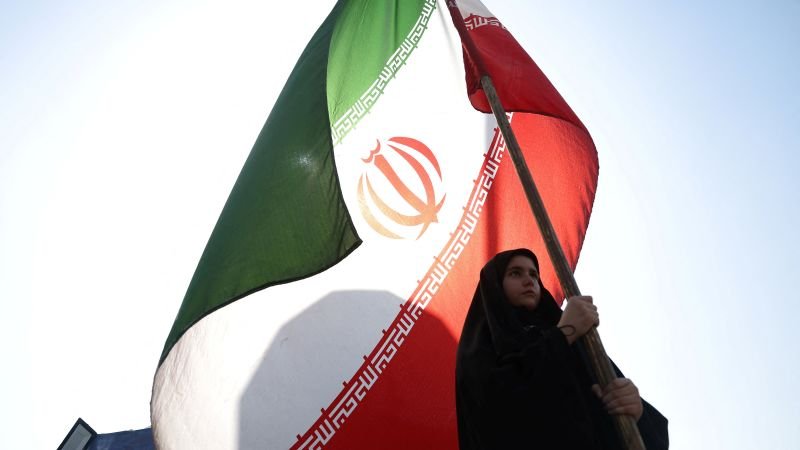
• Potential agreement: US President Donald Trump said an agreement with Iran is “scheduled to get signed” on Sunday and would reopen the Strait of Hormuz. But Iran’s Islamic Revolutionary Guard Corps denied plans for a Sunday signing, criticizing Trump’s “unusual insistence” on that day and saying a framework “has not yet been finalized.”
• Next steps: Officials are planning for a virtual signing because meeting in person presented logistical challenges and more potential for the process to get derailed, sources told CNN. The memorandum of understanding would kick off a new 60-day period of negotiations on how to implement the framework and resolve remaining sticking points, a US official said Friday.
• Questions remain: Iranian descriptions of the terms have differed from some details released by the US, including on key issues such as the future of Tehran’s nuclear program, regional proxy groups and frozen Iranian funds.
27 Posts
On Saturday, US President Donald Trump said an agreement with Iran “is scheduled to get signed tomorrow,” adding that the signing would trigger the reopening of the Strait of Hormuz.
While Tehran has also signaled the sides are close to agreeing on terms, Iran’s Islamic Revolutionary Guard Corps denied plans for a Sunday signing and criticized Trump’s “unusual insistence” on that day. It marks the latest divergence in US and Iranian statements during a flurry of diplomacy in recent days.
If a memorandum of understanding between Washington and Tehran is signed, it will kick off a new 60-day period of negotiations on how to implement the framework, a US official said Friday.
Here’s what else you need to know:
Virtual signing: Plans for an in-person gathering have been scrapped in favor of a potential electronic signing, officials familiar with the matter told CNN. The decision was made due to logistical challenges and in hopes of avoiding delays that might derail the negotiation process, one source said.
Trump to meet with Middle Eastern leaders: The US president will depart the White House early Monday morning, arriving in France for this week’s G7 summit. Tuesday afternoon will see Trump join a working lunch with G7 and Middle Eastern leaders, a senior administration official said.
Diplomatic calls: British Prime Minister Keir Starmer spoke to Trump on Saturday about his efforts to end the conflict with Iran, emphasizing the importance that “any deal delivers a durable and lasting peace.” And Qatar’s prime minister spoke with his Pakistani counterpart in a separate call Saturday, in which he emphasized support for Islamabad’s role in mediating US-Iran talks.
Tehran residents skeptical of potential agreement: Here’s how some people in the Iranian capital have been responding to the latest developments.
CNN’s Julia Benbrook, Mitchell McCluskey, DJ Judd, Kevin Liptak, Elise Hammond, Abbas Al Lawati, Lauren Kent, Eyad Kourdi, Charlotte Reck, Max Foster, Catherine Nicholls and Duarte Mendonca contributed to this report.
Plans to sign the memorandum of understanding virtually came together over the last day to cement the agreement quickly and avoid any eleventh-hour spoilers, officials familiar with the matter said.
While President Donald Trump said last week he expected the signing to occur in person in Europe, with Vice President JD Vance attending for the US, those plans did not come to pass.
That is due in part to complications over schedule. The president and vice president do not travel abroad simultaneously for security and continuity purposes, and Trump is scheduled to depart for a G7 summit in France early Monday. Getting Vance to and from a signing event in Europe in time for Trump to depart would have been difficult.
Instead, an electronic signing was offered to get the agreement finalized. The fear among some of the mediators is that the longer it goes unsigned, the greater the likelihood that something upends progress or one or both sides reneges, according to a person familiar with the matter.
As it stands, Washington and Tehran have each offered somewhat conflicting accounts of what is in the agreement, including what financial relief Iran will see. Whether those disputes are merely differences in public messaging, or reflect something deeper that could cause the agreement to collapse, remains unclear.
British Prime Minister Keir Starmer spoke to US President Donald Trump on Saturday about his efforts to end the conflict with Iran, according to a readout of the call provided by the prime minister’s office.
Starmer emphasized the importance of “ensuring any deal delivers a durable and lasting peace.”
During the call, Starmer “reiterated that the UK stands ready to support the implementation of any peace agreement and to work with international partners to ensure its success.”
The two leaders agreed to stay in contact ahead of next week’s Group of Seven summit, a Downing Street spokesperson said.
CNN has reached out to the White House for comment on the call.
Iran’s military force, the Islamic Revolutionary Guard Corps (IRGC), denied that Iran would sign an agreement with the United States on Sunday and criticized President Donald Trump’s “unusual insistence” on signing the agreement that day.
The IRGC described the timeline as a “test for Iran’s negotiating team” and that Trump’s announcement comes “despite Iranian negotiators explicitly stating that the memorandum has not yet been finalized and that signing on Sunday is definitely not happening.”
In a post on Telegram, the group suggested that Trump intended to schedule the signing to coincide with his birthday on June 14.
“Some observers believe his insistence may be driven by a desire to use the occasion symbolically and turn it into a personal publicity event,” the statement read.
President Donald Trump said an agreement with Iran “is scheduled to get signed tomorrow” adding that “immediately after it is signed, the Hormuz Strait is OPEN TO ALL.”
“At the appropriate time, when all is calm, we will go in and get the Nuclear Dust, buried deep under the powerful sunken granite mountains, thanks to our beautiful B-2 Bombers and their brilliant pilots, and downblend and destroy it, whether in Iran, or the United States,” Trump posted on Truth Social.
The president said that “hopefully, this process will all work out quickly, easily, and smoothly” but added that if it doesn’t, “we have the ultimate alternative.”
The memorandum of understanding being negotiated between the US and Iran states that, if signed, it would trigger a 60-day period for “technical” negotiations to take place, a senior Trump administration official said Friday.
While the memorandum outlines a series of topline commitments that Iran must agree to — including the dismantling of its nuclear program, reopening the Strait of Hormuz and the US destroying Iran’s enriched material — the highly technical talks will focus on how to specifically implement and carry out those points, the official said.
Iranian Foreign Ministry spokesperson Esmaeil Baghaei denied recent reports suggesting Geneva, Switzerland, would soon be the venue for the signing of a US-Iran truce.
“The exact timing of the signing should be awaited; however, there are no plans for travel to Geneva or anywhere else within the next couple of days,” Baghaei said Saturday, according to the semi-official Tasnim News Agency, which is affiliated with Iran’s Islamic Revolutionary Guard Corps (IRGC).
The logistics of the imminent signing of a US-Iran memorandum of understanding remain unclear. Options floated around by US and Iranian officials include a “remote” signing of the agreement, possibly followed by an in-person joint signing at a later date.
Baghaei, however, said both parties “have never been this close to an understanding.”
Qatari Prime Minister Sheikh Mohammed bin Abdulrahman Al-Thani held a phone call with his Pakistani counterpart Saturday to emphasize his support for Islamabad’s role in mediating talks between the US and Iran.
Al-Thani expressed his country’s “great satisfaction with the progress made in the negotiations,” according to a Qatari readout of the conversation with Pakistani Prime Minister Shehbaz Sharif.
It added that Pakistan’s updates on the state of negotiations signal “hope that the American and Iranian sides will sign the agreement soon.”
Fighting raged in Lebanon on Saturday amid hopes that a potential agreement for the resolution of the conflict between the United States and Iran would also cover the wartorn country.
A raid by Israeli forces killed a mayor in the southern Lebanese town of Al-Rihan on Saturday as they launched heavy fire on 19 areas, while the Iranian-backed militant group Hezbollah targeted Israeli troops elsewhere in the country.
Two other people were killed in separate raids, according to Lebanon’s National News Agency (NNA), after the Israeli military attacked Tyre, Jezzine and Nabatiyeh. Israeli planes also struck the towns of Seddiqine, Borj Qalaouiyah, Majdal Zoun and Al-Kanisa, including a raid on a church, NNA reported.
The Israeli military issued evacuation statements for residents in four areas – Ghassaniyah, Zarrariyah, Kothriyah Al-Reez Farm, and Sir Al-Gharbiyah – on Saturday. The UN previously warned the breadth of such blanket orders could amount to “prohibited forced displacement.”
CNN has reached out to the Israeli military for comment.
The Israeli military claimed to have “struck more than 70 Hezbollah terrorist infrastructure sites” in southern Lebanon over the past 24 hours. Hezbollah claimed responsibility for 19 attacks on Israeli army posts Friday through Saturday, in statements on Telegram.
Tehran has insisted that Israeli forces halt attacks in Lebanon, warning an agreement with Washington must involve a ceasefire there. The memorandum of understanding between the US and Iran, which has not yet been signed, will include a resolution for the conflict of Lebanon “and all other fronts,” Iranian Foreign Minister Abbas Araghchi said on state television Friday. Hezbollah also said it was confident Iran would insist that Lebanon was included in a deal with the US, Reuters reported.
But Israel’s Defense Minister Israel Katz said troops would not withdraw from occupied areas in Lebanon. He doubled down on the military’s intent to “act against both near and distant threats.”
Israeli attacks have killed 3,756 people and injured 11,632 others in Lebanon since March 2, the Lebanese Ministry of Public Health reported on Saturday. Meanwhile, 30 Israeli soldiers have been killed along with 24 civilians, according to the Israeli military.
CNN’s Eugenia Yosef and Oren Liebermann contributed reporting.
As Washington and Tehran appear to edge closer to finalizing an agreement, according to Pakistan and Iran, people in the Iranian capital have been responding to the developments, with some saying they believe the FIFA World Cup may have played a part.
“Look, they have hit our commanders, they have hit our leader. They have crossed all the red lines. We should not make an agreement. We had said that we would take revenge. Where is our revenge? We must take revenge,” local resident Ebrahim Sa’adat told the West Asia News Agency (WANA) in video shared with Reuters.
Listen to more interviews with Tehran residents in the video above.
Iranian Foreign Ministry spokesperson Esmaeil Baghaei said Saturday that the signing of a framework agreement between Washington and Tehran will “not be tomorrow” despite a suggestion from key mediator Pakistan, according to Iran’s semi-official Tasnim News Agency.
“This is not a final agreement between Iran and the United States, but rather a memorandum that outlines the main points of disagreement and clarifies that the war will end,” the Iranian spokesperson added.
Some key context: The comments from Baghaei, who has served as a spokesperson for the Iranian negotiating team, comes after Pakistan’s Prime Minister Shebaz Sharif said Saturday that potential terms were expected to be finalized in the “next 24 hours.”
His post, on X, was reposted by US President Donald Trump’s Truth Social account.
The Pakistani Foreign Ministry also said the electronic signing ceremony of the deal is “scheduled for tomorrow,” while adding that Pakistan’s Foreign Minister Senator Mohammad Ishaq Dar spoke with his Saudi Arabian counterpart today.
A source with knowledge of the talks has also told CNN an electronic signing of the agreement was expected by the end of tomorrow, and could come even before.
CNN has reached out to the White House for comment.
Officials from both Iran and Pakistan signaled today that an agreement between the US and Iran could be close — though both offered differing timelines for when a prospective framework could be signed.
If you’re just joining us, here’s what’s been going on in the region so far today:
Pakistan’s Prime Minister Shehbaz Sharif, whose country has been mediating talks, wrote on X: “We are closer to a peace deal than ever before,” saying that an agreement could be finalized in the “next 24 hours.”
However, Iranian Foreign Ministry spokesperson Esmaeil Baghaei said that the signing of a framework agreement will “not be tomorrow,” according to Iran’s semi-official Tasnim News Agency.
A tanker was struck by an unknown projectile off the coast of Oman yesterday, the United Kingdom Maritime Trade Operation (UKMTO) reported today, adding that all crew members were confirmed safe.
The funeral for Iran’s former Supreme Leader Ali Khamenei will begin in Tehran on July 4, Iranian state media reported today, with the burial set to take place on July 9 in the northeastern city of Mashhad.
Iran’s Deputy Foreign Minister Kazem Gharibabadi met with Russian and Chinese ambassadors in Tehran today, according to local media, to discuss “the latest developments” of the tentative proposal with the US.
A number of banks in Iran have been “experiencing disruptions,” raising the prospect of a “cyber-attack,” according to local media, which cautioned that “no official authority has confirmed or denied the matter.”
CNN’s Sophia Saifi, Mostafa Salem, Charlotte Reck and Sana Noor Haq contributed to this reporting.
The terms of a potential agreement that could bring a halt to the war between the US and Iran are still emerging, but one of its main mediators signaled today that it could be finalized in the “next 24 hours.”
Should the agreement be signed, it will then be followed by “technical level talks next week,” Sharif said.
US President Donald Trump later shared Sharif’s message on his Truth Social platform. CNN has reached out to the White House for comment.
A source with knowledge of the talks also told CNN that an electronic signing of the agreement is expected by the end of tomorrow, and could come even before. The source said there is a shared desire to get the signatures locked in so that the process cannot be derailed.
Some context: While the terms of the prospective agreement have not been shared officially, a senior US administration official told CNN yesterday that framework will include the reopening of the Strait of Hormuz and the lifting of the US blockade on Iranian ports.
The potential deal will also see an end to several economic pressures on Iran, the official said, as well as the dismantling of Tehran’s nuclear program.
Technical details of how to remove Iran’s stockpile of highly enriched uranium have yet to be worked out, CNN was also told by a senior US administration official yesterday.
This post has been updated to note that Trump reposted the message from Sharif.
CNN’s Kevin Liptak, Nic Robertson and Mostafa Salem contributed to this reporting.
Iran and Oman are expected to release a joint statement on the future of the Strait of Hormuz “soon,” Iranian Foreign Minister Abbas Araghchi said yesterday.
The reopening of the waterway is expected to be a part of a prospective agreement between the US and Iran.
The strait has effectively been closed by Iran since the US and Israel began the war back in February. It is the main route for shipping crude from oil-rich countries such as Saudi Arabia and Kuwait to the rest of the world.
Both Iran and Oman have Exclusive Economic Zones (EEZ) in the strait.
According to the United Nations, a state has “sovereign rights” to explore, exploit, conserve and manage the natural resources of the waters in its EEZ.
However, under the United Nations Convention on the Law of the Sea (UNCLOS), “ships of all States, whether coastal or land-locked, enjoy the right of innocent passage through the territorial sea.”
A coastal state should not “hamper the innocent passage of foreign ships through the territorial sea,” it says, except in specific outlined scenarios. It may “take the necessary steps in its territorial sea to prevent passage which is not innocent,” UNCLOS outlines.
Iran’s Deputy Foreign Minister Kazem Gharibabadi convened with Russian and Chinese ambassadors in Tehran on Saturday, according to local media, to discussing “the latest developments” of a tentative proposal with the US.
In a joint meeting among the trio, “views were exchanged and discussions were held regarding the latest developments related to the draft memorandum of understanding in Islamabad,” the semi-official Iranian Students’ News Agency (ISNA) reported, quoting a statement from Gharibabadi.
“The strategic partnership between Iran, China, and Russia, and the coordination and cooperation among the three countries, will continue strongly,” the statement added.
US, Iranian and Pakistani officials have each issued statements in recent days about a memorandum of understanding between Tehran and Washington – the exact terms of which have not been released publicly.
Some context: Both Russian President Vladimir Putin and China’s Xi Jinping are key allies of Tehran, with the latter having increasingly presented himself as a potential peace broker between the US and Iran.
Just last month, the Chinese Foreign Minister Wang Yi pledged to support ongoing talks after his Iranian counterpart visited Beijing. Meanwhile, the Kremlin has provided intelligence to Iran about the locations of American troops and assets.
A tanker was struck by an unknown projectile in its port bow off the coast of Oman, the United Kingdom Maritime Trade Operation (UKMTO) reported on Saturday.
The incident occurred on Friday, the UKMTO said, six nautical miles east of Oman.
All crew members aboard the vessel were confirmed safe by the UKMTO, and no environmental impact has been reported. The tanker is continuing to its next port of call, the UKMTO said.
The Strait of Hormuz has been effectively closed for 105 days, cutting off 20% of the world’s oil supply to global markets, along with liquid natural gas and fertilizer needed for a functioning global economy, and causing oil prices to rise dramatically.
While Iran has consistently claimed the strait is functioning as usual, accessing the crucial waterway has proven difficult. Traffic has been significantly depleted with only a handful of vessels crossing each day.
Attacks on vessels in the region have become common, with tankers being hit by both Iran and the United States. On Wednesday, a US strike on a Palau-flagged commercial oil tanker killed three Indian seafarers and triggered public anger across India.
The death of Supreme Leader Ali Hosseini Khamenei stunned Iranians, many of whom had never known anything but his authoritarian leadership.
Now, more than three months after he was killed at the start of the US-Israeli war, the date of his burial has been announced.
The funeral will begin in the country’s capital of Tehran on July 4, with the burial set to take place on July 9 in the northeastern city of Mashhad, Iranian state media reported Saturday.
The burial ceremony will comprise of a two-day farewell to the slain former leader in Tehran and a funeral procession through the capital. A second funeral procession will be conducted in the holy city of Qom the following day.
A final commemorative procession will be held in Mashhad on July 9 before Khamenei’s remains are buried in the holy city’s sacred shrine.
Ayatollah Ali Khamenei was Iran’s hardline supreme leader who ruled the country for almost four decades before he was killed in joint US-Israeli strikes at the beginning of the conflict on February 28. His death sparked celebration among Iranians who opposed his rule and despair from pro-regime loyalists.
Khamenei was succeeded by his second son, Mojtaba Khamenei, a little over a week later by the 88-member Assembly of Experts. The elevation of Mojtaba was considered an act of defiance by the Islamic Republic, after US President Donald Trump deemed him an “unacceptable” choice during deliberations.
Since his appointment, Mojtaba has issued various purported messages to the people of Iran, but has yet to be seen in public.
A number of banks in Iran have been “experiencing disruptions,” raising the prospect of a “cyber-attack,” according to local media, which cautioned that “no official authority has confirmed or denied the matter.”
Several chains — including Bank Melli, Bank Tejarat and Bank Saderat — have been hit by delays to mobile banking, internet banking, ATMs and card readers, the Iranian semi-official news agency Fars said on Saturday.
“Some sources have reported the possibility of a cyber-attack, but so far, no official authority has confirmed or denied the matter, and there is not enough information for a definitive statement,” the agency added.
In Iran, several residents told CNN they are struggling with rampant unemployment and hyperinflation – as cost of the fighting compounds crippling economic sanctions imposed by the US.
The violence triggered by US-Israeli strikes on Iran in February, Tehran’s retaliatory strikes and parallel US-Iranian blockades on non-allied vessels in the key Strait of Hormuz, have catapulted much of the wider region and beyond into economic disarray marked by fluctuating oil prices and food insecurity.
President Donald Trump on Friday reposted a message from Iran’s Foreign Minister Abbas Araghchi stating that an agreement is close — the first time the US president appeared to publicly and officially endorse a position expressed by a senior member of Iran’s government during the war.
While nothing is yet signed, the optics seem more positive this time — on previous occasions Trump has talked up the prospects of an imminent agreement only to be knocked back by Iran.
Araghchi has become one of Tehran’s leading nuclear negotiators, drawing on his academic background and years of experience as Iran’s foreign ministry spokesperson. These qualities helped deliver past breakthroughs with Washington, notably the 2015 nuclear agreement.
Like Trump, Araghchi has an eye for a deal. The chief diplomat wrote “The Power of Negotiation” in 2024 where he framed his technique as one inspired by the haggling in Iranian bazaars and his family’s carpet trading past.
As a young man, he took part in the revolution that birthed the Islamic Republic and fought for Iran’s military. Now, 63, the war has given him a surprising TikTok fanbase, with some younger generations praising his style in admiration and, perhaps, sarcastic humor.
Trump’s amplification of Araghchi’s message offers the strongest public hint that Tehran and Washington see a deal within reach, despite confusion swirling around the status of negotiations and whether an agreement has been secured.
There is suddenly newfound optimism about the Trump administration reaching an agreement with Iran to extend the ceasefire and to start to bring the war to an end — and not just inside President Donald Trump’s head this time.
Even Iran’s foreign minister says an agreement “has never been closer.”
But it’s important to note that, even if there’s good reason for the optimism, this would not be a peace deal, in and of itself. It’s the first step in a much longer process.
Getting here was likely the easier part; what comes next will be even harder.
The interim agreement under discussion would essentially involve the two sides coming to terms on some of the easier points — like ending Iran’s throttling of the Strait of Hormuz and the nearby US blockade — while setting a 60-day clock and a set agenda for resolving the more difficult ones.
The Trump administration is also claiming Iran has agreed to some very big concessions, but Iranian media is pitching a much different version of a tentative agreement.
Friday morning reinforced the fraught nature of what lay ahead. After media outlets connected to the Iranian government reported details of a potential agreement that looked very favorable to Tehran, Trump ripped into its leaders as “very dishonorable people to deal with,” with whom “there is no such thing as dealing in good faith.”
So what would Trump be trying to iron out with his irredeemably dishonest counterparts?
Take a look at some of the potential sticking points here.
Despite the US and Iran both signaling that a prospective agreement between them could be close, Tehran has continued to target vessels in the Strait of Hormuz, according to Washington.
On Thursday, US President Donald Trump announced a “great settlement” that could resolve the war, suggesting it would be finalized in the coming days.
That evening, however, the US military shot down two Iranian attack drones that were targeting vessels in the Strait of Hormuz, according to a US defense official.
Trump said in a social media post yesterday that Iran’s continued targeting of ships in the strait was “TOTALLY UNACCEPTABLE.”
US Central Command also announced early this morning local time in Iran that US forces had shot down “multiple one-way attack drones” that had attempted to “strike commercial ships transiting the Strait of Hormuz.”
CNN’s Kaanita Iyer, Lauren Kent and Michael Williams contributed to this reporting.
• Potential agreement: US President Donald Trump said an agreement with Iran is “scheduled to get signed” on Sunday and would reopen the Strait of Hormuz. But Iran’s Islamic Revolutionary Guard Corps denied plans for a Sunday signing, criticizing Trump’s “unusual insistence” on that day and saying a framework “has not yet been finalized.”
• Next steps: Officials are planning for a virtual signing because meeting in person presented logistical challenges and more potential for the process to get derailed, sources told CNN. The memorandum of understanding would kick off a new 60-day period of negotiations on how to implement the framework and resolve remaining sticking points, a US official said Friday.
• Questions remain: Iranian descriptions of the terms have differed from some details released by the US, including on key issues such as the future of Tehran’s nuclear program, regional proxy groups and frozen Iranian funds.
On Saturday, US President Donald Trump said an agreement with Iran “is scheduled to get signed tomorrow,” adding that the signing would trigger the reopening of the Strait of Hormuz.
While Tehran has also signaled the sides are close to agreeing on terms, Iran’s Islamic Revolutionary Guard Corps denied plans for a Sunday signing and criticized Trump’s “unusual insistence” on that day. It marks the latest divergence in US and Iranian statements during a flurry of diplomacy in recent days.
If a memorandum of understanding between Washington and Tehran is signed, it will kick off a new 60-day period of negotiations on how to implement the framework, a US official said Friday.
Here’s what else you need to know:
Virtual signing: Plans for an in-person gathering have been scrapped in favor of a potential electronic signing, officials familiar with the matter told CNN. The decision was made due to logistical challenges and in hopes of avoiding delays that might derail the negotiation process, one source said.
Trump to meet with Middle Eastern leaders: The US president will depart the White House early Monday morning, arriving in France for this week’s G7 summit. Tuesday afternoon will see Trump join a working lunch with G7 and Middle Eastern leaders, a senior administration official said.
Diplomatic calls: British Prime Minister Keir Starmer spoke to Trump on Saturday about his efforts to end the conflict with Iran, emphasizing the importance that “any deal delivers a durable and lasting peace.” And Qatar’s prime minister spoke with his Pakistani counterpart in a separate call Saturday, in which he emphasized support for Islamabad’s role in mediating US-Iran talks.
Tehran residents skeptical of potential agreement: Here’s how some people in the Iranian capital have been responding to the latest developments.
CNN’s Julia Benbrook, Mitchell McCluskey, DJ Judd, Kevin Liptak, Elise Hammond, Abbas Al Lawati, Lauren Kent, Eyad Kourdi, Charlotte Reck, Max Foster, Catherine Nicholls and Duarte Mendonca contributed to this report.
Plans to sign the memorandum of understanding virtually came together over the last day to cement the agreement quickly and avoid any eleventh-hour spoilers, officials familiar with the matter said.
While President Donald Trump said last week he expected the signing to occur in person in Europe, with Vice President JD Vance attending for the US, those plans did not come to pass.
That is due in part to complications over schedule. The president and vice president do not travel abroad simultaneously for security and continuity purposes, and Trump is scheduled to depart for a G7 summit in France early Monday. Getting Vance to and from a signing event in Europe in time for Trump to depart would have been difficult.
Instead, an electronic signing was offered to get the agreement finalized. The fear among some of the mediators is that the longer it goes unsigned, the greater the likelihood that something upends progress or one or both sides reneges, according to a person familiar with the matter.
As it stands, Washington and Tehran have each offered somewhat conflicting accounts of what is in the agreement, including what financial relief Iran will see. Whether those disputes are merely differences in public messaging, or reflect something deeper that could cause the agreement to collapse, remains unclear.
British Prime Minister Keir Starmer spoke to US President Donald Trump on Saturday about his efforts to end the conflict with Iran, according to a readout of the call provided by the prime minister’s office.
Starmer emphasized the importance of “ensuring any deal delivers a durable and lasting peace.”
During the call, Starmer “reiterated that the UK stands ready to support the implementation of any peace agreement and to work with international partners to ensure its success.”
The two leaders agreed to stay in contact ahead of next week’s Group of Seven summit, a Downing Street spokesperson said.
CNN has reached out to the White House for comment on the call.
Iran’s military force, the Islamic Revolutionary Guard Corps (IRGC), denied that Iran would sign an agreement with the United States on Sunday and criticized President Donald Trump’s “unusual insistence” on signing the agreement that day.
The IRGC described the timeline as a “test for Iran’s negotiating team” and that Trump’s announcement comes “despite Iranian negotiators explicitly stating that the memorandum has not yet been finalized and that signing on Sunday is definitely not happening.”
In a post on Telegram, the group suggested that Trump intended to schedule the signing to coincide with his birthday on June 14.
“Some observers believe his insistence may be driven by a desire to use the occasion symbolically and turn it into a personal publicity event,” the statement read.
President Donald Trump said an agreement with Iran “is scheduled to get signed tomorrow” adding that “immediately after it is signed, the Hormuz Strait is OPEN TO ALL.”
“At the appropriate time, when all is calm, we will go in and get the Nuclear Dust, buried deep under the powerful sunken granite mountains, thanks to our beautiful B-2 Bombers and their brilliant pilots, and downblend and destroy it, whether in Iran, or the United States,” Trump posted on Truth Social.
The president said that “hopefully, this process will all work out quickly, easily, and smoothly” but added that if it doesn’t, “we have the ultimate alternative.”
The memorandum of understanding being negotiated between the US and Iran states that, if signed, it would trigger a 60-day period for “technical” negotiations to take place, a senior Trump administration official said Friday.
While the memorandum outlines a series of topline commitments that Iran must agree to — including the dismantling of its nuclear program, reopening the Strait of Hormuz and the US destroying Iran’s enriched material — the highly technical talks will focus on how to specifically implement and carry out those points, the official said.
Iranian Foreign Ministry spokesperson Esmaeil Baghaei denied recent reports suggesting Geneva, Switzerland, would soon be the venue for the signing of a US-Iran truce.
“The exact timing of the signing should be awaited; however, there are no plans for travel to Geneva or anywhere else within the next couple of days,” Baghaei said Saturday, according to the semi-official Tasnim News Agency, which is affiliated with Iran’s Islamic Revolutionary Guard Corps (IRGC).
The logistics of the imminent signing of a US-Iran memorandum of understanding remain unclear. Options floated around by US and Iranian officials include a “remote” signing of the agreement, possibly followed by an in-person joint signing at a later date.
Baghaei, however, said both parties “have never been this close to an understanding.”
Qatari Prime Minister Sheikh Mohammed bin Abdulrahman Al-Thani held a phone call with his Pakistani counterpart Saturday to emphasize his support for Islamabad’s role in mediating talks between the US and Iran.
Al-Thani expressed his country’s “great satisfaction with the progress made in the negotiations,” according to a Qatari readout of the conversation with Pakistani Prime Minister Shehbaz Sharif.
It added that Pakistan’s updates on the state of negotiations signal “hope that the American and Iranian sides will sign the agreement soon.”
Fighting raged in Lebanon on Saturday amid hopes that a potential agreement for the resolution of the conflict between the United States and Iran would also cover the wartorn country.
A raid by Israeli forces killed a mayor in the southern Lebanese town of Al-Rihan on Saturday as they launched heavy fire on 19 areas, while the Iranian-backed militant group Hezbollah targeted Israeli troops elsewhere in the country.
Two other people were killed in separate raids, according to Lebanon’s National News Agency (NNA), after the Israeli military attacked Tyre, Jezzine and Nabatiyeh. Israeli planes also struck the towns of Seddiqine, Borj Qalaouiyah, Majdal Zoun and Al-Kanisa, including a raid on a church, NNA reported.
The Israeli military issued evacuation statements for residents in four areas – Ghassaniyah, Zarrariyah, Kothriyah Al-Reez Farm, and Sir Al-Gharbiyah – on Saturday. The UN previously warned the breadth of such blanket orders could amount to “prohibited forced displacement.”
CNN has reached out to the Israeli military for comment.
The Israeli military claimed to have “struck more than 70 Hezbollah terrorist infrastructure sites” in southern Lebanon over the past 24 hours. Hezbollah claimed responsibility for 19 attacks on Israeli army posts Friday through Saturday, in statements on Telegram.
Tehran has insisted that Israeli forces halt attacks in Lebanon, warning an agreement with Washington must involve a ceasefire there. The memorandum of understanding between the US and Iran, which has not yet been signed, will include a resolution for the conflict of Lebanon “and all other fronts,” Iranian Foreign Minister Abbas Araghchi said on state television Friday. Hezbollah also said it was confident Iran would insist that Lebanon was included in a deal with the US, Reuters reported.
But Israel’s Defense Minister Israel Katz said troops would not withdraw from occupied areas in Lebanon. He doubled down on the military’s intent to “act against both near and distant threats.”
Israeli attacks have killed 3,756 people and injured 11,632 others in Lebanon since March 2, the Lebanese Ministry of Public Health reported on Saturday. Meanwhile, 30 Israeli soldiers have been killed along with 24 civilians, according to the Israeli military.
CNN’s Eugenia Yosef and Oren Liebermann contributed reporting.
As Washington and Tehran appear to edge closer to finalizing an agreement, according to Pakistan and Iran, people in the Iranian capital have been responding to the developments, with some saying they believe the FIFA World Cup may have played a part.
“Look, they have hit our commanders, they have hit our leader. They have crossed all the red lines. We should not make an agreement. We had said that we would take revenge. Where is our revenge? We must take revenge,” local resident Ebrahim Sa’adat told the West Asia News Agency (WANA) in video shared with Reuters.
Listen to more interviews with Tehran residents in the video above.
Iranian Foreign Ministry spokesperson Esmaeil Baghaei said Saturday that the signing of a framework agreement between Washington and Tehran will “not be tomorrow” despite a suggestion from key mediator Pakistan, according to Iran’s semi-official Tasnim News Agency.
“This is not a final agreement between Iran and the United States, but rather a memorandum that outlines the main points of disagreement and clarifies that the war will end,” the Iranian spokesperson added.
Some key context: The comments from Baghaei, who has served as a spokesperson for the Iranian negotiating team, comes after Pakistan’s Prime Minister Shebaz Sharif said Saturday that potential terms were expected to be finalized in the “next 24 hours.”
His post, on X, was reposted by US President Donald Trump’s Truth Social account.
The Pakistani Foreign Ministry also said the electronic signing ceremony of the deal is “scheduled for tomorrow,” while adding that Pakistan’s Foreign Minister Senator Mohammad Ishaq Dar spoke with his Saudi Arabian counterpart today.
A source with knowledge of the talks has also told CNN an electronic signing of the agreement was expected by the end of tomorrow, and could come even before.
CNN has reached out to the White House for comment.
Officials from both Iran and Pakistan signaled today that an agreement between the US and Iran could be close — though both offered differing timelines for when a prospective framework could be signed.
If you’re just joining us, here’s what’s been going on in the region so far today:
Pakistan’s Prime Minister Shehbaz Sharif, whose country has been mediating talks, wrote on X: “We are closer to a peace deal than ever before,” saying that an agreement could be finalized in the “next 24 hours.”
However, Iranian Foreign Ministry spokesperson Esmaeil Baghaei said that the signing of a framework agreement will “not be tomorrow,” according to Iran’s semi-official Tasnim News Agency.
A tanker was struck by an unknown projectile off the coast of Oman yesterday, the United Kingdom Maritime Trade Operation (UKMTO) reported today, adding that all crew members were confirmed safe.
The funeral for Iran’s former Supreme Leader Ali Khamenei will begin in Tehran on July 4, Iranian state media reported today, with the burial set to take place on July 9 in the northeastern city of Mashhad.
Iran’s Deputy Foreign Minister Kazem Gharibabadi met with Russian and Chinese ambassadors in Tehran today, according to local media, to discuss “the latest developments” of the tentative proposal with the US.
A number of banks in Iran have been “experiencing disruptions,” raising the prospect of a “cyber-attack,” according to local media, which cautioned that “no official authority has confirmed or denied the matter.”
CNN’s Sophia Saifi, Mostafa Salem, Charlotte Reck and Sana Noor Haq contributed to this reporting.
The terms of a potential agreement that could bring a halt to the war between the US and Iran are still emerging, but one of its main mediators signaled today that it could be finalized in the “next 24 hours.”
Should the agreement be signed, it will then be followed by “technical level talks next week,” Sharif said.
US President Donald Trump later shared Sharif’s message on his Truth Social platform. CNN has reached out to the White House for comment.
A source with knowledge of the talks also told CNN that an electronic signing of the agreement is expected by the end of tomorrow, and could come even before. The source said there is a shared desire to get the signatures locked in so that the process cannot be derailed.
Some context: While the terms of the prospective agreement have not been shared officially, a senior US administration official told CNN yesterday that framework will include the reopening of the Strait of Hormuz and the lifting of the US blockade on Iranian ports.
The potential deal will also see an end to several economic pressures on Iran, the official said, as well as the dismantling of Tehran’s nuclear program.
Technical details of how to remove Iran’s stockpile of highly enriched uranium have yet to be worked out, CNN was also told by a senior US administration official yesterday.
This post has been updated to note that Trump reposted the message from Sharif.
CNN’s Kevin Liptak, Nic Robertson and Mostafa Salem contributed to this reporting.
Iran and Oman are expected to release a joint statement on the future of the Strait of Hormuz “soon,” Iranian Foreign Minister Abbas Araghchi said yesterday.
The reopening of the waterway is expected to be a part of a prospective agreement between the US and Iran.
The strait has effectively been closed by Iran since the US and Israel began the war back in February. It is the main route for shipping crude from oil-rich countries such as Saudi Arabia and Kuwait to the rest of the world.
Both Iran and Oman have Exclusive Economic Zones (EEZ) in the strait.
According to the United Nations, a state has “sovereign rights” to explore, exploit, conserve and manage the natural resources of the waters in its EEZ.
However, under the United Nations Convention on the Law of the Sea (UNCLOS), “ships of all States, whether coastal or land-locked, enjoy the right of innocent passage through the territorial sea.”
A coastal state should not “hamper the innocent passage of foreign ships through the territorial sea,” it says, except in specific outlined scenarios. It may “take the necessary steps in its territorial sea to prevent passage which is not innocent,” UNCLOS outlines.
Iran’s Deputy Foreign Minister Kazem Gharibabadi convened with Russian and Chinese ambassadors in Tehran on Saturday, according to local media, to discussing “the latest developments” of a tentative proposal with the US.
In a joint meeting among the trio, “views were exchanged and discussions were held regarding the latest developments related to the draft memorandum of understanding in Islamabad,” the semi-official Iranian Students’ News Agency (ISNA) reported, quoting a statement from Gharibabadi.
“The strategic partnership between Iran, China, and Russia, and the coordination and cooperation among the three countries, will continue strongly,” the statement added.
US, Iranian and Pakistani officials have each issued statements in recent days about a memorandum of understanding between Tehran and Washington – the exact terms of which have not been released publicly.
Some context: Both Russian President Vladimir Putin and China’s Xi Jinping are key allies of Tehran, with the latter having increasingly presented himself as a potential peace broker between the US and Iran.
Just last month, the Chinese Foreign Minister Wang Yi pledged to support ongoing talks after his Iranian counterpart visited Beijing. Meanwhile, the Kremlin has provided intelligence to Iran about the locations of American troops and assets.
A tanker was struck by an unknown projectile in its port bow off the coast of Oman, the United Kingdom Maritime Trade Operation (UKMTO) reported on Saturday.
The incident occurred on Friday, the UKMTO said, six nautical miles east of Oman.
All crew members aboard the vessel were confirmed safe by the UKMTO, and no environmental impact has been reported. The tanker is continuing to its next port of call, the UKMTO said.
The Strait of Hormuz has been effectively closed for 105 days, cutting off 20% of the world’s oil supply to global markets, along with liquid natural gas and fertilizer needed for a functioning global economy, and causing oil prices to rise dramatically.
While Iran has consistently claimed the strait is functioning as usual, accessing the crucial waterway has proven difficult. Traffic has been significantly depleted with only a handful of vessels crossing each day.
Attacks on vessels in the region have become common, with tankers being hit by both Iran and the United States. On Wednesday, a US strike on a Palau-flagged commercial oil tanker killed three Indian seafarers and triggered public anger across India.
The death of Supreme Leader Ali Hosseini Khamenei stunned Iranians, many of whom had never known anything but his authoritarian leadership.
Now, more than three months after he was killed at the start of the US-Israeli war, the date of his burial has been announced.
The funeral will begin in the country’s capital of Tehran on July 4, with the burial set to take place on July 9 in the northeastern city of Mashhad, Iranian state media reported Saturday.
The burial ceremony will comprise of a two-day farewell to the slain former leader in Tehran and a funeral procession through the capital. A second funeral procession will be conducted in the holy city of Qom the following day.
A final commemorative procession will be held in Mashhad on July 9 before Khamenei’s remains are buried in the holy city’s sacred shrine.
Ayatollah Ali Khamenei was Iran’s hardline supreme leader who ruled the country for almost four decades before he was killed in joint US-Israeli strikes at the beginning of the conflict on February 28. His death sparked celebration among Iranians who opposed his rule and despair from pro-regime loyalists.
Khamenei was succeeded by his second son, Mojtaba Khamenei, a little over a week later by the 88-member Assembly of Experts. The elevation of Mojtaba was considered an act of defiance by the Islamic Republic, after US President Donald Trump deemed him an “unacceptable” choice during deliberations.
Since his appointment, Mojtaba has issued various purported messages to the people of Iran, but has yet to be seen in public.
A number of banks in Iran have been “experiencing disruptions,” raising the prospect of a “cyber-attack,” according to local media, which cautioned that “no official authority has confirmed or denied the matter.”
Several chains — including Bank Melli, Bank Tejarat and Bank Saderat — have been hit by delays to mobile banking, internet banking, ATMs and card readers, the Iranian semi-official news agency Fars said on Saturday.
“Some sources have reported the possibility of a cyber-attack, but so far, no official authority has confirmed or denied the matter, and there is not enough information for a definitive statement,” the agency added.
In Iran, several residents told CNN they are struggling with rampant unemployment and hyperinflation – as cost of the fighting compounds crippling economic sanctions imposed by the US.
The violence triggered by US-Israeli strikes on Iran in February, Tehran’s retaliatory strikes and parallel US-Iranian blockades on non-allied vessels in the key Strait of Hormuz, have catapulted much of the wider region and beyond into economic disarray marked by fluctuating oil prices and food insecurity.
President Donald Trump on Friday reposted a message from Iran’s Foreign Minister Abbas Araghchi stating that an agreement is close — the first time the US president appeared to publicly and officially endorse a position expressed by a senior member of Iran’s government during the war.
While nothing is yet signed, the optics seem more positive this time — on previous occasions Trump has talked up the prospects of an imminent agreement only to be knocked back by Iran.
Araghchi has become one of Tehran’s leading nuclear negotiators, drawing on his academic background and years of experience as Iran’s foreign ministry spokesperson. These qualities helped deliver past breakthroughs with Washington, notably the 2015 nuclear agreement.
Like Trump, Araghchi has an eye for a deal. The chief diplomat wrote “The Power of Negotiation” in 2024 where he framed his technique as one inspired by the haggling in Iranian bazaars and his family’s carpet trading past.
As a young man, he took part in the revolution that birthed the Islamic Republic and fought for Iran’s military. Now, 63, the war has given him a surprising TikTok fanbase, with some younger generations praising his style in admiration and, perhaps, sarcastic humor.
Trump’s amplification of Araghchi’s message offers the strongest public hint that Tehran and Washington see a deal within reach, despite confusion swirling around the status of negotiations and whether an agreement has been secured.
There is suddenly newfound optimism about the Trump administration reaching an agreement with Iran to extend the ceasefire and to start to bring the war to an end — and not just inside President Donald Trump’s head this time.
Even Iran’s foreign minister says an agreement “has never been closer.”
But it’s important to note that, even if there’s good reason for the optimism, this would not be a peace deal, in and of itself. It’s the first step in a much longer process.
Getting here was likely the easier part; what comes next will be even harder.
The interim agreement under discussion would essentially involve the two sides coming to terms on some of the easier points — like ending Iran’s throttling of the Strait of Hormuz and the nearby US blockade — while setting a 60-day clock and a set agenda for resolving the more difficult ones.
The Trump administration is also claiming Iran has agreed to some very big concessions, but Iranian media is pitching a much different version of a tentative agreement.
Friday morning reinforced the fraught nature of what lay ahead. After media outlets connected to the Iranian government reported details of a potential agreement that looked very favorable to Tehran, Trump ripped into its leaders as “very dishonorable people to deal with,” with whom “there is no such thing as dealing in good faith.”
So what would Trump be trying to iron out with his irredeemably dishonest counterparts?
Take a look at some of the potential sticking points here.
Despite the US and Iran both signaling that a prospective agreement between them could be close, Tehran has continued to target vessels in the Strait of Hormuz, according to Washington.
On Thursday, US President Donald Trump announced a “great settlement” that could resolve the war, suggesting it would be finalized in the coming days.
That evening, however, the US military shot down two Iranian attack drones that were targeting vessels in the Strait of Hormuz, according to a US defense official.
Trump said in a social media post yesterday that Iran’s continued targeting of ships in the strait was “TOTALLY UNACCEPTABLE.”
US Central Command also announced early this morning local time in Iran that US forces had shot down “multiple one-way attack drones” that had attempted to “strike commercial ships transiting the Strait of Hormuz.”
CNN’s Kaanita Iyer, Lauren Kent and Michael Williams contributed to this reporting.




Responses